
Power Tools · Comparison · DIY
Circular Saw vs. Miter Saw for a First Purchase
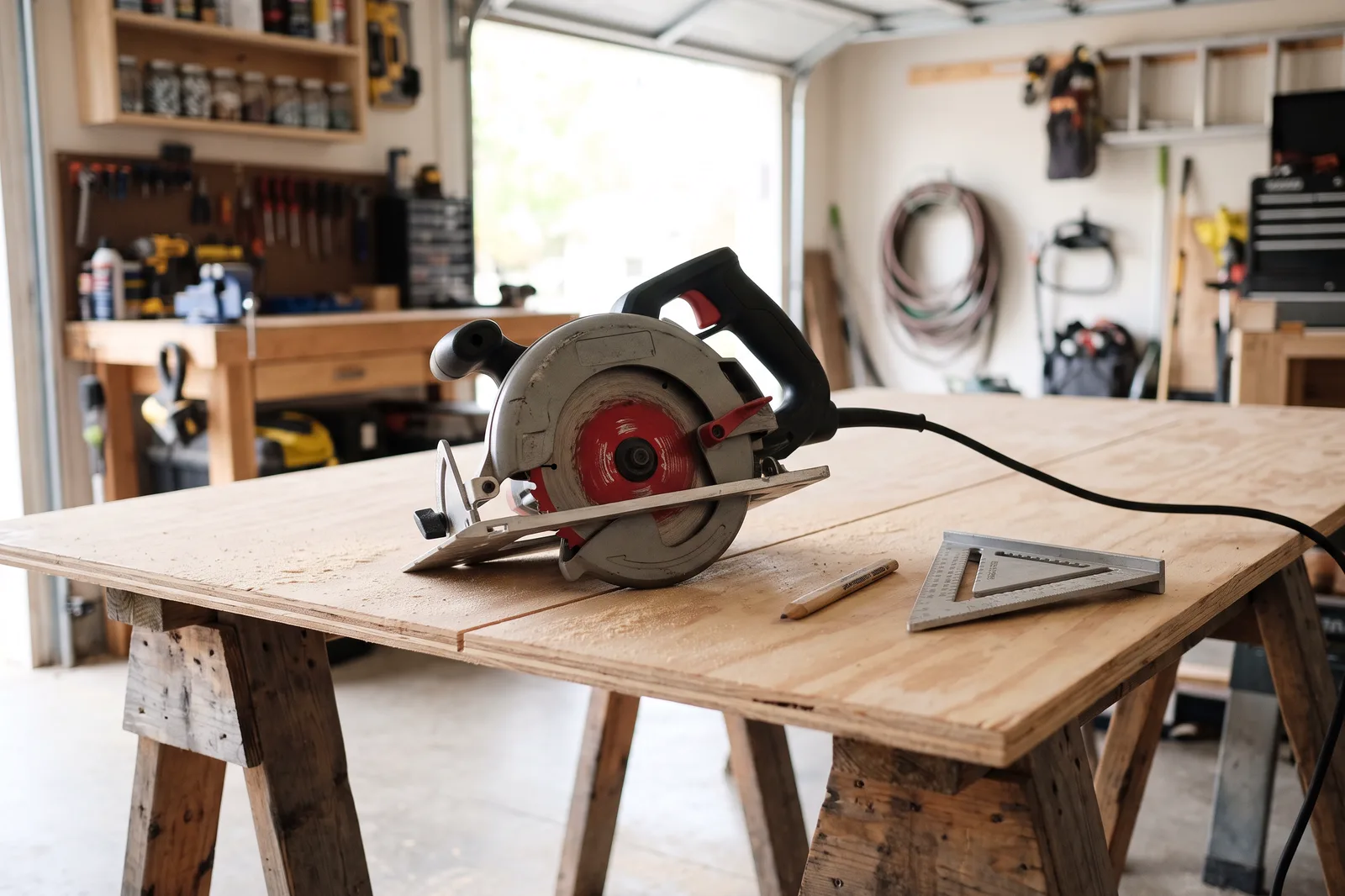
 DEWALT DWE575SB 7-1/4 inch Corded Circular Saw with Electric Brake
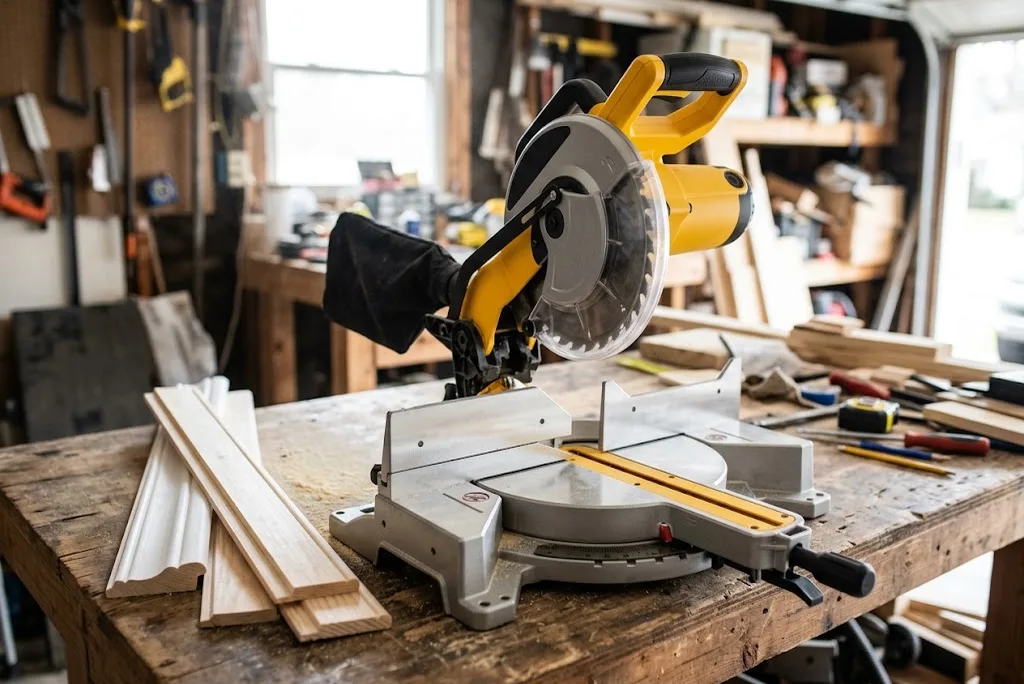
 DEWALT 12-Inch Miter Saw, 15-Amp, Single Bevel, Compound (DWS715)
Photos from the Amazon listings. Scores are our own, not customer ratings.
Quick answer
For most first-time buyers, a circular saw is the better first purchase: it cuts plywood sheets and lumber, and goes where the work is. Buy a miter saw first only if your projects are mostly trim, picture frames or boards cut to length. Our reference pair is the DEWALT DWE575SB circular saw and the DEWALT DWS715 miter saw.
Quick verdict
If you are buying one power saw, the question is not which saw is better. It is which job you will do first.
- Buy a circular saw first if your projects include plywood, framing, fences, sheds, repairs or any lengthwise cut. It is the more versatile saw, and it goes to the work.
- Buy a miter saw first if your projects are mostly trim, picture frames, shelves from boards or many boards cut to the same length.
- Plan to own both if you are building a deck or finishing a room. Many people start with a circular saw and add a miter saw later.
We compare a reference pair from the same brand and tier: the corded DEWALT DWE575SB circular saw and the DEWALT DWS715 12-inch miter saw. We read maker specs, buyer reviews, Bob Vila's tests and three videos. For the basics of each tool, see our circular saw and miter saw guides.
What each saw does
A circular saw is a handheld saw. You set its base plate on the board and push the saw through. It can cut across a board, along a board and across a full sheet of plywood. You tilt the base plate for bevel cuts.
A miter saw is a circular saw on a hinged arm above a table and fence. You hold the board still against the fence and pull the blade down. It only cuts across the board, but it does so at the same angle every time, and it can be set to a miter, a bevel or both.
Sawinery Woodworking's video puts it simply: the miter saw is more accurate but limited to crosscuts and miters, while the circular saw is far more versatile and is the best tool for breaking down plywood sheets.
Who it's for
- First-time buyers with a mix of projects: shelves, fences, plywood, repairs
- Trim and flooring DIYers cutting many boards to length at set angles
- Anyone planning a deck who may end up needing both saws
Who should skip it
- People who make only a few cuts a year. A hand saw and speed square may do.
- Those without space or a stand. A miter saw needs a stable surface to be accurate.
Head to head
| Circular saw (DWE575SB) | Miter saw (DWS715) | |
|---|---|---|
| Crosscuts | Yes, by eye or with a square | Yes, fast and exact |
| Lengthwise cuts | Yes | No |
| Plywood sheets | Yes | No |
| Angled cuts | Bevel with a tilting base plate | Miter and bevel with set stops |
| Portability | Goes to the work | Stays in one place |
| Setup | Sawhorses | Stand or sturdy bench |
| Repeat cuts | Slower, depends on your line | Fast with a stop block |
Versatility
The circular saw wins. Tool Box Buzz found the DWE575's motor handled plywood, framing lumber and a rip cut down a pressure-treated 2x8. A miter saw cannot cut a sheet at all. The Sawinery video's conclusion is that if you will work with plywood sheets you need the circular saw.
Accuracy and repeat cuts
The miter saw wins. ToolsRank's explainer says a miter saw makes more accurate cuts because a circular saw is handheld. In Matt Crampton Labs' test of the DWS715, the saw cut a 2x4, 4x4, 2x6 and 4x6 square, and the reviewer said the cuts were smooth. Bob Vila's testers called the DWS715 powerful and precise on dimensional lumber and trim.
Portability
The circular saw wins. You bring it to the roof, the fence line or the garage floor. The DWS715 weighs about 36 pounds, which Bob Vila's testers liked for moving between jobs, but the miter saw still stays where you set it up.
Learning curve and safety
Neither is risk-free. ToolsRank's video says a miter saw is safer; some writers recommend one for beginners because the board stays still and you can keep a hand away from the blade. A circular saw needs board support to prevent pinching and kickback, and a steady push. Both need eye and ear protection, and neither should be used to cut small pieces held by hand.
Space and setup
A circular saw needs two sawhorses. A miter saw needs a stand or a sturdy bench and room on both sides for long boards. If you live in an apartment or have little storage, that matters.

Pros and cons
Circular saw (DEWALT DWE575SB)
| Pros | Cons |
|---|---|
| Cuts sheets, lengthwise and across. | Needs a line or guide for exact cuts. |
| Goes anywhere. | Corded only. |
| Light for a full-size corded saw, at 8.8 pounds from the maker. | No rip fence, light or laser. |
| Electric brake and a wide bevel up to 57 degrees. |
Miter saw (DEWALT DWS715)
| Pros | Cons |
|---|---|
| Square, repeatable crosscuts and set angles. | Cannot cut plywood sheets or rip. |
| Handles common lumber: the maker lists a 2x8 at 90 degrees and a 2x6 at 45 degrees. | Not a sliding saw, so wide boards are limited. |
| Lighter than a sliding saw, about 36 pounds. | Single bevel: tilts 48 degrees left and only 3 right. |
| Positive stops with 14 detents, per the maker. | Dust bag catches only part of the dust. |
| Needs a stand or bench. |
Cost of ownership and space
A circular saw is a one-piece purchase. You need sawhorses and a clamp, which most garages already have. A miter saw is often the more involved purchase: the saw itself, plus a stand or sturdy bench to put it on, plus support for long boards. It also takes more room to store.
Neither saw includes the blade you will actually want for finish work. Both ship with a framing blade. Plan to add a finer blade, whichever saw you buy first.
Common mistakes to avoid
- Buying a miter saw to cut plywood. It cannot. A sheet will not fit.
- Buying a circular saw and expecting trim-quality angles with no guide. You can get them, but you need a square or a clamped guide and some practice.
- Holding small pieces by hand on either saw. Clamp them.
- Skipping eye and ear protection. Both saws throw chips and are loud.
- Buying the saw before listing your projects. Write the next three projects and the cuts they need. The right saw is usually obvious after that.
What buyers say about each saw
On the circular saw, buyers and testers praise the light weight, the power and the brake, and complain mainly that it is corded and has no rip fence, light or laser guide. Tool Box Buzz found it handled plywood, framing lumber and a rip cut with no trouble.
On the miter saw, ShopSavvy's summary praises accuracy and value and lists the small dust bag and single bevel as drawbacks. Bob Vila's testers praised its power, precision, ease of use and portability, with the lack of a sliding arm as the one downside.
Which should you buy first? By project
- Shelves from plywood, garage storage, sheds: circular saw.
- Fence, deck framing, repairs: circular saw first. A miter saw is a nice add later for deck boards.
- Baseboard, door casing, window trim: miter saw.
- Picture frames and small furniture parts: miter saw.
- Cutting a lot of boards to the same length: miter saw.
- Flooring install: a miter saw for boards, a circular saw for rips and awkward cuts.
- A little of everything, one saw only: circular saw.
A feet-and-inch fraction calculator is handy for turning a cut list into exact lengths, and the deck calculator counts boards and screws for a deck. A speed square helps with either saw.
If you buy a circular saw first
Set yourself up with the things that make it accurate and safe: two sawhorses, two clamps, a speed square and a straight board to use as a guide. Add a finer blade for plywood. With those, a circular saw makes cuts that are good enough for framing, fences, shelving and most furniture-grade work, and you can add a miter saw when trim and repeat cuts start to matter.
If you buy a miter saw first
Budget for a stand or a sturdy bench with supports on both sides, a shop vacuum for dust and a finer blade for trim. Learn to check the saw against a square. A miter saw will give you excellent boards and trim cuts, but you will still need another saw the first time a project calls for plywood or a lengthwise cut.
Key specs to look for
| Spec | What to look for |
|---|---|
| Type of cut | A circular saw cuts crosswise, lengthwise (ripping) and across sheets. A miter saw only cuts across a board, at the angle you set. |
| Portability | A circular saw goes to the work. A miter saw is a bench tool; reviewers praise the DWS715 as light for a miter saw, at about 36 pounds, but you still carry the boards to it. |
| Accuracy | A miter saw gives square and angled cuts by default. A circular saw needs a pencil line, square or guide for the same accuracy. |
| Capacity | The DWE575SB cuts 2-9/16 inches deep. The DWS715 lists a 2x8 crosscut at 90 degrees and a 2x6 at 45 degrees. |
| Sheet goods | Circular saw: yes, it breaks down plywood sheets. Miter saw: no, boards only. |
| Setup space | A circular saw needs sawhorses. A miter saw needs a stand or sturdy bench and space on both sides for long boards. |
| Dust | Both throw dust. The DWS715 has a dust bag that catches only part, so use a shop vacuum indoors. |
Where to buy
Both saws are sold on Amazon. Check the exact model names before you order.

DEWALT DWE575SB 7-1/4 inch Corded Circular Saw with Electric Brake
- Cuts plywood sheets, framing lumber and angled cuts, and goes to the work
- Light for a full-size corded saw, with an electric brake
- One saw that covers the most first projects
How we scored it
Usefulness 9/10 · Value 8/10 · Durability 9/10. This is our own opinion, based on specs, buyer reviews and independent tests. It is not an Amazon or customer rating.

DEWALT 12-Inch Miter Saw, 15-Amp, Single Bevel, Compound (DWS715)
- Fast, square, repeatable crosscuts and angles on boards and trim
- 12-inch blade and a positive-stop miter plate
- Non-sliding single bevel design is simpler and lighter than a sliding saw
How we scored it
Usefulness 9/10 · Value 8/10 · Durability 8/10. This is our own opinion, based on specs, buyer reviews and independent tests. It is not an Amazon or customer rating.
Read the newest reviews before you buy. A miter saw also needs a stand or bench, and both saws need safety glasses, hearing protection and a good blade for the job.
Watch and read more
Video reviews
- Don’t Buy the Wrong Saw: Circular Saw vs Miter Saw — Sawinery Woodworking
Explains that a miter saw gives accurate crosscuts and miters but cannot rip or cut plywood sheets, while a circular saw is more versatile; if you work with plywood sheets you need the circular saw. - Miter Saw vs Circular Saw - Which One is Best for You? — ToolsRank
A short explainer: a circular saw breaks down sheet goods and is portable and less expensive; a miter saw is more accurate and cuts only across boards. - Testing Dewalt DWS715 Miter Saw — Matt Crampton Labs
Unboxing and test cuts with the DWS715: it cuts 2x4, 4x4, 2x6 and 4x6 square, but a 45-degree cut will not go all the way through a 4x4.
PROSWho uses it
- Tool Box Buzz — Reviewed the DEWALT DWE575 circular saw and found it handled plywood, framing lumber and a pressure-treated 2x8 rip.
Free calculators FigureMyHome
- Deck Calculator — Count deck boards and screws before you start cutting.
- Feet-Inch Fraction Calculator — Turn a cut list into exact lengths.
Frequently asked questions
Should I buy a circular saw or a miter saw first?
For most beginners, a circular saw, because it cuts sheets of plywood and long lengthwise cuts, and travels to the job. Buy a miter saw first if you plan mostly trim, frames or many identical crosscuts.
Can a miter saw replace a circular saw?
Not fully. A miter saw only cuts across boards that fit under the blade, and it cannot cut a sheet of plywood or rip a board lengthwise.
Can a circular saw replace a miter saw?
For rough work, yes. With a speed square or a clamped guide it makes square and angled cuts. For repeated, trim-quality cuts, a miter saw is faster and more accurate.
Which saw is safer for a beginner?
Each has its own risks. A miter saw is held in place and lets you keep a hand well away from the blade, which some writers recommend for beginners. A circular saw needs good board support to avoid kickback. Learn the basics and wear eye and ear protection with either.
Which saw is cheaper?
Circular saws are generally the lower-priced of the two, and you do not need a stand. A miter saw often needs a stand or bench too.
Do I need both saws for a deck?
You can build a deck with just a circular saw. A miter saw makes cutting many deck boards to the same length faster.
Sources
Related tools
 Power ToolsCircular Saw: The Power Saw Most Homeowners Should Own FirstA circular saw is a handheld power saw with a round toothed blade that cuts boards and sheets of plywood in a few seconds.
 Power ToolsMiter Saw: The Fast, Accurate Way to Cut Trim and FramingA miter saw is a circular saw mounted on an arm that swings down onto a board held against a fence, so it makes fast, repeatable angled and square crosscuts.
 Power ToolsOscillating Multi-Tool: The One Tool for Cuts Other Saws Cannot MakeAn oscillating multi-tool wiggles a short blade back and forth to make plunge cuts, flush cuts and tight sanding that a normal saw cannot reach.