
Workshop & Storage · Single tool · DIY · Pro
Shop Vacuum: The Wet/Dry Cleanup Tool Every Garage Needs

Our verdict
RIDGID 62703 RT1200 NXT 12-Gal. Wet Dry Shop Vacuum with Casters, 5.0 Peak HP Motor, and Pro Locking Hose
8.3/10
Worth-owning score
Price tier Mid ($$)
View on AmazonOur own score from specs, buyer reviews and tests. Not a customer rating. Photo from the Amazon listing.
Quick answer
A shop vacuum is a tough wet/dry vacuum that sucks up sawdust, drywall scraps and spilled water that would wreck a household vacuum. For most homeowners, a 12-gallon corded model like the RIDGID RT1200 is a sensible all-rounder with a drain and a lifetime warranty per the listing. Skip it if you only have light dust and crumbs to clean; a small 3-gallon unit or your regular vacuum will do.
What is a shop vacuum?
A shop vacuum, often called a shop vac or wet/dry vac, is a tough vacuum with a big plastic tank, a strong motor and a wide hose. It is built for the messes that would clog or ruin a household vacuum: sawdust, drywall scraps, leaves, nails, wood chips and spilled water. You pull the hose around the room, and everything goes into the tank. When it is full, you empty it into a bin.
Bob Vila's testers sort shop vacs by tank size: small (1 to 5 gallons) for light household messes, medium (6 to 10 gallons) for jobsites and busy DIY, and large (over 10 gallons) for dedicated shop use. They also note that tank capacity is the most important factor, because a small tank means frequent emptying.
| Tank size | Best for | Watch out for |
|---|---|---|
| 1 to 5 gallons | Car interior, small spills, workbench dust | Fills quickly on big jobs |
| 6 to 10 gallons | Garage, DIY projects, light jobsite use | Middle ground; check the hose and filter |
| Over 10 gallons | Big cleanups, wet basements, workshop | Takes storage space, heavier to move |
| Cordless (18 to 20V) | Cars, quick pickups, no outlet | Needs recharging; smaller tanks |
Why you'll want one
It handles water. A wet/dry vac can pull up standing water from a garage floor or a flooded corner. Bob Vila's testers poured water on a garage floor and used a squeegee nozzle to pick it up, and one reviewer said a 12-gallon RIDGID would have kept ahead of a flooded basement.
It keeps project dust under control. Sawdust, drywall bits and wood offcuts go in the tank, not on the floor or into your lungs. This Old House says newer shop vacs can also connect to power tools to capture dust at the source. Saws like a miter saw throw dust that a bag only partly catches, so the vac is the usual fix indoors.
It does the jobs a household vacuum should not. Nails, screws, wet leaves and mud would damage a bagless household vacuum, but a shop vac takes them.
It works as a blower. Many models can blow as well as suck. A Money Evolution reviewer says the blow side of their RIDGID is not strong but can clear dust and leaves from a garage.
Who it's for
- Homeowners with a garage or workshop who cut wood, sand or do repairs
- Anyone who has dealt with a leaking water heater or a wet basement and needs to pull up standing water
- DIYers tackling drywall, deck or trim jobs who want dust and offcuts gone at the end of the day
- Car owners who want a strong vacuum for the interior and the trunk
Who should skip it
- Apartment dwellers with little storage. A 12-gallon tank is bulky; a small 3-gallon vac is easier to store.
- People who only have crumbs and pet hair. A household vacuum is quieter and easier to carry.
- Anyone cleaning fireplace ashes. Bob Vila says warm ashes need a dedicated ash vacuum, not a standard shop vac.
How to use it
Always read the maker's manual first, unplug the vac before changing the filter and wear hearing protection; see our safety glasses and hearing protection guide for what to own.
- Assemble it. Money Evolution's unboxing shows the wheels, hose and screws can be hidden in the tank or taped in a wheel housing, so check the whole box before you think anything is missing. Press the caster wheels firmly into their housings.
- Check the filter. The cartridge or foam sleeve must be fitted before you turn it on. This Old House says foam sleeves protect the motor and suit wet pickup, while pleated paper suits sawdust and everyday dirt.
- Pick the nozzle. Use a utility nozzle for general debris, a crevice tool for corners and a squeegee wet nozzle for water.
- Plug in and start. Keep the cord out of the water and out of your path.
- Vacuum dry mess first. Pick up sawdust and chips before wet jobs so debris does not turn to sludge.
- For water, use a wet nozzle. Move slowly so the nozzle can pull up the water. Dale The Shop Vac Guy's video shows a RIDGID 12-gallon clearing water from a container quickly.
- Watch the tank level. Bob Vila notes that a larger tank means less frequent emptying; stop before it is full so you can lift it or drain it.
- Empty it with the drain. If your vac has a drain, unscrew the plug and let the water flow into a floor drain or outdoors, as the Dale The Shop Vac Guy video shows, then put the plug back.
- Clean the filter. This Old House says a clean filter preserves suction. Tap out or replace it as the manual says; foam sleeves and some washable cartridges can be rinsed.
- Store it with its accessories. In SeidelRanch Reviews' video, the accessories clip into the wheel housings, with the hose looped around the tank. A neat vac gets used more, and it fits nicely with a stackable tool box system.

What reviewers and buyers say about the RIDGID RT1200
We feature the RIDGID RT1200, a 12-gallon corded wet/dry vac. The Bob Vila test named a related RIDGID 12-gallon model, the HD1200 sold at Home Depot, its best overall, so we treat its results as a guide to the line, not a test of this exact listing.
- Praised: Bob Vila's testers scored the 12-gallon RIDGID 5 out of 5 for performance and ease of use. They liked the strong motor, the wet nozzle with a squeegee, the front drain plug and the long hose and cord. Owners in the videos praise the drain, the quiet running for its size, and how the accessories store on the machine.
- Common complaints: Bob Vila's only listed drawback is that it needs significant storage space. Money Evolution found assembly slightly fiddly, with one wheel needing a hammer, and the blow side not very strong.
- Reliability: We did not find a controlled long-term durability test of this exact model, so we do not claim one. The listing states a lifetime warranty.

Choosing a filter
The filter decides what the vac can safely pick up. This Old House describes four main kinds:
| Filter | Good for | Limit |
|---|---|---|
| Foam sleeve | Wet pickup; protecting the motor from large debris | Fine dust passes through |
| Pleated paper (standard) | Sawdust, everyday dirt, crumbs | Check the manual before using on wet jobs |
| Fine-dust pleated | Drywall and cement dust, particles to about 1 micron | RIDGID says its fine dust filter is for dry pickup only |
| HEPA | Lead paint, fiberglass, mold; at least 99.97 percent of particles to 0.3 microns | Can lower suction and costs more to replace |
For hazardous dust such as lead paint, call a licensed abatement professional rather than relying on a household shop vac.
Common mistakes to avoid
Vacuuming fine dust with a basic filter. Drywall and cement dust pass through a foam sleeve and blow back into the room. Use a fine-dust or HEPA filter, as This Old House advises.
Picking up hot ashes. Bob Vila says warm ashes need a dedicated ash vacuum with heat-resistant construction. A standard shop vac is not made for them.
Using a dry-only filter for water. RIDGID says its fine dust filter is for dry pickup only. Swap to the wet-rated filter or foam sleeve before wet jobs.
Letting the tank overfill. Stop and empty it before it is full, especially with water, because a full tank is heavy.
Buying on horsepower alone. Peak horsepower is a marketing number. This Old House suggests airflow is a better guide, so compare features such as filter, hose and drain too.
What to look for when buying
- Tank size. Match it to your jobs: 3 to 5 gallons for the car and the workbench, 6 to 10 for the garage, 10 or more for big cleanups.
- Wet and dry rating. Make sure the vac and its filter are rated for what you will pick up.
- Drain port. Lets you empty water without lifting the tank.
- Hose. A locking hose with a wide diameter collects dust well; This Old House warns that very long hoses lose suction.
- Filter choice. Check that fine-dust and HEPA options exist for your model, and that the filter is easy to change.
- Wheels and storage. Casters make it easy to move; accessory storage keeps the pieces together.
- Noise. Lower horsepower models are often quieter, per Bob Vila. Wear hearing protection anyway.
- Warranty. Check the terms before you rely on it.
Key specs to look for
| Spec | What to look for |
|---|---|
| Tank capacity | 12 gallons per the listing. Bob Vila groups 6 to 10 gallons as suited to jobsites and busy DIY, and larger tanks as dedicated shop use. |
| Motor power | 5.0 peak horsepower per the listing. Peak horsepower is a marketing number, so use it to compare vacs of the same brand, not as a promise of suction. |
| Hose | A 1-7/8 inch by 8 foot locking hose per the listing. A locking hose will not pull loose mid-job; longer hoses lose some suction, per This Old House. |
| Filter | A cartridge filter fastened with the Qwik Lock system per the listing. Check the manual for which filter or foam sleeve is meant for wet pickup. |
| Wheels and drain | Four caster wheels and a large drain, per the listing. Wheels need a few minutes of assembly. |
| Blower port | The listing says it can blow leaves and debris from walkways and decks, so the exhaust side works as a blower. |
| Noise | The listing shows 80 dB and a noise-reducing scroll design. Any shop vac is loud, so wear hearing protection for long jobs. |
| Warranty | The listing says RIDGID lifetime warranty. Read the terms; one video owner says it covers defects. |
Where to get it
The RIDGID RT1200 below is a 12-gallon corded wet/dry vac with a 5.0 peak horsepower motor and an 8 foot locking hose, according to the listing. Check the listing to confirm what is in the box before you buy.

RIDGID 62703 RT1200 NXT 12-Gal. Wet Dry Shop Vacuum with Casters, 5.0 Peak HP Motor, and Pro Locking Hose
- A 12-gallon tank with a 5.0 peak horsepower motor and an 8 foot locking hose, per the Amazon listing
- A drain at the base lets you empty water without lifting the full tank, which reviewers and video owners single out as handy
- The listing states a lifetime warranty, and a related RIDGID 12-gallon model won Bob Vila's best overall test
How we scored it
Usefulness 9/10 · Value 8/10 · Durability 8/10. This is our own opinion, based on specs, buyer reviews and independent tests. It is not an Amazon or customer rating.
Watch and read more
Video reviews
- Ridgid HD1200 Wet Dry Vac 12 Gallon Review — Money Evolution
Unboxes and assembles the RIDGID 12-gallon: the wheels and hose are inside the tank, the screws are taped in the wheel housing and one wheel needed a hammer. The garage cleanup went decently, and the reviewer says the blower side is not strong. - RIDGID 12 GALLON WET/DRY VAC WATER TEST & DRAIN DEMONSTRATION — Dale The Shop Vac Guy
Sucks water out of a container and then unscrews the drain to empty the tank without carrying it outside. A real-world look at the wet pickup and the drain. - What You Should Know - 12 Gallon RIDGID Shop Vacuum and Accessories — SeidelRanch Reviews
Shows what is in the box and how accessories store on the wheel housings. The reviewer calls it quiet for its size and describes the lifetime warranty as covering defects.
Frequently asked questions
What is the difference between a shop vac and a regular vacuum?
A shop vacuum is built for wet and dry messes, has a large tank, a tougher hose and usually a motor that can handle water, sawdust and debris. Bob Vila says standard shop vacs can pick up wet sawdust and standing water, which a regular household vacuum should not.
How many gallons do I need?
Bob Vila groups 1 to 5 gallons as light household messes, 6 to 10 gallons as jobsites and busy DIY, and over 10 gallons as dedicated shop use. A 12-gallon tank suits a garage where messes are big and you do not want to empty it often.
Can I vacuum up water with a shop vac?
Yes, if it is a wet/dry model. This Old House notes foam sleeves suit wet pickup, while its fine-dust and pleated paper filters are meant for dry use. RIDGID says its fine dust filter should only be used for dry pickup, so follow the manual for wet jobs.
Can a shop vac pick up drywall dust?
Only with the right filter. This Old House says foam sleeves let fine dust pass through, and recommends a fine-dust or HEPA filter for very fine dust and hazards such as lead paint, fiberglass and mold. Check the vac's manual for the compatible fine-dust filter.
How do I empty water from a shop vac?
Use the drain port if the vac has one. In the Dale The Shop Vac Guy video, the drain is unscrewed on a RIDGID 12-gallon after a water test and the water runs out without carrying the tank outside.
What is peak horsepower?
It is the highest output the motor reaches briefly, not what it sustains. Bob Vila notes that higher horsepower handles water intrusion more efficiently, and lower horsepower models are often quieter. This Old House points to airflow as the number to watch.
Can I use a shop vac as a leaf blower?
Some can. The RIDGID listing says its exhaust can blow leaves and debris. A Money Evolution reviewer found the blow side is not very strong but did the job for dust in a garage.
Sources
Related tools
 Power ToolsMiter Saw: The Fast, Accurate Way to Cut Trim and FramingA miter saw is a circular saw mounted on an arm that swings down onto a board held against a fence, so it makes fast, repeatable angled and square crosscuts.
 Workshop & Storage · RoundupSafety Glasses and Hearing Protection: What to Own for Home ProjectsEvery power-tool job needs two things: impact-rated eye protection and hearing protection rated for the noise.
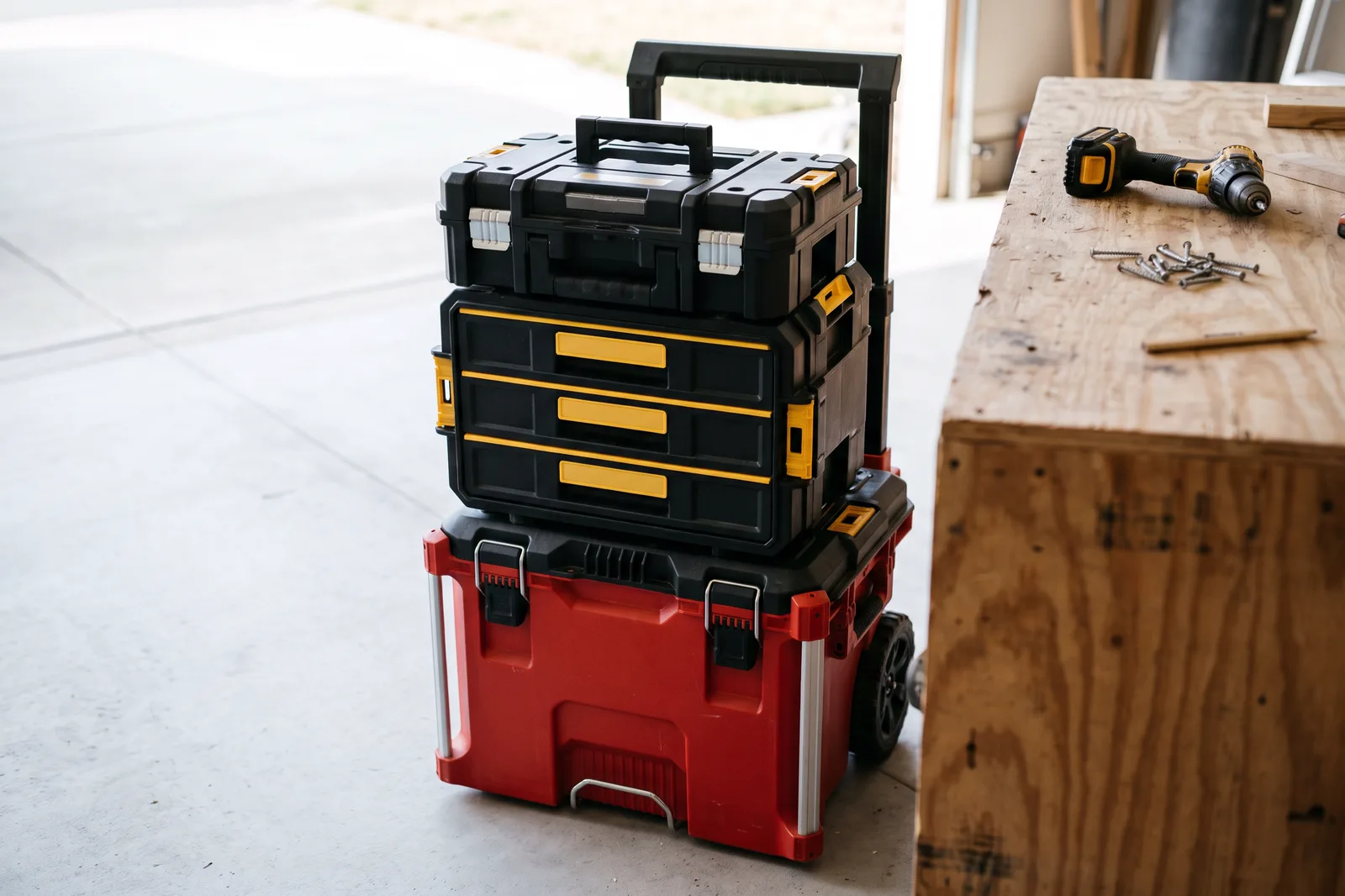 Workshop & Storage · RoundupStackable Tool Box Systems: Which One to Own for Home and JobsiteA stackable tool box system is a set of boxes that click together so one stack carries everything.