
Hand Tools · Roundup · DIY
Hand Saws Every Toolbox Needs: Panel, Pull and Coping Saws Explained
Quick answer
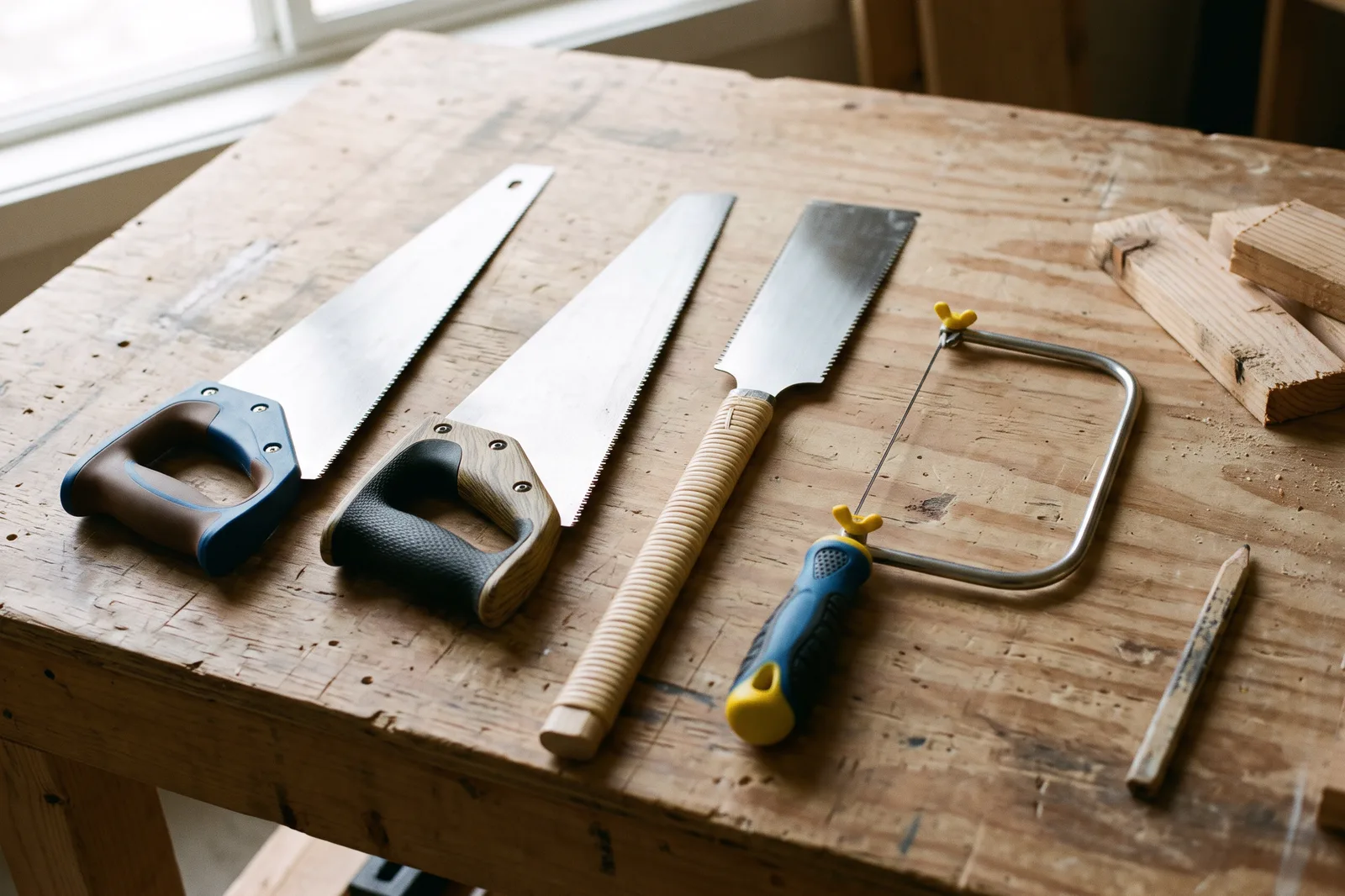
Most toolboxes need three hand saws: a 15-inch panel saw for quick cuts in lumber and plywood, a Japanese pull saw for neat, thin-kerf cuts in trim and joinery, and a coping saw for curves and inside corners. A budget panel saw such as the Irwin ProTouch does the rough work. A thin, double-edged pull saw such as the Suizan ryoba is the one that most improves the cut quality. Skip all three only if you already own a power saw and never need a precise or tight cut.
What are hand saws?
A hand saw is a blade with teeth that you move back and forth by hand to cut wood. There is no cord, no battery and no noise, and a good one starts cutting the second you pick it up. Hand saws are not one tool but a family, and each member is built for a different cut. Three of them cover most households:
| Saw | Cuts on | Best at | What to know |
|---|---|---|---|
| Panel saw (the classic carpenter's saw) | Push stroke | Quick cuts in lumber, plywood and branches | Fast, but leaves a rougher edge |
| Japanese pull saw (ryoba or dozuki) | Pull stroke | Clean, thin cuts in trim, small parts and joinery | Thin blade, so it flexes and is not for thick lumber |
| Coping saw | Either (blade can face either way) | Curves, tight shapes and fitting trim into inside corners | The blades are thin and break |
Other saws exist. A hacksaw cuts metal, and The Honest Carpenter groups it with the coping saw as a "specialty" saw, so we left it out and kept this guide to wood.
How a push saw differs from a pull saw
The Honest Carpenter's video makes one point clearly: the big difference between Western and Japanese saws is the direction they cut. Western saws have teeth that lean forward and bite as you push. Japanese saws have teeth that lean back and bite as you pull. That one change explains the rest. A pull stroke keeps the blade stretched straight, so it can be paper-thin without buckling, and a thin blade removes less wood and takes less effort. A Western saw needs a thicker blade because it is pushed, and it gets a D-shaped handle that supports your palm.
Pull saws are often double-edged. As that video puts it, the coarse side is for ripping, cutting with the grain, and the finer side is for crosscutting, cutting across the grain. That one blade does the work of two saws.
The four picks in this guide
We chose well-reviewed models across the tiers:
- Budget panel saw: the IRWIN ProTouch 15-inch coarse cut saw.
- Mid panel saw: the STANLEY FATMAX 15-inch saw.
- Pro pull saw: the SUIZAN 9.5-inch ryoba, a double-edge Japanese pull saw.
- Budget coping saw: the IRWIN ProTouch coping saw.
If you want only one of these, read the next section, then pick the saw that matches the jobs you do most.
Why you'll want them
A hand saw is the quickest tool for a small cut. For one board or one piece of trim, there is no cord to find, no battery to charge and no setup. Amazon's review summary for the FATMAX says buyers find it faster than setting up power tools for small home projects, and the IRWIN's summary says one buyer found it works almost as fast as an electric saw. Those are buyer comments, not tests, but they match what most people expect.
A power saw cannot do every cut. A circular saw is great for long, straight cuts, and our circular saw guide covers when to buy one. But it cannot cut a curve, cannot work in a tight corner and tends to leave a rougher edge on trim. A pull saw or a coping saw handles those cuts.
Pull saws are easy to control. The Whole House Care video describes pull saws as allowing more accurate cuts, and Amazon's summary for the Suizan says buyers find it cuts with very little effort and gets into tight corners with precision. Beginner guides we read, including Woodcraft's, also say a Japanese saw is often easier for a newcomer to control than a push saw, because the thin blade is easy to guide.
Coping makes trim joints look better. An inside corner of baseboard or crown molding is rarely a perfect square. Fix It Home Improvement's video shows the usual fix: trace the profile on the back of one piece with a pencil, cut along it with a coping saw, and the piece fits snugly against the face of its neighbor. The joint then hides small gaps, even if the wall corner is off.
They are quiet and safe in small spaces. No dust blast and no loud motor, so a hand saw works in an apartment, a hallway or a room full of finished furniture. Always clamp the work so the blade cannot kick.

What buyers say
Buyer feedback in Amazon's review summaries points the same way for each saw:
- IRWIN panel saw: buyers find it cuts wood "like butter", handles large limbs, and is sharp, sturdy, comfortable and good value.
- STANLEY FATMAX: buyers say it cuts thick branches easily, stays sharp through extended use, is portable and comfortable, and is fast.
- SUIZAN ryoba: buyers call it an outstanding tool that cuts with little effort and say it beats mid-grade traditional hand saws, with praise for the double-edge design and accuracy.
- IRWIN coping saw: buyers like the cutting performance and value, but durability gets mixed feedback. Some say it is sturdy, while others report blades breaking quickly and holding pins that are not aligned.
We found no controlled test comparing these exact four models, so the ratings above rest on buyer feedback and maker specs. If you want independent tests, Bob Vila's hand saw roundup tests several saws against each other, including an IRWIN coarse-cut panel saw, a Japanese pull saw and the IRWIN ProTouch coping saw.
Who it's for
- First-time homeowners building a toolbox that can cut lumber, trim and small jobs without a power saw
- Renters and apartment DIYers with no room or outlet for a power saw but a need to trim a board or a piece of molding
- Woodworkers and makers who want clean, quiet cuts for joinery, models and small projects
Who should skip it
- Anyone cutting a lot of lumber. A circular saw or a miter saw is much faster for framing and decking.
- Anyone who needs to cut metal or pipe. Those jobs call for a hacksaw or a tubing cutter, which this guide does not cover.
- People who only need a single cut once. A hardware store may cut it for you.
How to use them
These steps combine what the videos and guides we read agree on.
- Clamp the wood. Hold the board against a bench or sawhorse with a clamp. A loose board moves with the saw and makes a crooked cut.
- Mark the cut line with a sharp pencil or knife. A speed square helps you draw a square line, and our speed square guide shows how.
- Saw on the waste side of the line. The blade removes wood, so cut just outside the line and leave the line itself on the piece you are keeping.
- Start the cut gently. For a panel saw, Honest Carpenter suggests drawing the saw backward a few times first, steadying the blade with a thumbnail or fingertip, so it sets a small notch. Then push forward with steady strokes. For a pull saw, do the opposite: a few light push strokes set the notch, then pull firmly.
- Let the saw do the work. Use long, even strokes with light pressure. Forcing the saw makes it wander.
- Match the saw to the cut. Use the coarse edge of a ryoba to cut with the grain and the fine edge to cut across it. Use the panel saw when you need speed more than neatness.
- Support the offcut. As you near the end of the cut, hold the piece that will fall, or the wood will splinter at the bottom.
- For a cope joint, cut the first piece square. Fix the first piece of baseboard in the corner with its end butted into the wall.
- Trace the profile. Hold the second piece against the first, as FIX IT's video does, and trace the shape of the molding onto the face of the second piece in pencil.
- Cope along the pencil line. Tilt the coping saw a little so you cut slightly back from the face, which makes the piece slide into the corner. Cut in small pieces and break out the waste.
- Test and clean up. Dry-fit the piece, then sand or file any tight spots. A little caulk hides what is left on painted trim.
- Replace the blade when it dulls or bends. Coping saw and pull saw blades are meant to be swapped.
Common mistakes
- Pressing too hard. A sharp saw cuts on its own weight. Pushing makes it bind.
- Cutting on the line instead of beside it. The blade removes a strip of wood, so the piece ends up short.
- Using a pull saw for thick framing lumber. The thin blade flexes. Use a panel saw or a power saw.
- Skipping the clamp. A moving board is the main cause of ragged cuts.

What to look for when buying
Pick the tooth count for the job. Bob Vila's guide notes that fewer teeth cut fast and leave a rough edge, and ten or more teeth cut smoothly but need more effort. A general panel saw sits near 8 or 9 teeth per inch. The IRWIN coping saw lists 17 teeth per inch for fine work.
Think about what you cut most. If it is lumber, plywood or branches, choose a panel saw. If it is trim, small parts or neat joints, choose a pull saw. If it is curves or cope joints, add a coping saw.
Look at the handle. Comfort matters as much as the blade, as Bob Vila notes. Look for a grip that fits your hand and does not slip. A closed D-shaped handle suits pushing, and a long straight handle suits pulling and lets you use two hands.
Check whether the blade is replaceable. A pull saw and a coping saw take new blades. A panel saw is normally used until it dulls. If you want a saw for years, a replaceable blade matters.
Check blade length and tool size. A 15-inch panel saw fits a drawer or tool bag. A 9.5-inch pull blade gives short, controlled strokes. A coping saw's frame depth limits how far it can reach into a board, and the IRWIN lists a 5-1/2 inch frame depth.
Match the saw to the wood. Guides we read note that many Japanese saws are made with tooth shapes meant for softwoods. If you cut a lot of hardwood, check the listing and read the reviews before you buy.
Plan for spare blades. The most common complaint about coping saws in buyer reviews is that blades snap. Buy a pack of spare blades when you buy the frame.
Know what a hand saw cannot do. It will not cut metal or masonry, and it will not rip a long board as fast as a power saw. For heavy cutting, see our marking tools guide for laying out accurate lines first, then pick a power saw.
Key specs to look for
| Spec | What to look for |
|---|---|
| Teeth per inch (TPI) | Fewer teeth cut fast and rough, more teeth cut slow and smooth. About 8 to 9 TPI suits a general panel saw. Finer teeth suit trim and joinery. |
| Cut direction | Western saws cut on the push stroke. Japanese pull saws cut on the pull stroke, which lets the blade be much thinner. |
| Blade thickness and kerf | A thinner blade removes less wood and takes less effort, but it flexes. The Suizan lists a 0.02 inch blade and a 0.03 inch kerf. |
| Blade length | A 15-inch panel saw is the common size for a toolbox. Longer blades give straighter strokes, shorter ones fit a bag and cut tighter. |
| Rip or crosscut teeth | Rip teeth cut with the grain, crosscut teeth cut across it. A double-edge pull saw has both. Many panel saws are a compromise between the two. |
| Handle | A closed D-shaped grip gives palm support when pushing. A long straight handle gives control when pulling. Rubber or textured grips reduce slipping. |
| Replaceable blade | Pull saws and coping saws use blades you can swap. A panel saw is usually a throw-away when it dulls, since sharpening is a specialist job. |
Where to get them
All four are sold on Amazon. We rate the IRWIN panel saw and the IRWIN coping saw as budget tier, the STANLEY FATMAX as mid tier and the SUIZAN ryoba as pro tier.
| Pros | Cons |
|---|---|
| A hand saw works anywhere, with no cord, battery or noise | Slower than a power saw for long cuts or thick lumber |
| Pull saws and coping saws make cuts a power saw cannot, such as fine trim cuts and curves | Coping and pull saw blades are thin and can break or bend |
| Cheap to own, with replacement blades available for pull and coping saws | Technique matters, so the first few cuts may be crooked |
| Pick | Best for | What buyers like | What buyers flag |
|---|---|---|---|
| IRWIN ProTouch 15-inch panel saw | Rough cuts in lumber, plywood and branches | Fast, sharp, sturdy, good value | Rough edge on coarse teeth |
| STANLEY FATMAX 15-inch | General cutting, marking 45 and 90 degree lines | Speed, comfort, stays sharp | Maker claims are not independent tests |
| SUIZAN ryoba 9.5-inch pull saw | Trim, small parts and joinery | Cuts with little effort, accurate, versatile | Thin blade, not for thick lumber |
| IRWIN ProTouch coping saw | Curves and cope joints | Clean cuts, good value | Blades can snap, pins can misalign |

IRWIN ProTouch 15-Inch Coarse Cut Hand Saw (2011201)
- A 15-inch panel saw with deep gullets and a thick blade, meant for fast cuts in lumber, plywood and branches
- Amazon's review summary says buyers find it sharp, sturdy, comfortable and good value, and one says it works almost as fast as an electric saw
- A coarse-tooth saw leaves a rougher edge, so it suits framing and rough cuts better than visible trim
How we scored it
Usefulness 8/10 · Value 9/10 · Durability 7/10. This is our own opinion, based on specs, buyer reviews and independent tests. It is not an Amazon or customer rating.

STANLEY FATMAX 15-Inch Hand Saw (20-045)
- A 15-inch panel saw with induction-hardened teeth that the maker says stay sharp longer than standard teeth, and a back edge that marks 45 and 90 degree lines
- Amazon's review summary says buyers value its speed, comfort and portability, and that it cuts thick branches with ease
- The speed and sharpness figures are the maker's own claims, not independent test results
How we scored it
Usefulness 8/10 · Value 8/10 · Durability 8/10. This is our own opinion, based on specs, buyer reviews and independent tests. It is not an Amazon or customer rating.

SUIZAN Japanese Ryoba Double-Edge Pull Saw, 9.5 in.
- One thin blade with coarse rip teeth on one edge and fine crosscut teeth on the other, so it covers both cuts
- Buyers say it cuts with very little effort, gets into tight corners with precision and beats mid-grade traditional hand saws
- The blade is very thin and flexes, so it is for trim and joinery, not for sawing through thick framing lumber
How we scored it
Usefulness 8/10 · Value 7/10 · Durability 7/10. This is our own opinion, based on specs, buyer reviews and independent tests. It is not an Amazon or customer rating.

IRWIN ProTouch Coping Saw (2014400)
- A 6-1/2 inch blade, 17 teeth per inch, a flat-bar frame and a triangular grip, made for cutting curves and coping trim
- Buyers say it cuts quarter-round molding like butter and is good value, and Bob Vila picked it for precision cuts
- Some buyers report thin blades breaking quickly and holding pins that do not line up, so a spare pack of blades is wise
How we scored it
Usefulness 7/10 · Value 9/10 · Durability 6/10. This is our own opinion, based on specs, buyer reviews and independent tests. It is not an Amazon or customer rating.
Before you cut, work out your measurements with the Feet-Inch Fraction Calculator, and read our circular saw guide if you also need a power saw for longer cuts.
Watch and read more
Video reviews
- JAPANESE SAW vs. WESTERN SAW...One Small Difference Separates Hand Saws...But Which Should You Buy?! — The Honest Carpenter
Explains that Western saws cut on the push stroke and Japanese saws on the pull stroke, why that changes the handle and blade shape, and what the two edges of a Japanese saw are for. - How To Cope Molding - Coping Saw - Tools For The Home — FIX IT Home Improvement Channel
Shows how to trace the molding profile in pencil and cut it with a coping saw, tilting the saw to back-cut the edge so the piece fits into a corner. - Top 5 Handsaw on the Market! — Whole House Care
A ranked list of five hand saws that includes the Suizan Japanese ryoba pull saw, described as two saws in one with fine crosscut teeth and coarse rip teeth.
Free calculators FigureMyHome
- Feet-Inch Fraction Calculator — Add and subtract measurements in feet, inches and fractions before you mark a cut.
Frequently asked questions
What hand saws do I really need?
For most households, three: a 15-inch panel saw for general cuts in lumber and plywood, a Japanese pull saw for clean, fine cuts in trim and small wood parts, and a coping saw for curves and for shaping the end of molding to fit an inside corner. A hacksaw is the fourth if you cut metal.
What is the difference between a Japanese saw and a Western saw?
Direction. A Western saw is built to cut on the push stroke, and a Japanese saw is built to cut on the pull stroke. The Honest Carpenter explains that this comes from the way the teeth lean, and it is why Japanese saws have thin blades and long straight handles. A pull cut also keeps the blade under tension, so it stays straighter even when very thin.
What is a ryoba saw?
A ryoba is a Japanese pull saw with teeth on both long edges. One edge has coarse teeth for cutting along the grain (ripping) and the other has finer teeth for cutting across the grain (crosscutting). It is the all-round Japanese saw most guides suggest for a first purchase.
Can a pull saw cut thick lumber?
It can, but it is not the right tool. Sources we read say a Western saw usually does better on heavy crosscuts in thick stock because you can lean body weight into a push stroke. A pull saw shines on fine work.
What is a coping saw used for?
It cuts curves and tight shapes with a very thin blade held in a U-shaped frame. The most common home use is coping molding: cutting the end of one piece of baseboard or crown to match the face of the piece in the corner, so the joint hides small gaps.
How many teeth per inch should a hand saw have?
A rough guide from Bob Vila: fewer than about seven teeth per inch cut fast and leave a rough edge, and ten or more cut smoother with more effort. For a general panel saw, 8 to 9 TPI is a common middle.
Do hand saws need sharpening?
Most modern panel saws have hardened teeth and are used until they dull, then replaced. Pull saws and coping saws take replacement blades. Sharpening a traditional handsaw is a skill most homeowners skip.
Sources
- Bob Vila: The best hand saws for clean, fast cuts, tested
- The Honest Carpenter: Japanese saw vs. Western saw (video)
- Woodcraft: Japanese saw guide for beginners
- This Old House: Japanese handsaws
- IRWIN 2011201 hand saw listing on Amazon (maker specs and customer review summary)
- STANLEY FATMAX 20-045 hand saw listing on Amazon (maker specs and customer review summary)
- SUIZAN ryoba pull saw listing on Amazon (maker specs and customer review summary)
- IRWIN ProTouch coping saw listing on Amazon (maker specs and customer review summary)
Related tools
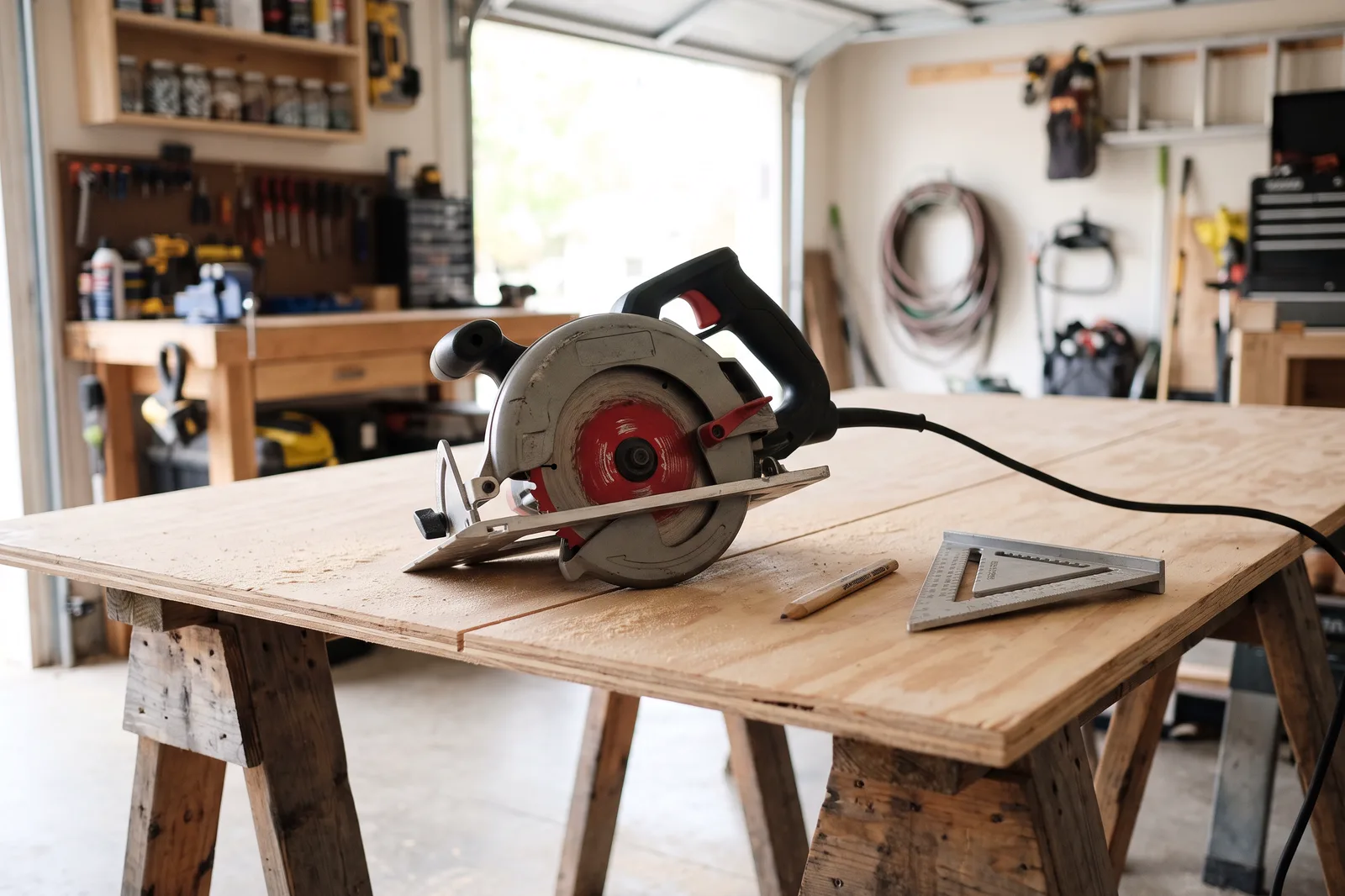 Power ToolsCircular Saw: The Power Saw Most Homeowners Should Own FirstA circular saw is a handheld power saw with a round toothed blade that cuts boards and sheets of plywood in a few seconds.
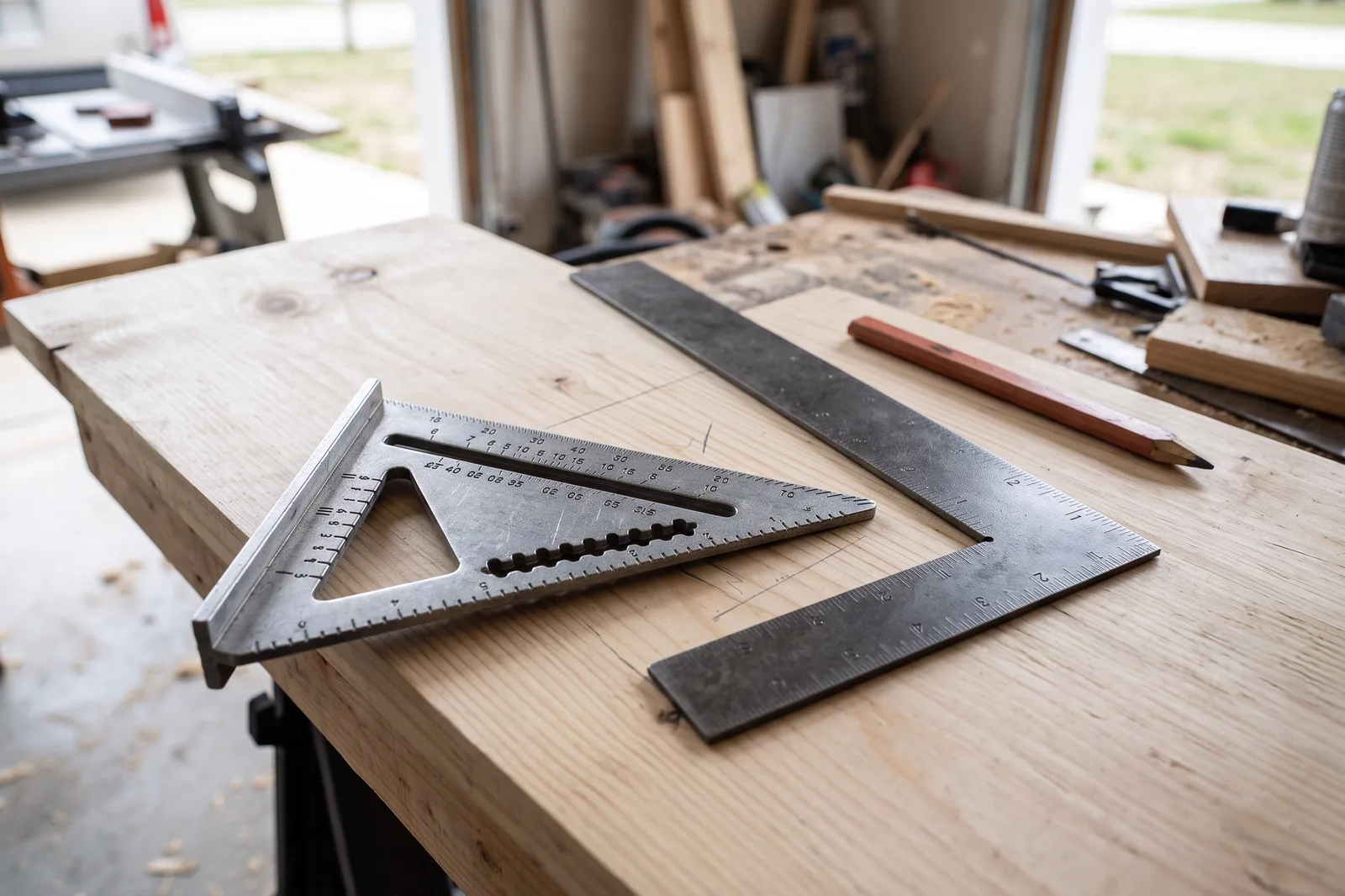 Measuring & LayoutSpeed Square and Framing Square: Two Layout Tools Worth OwningA speed square is a small aluminum triangle for marking square and angled cuts on boards, and a framing square is a large steel L for checking corners and laying out stairs and rafters.
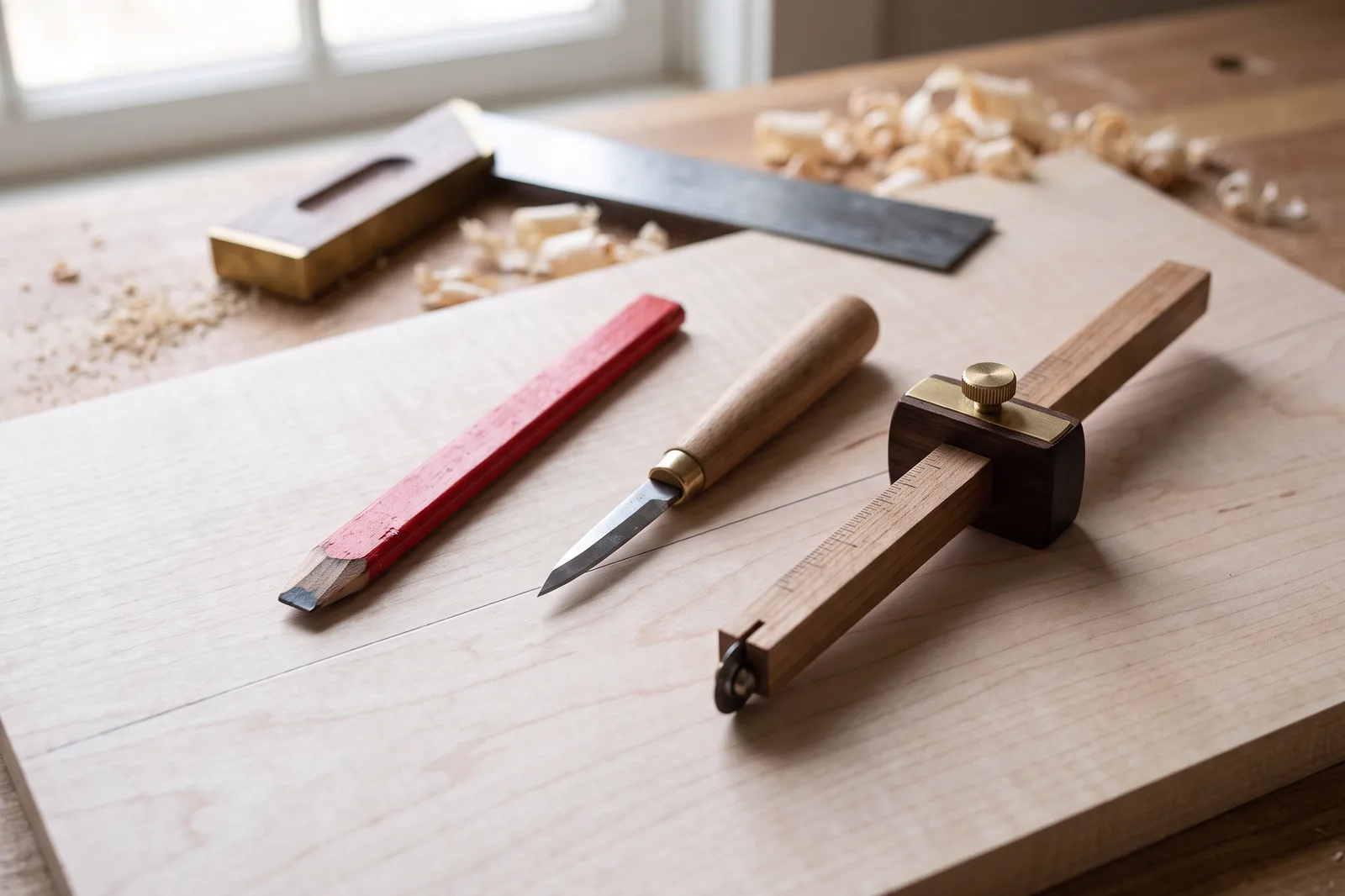 Measuring & LayoutMarking Tools for Woodworking: Pencils, Knives and Gauges ComparedUse a pencil for rough layout and a marking knife or gauge for anything that has to fit.