Measuring & Layout · Single tool · DIY · Pro
Speed Square and Framing Square: Two Layout Tools Worth Owning
8 min read
As an Amazon Associate I earn from qualifying purchases. Links to Amazon on this page are affiliate links. How that works.
Quick answer
A speed square is a small aluminum triangle for marking square and angled cuts on boards, and a framing square is a large steel L for checking corners and laying out stairs and rafters. Anyone who cuts lumber should own a speed square; add a framing square when you build stairs, frame walls or check big corners. Skip both if you never cut wood.
What is a speed square, and what is a framing square?
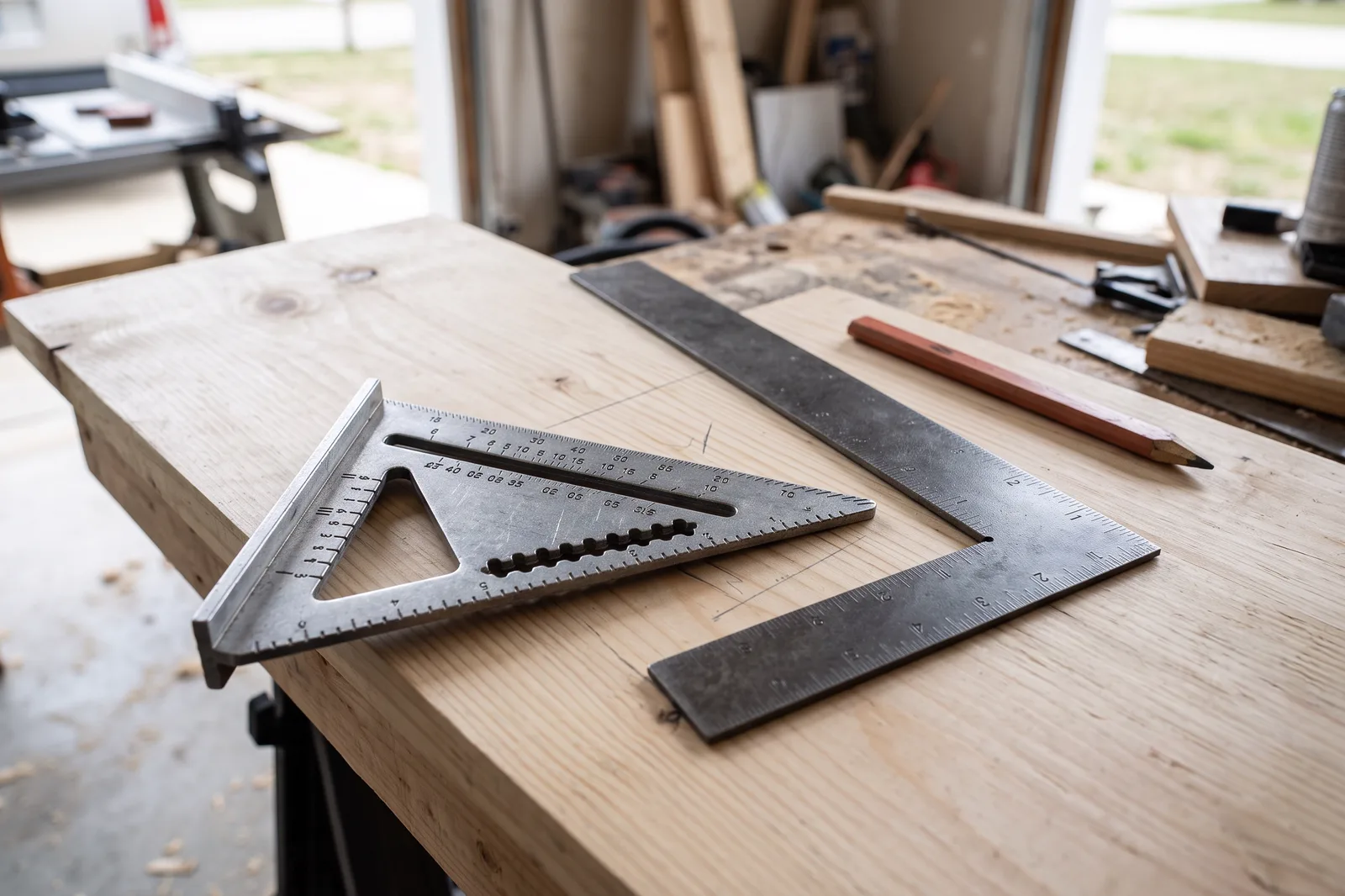
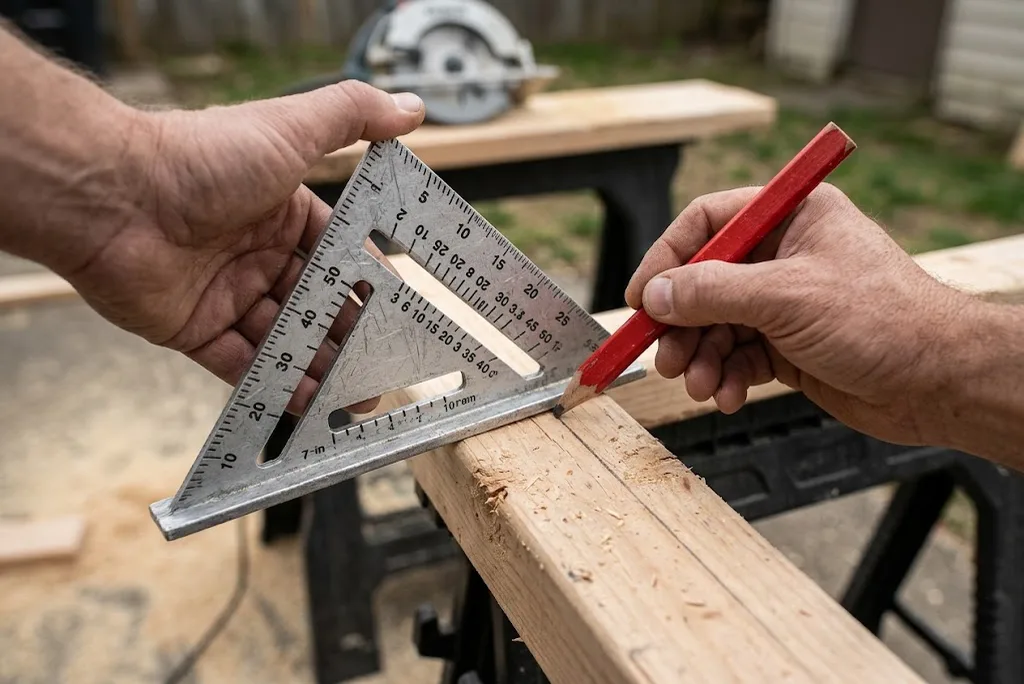
A speed square is a small, thick triangle, usually aluminum, about 7 inches on its short sides. One edge has a raised lip, also called a fence, that hooks over the edge of a board. Press the lip against the board and the other edge sits at exactly 90 degrees, ready for a pencil line. The long edge has a degree scale, so the same tool marks 45 degree cuts, roof angles and anything in between.
A framing square is the big brother. It is a flat L made of steel or aluminum, with a long, wide arm called the body and a shorter, narrower arm called the tongue. Both arms carry inch marks, and many framing squares have tables printed on them for roof rafters and stairs. It is too big for a pocket, but it checks large corners and lays out stair steps in a way a small square cannot.
Both tools do one simple job: they tell you what "square" is. Square means two lines meet at exactly 90 degrees. Every wall, cabinet, deck and shelf depends on it. When things are not square, doors stick, shelves rock and gaps show up in the trim.
I'm a licensed architect, and on nearly every job site I visit there is a speed square hanging off someone's toolbelt. It is one of the least expensive tools a carpenter owns and one of the most used.
Why you'll want it
A tape measure tells you how long to cut a board. A square tells you where the cut line goes across the board. Without one, you are guessing, and a cut that is off by a few degrees turns into a visible gap once the piece is installed.
Square cuts every time. With a speed square, you hook the lip on the edge of the board, run a pencil along the other edge, and you have a square line in two seconds. No measuring from both sides, no wandering line.
Angled cuts without a protractor. The degree scale lets you pivot the square from one corner and mark any angle. That covers deck railings, rafters, stair parts and decorative cuts.
A guide for your saw. Hold a speed square tight against the board and run a circular saw along it, and you get a quick, square crosscut without a miter saw. This is the trick that makes a circular saw so useful on a deck or in a yard.
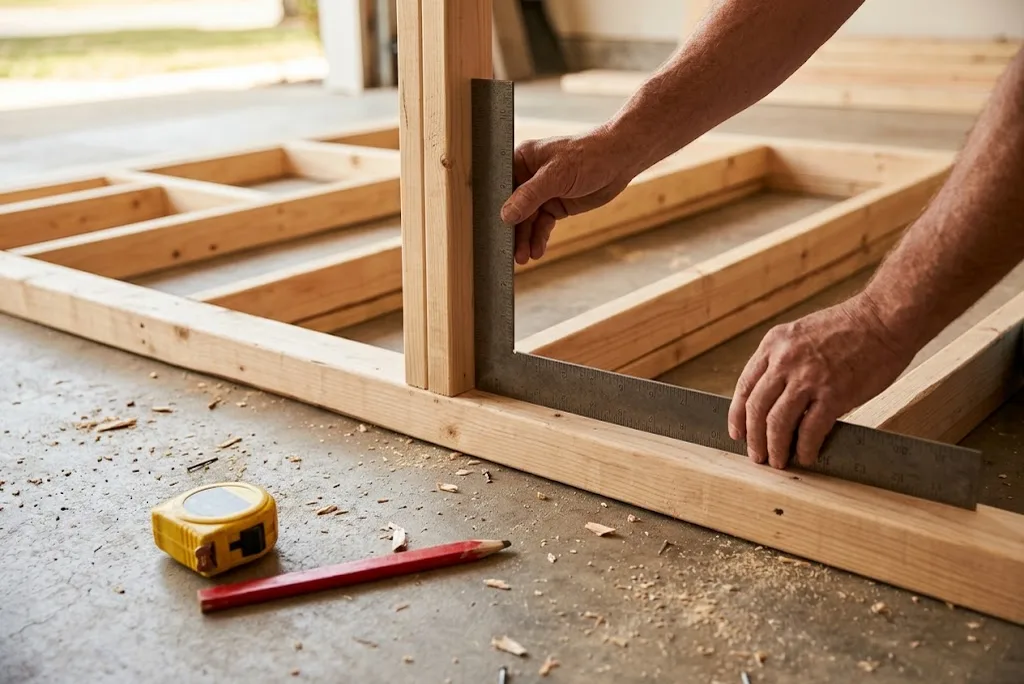
Checking corners. A framing square sits in the corner of a wall frame, a cabinet box or a concrete form and shows right away whether it is square. Its long arms make small errors easy to see.
Stairs and roofs. A framing square, with a pair of small clips called stair gauges, lays out every step on a stair stringer (the sloped board that carries the steps) at the same size. Both squares have scales for roof rafter angles, so you can mark rafter cuts without doing trigonometry.
They last for decades. A good aluminum or steel square has no battery, no motor and almost nothing to break. Many carpenters use the same square for most of their working life.
Where you will use them
- Decks and fences: marking every board end square before cutting.
- Sheds and wall framing: marking stud positions and checking that corners are square before sheathing.
- Stairs: laying out the rise and run of each step on a stringer with a framing square.
- Shelving and storage: marking plywood and boards for clean, square cuts.
- Small repairs: replacing a fence picket, a stair tread or a piece of trim.
Speed square or framing square first?
If you buy one, buy a speed square. It handles most cuts a homeowner makes, fits in a pocket and is one of the least expensive tools in any kit. Add a framing square when you start framing walls, building stairs or checking larger assemblies. On a remodel, I like to see both in the truck.
Who it's for
- Homeowners cutting boards for shelves, sheds, decks and fences
- DIY remodelers framing walls, building stairs or squaring up cabinets
- Woodworkers and makers who need a quick, reliable square at the bench
- Pros and students learning roof and stair layout
Who should skip it
- People who never cut wood. A small combination square or a ruler covers picture frames and craft work.
- Fine cabinetmakers who need machinist-level accuracy. They will want an engineer's square for joinery, though a speed square still earns its place for rough cuts.
How to use it
These steps cover the two jobs you will do most: marking a square cut with a speed square, and checking a corner with a framing square.
- Measure and mark your length. Use a tape measure to find the length you need, and make a small V mark on the board with a sharp pencil. The point of the V is your exact spot.
- Hook the speed square lip on the board. Press the raised lip firmly against the edge of the board that faces you, with the square lying flat on top.
- Slide the square to your mark. Move the square along the edge until its straight edge touches the point of your V.
- Draw the line. Hold the square still with one hand and draw a line along its edge, all the way across the board. This line is square to the edge.
- Mark the waste side. Draw a small X on the side of the line you will throw away, so you remember to cut on that side and keep the finished piece the right length.
- Mark an angle when you need one. Put the pivot point (the corner marked "pivot") against the board edge, rotate the square until the degree you need on the long edge lines up with the same board edge, and draw along the square.
- Check a corner with a framing square. Set the framing square in the inside corner of the frame, body along one side and tongue along the other. If both arms sit tight with no gap, the corner is square.
- Check big frames by measuring diagonals. For a whole wall or deck frame, measure corner to corner both ways. If the two diagonals match, the frame is square. If not, push the corners of the long diagonal toward each other until they match.
- Test your square once in a while. Draw a line with the square against a straight edge, flip the square over, and draw again from the same point. If the lines do not match, the square is out and should be replaced.
Tips from the field
- Use a sharp pencil or a marking knife. A thick pencil line can be wider than your error. Sharpen often, or score fine work with a utility knife.
- Mark from the same edge. When marking several boards, always hook the square on the same factory edge so every cut matches.
- Use the 3-4-5 rule for big layouts. Measure 3 feet along one side and 4 feet along the other; if the distance between those two points is exactly 5 feet, the corner is square. Use 6-8-10 for larger areas.
- Keep the lip clean. Dried glue or a dent on the lip throws off every line you draw.
- Hang it, don't toss it. A square dropped on concrete can bend at the corner. Steel framing squares especially should hang on a wall, not ride loose in a truck bed.
Common mistakes
- Letting the lip slip off the edge. If the lip is not tight against the board, the line will be out of square. Press it firmly before you draw.
- Cutting on the wrong side of the line. The saw blade has thickness. Cut on the waste side, or your board ends up short.
- Trusting a damaged square. A bent or chipped square gives a confident wrong answer. Test it and replace it if it fails.
- Reading the wrong scale. Speed squares carry a degree scale and rafter scales side by side. Read the label on the row before you mark.
What to look for when buying
Squares are simple, so the details that matter are few. Here is what I would check.
Size. For a speed square, the 7 inch size is the standard and covers 2x4 and 2x6 lumber. A 12 inch version is handy for wider boards and stair work. Framing squares come in a common large size that suits wall and stair layout; smaller versions exist for cabinet work.
Material. Aluminum is light and does not rust. Steel framing squares are stiff and wear well but need care to avoid rust. Skip thin plastic squares for carpentry; they flex, and any chip on the edge ruins their accuracy.
A solid lip. On a speed square, the lip should be thick, straight and long enough to hook a board firmly. This is what makes the tool fast.
Markings that last. Look for stamped, engraved or deeply printed markings with good contrast. Painted-on marks can wear away in a season.
Accuracy. A square is only useful if it is truly square. Do the flip test at home and return any square that fails.
Extras. Rafter scales, stair tables and reference books are useful once you frame a roof or build stairs. They are a bonus, not a reason to pay more on day one.
Tier. Both tools are inexpensive. Even the well-known brands sit in the budget tier, so there is little reason to gamble on an unknown brand to save a small amount.
The table below sums up the key specs to compare.
Key specs to look for
| Spec | What to look for |
|---|---|
| Size | A 7 inch speed square fits a toolbelt and covers a 2x4 or 2x6. A 12 inch version helps on wider boards. For a framing square, the standard large size handles stairs and wall corners. |
| Material | Solid aluminum or steel. Avoid thin plastic squares for real carpentry; they flex and chip, and a chipped edge is no longer square. |
| Lip (fence) on a speed square | A thick, straight lip along one edge that hooks firmly over the board. This is what lets you mark a square line in one move. |
| Markings | Stamped or engraved markings that will not rub off, with high contrast so you can read them in low light. |
| Accuracy | A true 90 degree corner. Check it at home with the flip test described in this article. |
| Scales and tables | Degree scale and rafter scales on a speed square; inch scales on both faces of a framing square. Rafter tables are useful later, not needed on day one. |
| Finish | A matte or coated finish that does not glare in sunlight and resists rust on steel squares. |
Where to get it
For this guide I'm featuring the Swanson S0101 Speed Square. According to the product listing, it is a 7 inch aluminum layout square made in the USA, machined to a true 45 and 90 degree corner, and it ships with Swanson's small blue reference book for roof and stair layout. Swanson is the company that introduced the speed square, and its markings are the pattern most other squares follow. It sits in the budget tier.
Swanson Speed Square, 7 in. Aluminum Layout Square with Blue Book (S0101)
- Made by the company that introduced the speed square, so its markings are the pattern others follow
- Solid aluminum that holds up to drops, toolbelts and years of jobsite use
- Comes with a small reference book for roof and stair angles when you are ready for them
How we scored it
Usefulness 10/10 · Value 9/10 · Durability 9/10. This is our own opinion, based on reading specs and using similar tools. It is not an Amazon or customer rating.
Click through to check today's price and read the current reviews on Amazon. When you are ready for a framing square, look for a steel or aluminum one in the standard large size with clear, engraved inch marks on both faces, and add a pair of stair gauges if you plan to build steps.
A square works best alongside a good tape measure or a laser distance meter for long runs. For a full starter set, see the new homeowner toolkit.
Frequently asked questions
What is the difference between a speed square and a framing square?
A speed square is a small triangle for marking square and angled cuts on boards. A framing square is a large L-shaped square for checking big corners and laying out stairs and rafters. Most people buy a speed square first.
Do I need both?
Not at first. A speed square covers most everyday cuts. Add a framing square when you build stairs, frame a wall or need to check a large corner for square.
What size speed square should I buy?
Start with the common 7 inch size. It fits in a pocket or toolbelt and covers standard 2x4 and 2x6 lumber. A 12 inch speed square helps when you often mark wide boards.
How do I check if a square is accurate?
Draw a line along the edge of a straight board using the square, flip the square over and draw a second line from the same point. If the two lines match, the square is true.
Can I use a speed square as a saw guide?
Yes. Hold the lip tight against the board and slide a circular saw's base plate along the square's edge for a quick, square crosscut. Keep your hand well away from the blade path.
What is the small book that comes with some speed squares for?
It is a reference for roof and stair layout. It shows which numbers on the square to use for a given roof pitch. You can ignore it until you frame a roof or stairs.
Related tools
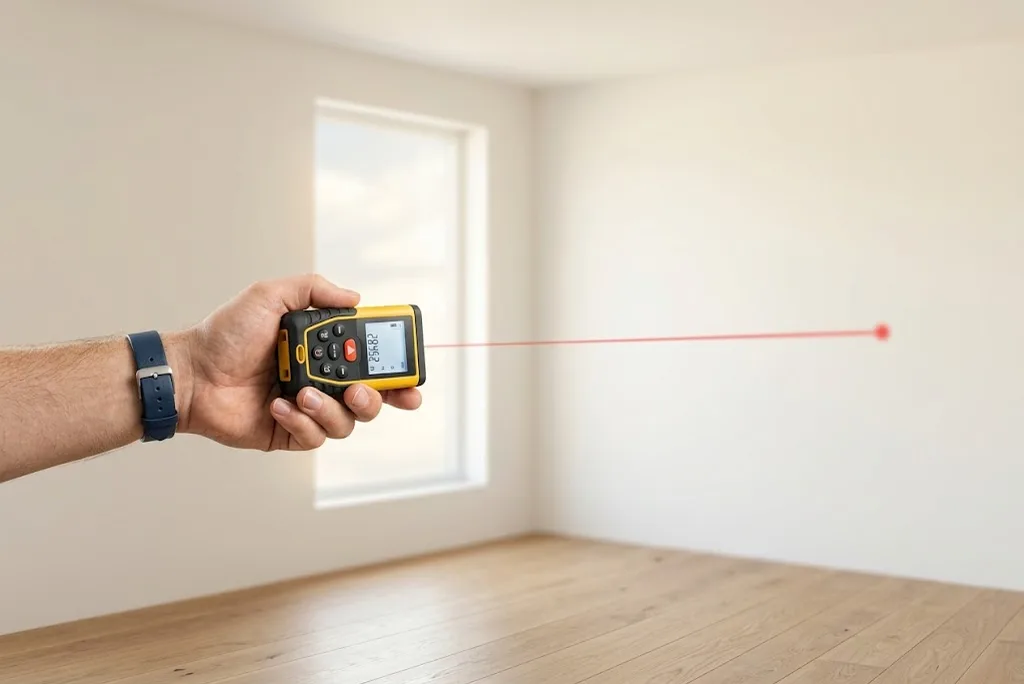 Measuring & LayoutLaser Distance Meter: The Tape Measure Upgrade Worth OwningA laser distance meter is a small handheld tool that shoots a laser at a wall and shows the distance on a screen.
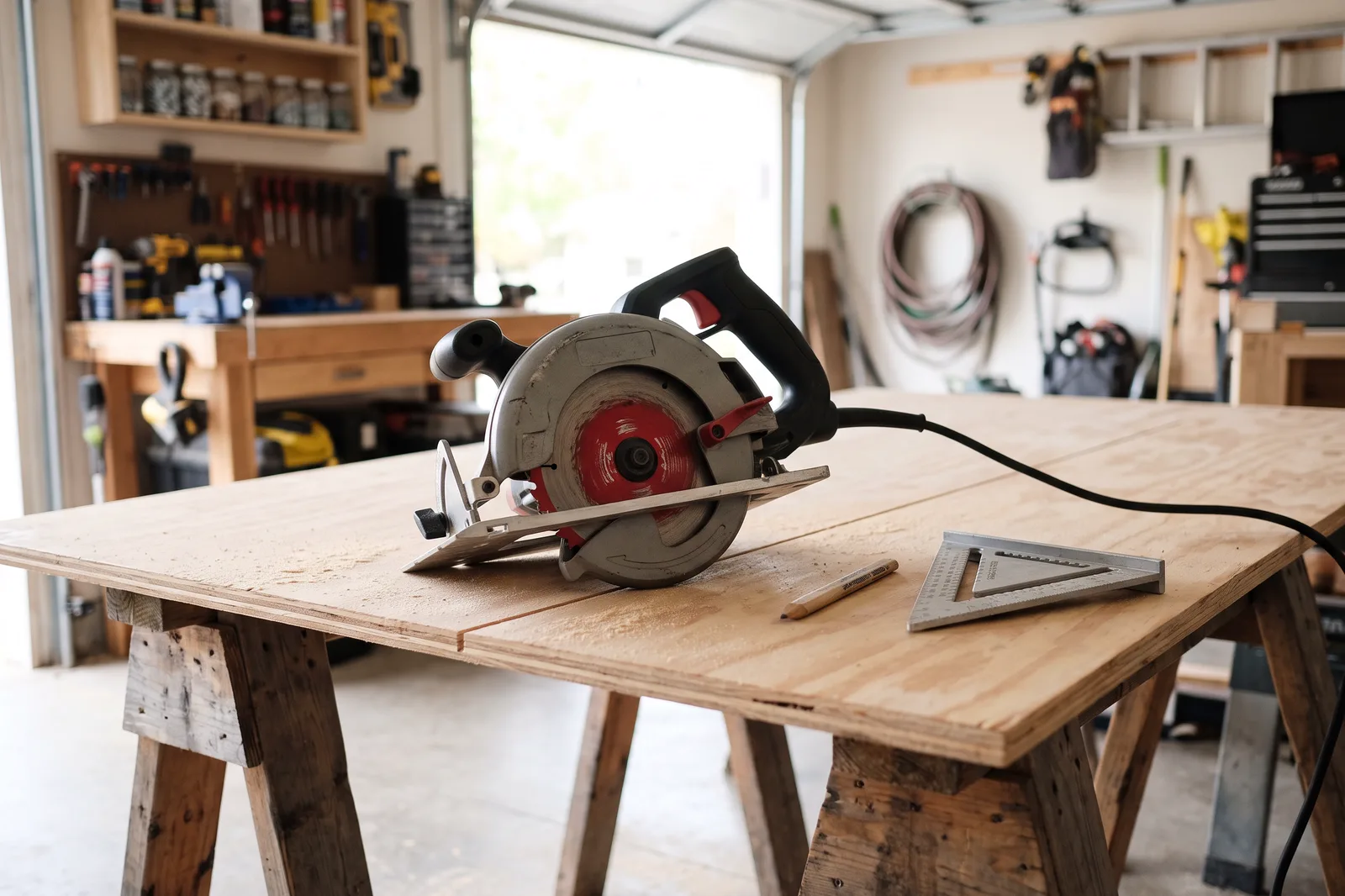 Power ToolsCircular Saw: The Power Saw Most Homeowners Should Own FirstA circular saw is a handheld power saw with a round toothed blade that cuts boards and sheets of plywood in a few seconds.