Power Tools · Single tool · DIY · Pro
Circular Saw: The Power Saw Most Homeowners Should Own First
8 min read
As an Amazon Associate I earn from qualifying purchases. Links to Amazon on this page are affiliate links. How that works.
Quick answer
A circular saw is a handheld power saw with a round toothed blade that cuts boards and sheets of plywood in a few seconds. If you build, repair or remodel anything made of wood, it is usually the first power saw worth owning. Skip it if you only cut small trim pieces or you are not ready to learn basic saw safety.
What is a circular saw?
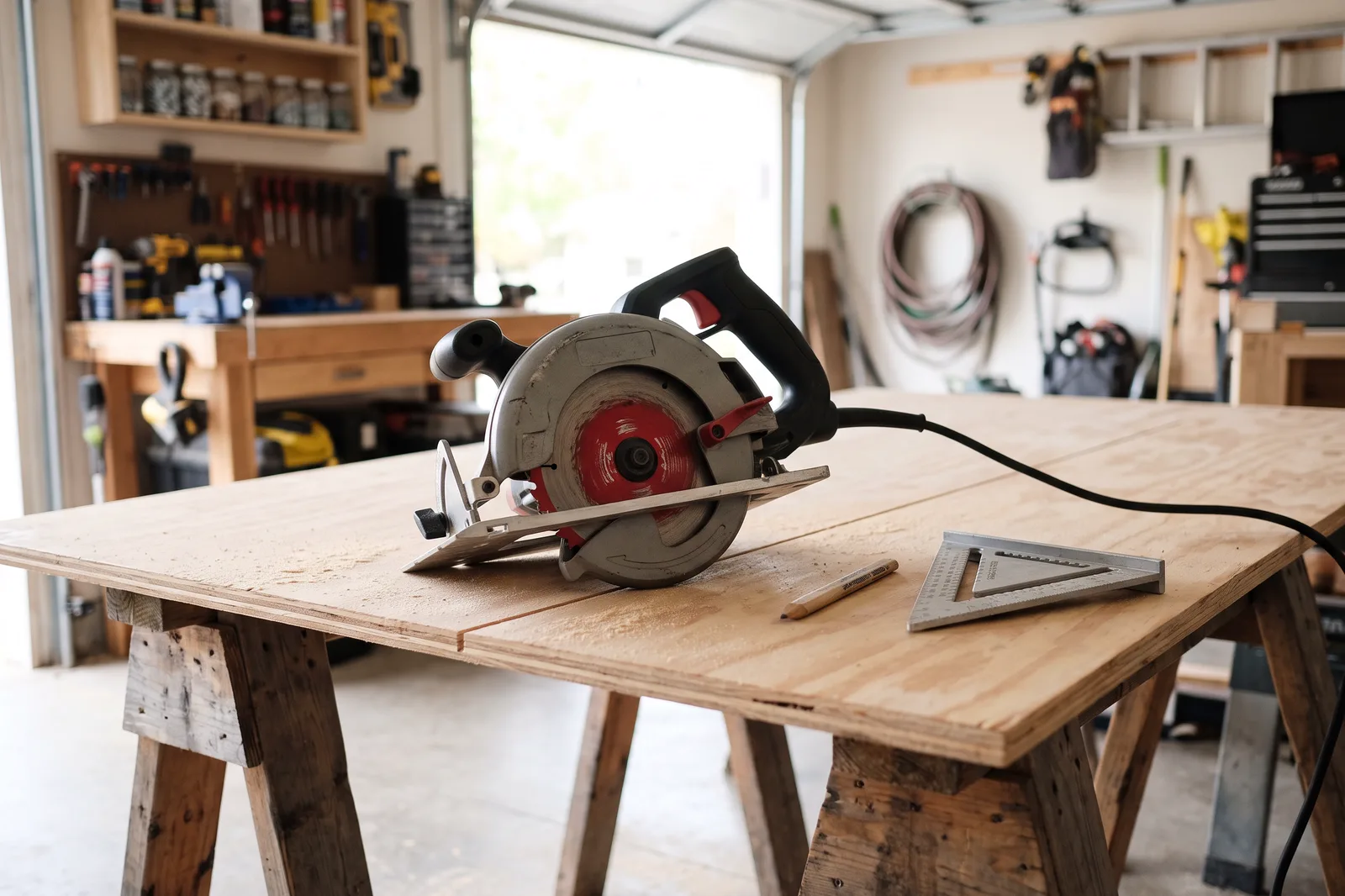
A circular saw is a handheld power saw with a round, toothed blade that spins very fast. You set the saw's flat base plate on a board, line up the blade with your pencil mark, pull the trigger and push the saw forward. The blade cuts through the wood in a few seconds.
Most circular saws for home use take a 7-1/4 inch blade. That size cuts through a standard two-by-four, a deck board or a sheet of plywood in one pass. The saw has a fixed guard over the top of the blade and a spring-loaded lower guard that swings out of the way as you cut, then snaps back to cover the teeth when you lift the saw.
You will hear them called "skill saws" on a jobsite, after an old brand name. The common type has the motor beside the blade, which keeps the saw short and light. A worm-drive saw puts the motor behind the blade; it is heavier and preferred by some framers, but most homeowners do not need one.
I'm a licensed architect, and I have watched a circular saw do more work on job sites than any other power tool. If a house has a wood frame, a circular saw cut most of it.
Why you'll want it
Here is the honest case. A hand saw can make every cut a circular saw makes. It just takes ten times as long, and the cut wanders. A circular saw turns a weekend project into an afternoon, and it makes long, straight cuts that are hard to do any other way.
It cuts sheet goods. Plywood and OSB come in big four-by-eight sheets that will not fit on most other saws. With a circular saw, you bring the saw to the sheet. That alone makes it the first power saw for many people.
It handles framing lumber. Studs, joists, deck boards and fence rails are what a circular saw was built for. One pass, one square cut.
It goes where the work is. A miter saw or table saw stays in the garage. A circular saw goes up on the deck, out to the fence line or into the room you are remodeling.
It makes angled cuts. Tilt the base plate and the saw cuts a bevel, an angled edge, for rafters, stair parts or a mitered deck corner.
It is versatile for the money. With different blades, the same saw cuts plywood cleanly, rips long boards and even scores some other materials. A single good saw covers most of what a homeowner will ever cut.
Where you will use it
- Sheds, raised beds and planters: cut every board to length in one session.
- Decks and fences: trim deck boards, cut posts and rails, make angled cuts at corners.
- Shelving and storage: rip plywood into shelves for a garage or closet.
- Repairs: cut a new subfloor patch, a stair tread or a piece of fence.
- Remodels: cut studs for a new wall, blocking for a TV mount or plywood for a closet floor.
Circular saw or miter saw?
People often ask which to buy first. My answer is a circular saw for most homeowners. A miter saw makes faster, more precise crosscuts on smaller boards, which is why trim carpenters love it. But a miter saw cannot cut a sheet of plywood, and it does not travel well. If you only own one power saw, a circular saw covers more jobs. Add a miter saw later if you find yourself cutting a lot of trim.
Who it's for
- Homeowners building shelves, sheds, raised beds or repairs
- DIY remodelers cutting plywood, studs and subfloor
- Deck and fence builders making many straight cuts outdoors
- Pros who need a dependable everyday framing saw
Who should skip it
- People who only cut small trim or molding. A miter saw or a hand saw is safer and cleaner for small pieces.
- Anyone not ready to learn saw safety. A circular saw is powerful and needs both hands and full attention.
- Apartment dwellers with no place to cut. You need a stable surface, room to work and tolerance for sawdust.
How to use it
Read the manual for your saw first. These steps are the routine I would teach any beginner, and they still apply on a professional crew.
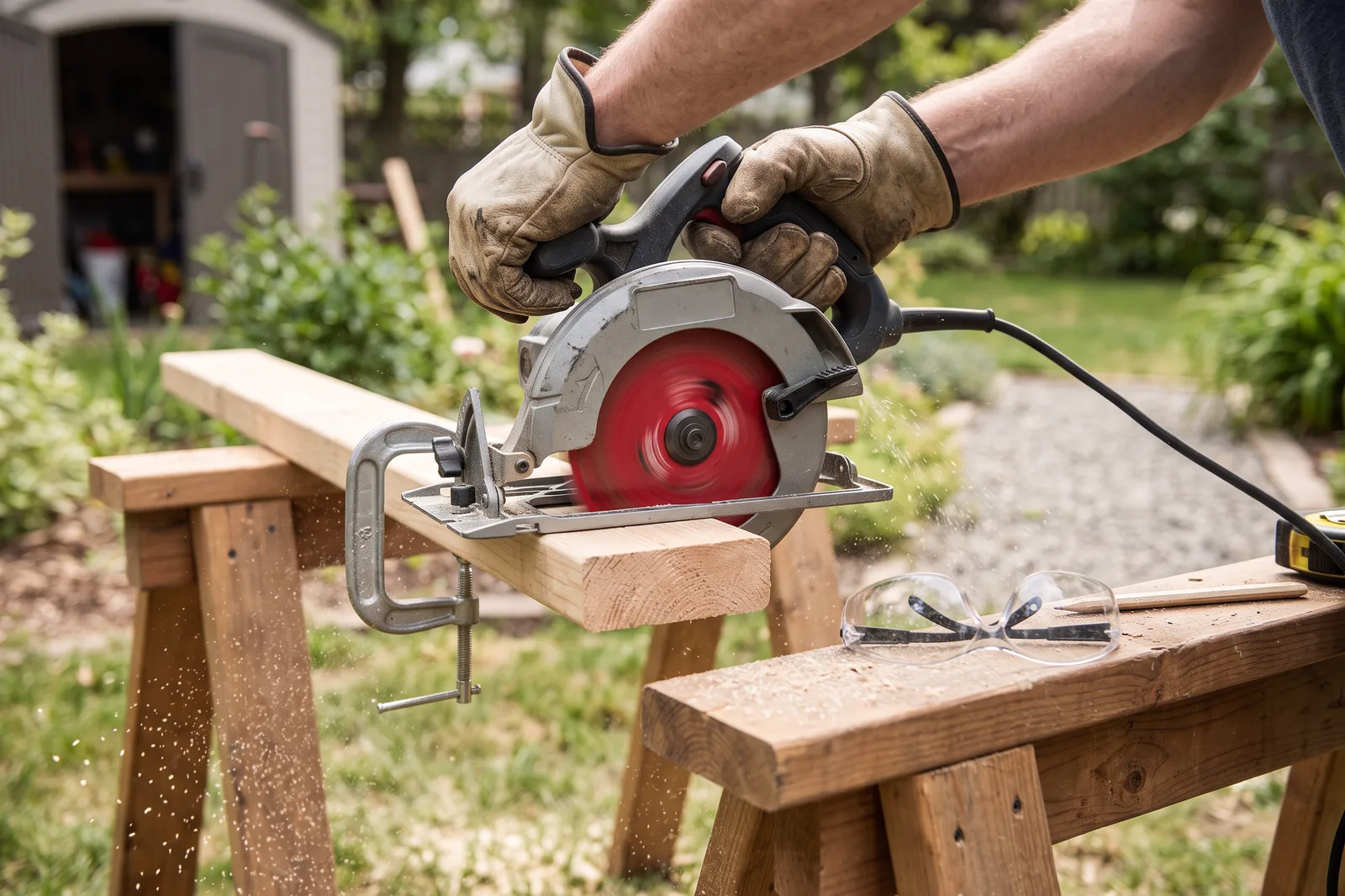
- Put on safety glasses and hearing protection. Sawdust and chips fly toward your face, and a saw is loud. Tie back long hair and skip loose sleeves.
- Unplug the saw and check the blade. Make sure the blade is tight, sharp and installed with the teeth pointing the right way (the arrow on the blade matches the arrow on the guard). Check that the lower guard snaps back freely.
- Support the board so the cut piece falls away. Rest the board on two sawhorses or on scrap boards on the ground, with the cut line hanging past the support. Never cut between two supports where the board can sag and pinch the blade.
- Clamp the work. Use one or two clamps so the board cannot slide. Your hands belong on the saw, not on the board.
- Set the blade depth. Loosen the depth lever and set the blade so the teeth reach just below the bottom of the board. Lock the lever.
- Line up the blade with your mark. Most base plates have a notch that shows where the blade will cut. Keep the blade on the waste side of your pencil line so the finished piece stays the right length.
- Start the saw before it touches the wood. Rest the front of the base plate on the board, pull the trigger, and let the blade reach full speed before you push forward.
- Push steadily with both hands. Keep the base plate flat on the board and let the blade do the work. If the saw slows down or smokes, you are pushing too hard or the blade is dull.
- Let the blade stop before lifting. At the end of the cut, release the trigger and wait for the blade to stop, then lift the saw away. Check that the lower guard has closed.
- Unplug before changing anything. Any time you change the blade, depth or angle, unplug the saw or remove the battery first.
Tips from the field
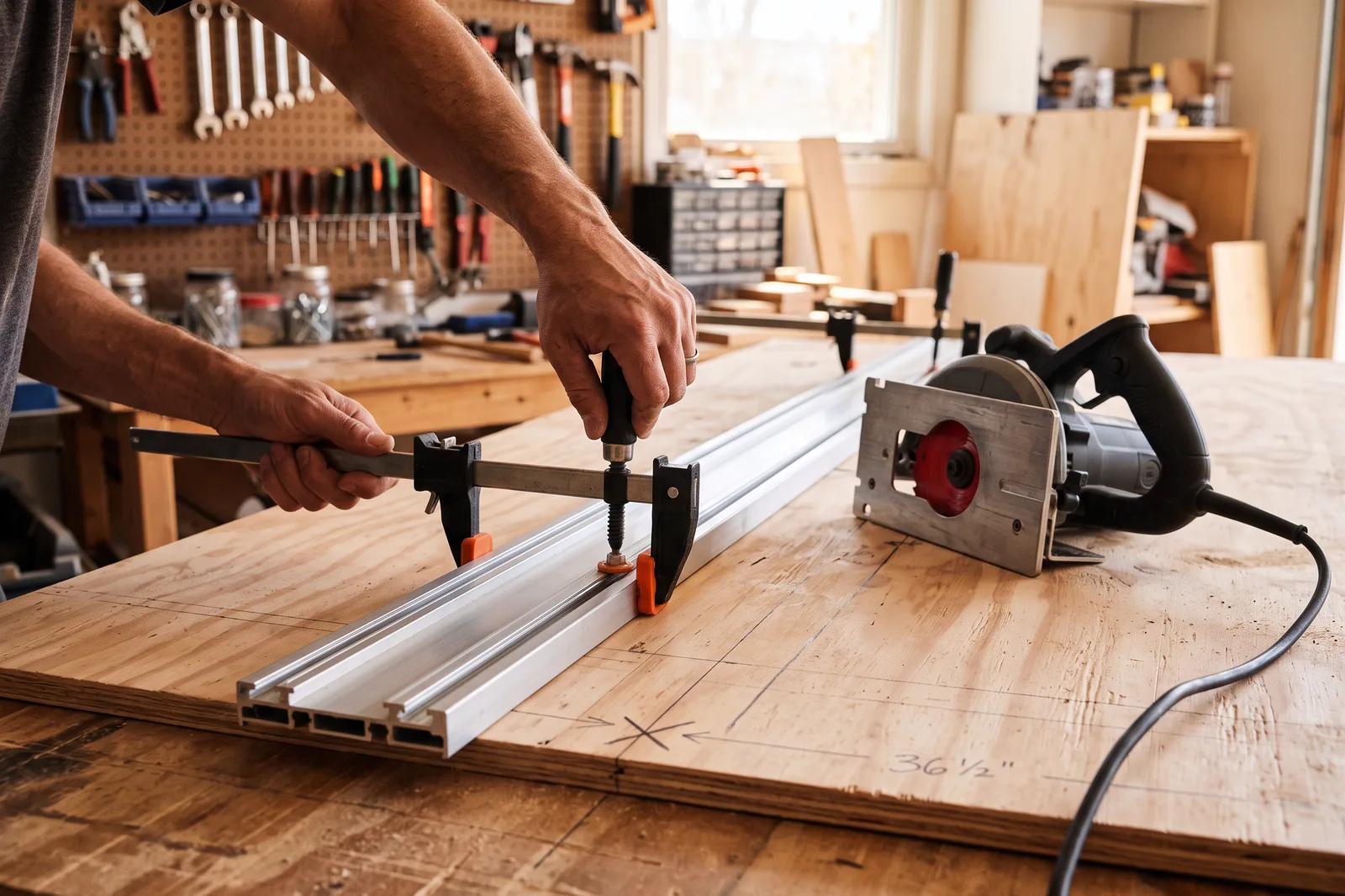
- Use a guide for long cuts. For plywood, clamp a straight board or an aluminum guide rail to the sheet and run the saw's base plate against it. The cut will be as straight as the guide.
- Put the good face down. The blade cuts upward, so splinters happen on the top face. Lay plywood with the side you want to look nice facing down.
- Score with tape. On plywood that splinters easily, a strip of painter's tape along the cut line helps keep the edge clean.
- Practice on scrap. Make a few cuts on a spare board before the real one. It takes two minutes and tells you exactly where the blade cuts relative to the notch.
- Keep the cord behind you. Drape the cord over your shoulder or behind the saw so it can never cross in front of the blade.
Common mistakes
- Supporting the board in the middle. The two halves sag toward each other, pinch the blade and can cause kickback, when the saw jumps back toward you. Let the waste piece fall free.
- Setting the blade too deep. More exposed blade means more risk and rougher cuts. Just below the board is enough.
- Twisting the saw mid-cut. If you drift off the line, back up and restart instead of steering. Twisting binds the blade.
- Holding the board with your free hand. Clamp it. Both hands stay on the saw.
- Using a dull blade. A dull blade burns the wood, slows the saw and makes you push harder. Blades are inexpensive compared to a ruined board.
What to look for when buying
Most circular saws do the same basic job. A few details decide whether a saw is pleasant to use for years or annoying from day one.
Blade size. Stick with the common 7-1/4 inch size unless you have a specific reason not to. It cuts standard lumber in one pass, and blades are easy to find.
Corded or cordless. Corded saws are lighter for the power they make and never run down mid-cut. Cordless saws have become very capable and are great on a roof or at the far end of a yard, but they make the most sense if you already own batteries from one brand.
Weight and balance. You hold this saw out in front of you, sometimes for a long cut. A lighter, well-balanced saw is easier to keep on the line and less tiring.
Electric brake. A brake stops the blade quickly when you release the trigger. It means less waiting between cuts and less time with a spinning blade near your work.
Bevel range. Every saw tilts to 45 degrees. Some go further, which helps with roof and deck angles. Look for clear, firm stops at the common angles.
Base plate. The flat plate that rides on the wood should be stiff and flat. A thin, flexible plate wanders. Look for a clear notch or sight line so you can see where the blade will cut.
Adjustments. Depth and bevel levers should be easy to reach and should lock tight. A lever that slips during a cut is a real problem.
Tier. Budget saws handle occasional projects. Mid-range saws add a lighter build, a brake and better adjustments, and they last for years of regular use. Pro saws are built for daily jobsite abuse. For most homeowners and many pros, a mid-range corded saw is the sweet spot.
The table below sums up the key specs so you can compare models side by side.
Key specs to look for
| Spec | What to look for |
|---|---|
| Blade size | A 7-1/4 inch blade is the standard size. It cuts through common framing lumber in one pass, and replacement blades are sold everywhere. |
| Corded or cordless | Corded saws never run out of power and suit long cutting sessions. Cordless saws are handier on a roof or in a yard, if you already own that brand's batteries. |
| Weight and balance | Lighter saws are easier to guide and less tiring. Pick it up in a store if you can and check how it sits in your hands. |
| Electric brake | A brake stops the blade within a moment of releasing the trigger. It is a safety and speed feature worth having. |
| Bevel range and stops | Most saws tilt to 45 degrees; some go further. Positive stops at common angles make setting the angle quick and repeatable. |
| Base plate (shoe) | A flat, stiff base plate that does not flex keeps cuts straight. Clear sight lines to the blade help you follow your pencil line. |
| Depth adjustment | A lever that is easy to set and holds firmly, so you can set the blade just below the board. |
| Cord and guard | A long, flexible cord with strain protection, and a lower blade guard that snaps back smoothly every time. |
Where to get it
For this guide I'm featuring the DEWALT DWE575SB, a corded 7-1/4 inch circular saw. According to the product listing, it has an electric brake and bevels up to 57 degrees, and it is light for a full-size corded saw. It sits in the mid-range tier. I picked it because it is a common, widely stocked saw from a brand that has made jobsite tools for a long time, and it has the features I would want a beginner to have, especially the brake.
DEWALT DWE575SB 7-1/4 inch Corded Circular Saw with Electric Brake
- Lightweight for a full-size corded saw, so it is easier to control on long cuts
- Electric brake stops the blade quickly after you let go of the trigger
- Bevels well past 45 degrees for angled cuts on decks, rafters and trim
How we scored it
Usefulness 9/10 · Value 8/10 · Durability 9/10. This is our own opinion, based on reading specs and using similar tools. It is not an Amazon or customer rating.
Click through to check today's price and read the current reviews on Amazon. If you already own cordless batteries from another brand, compare that brand's cordless saw against the specs above before you decide. Whatever you choose, buy a second, finer-tooth blade for plywood and a pair of safety glasses the same day.
If you are building out a basic kit, see the new homeowner toolkit or the weekend DIYer kit for what to buy next.
Frequently asked questions
Is a circular saw safe for a beginner?
Yes, if you learn the basics first: wear safety glasses, support the board so the cut piece falls away, keep both hands on the saw, and set the blade just below the wood. Most accidents come from poor support and rushing, not from the saw itself.
Corded or cordless circular saw?
Corded is the simple, steady choice if you have an outlet nearby and cut a lot. Cordless makes sense if you already own batteries from one brand or you work on roofs and in yards far from power.
Can a circular saw cut a straight line?
Yes. Freehand along a pencil line is close enough for framing. For cabinet-quality plywood cuts, clamp a straight edge or a guide rail to the sheet and run the base plate against it.
What blade should I buy first?
The blade that comes with the saw is fine for framing lumber. For plywood and finish cuts, add a blade with more teeth, which leaves a cleaner edge with less splintering.
How deep should I set the blade?
Set it so the teeth reach just below the bottom of the board, about a quarter inch or less. A shallow blade is safer, cuts cleaner and is less likely to bind.
Why does my saw kick back?
Kickback happens when the blade gets pinched, usually because the board was supported in the middle and sagged into the cut. Support the board so the waste piece can fall free, and never twist the saw mid-cut.
Related tools
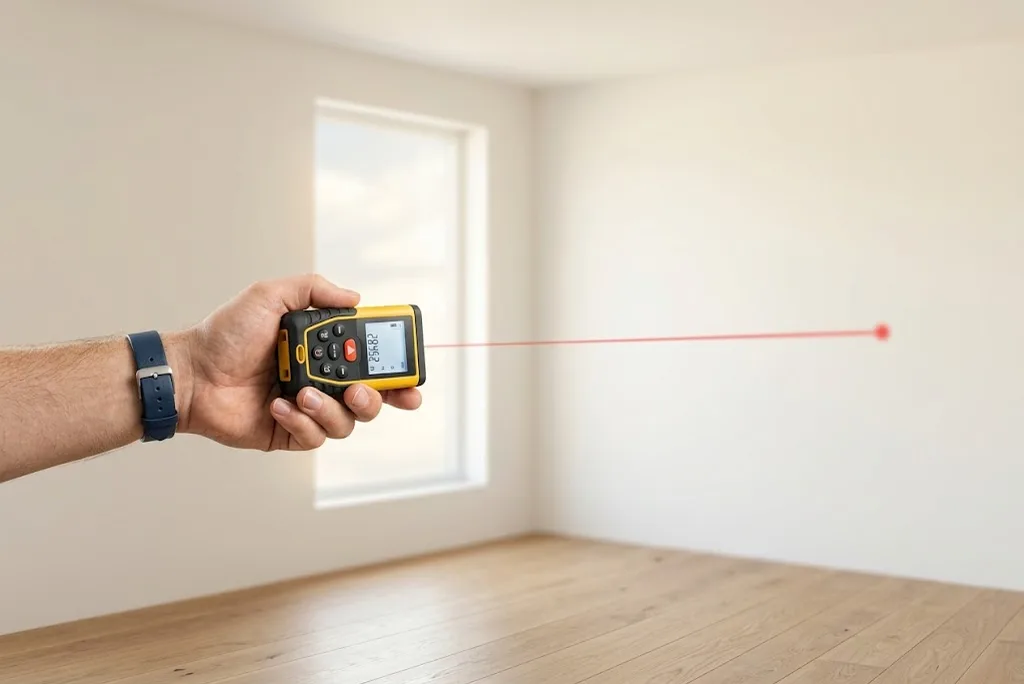 Measuring & LayoutLaser Distance Meter: The Tape Measure Upgrade Worth OwningA laser distance meter is a small handheld tool that shoots a laser at a wall and shows the distance on a screen.
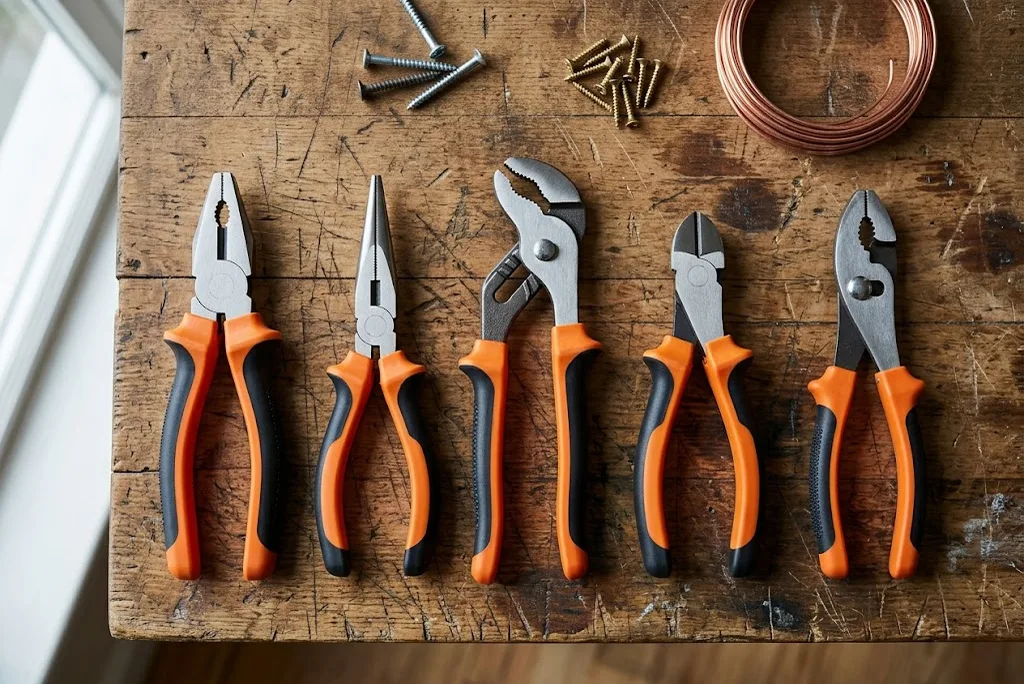 Hand Tools · Roundup5 Pliers Every Homeowner Should Own (and What Each One Does)Most homeowners need five pliers: lineman's pliers for cutting and gripping, long-nose pliers for tight spots, tongue-and-groove pliers for pipes and big nuts, diagonal cutters for wire, and slip-joint pliers for general grabbing.