
Measuring & Layout · Single tool · DIY · Pro
Tape Measure: The Everyday Tool Behind Every Good Cut

Our verdict
STANLEY FATMAX 25-Foot Tape Measure (33-725)
8.7/10
Worth-owning score
Price tier Mid ($$)
View on AmazonOur own score from specs, buyer reviews and tests. Not a customer rating. Photo from the Amazon listing.
Quick answer
A tape measure is a coiled steel ruler that locks and retracts, and it is the first measuring tool every home toolbox needs. For most people a 25-foot tape with a wide, coated blade is the right size. Skip fancy extras like a magnet unless you work near steel. Buy one tape you trust and keep a second to cross-check it.
What is a tape measure?
A tape measure is a flexible steel ruler wound inside a small case. You pull the blade (the long metal strip with the numbers) out to measure, a lock holds it in place, and a spring pulls it back in when you let go. At the end of the blade is a metal hook, sometimes called the tang, that catches the edge of what you are measuring.
Most home tapes are 16 or 25 feet long and show inches, with fractions down to sixteenths of an inch. Some also print stud marks at 16 inches, which is the usual spacing of wall studs, and a few add metric.
| Part | What it does |
|---|---|
| Blade | Carries the numbers; a coating protects the print from wear |
| Hook | Catches the edge; it slides a little on purpose so readings stay true |
| Lock | Holds the blade out so you can read it or move the tape |
| Case | Holds the spring and blade; rubber makes it grippy and tougher |
| Belt clip | Keeps the tape on your pocket or belt |
Why you'll want one
It is the measuring tool you will use most. Shelves, curtains, a rug, a fence board, a paint job: nearly every project starts with a number. A tape measure gives you that number quickly, with no batteries.
It prevents costly cuts. The old rule is "measure twice, cut once". A tape that is easy to read, with a hook that is not bent, cuts down on short boards and wrong-size parts.
Not all tapes are equal. We read the main independent tests: Project Farm's video of eleven tapes, Tool Box Buzz's head-to-head, and written tests from Bob Vila and This Old House. Patterns that repeat:
- Accuracy is rarely the problem. Project Farm found every tape close to perfect on hook movement except one cheap brand that was off by about 1/32 inch. The testers we read treat budget and premium tapes as accurate.
- The blade coating is the big difference. In Project Farm's sandpaper test, a thin budget tape did fairly well, but one very cheap tape lost its numbers within ten passes. Stanley, DeWalt, Craftsman and Klein Tools earned a full five out of five. Tool Box Buzz calls coating wear the number-one failure of tape measures.
- Standout varies a lot. A thin blade can fold at 7 feet. In Project Farm's test a Stanley FATMAX reached about 127 inches, a little short of its claim, and the longest in the test went past 167 inches. Bob Vila's testers said a thin blade can bend at 5 feet or less.
- Dust and sand slow the recoil. After five minutes in a can with sawdust, sand and screws, Stanley's FATMAX slowed by about nine percent, while some cheap tapes stopped short of fully retracting.
- Magnets differ in strength. Project Farm measured pulls between about 2 and 5 pounds, and the FATMAX it tested came in at about 4. That was a magnetic version; the 33-725 we feature has no magnet.
- No tape wins everything. Project Farm picked a DeWalt as the standout of the group, noted it has no magnet, and called the Stanley FATMAX a great all-around tape.
What buyers say about the Stanley FATMAX 33-725
We feature the Stanley FATMAX 25-foot tape (33-725) as an easy first tape. Retail reviews we saw are generally positive, with praise for standout and build quality.
- Praised: the wide blade, the long standout and the easy-to-read markings.
- Common complaints: some buyers find the wide blade curved and awkward at first, and one critical review says the end hook bent and was hard to straighten.
- Maker facts: Stanley's page lists a 1-1/4 inch blade, a BladeArmor coating at the hook, large numbers, stud marks and a limited lifetime warranty. It says no magnet.
Common mistakes that cause bad readings
- Trusting a bent hook. A hook that has been dropped or whipped can sit a hair off, and every measurement carries that error. Compare it with a second tape or a ruler.
- Letting the blade sag. On a long span the blade droops and reads long. Support it, or measure in shorter steps.
- Reading from an angle. Look straight down at the line. Reading from the side shifts the number, especially on a wide, curved blade.
- Forgetting the pencil line has width. Mark on the waste side of the line, so the cut leaves the full length you measured.
- Mixing two tapes on one job. Different tapes can differ by a fraction. Use the same tape for every part of a project.
- Using the hook as a pry bar or scraper. Hooks wear and loosen. Keep it for hooking edges only.
Project Farm also checked belt clips, since a tape you cannot keep on you is a tape you will not use. A clip that grips well matters more than most buyers expect. In that test the strongest clips needed well over ten pounds of pull to release, while weak ones let go at four or five.

Who it's for
- First-time owners and renters who need one reliable tape for the drawer
- Weekend DIYers cutting shelves, trim and lumber
- Anyone who keeps measuring wrong: a wide, easy-to-read blade helps
- Parents and crafters measuring windows, frames and fabric
Who should skip it
- People measuring whole rooms often. A laser distance meter is faster for long runs.
- Buyers who need metric only. Many US tapes are inch-only, so check the markings.
How to use it
Check your tape's own markings, but this routine works for almost any tape.
- Hook the end. For an outside measure, hook the end over the edge and pull the tape straight. Do not let it sag.
- Push it for an inside measure. For a gap, press the end of the case against one side and push the hook into the other. The hook slides in by its own thickness, so the number is right.
- Pull the blade straight. A twisted blade can add error. Let the lock hold the length while you read.
- Read the lines. Longest line between numbers is a half, then quarters, eighths and the shortest are sixteenths. Make Build Modify's video builds this up from a blank stick.
- Round carefully. If the edge falls between two lines, note the nearer one and mark with a sharp pencil.
- Mark with a V. Make a small V or arrow at the measurement, with the point at the number. A single dot is easy to lose, but a V is clear.
- Mind the hook on edges. If the hook looks bent or loose, check it against a second tape before you trust it.
- Use the stud marks. Marks at 16 inches show where studs usually sit. Verify with a stud finder before you drill.
- Check against a second tape. Measure the same board with two tapes once. If they agree, trust both.
- Guide it home. Let the blade slide back by hand. Letting it whip bends the hook and wears the coating.
For long runs, add and subtract readings with the feet-inch fraction calculator so mistakes do not slip into your cut list.
Quick care tips
- Keep the blade clean. Dust and sand make the recoil sluggish, as Project Farm's sand test showed.
- Do not drop it on its hook. Case damage is common, but a bent hook is worse.
- Store it clipped or in a drawer. Boots and wheels bend blades left on the floor.
- Retire a worn tape. If the first few inches are unreadable, the tape is costing you accuracy. Replace it instead of guessing.

What to look for when buying
- Length. 25 feet is the all-round pick. Choose 16 feet for pockets and small jobs.
- Blade width and standout. A wide blade holds out farther. If you measure alone, it matters.
- Blade coating. Look for a coated blade and extra protection at the hook end.
- Hook. Check that it is riveted and does not wobble loosely. Bent hooks ruin accuracy.
- Lock. A simple slide lock rarely fails. Auto-locks are quick but can slip on long pulls.
- Magnet. Only if you work near steel. Most home projects do not need one.
- Markings. High-contrast numbers and clear fraction lines save squinting.
- Case and clip. A rubber case grips better and survives drops. The clip should hold firmly.
- Warranty. A clear maker warranty is a good sign.
If you measure whole rooms or long runs, a laser distance meter is faster, and a speed square helps you turn a measurement into a straight line. Our cheap vs. expensive tape measure comparison looks at what a higher price really buys.
Key specs to look for
| Spec | What to look for |
|---|---|
| Length | 25 feet is the all-round size most tests use. A 16-foot tape is lighter and pockets easily for trim and small projects. |
| Blade width | A wider blade stands out farther before it folds. Project Farm's thin-bladed budget tape reached about 7 feet, while wide-blade tapes went past 10 feet. |
| Blade coating | Wear is the main way tapes die, according to Tool Box Buzz. Look for a coated blade and for extra armor over the first few inches. |
| Hook | A riveted hook that stays tight and slides by exactly its own thickness. Bent hooks make every reading wrong. |
| Lock | A slide lock is simple and rarely jams. An auto-lock holds the blade without a button but can slip on long pulls. |
| Markings | High-contrast numbers, clear fraction lines and stud marks at 16 inches. |
| Magnet | Useful on steel studs, ducts and metal doors. In Project Farm's test the magnets held about 2 to 5 pounds, depending on the brand. |
| Case | A rubber overmold, a belt clip that holds and a body that sits flat on a surface. |
Where to get it
The Stanley FATMAX 25-foot tape measure (33-725) is sold on Amazon. It sits in our mid tier. Check the model number on the listing before you order, because Stanley sells several versions of the FATMAX, and some have a magnetic hook.

STANLEY FATMAX 25-Foot Tape Measure (33-725)
- A wide 1-1/4 inch blade with a BladeArmor-coated hook end, according to the maker
- Stanley's FATMAX line took full marks for blade wear in Project Farm's sandpaper test and won Tool Box Buzz's head-to-head
- Large markings with stud marks, in a rubber-coated case; this 33-725 model has no magnet
How we scored it
Usefulness 9/10 · Value 8/10 · Durability 9/10. This is our own opinion, based on specs, buyer reviews and independent tests. It is not an Amazon or customer rating.
Read the newest reviews before you buy, and keep a second tape for cross-checking.
Watch and read more
Video reviews
- Best "Tape Measure" Brand? Milwaukee, DeWalt, Stanley, Craftsman, Klein Tools — Project Farm
Tests eleven 25-foot tapes for standout, blade wear, sand and dust, magnet strength, hook accuracy, belt clips and drops, including a Stanley FATMAX. - How to Read a Tape Measure - REALLY EASY — Make Build Modify
Explains halves, quarters, eighths and sixteenths by adding lines to a plain stick, so the fractions make sense.
PROSWho uses it
- Project Farm — Tested a Stanley FATMAX 25-foot tape among eleven brands and called it a great all-around tape measure.
Free calculators FigureMyHome
- Feet-Inch Fraction Calculator — Add and subtract tape readings in feet, inches and fractions without mistakes.
Frequently asked questions
Why does the hook on a tape measure wiggle?
On purpose. The hook slides by exactly its own thickness, so an inside measurement (hook pushed in against a wall) and an outside measurement (hook pulled out over an edge) are both right. Project Farm checked this on every tape it tested, and all but one brand were close to perfect.
What size tape measure should I buy first?
A 25-foot tape is the all-round choice. A 16-foot tape is lighter and handy for small jobs, but 25 feet covers rooms, fences and lumber.
What is the difference between standout and reach?
Standout is how far the blade extends before it folds. Reach is standout plus about three feet of arm length. Project Farm notes some makers quote reach because it sounds bigger.
How do I read the little lines?
The longest line between the inch numbers is a half inch, the next is a quarter, then eighths, and the shortest is a sixteenth. Every fraction in its simplest form has an odd top number, which is a quick way to check yourself.
Is a more expensive tape measure more accurate?
Not by much. The tests we read call both budget and premium tapes accurate. The extra money mostly buys a tougher blade coating, a stronger hook and a better case. Our cheap vs. expensive comparison covers this.
How do I keep a tape measure from wearing out?
Guide the blade back by hand instead of letting it whip. Tool Box Buzz saw hooks bend or break from repeated fast recoil. Keep the blade clean, and do not leave it extended where boots or wheels can bend it.
Why do I need a magnet on the hook?
Only for steel work. The magnet lets the hook stick to a metal stud or duct while you pull the blade, which frees your hand. Most woodworking and home projects do fine without one.
Sources
- Project Farm: tape measure brand test (video, eleven tapes)
- Tool Box Buzz: Best Tape Measure head-to-head (8 tapes, 7 brands)
- Bob Vila: The Best Tape Measures, Tested for Accuracy and Durability
- This Old House: Best Tape Measures, Tested and Ranked
- Stanley Tools: FATMAX 25 ft tape measure 33-725 (maker page)
Related tools
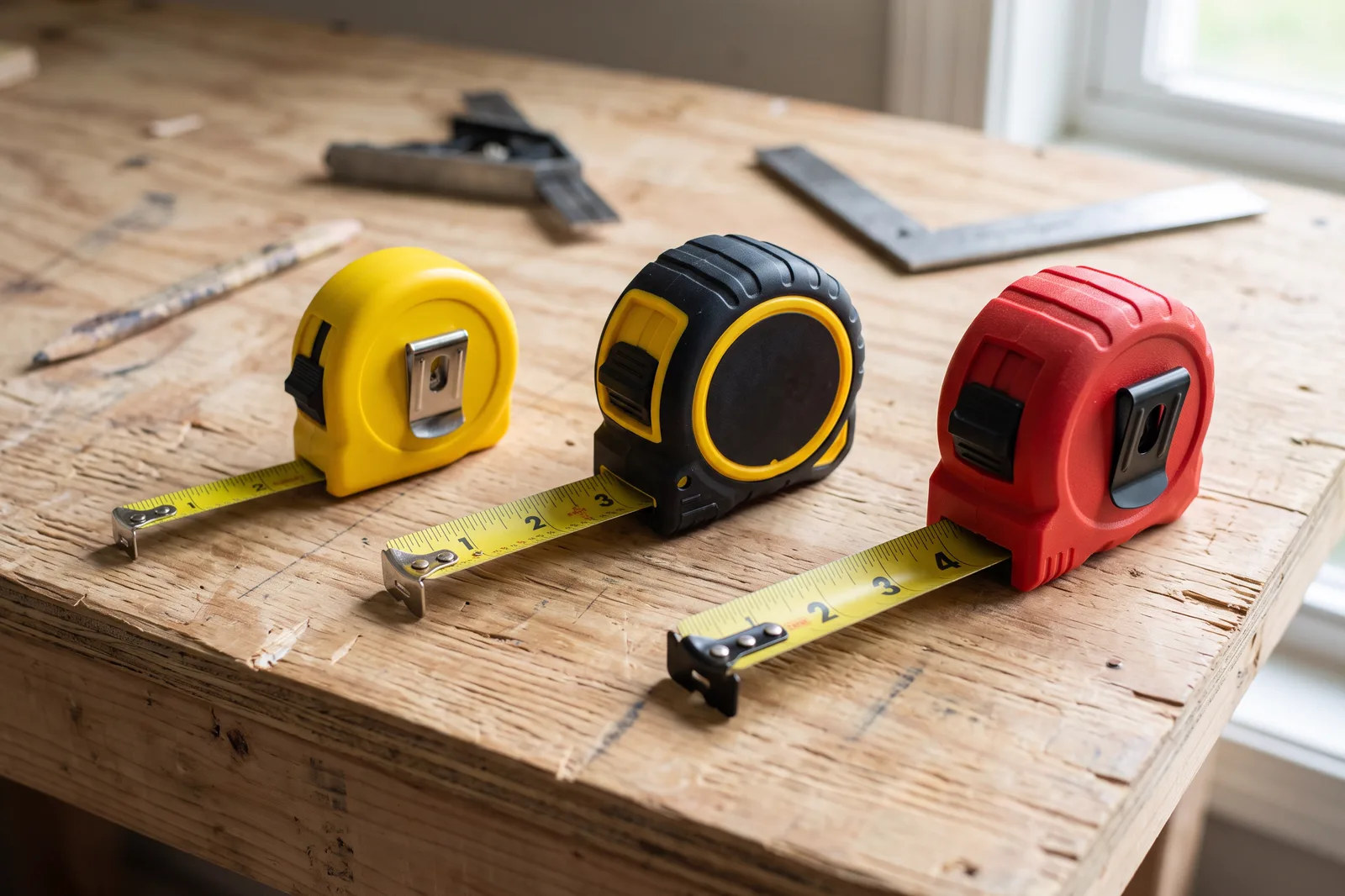 Measuring & LayoutCheap vs. Expensive Tape Measures: Is the Premium Worth It?For most homeowners, a budget self-locking tape is accurate enough and several testers rate one as a top pick.
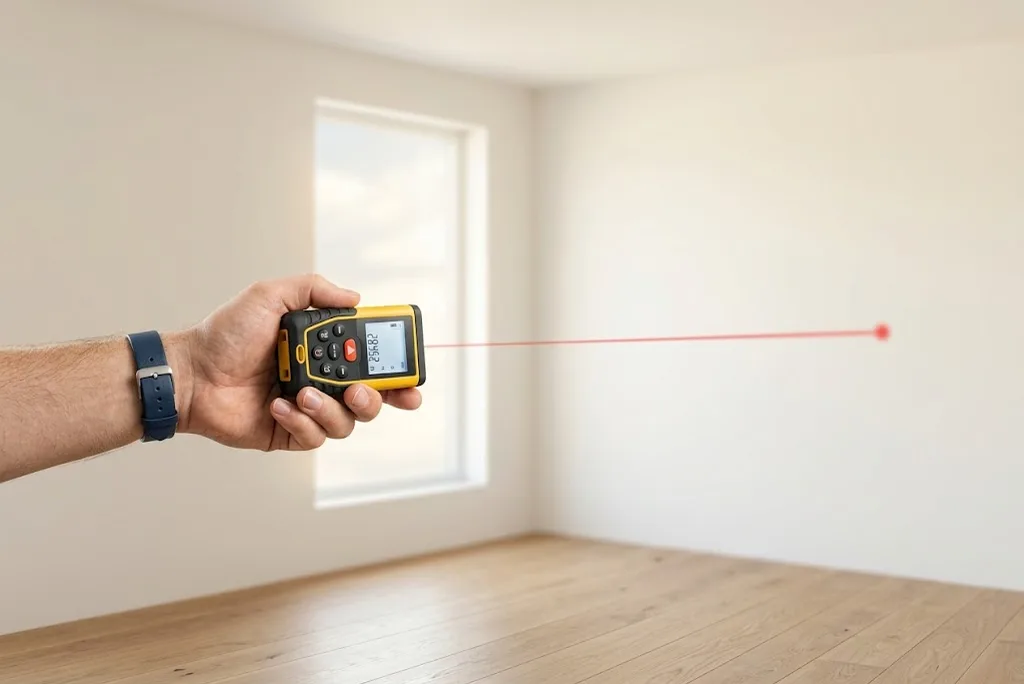 Measuring & LayoutLaser Distance Meter: The Tape Measure Upgrade Worth OwningA laser distance meter is a small handheld tool that shoots a laser at a wall and shows the distance on a screen.
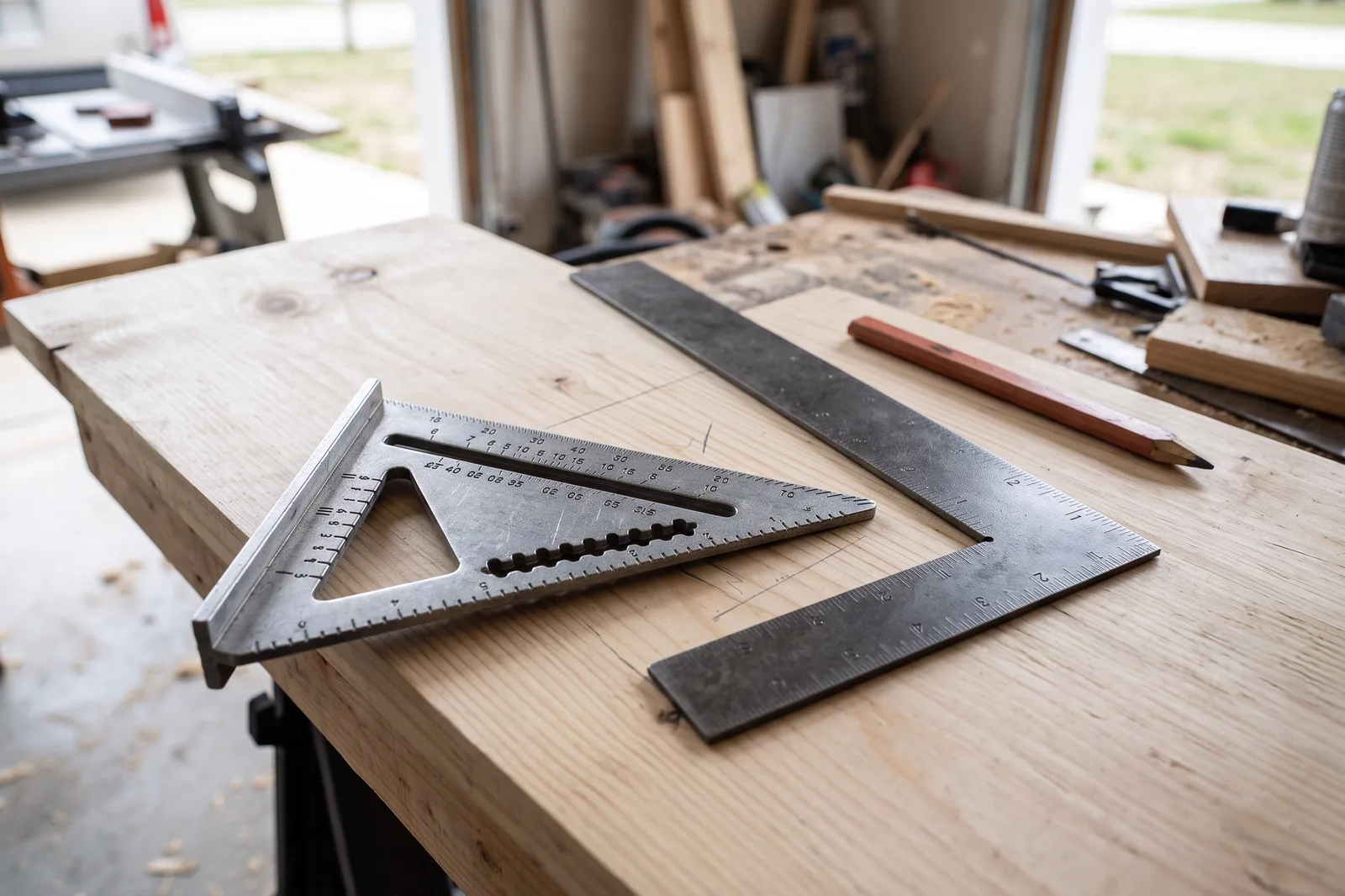 Measuring & LayoutSpeed Square and Framing Square: Two Layout Tools Worth OwningA speed square is a small aluminum triangle for marking square and angled cuts on boards, and a framing square is a large steel L for checking corners and laying out stairs and rafters.