
Measuring & Layout · Comparison · DIY · Pro
Cheap vs. Expensive Tape Measures: Is the Premium Worth It?
 Komelon SL2825 Self Lock 25-Foot Power Tape
 STANLEY FATMAX 25-Foot Tape Measure (33-725)
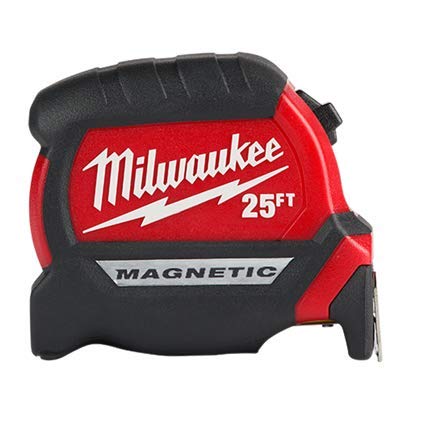 Milwaukee 48-22-0325 Compact Wide Blade Magnetic Tape Measure
Photos from the Amazon listings. Scores are our own, not customer ratings.
Quick answer
For most homeowners, a budget self-locking tape is accurate enough and several testers rate one as a top pick. The premium buys toughness: longer-lasting blade coating, stronger hooks and magnets, better drop survival and a stiffer blade. Pay more if you use a tape daily or drop it a lot. Do not pay more for accuracy alone.
Quick answer: where the extra money goes
A tape measure looks like the simplest tool in the box, so it is fair to ask why some cost many times more than others. We read the independent tests we could find, from Tool Box Buzz, Bob Vila, This Old House and Pro Tool Reviews, plus buyer feedback, to see what the premium really buys.
The short version: a budget tape is usually accurate. The premium buys toughness and convenience (a blade coating that survives, a stronger hook, a stiff blade, a strong magnet and a case that survives drops). If you only measure now and then, you probably do not need it. If you use a tape every day, you probably do.
If you find yourself measuring whole rooms, a laser distance meter is a better tool for that job, and many people end up owning both.
What the tests actually found
No single test covers everything, so we pulled out the findings that appear in the written tests.
Tool Box Buzz: eight premium 25-foot tapes
Tool Box Buzz put eight 25-foot tapes from seven brands through a long list of tests. It tested pro-grade tapes (so no very cheap ones), but it shows how much the "good" tapes differ from each other:
- Blade coating wear. Tool Box Buzz calls coating wear the number-one failure of tape measures. In its abrasion jig, the Stanley PowerLock showed the least wear, then Lufkin, DeWalt and Komelon.
- Drops. Almost every tape survived a 15-foot drop onto pavement, though several had slight case or hook damage, and the Klein's case opened. After a 30-foot drop, the DeWalt and the Stanley FATMAX were the most durable.
- Retraction. Letting the blade whip back is the fastest way to hurt a tape. During the tests the Milwaukee hook bent on the fourth recoil, and a Lufkin hook broke off on the third.
- Dust and sand. In a chamber of drywall dust, sawdust and sand, most tapes struggled to retract. The Stanley FATMAX did best.
- Magnets. The FATMAX held the most weight of the magnetic tapes, with Milwaukee second.
- Standout. The DeWalt reached about 11 feet before folding, the FATMAX about 10 feet 6 inches and the Lufkin about 10 feet.
- Ergonomics. Milwaukee won for grip, stability on a surface and its belt clip, with the FATMAX close behind and Komelon third.
Overall, Tool Box Buzz named the Stanley FATMAX the best tape in its test.
Bob Vila: ten tapes, a budget tape on the podium
Bob Vila tested ten options and picked the Stanley 25-foot PowerLock as best overall. Its testers saw the metal blade stand out nearly 10 feet before bending, compared with thin blades that bent at 5 feet or less. The Komelon Self-Lock was the best-value pick: it has an easy retract button and markings on both edges, though its auto-lock worked less well on longer extensions and it has no metric scale.
This Old House: the budget tape that came first
This Old House researched more than 30 tapes, tested the top five and read hundreds of customer reviews. Its top overall pick was also the Komelon Self-Lock, praised for its locking and grip. Its drawbacks were a shorter reach than heavy-duty tapes and no metric or fractions. Some negative buyer reviews said the lock jammed. The same roundup chose a Craftsman tape as most accurate and a Milwaukee magnetic tape as best magnetic, noting that the Milwaukee has no auto-lock.
Pro Tool Reviews: a 2026 head-to-head
Pro Tool Reviews tested eight brands on accuracy, function and durability. According to its summary, a Lufkin Shockforce scored highest, a Milwaukee second and an Irwin Strait-Line third. The scores only compare tapes inside that group.

Who it's for
- Homeowners and renters who measure now and then: a budget tape is enough
- Serious DIYers who build weekends: a mid-range tape pays off
- Pros and daily users: a premium tape lasts, and the magnet and standout save time
- Anyone who drops tools: the premium cases and hooks survive better
Who should skip it
- People who want a laser. Our guide on laser distance meters covers when a laser beats a tape.
- Buyers who need metric. Some of the tapes in these tests are imperial only. Check the markings before you buy.
Budget vs. expensive: what really differs
Accuracy. This is where the testers disagree least. Bob Vila calls its top picks accurate and This Old House's budget pick gets accuracy praise from buyers. Nothing we read suggested a premium tape reads more truly than a decent budget one. Whichever you buy, compare it to a second tape once. If two tapes agree, you can trust both.
The hook. A tape hook is loose on purpose. When you push it against a wall for an inside measurement it slides in by its own thickness, and when you hook an edge it slides out by the same amount. Tool Box Buzz measured how well each tape matched this, and found that fast repeated retractions loosened some hooks. Both Stanley tapes and the Milwaukee held their tolerance best.
Blade and standout. A wider, thicker blade stays straight farther. If you often measure alone (ceilings, wide gaps), a stiff premium blade is nice. For measuring a board or a shelf, any decent blade will do.
Coating and markings. The most common way a tape dies is by wearing off its numbers. Pros who use the first few inches constantly benefit from extra armor on the blade. A budget tape will last for years in a home toolbox, and may not last as long on a jobsite.
Magnet. Useful for steel work and one-person measurements. Tool Box Buzz saw big differences in magnet strength, so if this matters to you, read tests before buying.
The case. Rubber over-mold, a belt clip that holds and a body that sits flat are what pros pay for. They also help a tape survive drops.
Pros and cons
Budget tapes (for example the Komelon Self-Lock)
| Pros | Cons |
|---|---|
| Accurate enough for home and trade work, according to the reviewers who tested them | Less standout and a lighter case than premium tapes |
| Auto-lock and an easy retract button make single-handed use simple | Lock and retraction can wear with heavy use |
| Cheap enough to own a spare for the garage, the car and the kitchen drawer | Imperial only on several of the tapes tested |
Premium tapes (for example the Stanley FATMAX or a Milwaukee magnetic tape)
| Pros | Cons |
|---|---|
| Tougher blade coatings and hooks that last under daily use | Costs more, and the gains only matter if you use a tape a lot |
| Strong magnets and stiff blades for one-person work | Heavier and bulkier than a basic pocket tape |
| Better drop survival and grips | Not immune to damage. Fast retraction bent and broke hooks in Tool Box Buzz's test. |
Which should you buy?
- If you measure occasionally, get a budget self-locking tape. A top pick from two testers is a good place to start. Keep it clean and do not let it slam back.
- If you build on weekends, a mid-range wide-blade tape such as the FATMAX is a sensible upgrade. The stiff blade and strong lock make measuring alone easier.
- If you use a tape daily, especially on steel, a premium magnetic tape is worth the extra. Look at the hook, the coating and the case.
- If you measure rooms or long runs, add a laser distance meter for the long shots and keep a tape for everything else. A speed square also helps when you transfer a measurement into a line.
Whichever tape you buy, use the feet-inch fraction calculator on figuremyhome.com when you add up readings, so mistakes do not creep into your cut list.
Tips to make any tape last
- Guide the blade back by hand. Fast, full-length retraction bends hooks and tears them.
- Keep the blade clean. Dust and sand make the recoil sluggish.
- Do not use the hook as a pry bar. Hooks wear and loosen.
- Do not leave it extended on the floor. Boots and wheels bend blades.
- Test it against a second tape when it is new and every so often.

Key specs to look for
| Spec | What to look for |
|---|---|
| Blade width and thickness | A wider, thicker blade stands out farther before it bends. Bob Vila's testers saw a quality metal blade reach nearly 10 feet, while thin blades bent at 5 feet or less. |
| Blade coating | Coating wear is the number-one failure of tape measures, according to Tool Box Buzz. Look for a coated blade, and for extra armor over the first few inches. |
| Hook | A riveted hook that stays tight. The hook is supposed to be loose by one hook thickness, so inside and outside readings are both right. |
| Lock | Auto-lock holds the blade without a button. A slide lock is simpler and less likely to jam, but you have to push it. |
| Magnet | Useful on steel studs, metal doors and ducts. Strength varies a lot between tapes. |
| Case | Rubber over-mold, a belt clip that holds, and a body that sits flat on a surface. |
| Markings | High-contrast numbers, stud marks at 16 inches, and a back-side scale if you want upside-down reading. |
| Length | 25 feet is the most popular size. A 16-foot tape is lighter and fits a pocket. |
Where to buy
All three tapes below are sold on Amazon. They sit in our budget, mid and pro tiers. Check the exact model name on the listing before you order, because brands sell several versions of each tape.

Komelon SL2825 Self Lock 25-Foot Power Tape
- Self-locking blade holds when you pull it out, with a push-button to retract it
- Reviewers rate it as accurate and easy to read, with markings on both edges
- A top overall pick from This Old House and the best value pick from Bob Vila
How we scored it
Usefulness 8/10 · Value 9/10 · Durability 6/10. This is our own opinion, based on specs, buyer reviews and independent tests. It is not an Amazon or customer rating.

STANLEY FATMAX 25-Foot Tape Measure (33-725)
- Stanley's FATMAX line won Tool Box Buzz's head-to-head of premium 25-foot tapes (the exact model tested was a magnetic FATMAX)
- Wide, stiff blade with a protective coating on the first inches
- Strong tape lock and a long-lasting hook, according to testers
How we scored it
Usefulness 9/10 · Value 8/10 · Durability 9/10. This is our own opinion, based on specs, buyer reviews and independent tests. It is not an Amazon or customer rating.

Milwaukee 48-22-0325 Compact Wide Blade Magnetic Tape Measure
- Magnetic hook that sticks to steel studs, ducts and metal doors; a Milwaukee magnetic tape was This Old House's best magnetic pick
- A Milwaukee tape took top ergonomics honors in Tool Box Buzz's test (a different Milwaukee model than this one)
- Compact body with a wide blade for standout
How we scored it
Usefulness 9/10 · Value 7/10 · Durability 8/10. This is our own opinion, based on specs, buyer reviews and independent tests. It is not an Amazon or customer rating.
Read the newest reviews before you buy, and keep the receipt of any tape you plan to test against a second one.
Watch and read more
PROSWho uses it
- Tool Box Buzz — Ran a head-to-head of eight 25-foot tapes from seven brands, testing recoil, abrasion, magnets, debris, standout, hook movement, ergonomics and drops from 15 and 30 feet.
- Pro Tool Reviews — Published a head-to-head of eight tape measure brands scored on accuracy, function and durability; its summary lists a Lufkin first, a Milwaukee second and an Irwin third.
Free calculators FigureMyHome
- Feet-Inch Fraction Calculator — Add and subtract tape readings in feet, inches and fractions without mistakes.
Frequently asked questions
Is an expensive tape measure more accurate?
Not necessarily. The testers we read call both budget and premium picks accurate, and Bob Vila and This Old House both name a budget Komelon as a top choice. What the extra money usually buys is a tougher blade coating, a stronger hook, a magnet and a stiffer blade.
Why do tape measure hooks wiggle?
On purpose. The loose hook moves by exactly its own thickness, so an inside measurement (hook pushed in) and an outside measurement (hook pulled out against an edge) are both correct. Tool Box Buzz measured how well each brand matched this, and found the hooks loosened after repeated fast retractions.
What is tape measure standout?
How far you can extend the blade before it folds. It matters when you measure alone, for example across a ceiling. In Tool Box Buzz's test the best standout was around 11 feet, and Bob Vila saw about 10 feet for a quality tape.
Does a magnetic hook matter?
It does if you work with steel studs, ducts, metal doors or steel beams, because the hook sticks and frees your hand. Tool Box Buzz found magnet strength varied widely between brands. Most woodworkers can skip it.
How do I stop a tape from wearing out?
Do not let the blade whip back into the case. Tool Box Buzz found that repeated full-speed retraction bent one hook and broke another. Guide it back by hand, keep the blade clean and avoid dragging it across rough concrete.
Should I buy a 16-foot or 25-foot tape?
A 25-foot tape is the most popular all-round size and the one used in the major tests. A 16-foot tape is lighter and pockets easily, so it suits trim and small projects.
Do I still need a tape if I own a laser measure?
Yes. A laser is best for rooms and long runs. A tape is better for lumber, small parts and checking a cut.
Sources
Related tools
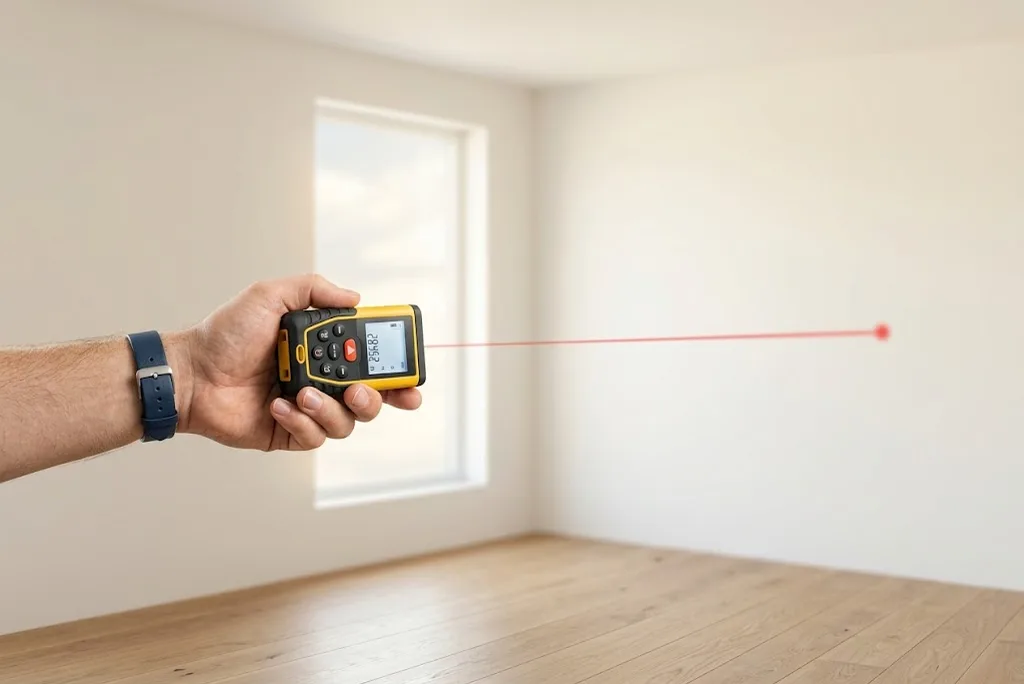 Measuring & LayoutLaser Distance Meter: The Tape Measure Upgrade Worth OwningA laser distance meter is a small handheld tool that shoots a laser at a wall and shows the distance on a screen.
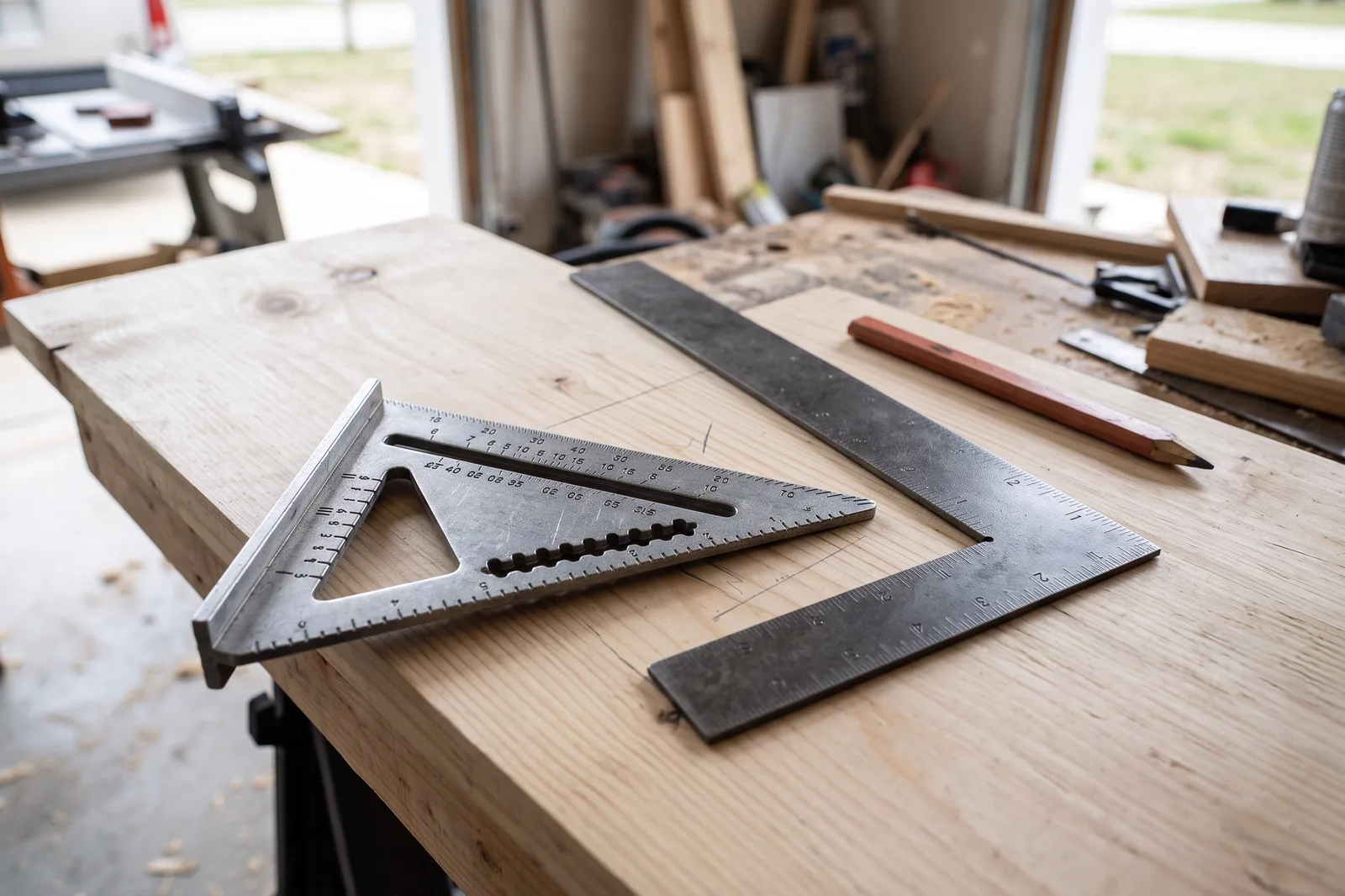 Measuring & LayoutSpeed Square and Framing Square: Two Layout Tools Worth OwningA speed square is a small aluminum triangle for marking square and angled cuts on boards, and a framing square is a large steel L for checking corners and laying out stairs and rafters.
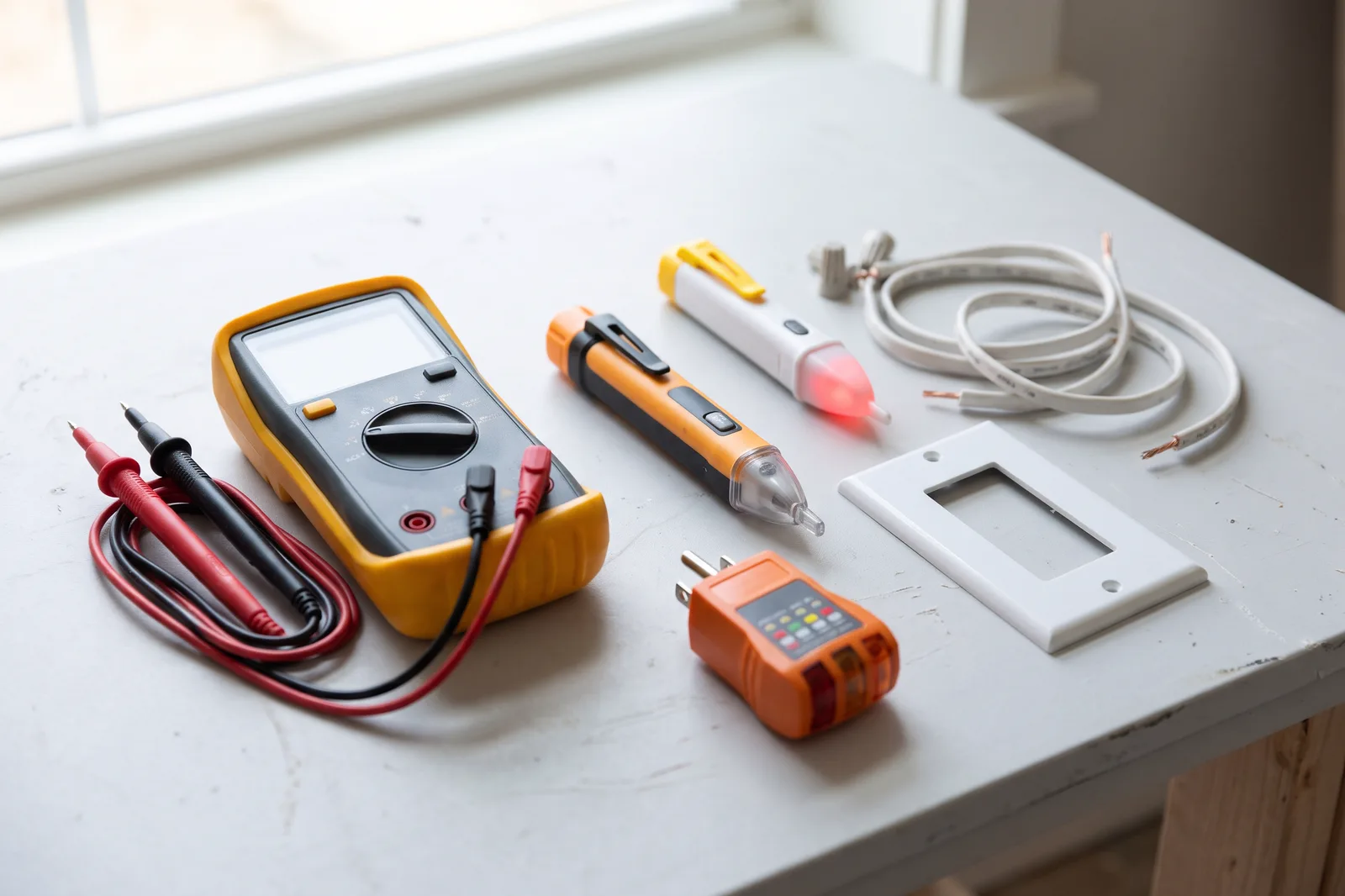 Measuring & Layout · RoundupMultimeters and Voltage Testers: Which to Own at HomeA non-contact voltage pen tells you if a wire may be live, a plug-in outlet tester checks wiring on the spot, and a multimeter gives actual numbers.