
Power Tools · Single tool · DIY · Maker
Random Orbit Sander: The Smooth-Finish Tool for Wood and Paint

Our verdict
DEWALT DWE6423K 5-Inch Variable Speed Random Orbit Sander Kit
8.3/10
Worth-owning score
Price tier Mid ($$)
View on AmazonOur own score from specs, buyer reviews and tests. Not a customer rating. Photo from the Amazon listing.
Quick answer
A random orbit sander is a handheld power sander with a round pad that moves in overlapping circles, so it smooths wood and strips old finish faster than hand sanding without leaving obvious scratch lines. A corded 5-inch model like the DEWALT DWE6423K is a well-reviewed first choice. Skip it if you only sand tight corners or small detail work, where a sanding block or detail sander reaches better.
What is a random orbit sander?
A random orbit sander is a handheld power sander with a round pad that does two things at once: it spins, and it also swings in tiny circles. Because the two motions never repeat, the sandpaper does not cut the same line twice. Anika's DIY Life describes it as a sander that moves in random overlapping circles and, used the right way, gives a really smooth finish.
The sandpaper is a round disc that sticks to the pad with hook and loop, the same grabby fastener used on Velcro. Small holes in the disc line up with holes in the pad so dust can be pulled away through them. Specific Love Creations stresses lining those holes up for the best dust collection.
| Random orbit sander | Sanding block | Belt sander | |
|---|---|---|---|
| Best at | Smoothing flat surfaces and stripping finish | Corners, edges and light touch-ups | Removing lots of wood fast |
| Finish | Smooth, few scratch lines | Depends on your arm | Aggressive; can gouge |
| Power | Corded or battery | None | Corded, heavy |
| Learning curve | Easy | Easy | Harder |
Why you'll want one
It saves hours of hand sanding. A tabletop, a door or a set of shelves takes a long time by hand. Reviewed.com notes that a sander stripped paint from a pine board with 80-grit paper in around three minutes in its test.
It is forgiving for beginners. The creator Specific Love Creations argues that the round-pad random orbit sander has real advantages for new DIYers over the square-pad type, because the random motion hides scratch patterns.
One tool, many jobs. Smooth a rough board before staining, scuff old paint before recoating, flatten a wood patch or prep a deck rail. Anika's DIY Life names the random orbital sander as one of five power tools worth starting with in woodworking.
It is easy to feed. Most 5-inch sanders use standard hook-and-loop discs, so replacement paper is cheap and easy to find.
Which grit for which job
Grit is the number on the back of the sandpaper. A lower number is coarser and cuts faster; a higher number is finer and smoother. Anika's DIY Life gives these ranges:
| Grit | Group | Use it for |
|---|---|---|
| 60–80 | Coarse | Fast removal of defects and rough spots |
| 120–150 | Medium | Removing the scratches from the coarse step and old finish |
| 180–220 | Fine | Final smoothing before paint or stain |
| 400 and up | Extra fine | Between coats of finish and polishing |
Both video creators say not to skip steps. Specific Love Creations warns that starting too fine means you will sit for a long time trying to remove deep scratches that a coarse grit would clear quickly.
Who it's for
- Homeowners refinishing a table, door or deck rail, or smoothing patched drywall and trim
- First-time woodworkers who want a smooth surface before stain or paint
- Anyone sanding large flat areas where hand sanding would take hours
- Painters stripping or scuffing old finish before a new coat
Who should skip it
- People who only sand tight corners or small detail work. A sanding block or a detail sander reaches where a round pad cannot.
- Buyers who want near-zero vibration and dust. Premium brands cost many times more; a basic sander tingles after a long session.
- Anyone who needs to strip very thick material fast. A belt sander removes wood faster, though it is harder to control.
How to use it
Wear safety glasses, hearing protection and a respirator or dust mask. Anika's DIY Life notes that sawdust is a health risk and that sanders are loud, especially with a shop vacuum attached. Work with good airflow and unplug the sander before you change a disc.
- Pick the first grit. Rough or painted surface: start with 60 to 80. Already fairly smooth wood: start with 120.
- Press on the disc and line up the holes. The holes must match the pad for dust to escape.
- Clamp or steady the work. Anika's DIY Life suggests a non-slip surface so the board does not run away.
- Connect dust collection. Fit a shop vacuum hose with the right adapter. The bag alone leaves dust floating, per Specific Love Creations.
- Set the speed. Slower for delicate surfaces and polishing; faster for stripping and shaping.
- Set the sander on the wood before you switch it on. Starting it in the air and landing it can dig grooves, per Specific Love Creations.
- Keep it flat and moving. Let the weight of the machine do the work. Pressing hard adds heat that can damage the disc and strain the motor.
- Overlap your passes. Move slowly in a steady pattern, going with the grain on the final grits.
- Mind the edges. Going far off an edge tips the sander and rounds it over, so keep the pad on the surface.
- Step up the grit. Wipe off the dust, switch to the next finer disc and repeat until you reach 180 to 220.
- Finish by hand if needed. A light pass with fine paper and the grain removes small swirls, per Specific Love Creations.

Our shop vacuum guide covers the wet/dry vacuum that does the best job of dust collection, and our safety glasses and hearing protection roundup covers the gear to wear.
Corners and tight spots
A round pad cannot reach into a square corner. Specific Love Creations suggests taping a strip of thin cardboard to the vertical wall so the pad edge does not scratch it, then sanding right up to it. For tight corners and detail, an oscillating multi-tool with a sanding pad reaches where a round pad cannot.
What reviewers and buyers say about the DEWALT DWE6423K
We feature the DEWALT DWE6423K, a corded 5-inch model with a variable speed dial. Here is what we found:
- Praised: In WWGOA's mid-priced sander test a DeWalt was the fastest at removing veneer and the most powerful of the group, with good dust collection. Reviewed.com named the single-speed DWE6421K its best overall orbital sander, citing a powerful 3 amp motor and fast removal.
- Common complaints: WWGOA rated the DeWalt's vibration high, and it needs a special adapter for non-DeWalt shop vacuums. Reviewed.com's tester found the single-speed DWE6421K jumpy and harder to control than most others tested. The DWE6423K adds variable speed per the listing, which may help, but we did not find a test of that exact model.
- Comparison: WWGOA found a Bosch the smoothest and quietest with low vibration but slower at stock removal, and a Makita nearly as fast as the DeWalt with medium vibration and great dust collection.
- Independent tests: We did not find a head-to-head test of the DWE6423K alone, so we do not claim a ranking beyond those findings.

Corded or cordless?
Reviewed.com treats corded as a good default unless you need to move around, since battery runtime can limit long sessions. Specific Love Creations says corded suits standing at one workbench all day, while cordless suits taking the sander out and about.
- Choose corded for long sessions at a bench or on a floor.
- Choose cordless if you work away from outlets and already own batteries from that brand.
What to look for when buying
- Variable speed. A dial lets you slow down for delicate or finishing work. Anika's DIY Life says variable speed makes a big difference to the finish and how fast you sand.
- Good dust collection. Look for a locking bag plus a port that fits a shop vacuum, and check which adapter you need.
- Low vibration. Hold one if you can. A counterweight and rubber over-mold help, but all budget sanders vibrate. Gloves reduce hand tingle on long jobs.
- A low, comfortable body. A shorter sander keeps the pad flat and your hand closer to the work. A side grip helps you avoid pressing down, per Specific Love Creations.
- Standard 5-inch hook-and-loop discs. They are the easiest and cheapest to replace.
- A sealed switch. Dust kills switches, so a dust-sealed one lasts longer.
- Cord length. A long cord means fewer extension cords.
- Good sandpaper. Both creators say quality paper gives a better finish and lasts longer, so budget for a few grits.
If you are building a first workshop, our workbench project guide shows where a sander fits next to the saws, clamps and squares.
Key specs to look for
| Spec | What to look for |
|---|---|
| Motor | 3 amps, corded, according to the listing. More power removes material faster and bogs down less under pressure. |
| Speed (OPM) | 8,000 to 12,000 OPM (orbits per minute, how many small circles the pad makes each minute), variable by dial. Slow suits polishing and delicate surfaces; fast suits stripping and shaping. |
| Pad size | 5 inches, with hook-and-loop (Velcro-style) discs. This is the most common size, so discs are easy to find. |
| Dust collection | A locking dust bag, and a dust port that fits the maker's own vacuum adapters. The listing says a separate quick connector is needed for other 1-1/4 inch hoses. |
| Vibration control | A separate counterweight is meant to cut vibration, per the listing. WWGOA still rated this DeWalt's vibration high in its test, so gloves help. |
| Switch | A dust-sealed switch, according to the listing, so fine dust does not wear it out early. |
| Body height | The listing says a shorter body lets you get closer to the work. A low sander keeps your palm near the surface for better control. |
| In the box | The kit includes a dust bag and a carrying bag, as the listing photos show. Check the listing for the current contents. |
Where to get it
The DEWALT DWE6423K is a corded 5-inch variable speed model sold as a kit with a dust bag and carrying bag. Check the listing for what is in the box and for the vacuum adapter you need before you buy.

DEWALT DWE6423K 5-Inch Variable Speed Random Orbit Sander Kit
- A 3 amp motor with variable speed from 8,000 to 12,000 orbits per minute, according to the listing
- A separate counterweight to reduce vibration, a dust-sealed switch and a one-handed locking dust bag, per the listing
- Reviewed.com named its single-speed sibling, the DWE6421K, its best overall orbital sander, and WWGOA found a DeWalt the fastest at removing veneer in its test
How we scored it
Usefulness 9/10 · Value 8/10 · Durability 8/10. This is our own opinion, based on specs, buyer reviews and independent tests. It is not an Amazon or customer rating.
Watch and read more
Video reviews
- Don't sand without watching this! Sanding basics you need to know — Anika's DIY Life
Explains how a random orbital sander moves, recommends variable speed and dust collection, and walks through coarse, medium and fine grits plus safety gear. - 20 Random Orbital Sander TIPS for Beginners — Specific Love Creations
Covers hook-and-loop discs and hole alignment, corded versus cordless, starting the sander on the work, light pressure, vibration, grit steps and sanding corners.
Frequently asked questions
What is the difference between a random orbit sander and an orbital sander?
A random orbit sander has a round pad that spins and also moves in small overlapping circles, so no scratch pattern repeats. A basic orbital sander usually has a square pad that only vibrates in small circles, which can leave visible lines. The round pad is also what most reviewers recommend for beginners.
Will a random orbit sander leave swirl marks?
It can. The creator Specific Love Creations says these sanders do most of the work but sometimes leave small swirls, which fine hand sanding with the grain removes. Starting with the right grit, moving slowly and keeping the pad flat help prevent them.
Which grits do I need first?
Anika's DIY Life describes 60 to 80 as coarse for fast removal, 120 to 150 as medium and 180 to 220 as fine for finish prep. A starter pack of 80, 120 and 220 covers most wood jobs.
Do I need a vacuum with it?
It helps a lot. Reviewed.com says dust collection matters most and suggests pairing a sander with a shop vacuum, and both video creators we checked warn that the bag alone leaves dust in the air.
Should I buy corded or cordless?
Reviewed.com treats corded as a good default unless you need portability, because battery runtime can limit long sessions. Specific Love Creations says corded suits all-day work and cordless suits moving around.
Can I use it to strip paint?
Yes, with a coarse disc. In Reviewed.com's test a DeWalt stripped paint from a pine board with 80-grit paper in about three minutes, then 120-grit smoothed it. Check for lead paint in older homes before you sand and never dry-sand it.
How do I stop it gouging the wood?
Set it down flat before you switch it on, keep light pressure, and keep it moving. Specific Love Creations warns that starting it in the air or tilting it can cut grooves you then have to sand out.
Sources
Related tools
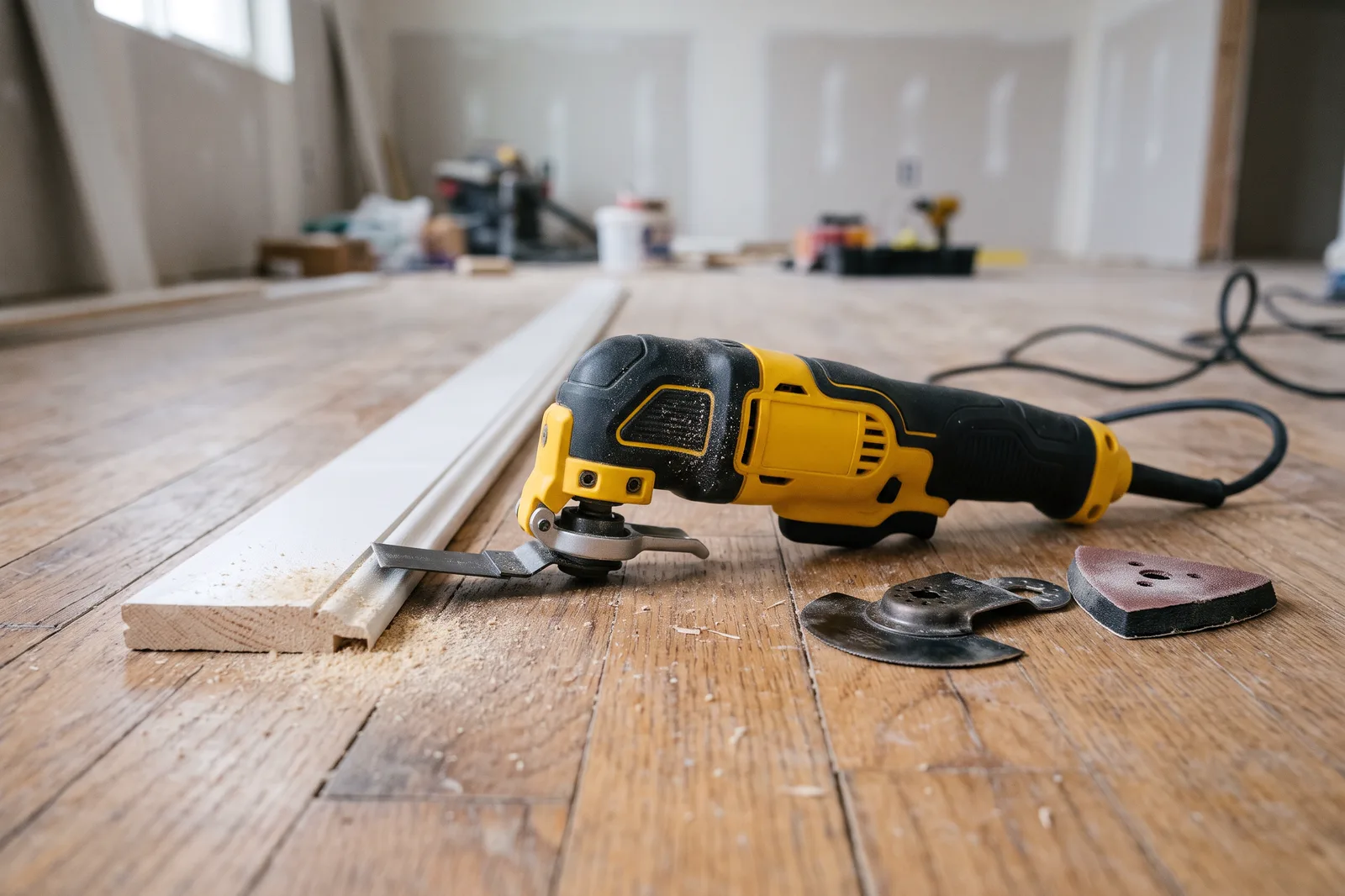 Power ToolsOscillating Multi-Tool: The One Tool for Cuts Other Saws Cannot MakeAn oscillating multi-tool wiggles a short blade back and forth to make plunge cuts, flush cuts and tight sanding that a normal saw cannot reach.
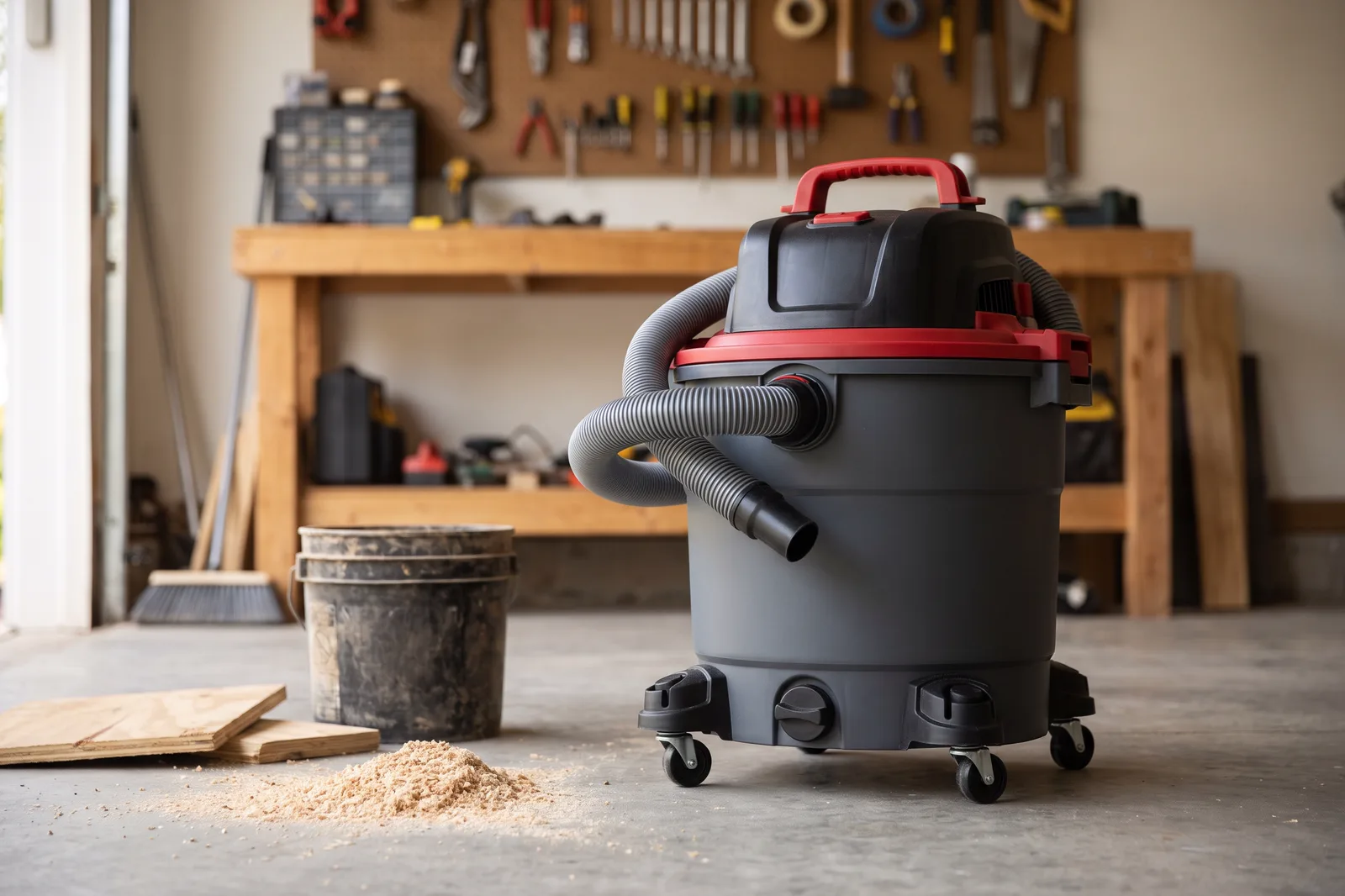 Workshop & StorageShop Vacuum: The Wet/Dry Cleanup Tool Every Garage NeedsA shop vacuum is a tough wet/dry vacuum that sucks up sawdust, drywall scraps and spilled water that would wreck a household vacuum.
 Workshop & Storage · RoundupSafety Glasses and Hearing Protection: What to Own for Home ProjectsEvery power-tool job needs two things: impact-rated eye protection and hearing protection rated for the noise.