Power Tools · Comparison · DIY
Ryobi vs. DEWALT for Homeowners: Which Platform to Buy?
 RYOBI 18V ONE+ HP Compact Brushless 1/2 in. Drill/Driver Kit
 DEWALT 20V MAX XR Drill Driver, Battery and Charger (DCD771C2)
 DEWALT 20V MAX Cordless Drill Driver Set (DCD777D1)
Photos from the Amazon listings. Scores are our own, not customer ratings.
Quick answer
Pick Ryobi if you do occasional projects, want one battery for the house and the yard, and like shopping at Home Depot. Pick DEWALT if you want lighter tools with better trigger control, plan to use them often, or may grow into pro-level work. Whichever you choose, buy into one battery system and stay with it.
Quick verdict
If you are choosing between Ryobi and DEWALT, you are really choosing a battery platform, which is the family of tools that share one type of battery. Once you own a few batteries, you will keep buying from the same brand, so the first choice matters more than the first drill.
After reading maker specs, independent reviews and three video tests, our verdict is this:
- Choose Ryobi if you do projects a few times a year, want the lowest cost of entry, and want one battery for the house and the yard.
- Choose DEWALT if you want a lighter tool with better trigger control, expect to use it often, or may move toward heavier work.
- Choose neither if you already own batteries from another brand. Stay where you are.
Neither choice is wrong. The sections below show where each brand wins and where it gives something up.
The two battery platforms
Ryobi uses the 18V ONE+ system. Reviewers count its tools in the hundreds: 731 Woodworks put the number above 260, and Pro Tool Reviews later said more than 400. That is the widest range of any DIY-focused brand. 731 Woodworks also points out that a ONE+ battery made in 2022 fits tools made as far back as 1996, and the other way around. That is unusual, and it means old batteries are rarely wasted.
DEWALT uses the 20V MAX system, with a higher-capacity FlexVolt line above it for heavy tools. The range is also large and runs up to pro-grade tools, which is one reason the brand is a common choice for people who think they may take on bigger jobs.
The two systems do not swap batteries. Adapters exist, but they are made by third parties, and we would not trust one on a power tool. The practical rule: pick the platform first, then the tools.
Which has more tools you will actually want?
For most homeowners, a drill, an impact driver, a circular saw, a work light and an oscillating tool cover 90% of jobs, and both brands make all of them. The difference shows up around the edges:
- Yard and garden. Reviewers often point to Ryobi when they talk about one battery running a drill, a blower and a string trimmer.
- Heavy-duty saws and pro tools. DEWALT's catalog goes further. Our DEWALT DWE575SB review shows the sort of build quality its corded line has, and the cordless line is built to the same standard.
- Niche tools. Both brands make routers, sanders and nailers. Reviewer 731 Woodworks called Ryobi's router top-heavy and said its table saw fence and miter saw were not tools he would buy, while praising its drills, drivers and oscillating tool.
Who it's for
- Homeowners choosing their first battery system for the house and garage
- Occasional DIYers doing shelves, furniture and light remodeling
- Yard owners who want one battery across drills, blowers and trimmers
- Growing DIYers deciding whether to pay more for a pro-grade brand
Who should skip it
- People who already own another brand's batteries. Buying a second platform rarely pays off.
- Daily jobsite users. Pro brands such as Milwaukee and Makita are built for that, and a pro brand will serve you better.
- Anyone who wants the cheapest drill only. A no-name drill kit can cost less, but it will not grow with you.
What independent tests found
Three sources give the clearest picture.
Classic Act Workshop: Ryobi HP brushless vs. a DEWALT brushless kit
This reviewer ran both kits through lag bolts, a 2-inch hole saw and construction screws. The results surprised him:
- Lag bolt in low speed: Ryobi took 3.4 seconds against 4.1 seconds for the DEWALT.
- 2-inch hole saw through 1-inch pine: Ryobi took about 12.5 seconds. The DEWALT needed over 20 seconds and was struggling.
- Control: The DEWALT had the better trigger, with fine control at low speed. The Ryobi trigger felt spongy to him, and its impact driver was harder to use for starting screws precisely.
- Weight and size: The DEWALT was lighter but longer. The Ryobi was shorter.
- His pick: Ryobi won on power, but he said he would personally buy the DEWALT for woodworking because of the lighter weight and better control.
Project Farm: hammer drills from 11 brands
Project Farm tested a Ryobi HP hammer drill and DEWALT's most powerful 20V MAX hammer drill, among others. These are different tiers, so read the results as "mid-range vs. flagship":
- The DEWALT drove lag bolts with more torque (about 440 inch-pounds against about 263 for the Ryobi) and drilled concrete a bit faster.
- The Ryobi was lighter, quieter and gave finer torque control on the lowest clutch setting. The DEWALT's electronic clutch was an area Project Farm said needed work.
Torque Test Channel: do you need a top-tier drill?
Torque Test measured the Ryobi HP hammer drill against Milwaukee, Ridgid and a compact DEWALT. The Ryobi made lower low-speed torque than the others, a record low for a name-brand drill on that channel, but kept speed up under load. The reviewer's conclusion for home use: the Ryobi is a very good value if you already have the batteries, and all of these drills are more than most DIY jobs need.
What buyers and reviewers say
We read the written reviews linked below, forum threads and the video tests. The same themes keep coming up.
What people praise about Ryobi
- Price and range. Reviewers say the main draw is that a kit with several tools sits well below a comparable kit from a pro brand.
- Home Depot access. You can buy a tool or a spare battery the same day without waiting for shipping.
- Old batteries still work. People like that the platform has not changed in decades.
What people criticise about Ryobi
- Durability in heavy use. 731 Woodworks says the tools are meant for beginners and occasional projects and will not take jobsite abuse as well as pro brands.
- Some tools are weaker than others. One reviewer liked the drills, drivers and oscillating tool but was lukewarm on the router, table saw and miter saw.
- Brushed motors in older kits. The same reviewer recommends the brushless line if you use tools often.
What people praise about DEWALT
- Build quality and balance. The drills are light for the power.
- Control. Trigger feel and low-speed control get regular praise.
- Growth path. You can start with a basic kit and move up to pro-level tools without changing batteries.
What people criticise about DEWALT
- Higher cost of entry than Ryobi.
- Small batteries in starter kits. Kits like the DCD771C2 ship with compact batteries that run down in long sessions.
- Some drills are long for their size, which matters in tight spaces.

Battery size and run time
A starter kit's battery decides how long you can work. The DEWALT DCD771C2 kit ships with two compact batteries, and one written review (This Old House) found the battery lasted only about 20 minutes of heavy use in its tests. Both brands sell larger batteries for longer runs, and the Torque Test video shows that a larger, high-output battery lifts performance on tough jobs. If you plan on long sessions, such as drilling many holes in a day, budget for a second or larger battery from the start.
Warranty and where each is sold
Warranty. Both brands advertise a 3-year limited warranty on tools. DEWALT's own page for the DCD771C2 also lists one year of free service and a 90-day satisfaction guarantee. Check the current terms for batteries and chargers before you buy.
Where to shop. Ryobi is a Home Depot brand in stores, which suits people who like to pick up the tool in person. DEWALT is sold at home centers, hardware stores and online, so you have more choices and more chances to catch a promotion.
What to buy first on either platform
Most homeowners do not need a whole kit on day one. A sensible short list works on either platform:
- A drill/driver. The most-used cordless tool in any house. Buy a compact brushless model with a 1/2 inch chuck, since it fits tight spaces and holds bits securely.
- A second battery. Running out of charge mid-job is the most common annoyance. Many starter kits include one compact battery, so a second one keeps you working while the first charges.
- An impact driver. It drives long screws and deck fasteners with less strain on your wrist. Its collet takes hex-shank bits only.
- A circular saw. Our circular saw guide explains why this is the first power saw most homeowners should own. If you buy a cordless one, check that it matches your battery system.
- A work light. Cheap, handy and useful in attics, crawl spaces and under sinks.
After that, add tools only when a project needs them. Buy them bare, without batteries, whenever you can. That is where a battery system pays you back.
Mistakes to avoid
- Buying two platforms by accident. A sale on a different brand's saw is only a bargain if you do not need a new battery and charger for it.
- Buying the biggest kit. A kit full of tools you will not use is not a bargain. Start small.
- Skipping the clutch. The ring behind the chuck sets how much torque the drill delivers before it slips. Set it low for screws in soft wood so you do not strip them or sink them too deep.
- Using a drill where an impact driver is better. Long deck screws are easier with an impact driver. Use the drill for holes and short screws.
- Leaving batteries in a hot garage or car. Heat shortens battery life on every brand.
Pros and cons
Ryobi pros
- Lower cost of entry than comparable DEWALT kits.
- Huge range of tools, including yard tools, on one battery.
- Backward-compatible batteries going back decades.
- Shorter drills and, in the tests we read, strong speed for the class.
Ryobi cons
- Not built for daily jobsite use, according to reviewers.
- Trigger feel was called spongy in one head-to-head.
- Uneven quality across the range, so read the review for each tool.
DEWALT pros
- Better control and balance in the tests we read.
- Pro-grade upgrade path if your projects get bigger.
- Wider retail availability.
DEWALT cons
- Higher cost for a kit of equal size.
- Starter batteries are small.
- Sometimes slower than Ryobi in the same test.
Our verdict, situation by situation
- You do a few projects a year and want the lowest cost. Get Ryobi. A compact brushless drill with a spare battery is plenty. Add tools only when a project calls for them.
- You want one battery for the house and yard. Get Ryobi. Reviewers cite this as its strongest selling point.
- You are a careful buyer who wants the better feel and plan to use tools often. Get DEWALT. Buy the brushless drill, not the cheapest kit.
- You may move into remodeling, decks or side jobs. Get DEWALT, so you can move to bigger tools without changing batteries.
- You are building a kit for a first-time homeowner as a gift. Either works. Choose the brand sold at the store nearest them, so returns and spare batteries are easy.
- You already own tools from either brand. Stay with it. Buying bare tools without batteries saves the most.
Planning a deck or fence? Our circular saw guide and the free deck calculator help you decide what to buy for the first project.
Key specs to look for
| Spec | What to look for |
|---|---|
| Battery platform | Ryobi uses the 18V ONE+ system. DEWALT uses 20V MAX. Both are the same kind of battery in practice, but they do not swap with each other. Pick the platform before you pick the drill. |
| Range of tools | Count the tools you might want in five years, including yard tools. Reviewers say Ryobi's range is the biggest in the DIY market; DEWALT's is large and reaches up to pro tools. |
| Brushless or brushed | Brushless motors run cooler, last longer on a charge and last longer overall. If you use tools often, pay for brushless. |
| Chuck | A 1/2 inch all-metal ratcheting chuck holds bits better than plastic or 3/8 inch chucks. |
| Clutch and trigger control | Many clutch positions and a smooth trigger keep you from stripping screws. A tester found DEWALT's trigger control better and Ryobi's trigger spongy. |
| Warranty | Both brands advertise a 3-year limited warranty on tools. Check the current terms for batteries and chargers. |
| Where it is sold | Ryobi is sold mainly at Home Depot and online. DEWALT is sold at home centers, hardware stores and online. |
| Weight and length | A lighter drill is easier overhead. A shorter drill fits between studs. In the tests we read, the Ryobi was often shorter and lighter and the DEWALT had the better balance. |
Where to get them
All three drills below are sold on Amazon, and each is a good place to start for the brand it represents. The Ryobi HP drill is our budget pick, and the two DEWALT drills are our mid-range picks. If you want to compare like with like, put the Ryobi HP next to the DCD777D1, because both are compact brushless drills.

RYOBI 18V ONE+ HP Compact Brushless 1/2 in. Drill/Driver Kit
- Brushless motor and a 24-position clutch in a compact body, per the listing
- Joins the ONE+ system, which reviewers count in the hundreds of tools
- Testers found it fast in screws and hole saws for a drill in its class
How we scored it
Usefulness 8/10 · Value 9/10 · Durability 7/10. This is our own opinion, based on specs, buyer reviews and independent tests. It is not an Amazon or customer rating.

DEWALT 20V MAX Cordless Drill Driver Set (DCD777D1)
- Brushless motor for longer run time, per the listing
- Light, compact design that fits tight spaces
- The closest DEWALT match to the Ryobi HP drill in this comparison
How we scored it
Usefulness 9/10 · Value 8/10 · Durability 8/10. This is our own opinion, based on specs, buyer reviews and independent tests. It is not an Amazon or customer rating.

DEWALT 20V MAX XR Drill Driver, Battery and Charger (DCD771C2)
- Long-running DEWALT 20V MAX starter drill with a 1/2 inch ratcheting chuck
- Two speeds (0-450 and 0-1,500 rpm) and a 3-year limited warranty, per the listing
- Works with the whole 20V MAX battery platform when you want more tools
How we scored it
Usefulness 8/10 · Value 8/10 · Durability 8/10. This is our own opinion, based on specs, buyer reviews and independent tests. It is not an Amazon or customer rating.
Check the current listing and recent reviews before you buy. Make sure each listing says what is in the box, since some listings are tool only and some include a battery and charger. Whichever brand you choose, treat the first battery as the real purchase, because every tool you add later will use it.
Watch and read more
Video reviews
- DeWalt vs Ryobi Brushless Drill and Impact Driver Kit | Surprising Performance Testing — Classic Act Workshop
Tests a Ryobi HP brushless kit against a DEWALT brushless kit: lag bolts, a 2-inch hole saw and screws. Ryobi won on power; DEWALT won on control and weight. - Everyone Hates RYOBI. I Had to Know Why. — 731 Woodworks
Explains who Ryobi tools are made for, the 3-year warranty, the battery that fits back to 1996, and which tools the reviewer would skip. - The Best Drill I've Ever Tested! — Project Farm
Hammer drills from 11 brands, including a Ryobi HP and a DEWALT, tested for chuck grip, torque, speed and noise.
Frequently asked questions
Is Ryobi as good as DEWALT?
For occasional home projects, many testers say yes. In one head-to-head of brushless kits, the Ryobi was faster in several tests and the DEWALT had better trigger control and was lighter. For daily professional use, DEWALT is the sturdier name, and one reviewer who likes Ryobi says its tools are meant for homeowners and beginners.
Can I use Ryobi batteries on DEWALT tools?
Not directly. The two use different battery connections. Adapters exist, but they are third-party products and not something we would trust on a power tool. Pick one system and stay with it.
Which brand has the longer warranty?
Both advertise a 3-year limited warranty on their tools. DEWALT also lists one year of free service and a 90-day satisfaction guarantee on its drill kit listing. Terms change, so read the maker's current page before you buy.
Is Ryobi only sold at Home Depot?
In stores, Ryobi is mainly a Home Depot brand, which reviewers count as a plus because you can walk in and buy a tool or a battery the same day. You can also find Ryobi on Amazon. DEWALT is sold in more places.
Do I need brushless?
Not for a few projects a year. If you use the drill every week, brushless is worth it: it runs cooler, uses the battery better and the motor lasts longer, according to makers and testers.
Which is better for outdoor yard work?
Reviewers often point to Ryobi for yard tools because the same ONE+ battery runs string trimmers, blowers and other outdoor tools. DEWALT has yard tools too, but reviewers mention it less for that reason.
What if I already own some Ryobi tools?
Then stay with Ryobi and buy bare tools without batteries when you can. The older ONE+ batteries work on new tools, which testers praise as a long-term plus.
Sources
Related tools
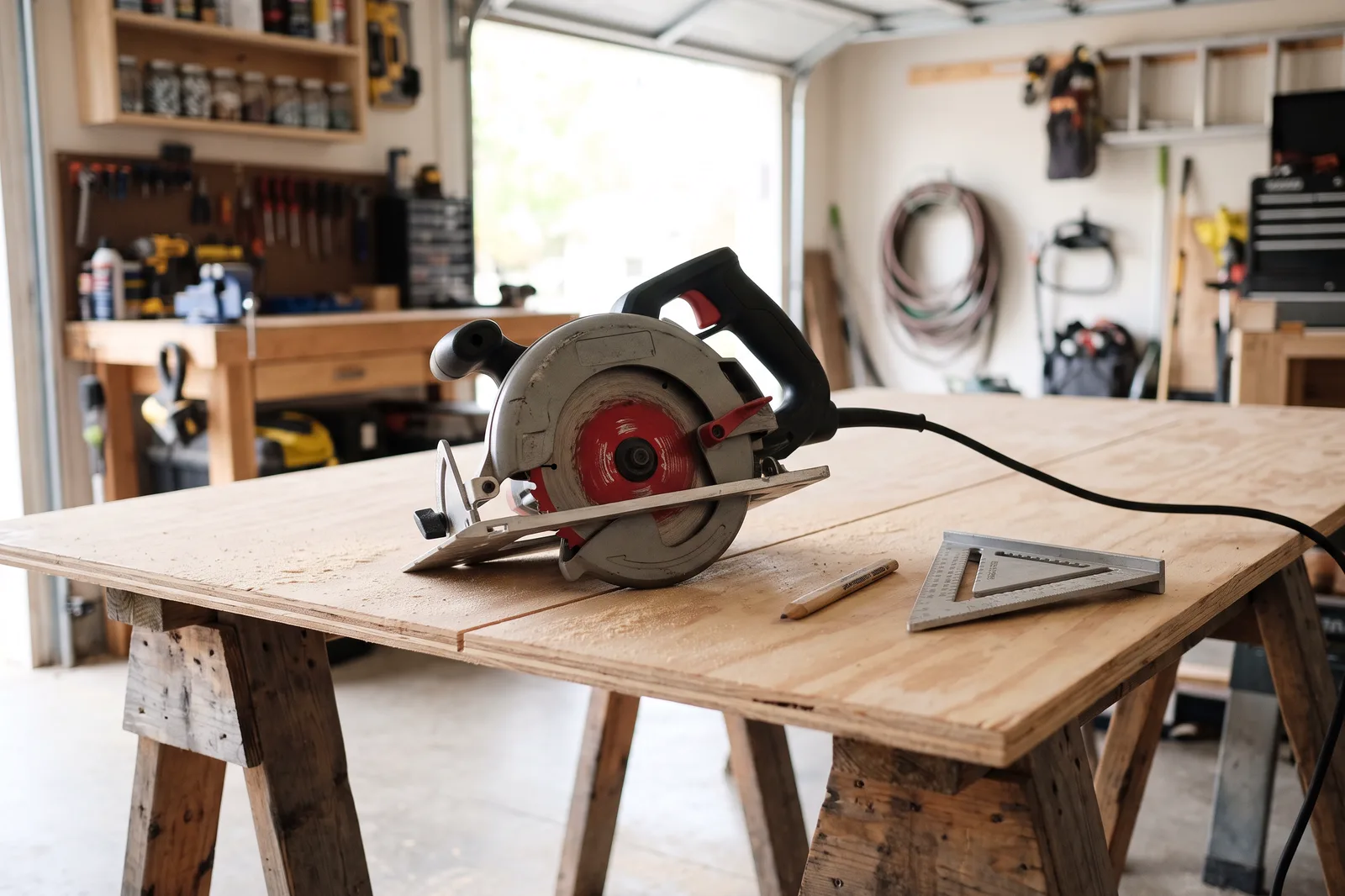 Power ToolsCircular Saw: The Power Saw Most Homeowners Should Own FirstA circular saw is a handheld power saw with a round toothed blade that cuts boards and sheets of plywood in a few seconds.
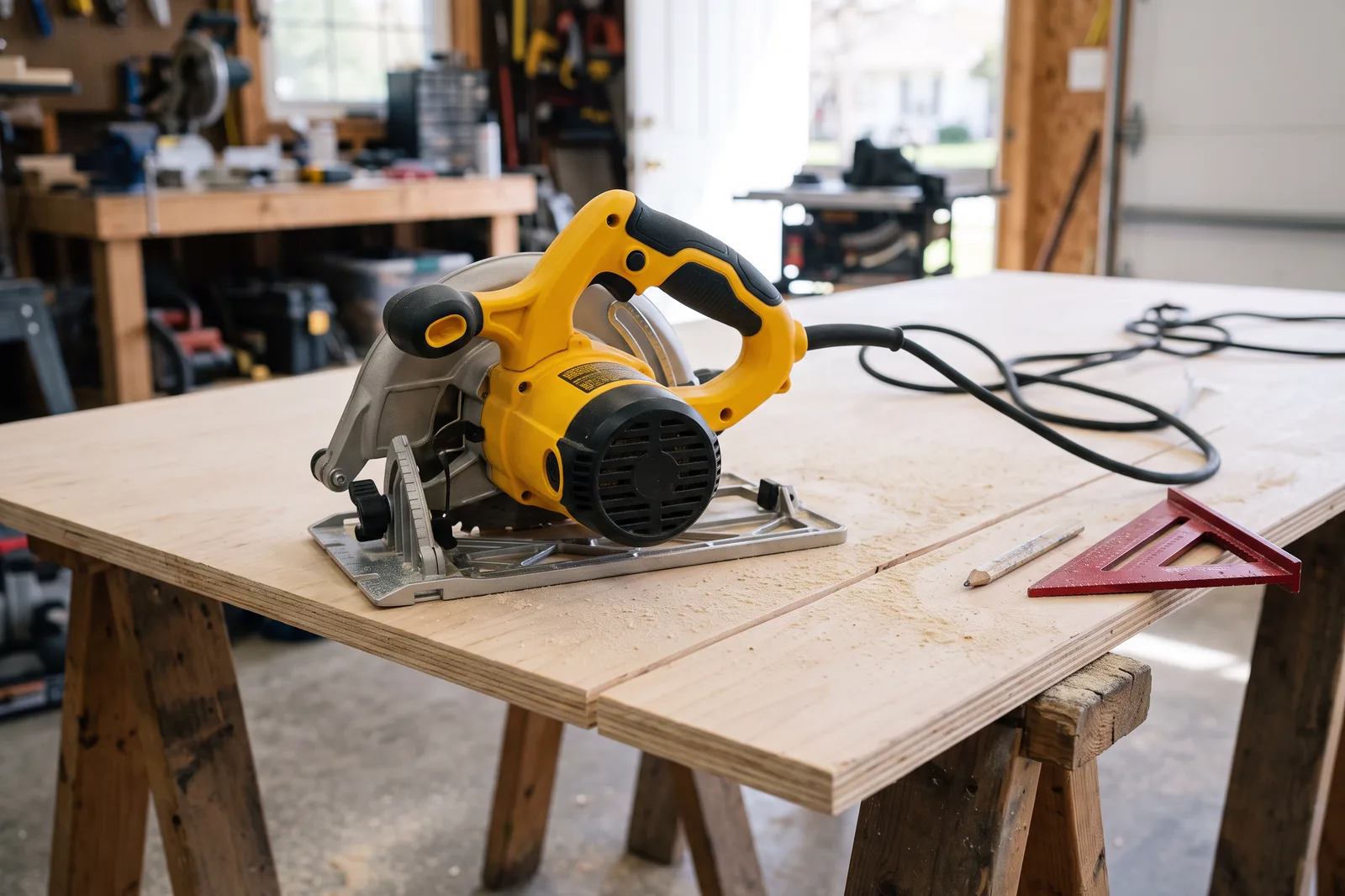 Power ToolsDEWALT DWE575SB Review: Is It Worth It for a First Circular Saw?Yes, for most people who want one dependable corded saw.
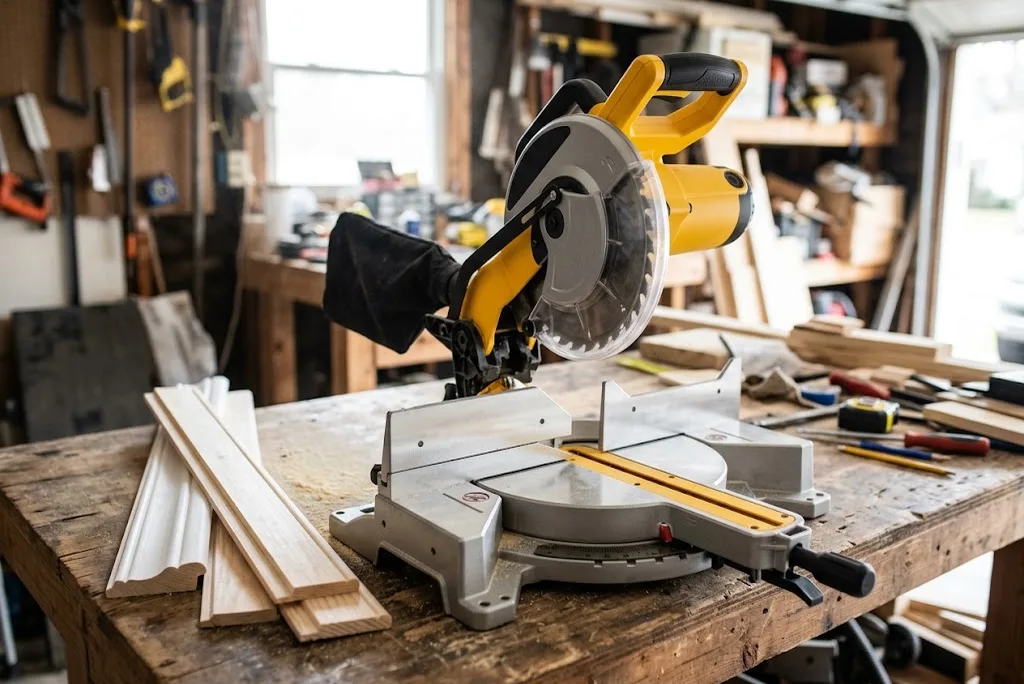 Power ToolsMiter Saw: The Fast, Accurate Way to Cut Trim and FramingA miter saw is a circular saw mounted on an arm that swings down onto a board held against a fence, so it makes fast, repeatable angled and square crosscuts.