
Everyday Carry & Tech · Roundup · DIY · Pro
Headlamps and Work Lights: Which Hands-Free Light to Own
Quick answer
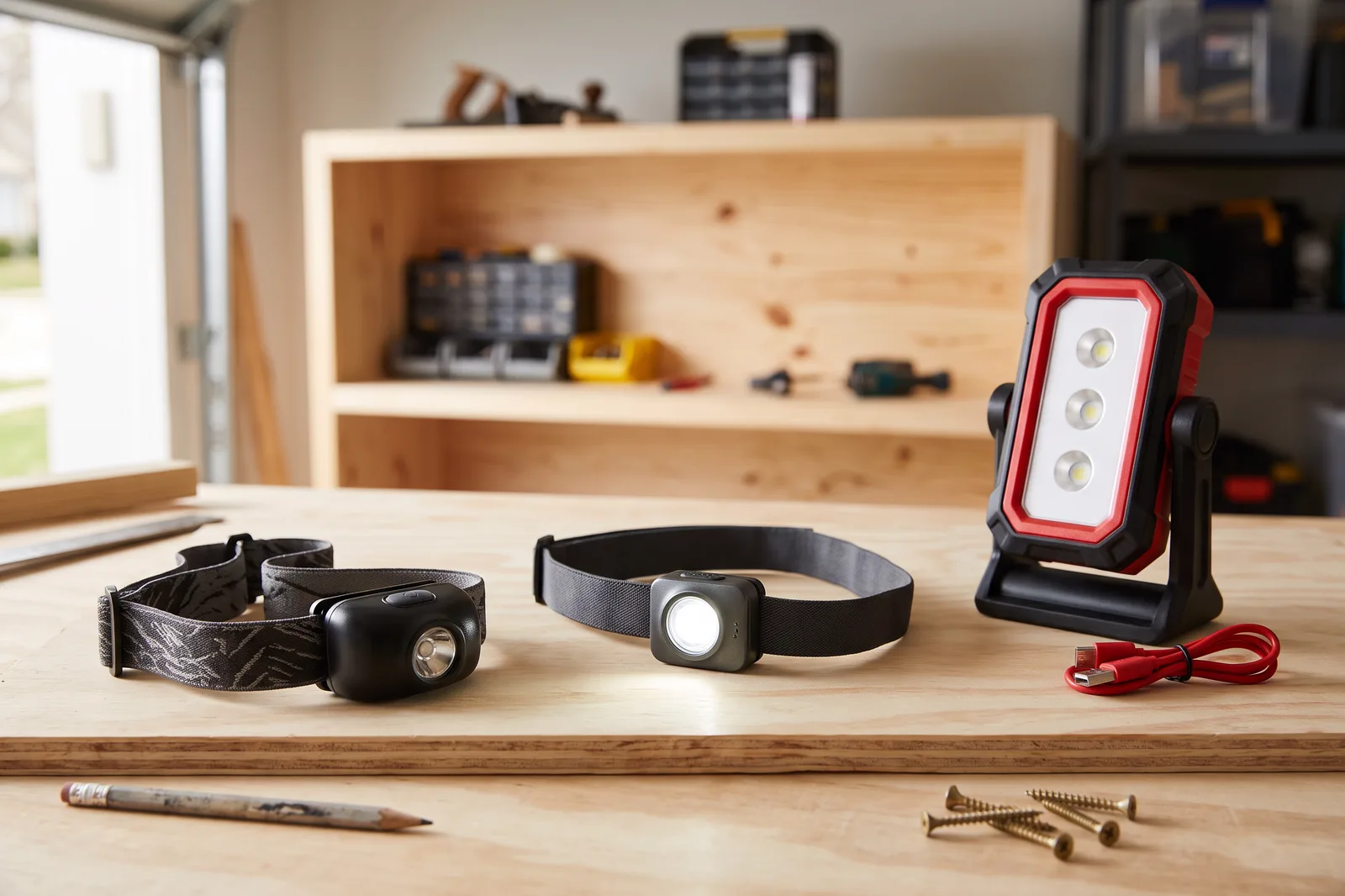
A headlamp puts light where you look, so it suits attic crawls, under-sink jobs and power cuts. A stand-alone work light lights a whole bench or wall and leaves your head free. For most homes we would start with a simple headlamp such as the Petzl Tikka, step up to the rechargeable Black Diamond Spot 400-R if you use it often, and add the Milwaukee 2015R pivoting task light when you want a steady, magnet-mounted light on the job. Skip the extras if you only need a light a few times a year.
What are headlamps and work lights?
A headlamp is a small LED light on an elastic strap that you wear on your head. It points where you look and leaves both hands free. A work light is a light you stand, hang or stick to a surface, so it lights one job while you move around it. For home repairs, both do the same basic job, which is to put steady light on a spot that your ceiling light and your phone cannot reach.
The two types solve different problems:
| Type | Where the light goes | Hands | Best for |
|---|---|---|---|
| Headlamp | Wherever your head points | Free | Attics, crawl spaces, under sinks, power cuts, walking at dusk |
| Work light | One fixed spot on the bench, wall or ladder | Free | Longer jobs at one place, sanding, wiring a fixture box (power off), assembling furniture |
In this guide we compare three well-reviewed lights, one per tier:
- Budget: the Petzl Tikka headlamp.
- Mid: the Black Diamond Spot 400-R rechargeable headlamp.
- Pro: the Milwaukee 2015R rechargeable pivoting task light.
They are not all the same kind of tool on purpose. Headlamps and work lights are two answers to one question, and a good home kit often has one of each.
Why you'll want one
You need both hands. Holding a torch in your teeth while you turn a valve is a common DIY mistake. A headlamp or a light that stands on its own fixes that. You can hold a board, a pipe or a screwdriver and still see.
The light follows your eyes. A headlamp lights whatever you look at, so under a sink or inside a cupboard you never have to guess where to point it. The Camp Geeks reviewer, who has used Petzl headlamps for years, likes that the middle setting gives him a working light for most jobs and that the top setting gives a bright beam when he needs one.
Some jobs need steady light. A work light holds still. If you are sanding a table or fitting a handle for twenty minutes, a light that stays put is easier on your neck than a headlamp that moves with each glance.
They are cheap insurance. A rechargeable light in a drawer is useful the first time the power goes out. A red light mode, found on both headlamps here, lets you look for the fuse box without blinding yourself or waking a family member.
They are small. A headlamp fits in a glove box or kitchen drawer. The Milwaukee lists a magnetic base and a head that folds into a stand, so it also fits a tool bag.

What buyers and reviewers say
We looked at the listings, retailer summaries, independent tests and two reviewer videos. The patterns are:
- Petzl Tikka: Buyers like the weight, the comfortable band and the red light. The Camp Geeks reviewer says the 2019 redesign is a big step up from the old slide switch, with a push button and a choice of three brightness levels. A tester of the related Tikka CORE wished for a middle setting between the lowest and highest. OutdoorGearLab rates the Tikka below the Black Diamond Spot, and its reviewer says the Spot gives better performance for the same price. Retailer ratings for the Tikka are mixed.
- Black Diamond Spot 400-R: Reviewers praise the brightness, the light weight and the dimming control. Clever Hiker's review of the Spot 400 notes the spot beam can be harsh near full power and that the controls take a little learning. A retailer reviewer points out the battery is built in. The Bushcraft Heroes video gives about 6 hours on high and about 100 hours on low.
- Milwaukee 2015R: We found retailer specs and no independent review. Owners of a similar Milwaukee magnetic light say the magnet holds well and that runtime on the brightest setting is short. Treat the figures here as the maker's claims.
We found no controlled head-to-head test of these three exact lights, so the pros and cons rest on maker specs, buyer summaries and the sources linked below.
Who it's for
- First-time homeowners who want a light for the attic, crawl space, under-sink cupboards and power cuts
- Renters and apartment dwellers who need a small, rechargeable light in a drawer for fuse boxes and appliance repairs
- Weekend DIYers who work in dim garages and basements and need both hands free
- Anyone who camps or walks at dusk and wants one light to cover home and outdoors
Who should skip it
- People who only need a light a few times a year. A phone torch or a small hand flashlight is enough.
- Anyone who needs bright, even light over a whole room. A tripod or stand work light lights a large area better than any of these three.
- Electricians and gas workers. Safety rules for that work call for approved, certified equipment. These are general-purpose lights.
How to use them
These steps are the way most guides and reviewers set up a hands-free light. They work for either type.
- Charge or load it before you need it. Charge the rechargeable lights fully, and keep three fresh AAA cells in the Tikka. A dead light in a power cut is no help.
- Choose the right level for the job. Use a low or middle setting for close work. High is for looking down a long space. Lower levels last much longer on a charge.
- Fit the headband snugly. The strap should hold the lamp steady when you bend down. A loose band makes the beam bob.
- Tilt the beam, not your neck. The Tikka has a tilting plate, so you can point the beam downward while looking straight ahead.
- Use red light for your eyes. Switch to red before checking a fuse box at night. It keeps your night vision and does not dazzle anyone near you.
- Lock it before you pack it. The Spot 400-R listing mentions a lock mode. Turn it on when the light goes into a bag so it does not drain itself.
- Set the work light before you start. Stand the Milwaukee on its stand, or stick it on a steel surface. Point it so your own shadow does not fall on the work.
- Avoid shining it in other eyes. Turn your head, not the beam, when you talk to someone. A headlamp on high is very bright up close.
- Keep it dry between jobs. The Milwaukee lists IP54 against splashes, and the Spot 400-R listing gives IP67. Neither belongs under running water, and wiping each one dry helps the seals last.
- Do not use it to light live electrical or gas work. Work on gas, panels or live wiring calls for approved equipment and often a licensed professional.

Common mistakes
- Buying on lumens alone. A very bright light is not a better close-work light. Beam shape and runtime matter more.
- Wearing the strap too loose. The beam drifts and tires your eyes.
- Leaving the light switched on in a bag. Use the lock mode or take the batteries out.
- Using one headlamp for everything. A work light is better when the job is long.
- Never recharging it. A lithium battery left empty for months can lose capacity. Top it up a few times a year.
What to look for when buying
Lumens. Lumens measure total light output. For repairs, 100 to 300 is plenty. Higher numbers mostly help with distance. The listings give 350 lumens for the Tikka, 400 for the Spot 400-R and 600 for the Milwaukee in flood mode, with its spot mode at 300.
Beam shape. A flood beam spreads wide and even. A spot beam throws a narrow line. For repairs you want a good wide flood at close range, and a small spot for far corners. A light with a dimming control beats one with two fixed levels.
Runtime on the level you will use. Do not read the lowest-setting runtime. Look at what the light gives on medium and high. The Bushcraft Heroes reviewer gives about 6 hours on high for the Spot 400-R, and Milwaukee lists 4 hours on its brightest flood setting.
Power source. Rechargeable is cheaper over time and charges with a common cable. Disposable cells can be swapped in minutes. The Tikka takes either, which makes it easy to keep working.
Charging port. A newer USB-C port is easier to find a cable for than micro-USB. The Milwaukee lists USB-C, while the Spot 400-R listing gives micro-USB, even though one review video says USB-C. Check the current listing before you buy.
Water and drop rating. IP54 covers dust and splashes. IP67 adds brief dunking. Milwaukee lists a 9 ft drop rating for the 2015R. For a garage or a shed, either is enough.
Mounting. For a headlamp, check the tilt plate and band. For a work light, check for a strong magnet, a hook and a kickstand.
Warranty. Milwaukee lists a two-year warranty for the 2015R. Check the maker's warranty for the others.
Price, in tiers. The Tikka is the low-cost pick, the Spot 400-R sits in the middle, and the Milwaukee is the highest. Prices change, so check the current listing.
Which light fits which buyer
You use a light a few times a year. The Tikka is enough. It is light, simple and runs on three AAA cells that sit in a drawer for months. The optional rechargeable battery gives it a second life if you use it often.
You use a light every month, or for walks and camping too. The Spot 400-R makes sense. It is rechargeable, bright, and has a lock mode for bags. Reviewers like it for the brightness for the weight, and it handles a long job in a crawl space.
You work on longer jobs at a bench or a van. Add the Milwaukee 2015R. A light that stands on a steel surface or on its own pivoting stand beats a headlamp for 20-minute jobs. It is also a clean fit for anyone who already owns Milwaukee tools and likes one maker.
You are not sure yet. Start with one headlamp. If you find yourself wishing the light would stay still, add a work light. Our guide to tools for garage shelves shows the kind of job where one helps.
Key specs to look for
| Spec | What to look for |
|---|---|
| Brightness (lumens) | Lumens measure total light. For close repair work 100 to 300 is plenty; extra brightness mostly adds glare. The listings give 350 lumens for the Tikka, 400 for the Spot 400-R and 600 for the Milwaukee in flood mode. |
| Beam shape | Flood light spreads wide and even, which suits a bench or a wall. Spot light is a narrow, long beam for looking down a crawl space. A light with both is more useful. |
| Runtime on each level | Check hours on the setting you will really use, not the lowest one. A reviewer of the Spot 400-R gives about 6 hours on high; Milwaukee lists 4 hours on its 600 lumen flood mode. |
| Power source | Disposable batteries are easy to swap in a power cut. A built-in rechargeable battery is cheaper to run but cannot be changed mid-job. Pick based on how often you use it. |
| Water and dust rating | An IP54 rating, as on the Milwaukee, covers dust and splashes. A higher rating, such as the IP67 on the Spot 400-R listing, also survives short dunking. For indoor repairs either is fine. |
| Mounting and hands-free use | Headlamps need an adjustable, tilting head. Work lights need a magnet, hook or kickstand so they stay where you point them. |
| Weight and comfort | A headlamp you can forget you are wearing gets used. The Tikka lists 94 g and one review of the Spot 400-R quotes 2.9 oz with the battery. |
Where to get them
All three are sold on Amazon. We rate the Petzl Tikka as budget tier, the Black Diamond Spot 400-R as mid tier and the Milwaukee 2015R pivoting task light as pro tier.
| Pros | Cons |
|---|---|
| Hands-free light makes tight-space jobs safer and quicker | A headlamp's beam moves with your head, which tires you on long jobs |
| Rechargeable options cost little to run and top up quickly | Built-in batteries cannot be swapped mid-job |
| A red light mode protects your night vision and does not dazzle others | Brightness figures come from the makers, and we found no independent test of the Milwaukee |
| Pick | Best for | What buyers like | What buyers flag |
|---|---|---|---|
| Petzl Tikka | Occasional use, drawer light | Light, simple, red light, takes AAA or a rechargeable | Mixed ratings, a big jump between middle and top levels |
| Black Diamond Spot 400-R | Frequent use, walks and camping | 400 lumens, rechargeable, dimming, lock mode | Harsh spot beam near full power, built-in battery |
| Milwaukee 2015R | Longer jobs at a bench or steel surface | Flood and spot modes, magnet and stand, USB-C | Brightest setting runs about 4 hours, no independent test found |
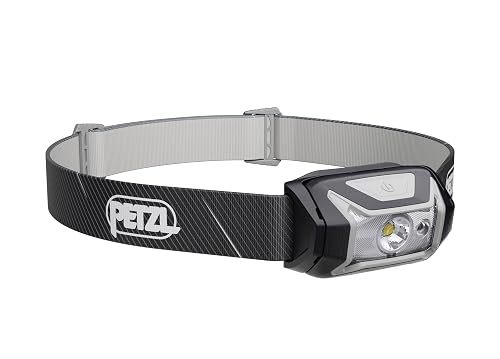
Petzl Tikka Headlamp (350 lumens)
- A light, simple headlamp that the listing rates at 350 lumens and 94 g, with three white levels, a red light and a tilt plate
- A video reviewer who owned the older Tikka for years says the redesigned one has a better push-button switch and an optional rechargeable battery
- Independent testers rate it below the Black Diamond Spot, and its brightness range is wide at the top and thin in the middle
How we scored it
Usefulness 7/10 · Value 8/10 · Durability 7/10. This is our own opinion, based on specs, buyer reviews and independent tests. It is not an Amazon or customer rating.

Black Diamond Spot 400-R Rechargeable Headlamp
- Up to 400 lumens from a built-in 1500 mAh rechargeable battery, with dimming, a red night-vision mode and a lock mode that stops it switching on in a bag
- Reviewers praise the output and the low weight, and one review of the earlier Spot calls the spot beam harsh when set near full power
- The battery is built in, so a worn-out cell cannot simply be swapped for a fresh one
How we scored it
Usefulness 8/10 · Value 8/10 · Durability 8/10. This is our own opinion, based on specs, buyer reviews and independent tests. It is not an Amazon or customer rating.

Milwaukee 2015R Rechargeable Pivoting Task Light with Spot Mode
- Retailer specs list 600 lumens in flood mode and 300 lumens in spot mode, with a magnetic base, a pivoting head that doubles as a stand and USB-C charging
- The maker rates it IP54 against dust and splash, with a 9 ft drop rating and a two-year warranty
- We found no independent test of this exact light, so its ratings rest on the maker and retailer listings
How we scored it
Usefulness 8/10 · Value 7/10 · Durability 8/10. This is our own opinion, based on specs, buyer reviews and independent tests. It is not an Amazon or customer rating.
For a project that needs good light, see our guides to tools for a simple workbench and the stud finder.
Watch and read more
Video reviews
- Petzl Tikka Headlamp Review — Camp Geeks
A longtime Petzl user compares the 2019 redesigned Tikka with his old one: a push button, three brightness levels, a red light and an optional rechargeable battery. - Black Diamond Spot 400-R Review: The BEST Headlamp for Your Adventures? — Bushcraft Heroes
Covers the Spot 400-R's 400 lumen output, red light, brightness memory and weight. Its charging and water-rating details differ from the current Amazon listing, so the article uses the listing figures.
Frequently asked questions
Is a headlamp or a work light better for home repairs?
It depends on the job. A headlamp follows your eyes, so it suits tight spaces, crawling and reaching into cupboards. A work light holds one spot steady, so it suits a bench, a wall or a section of a ceiling you work on for an hour. Many homes end up wanting one of each.
How many lumens do I need?
For close work, about 100 to 300 lumens is enough. More helps you see farther, not closer, and can cause glare off pale surfaces. A reviewer of the Petzl Tikka says he uses the middle setting, about 100 lumens, most of the time.
Rechargeable or battery-powered?
Rechargeable lights cost less to run and are quick to top up. Battery-powered lights can be swapped for fresh cells during a long job or a long power cut. The Tikka can use three AAA batteries or an optional Petzl rechargeable battery, so it can do both.
Is a red light mode useful at home?
Yes. Red light keeps your eyes adjusted to the dark and does not dazzle anyone near you. It suits a night-time check on the fuse box or a cupboard without waking a sleeping family. Both headlamps here have a red mode.
Are these lights waterproof?
Not in the way a phone case is. The Milwaukee lists IP54, which means dust-tight enough and protected from splashes, and the Spot 400-R listing gives IP67, which includes brief dunking. Neither is made for being left under water.
Can I use a headlamp as a work light?
For a short job, yes. Its beam moves every time you turn your head, which is tiring for long tasks at one spot. For anything longer than a quarter hour, a work light that you stand on the bench saves neck strain.
Do magnetic work lights really stay put?
On a steel surface, such as a fridge, a ladder or a steel stud, yes. Owners of a similar Milwaukee magnetic light say the base holds well. On wood or drywall you need the kickstand or a hook instead.
Sources
- OutdoorGearLab: Black Diamond Spot headlamp review
- OutdoorGearLab: Petzl Tikka headlamp review
- Clever Hiker: Black Diamond Spot 400 headlamp review
- Milwaukee 2015R pivoting task light, retailer spec sheet
- Petzl Tikka listing on Amazon (maker specs and customer review summary)
- Black Diamond Spot 400-R listing on Amazon (maker specs and customer review summary)
- Milwaukee MWK2015R listing on Amazon (maker specs)
Related tools
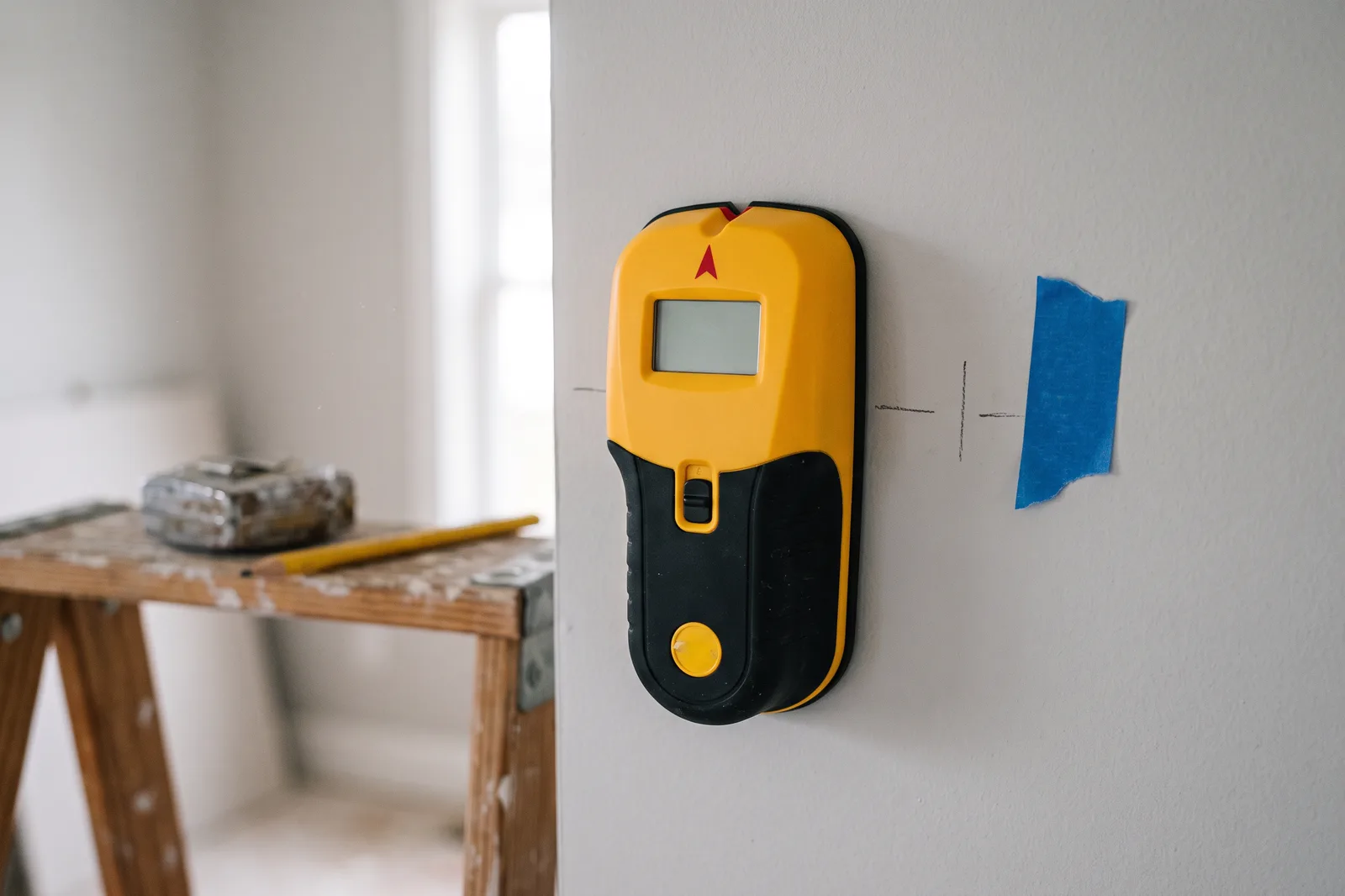 Measuring & LayoutStud Finder: The Wall Scanner That Keeps Shelves and TVs From FallingA stud finder is a small handheld scanner that tells you where the wood or metal studs are behind drywall, so heavy shelves, mirrors and TVs get fastened to something strong.
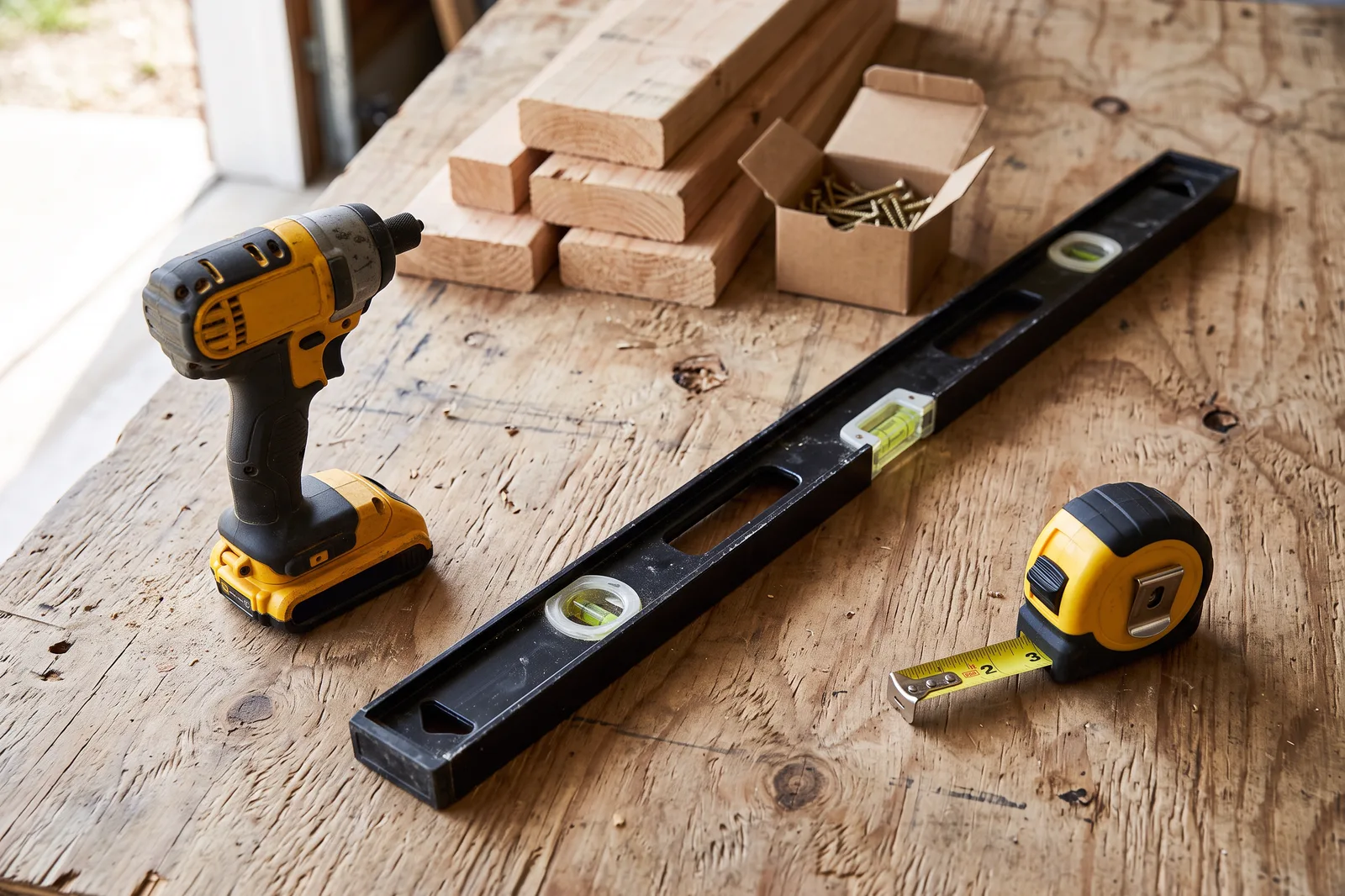 Workshop & StorageTools Needed to Build Garage ShelvesSturdy garage shelves from 2x4s and plywood need a handful of tools: a tape measure, a level, a cordless drill/driver, a saw to cut the lumber and a square to mark it.
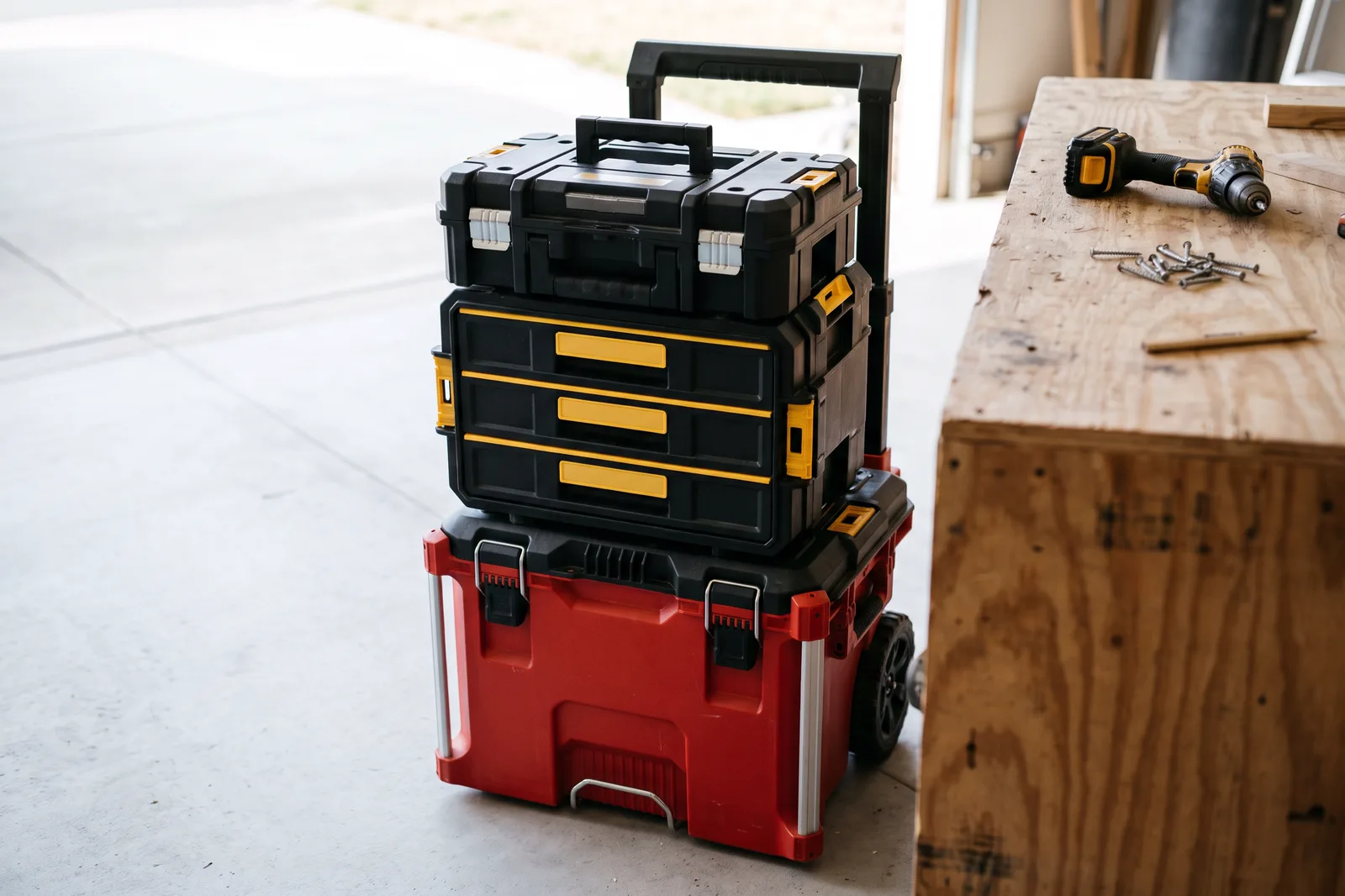 Workshop & Storage · RoundupStackable Tool Box Systems: Which One to Own for Home and JobsiteA stackable tool box system is a set of boxes that click together so one stack carries everything.