
Power Tools · Review · DIY · Pro
DEWALT DWS715 Miter Saw Review: Is It Worth It for a First Miter Saw?

Our verdict
DEWALT 12-Inch Miter Saw, 15-Amp, Single Bevel, Compound (DWS715)
8.3/10
Worth-owning score
Price tier Mid ($$)
View on AmazonOur own score from specs, buyer reviews and tests. Not a customer rating. Photo from the Amazon listing.
Quick answer
Yes, for most people who want a straightforward 12-inch miter saw for trim, framing and deck boards. The DWS715 is light for its size, has firm angle stops and cuts common lumber well. Skip it if you need to cut wide boards in one pass, want a dual-bevel saw, or cut sheets of plywood.
Quick verdict
The DEWALT DWS715 is a corded 12-inch, single-bevel compound miter saw. After reading the maker's specs, Bob Vila's tested review, a written review summary and a video test, our verdict is: if you want one straightforward miter saw for trim, framing and deck boards, it is a safe choice.
It is light for a 12-inch saw, it has firm angle stops, and reviewers praise its accuracy and value. It is also a simple saw: no sliding arm, a single bevel and a dust bag that catches only part of the dust.
If you are still deciding whether you need a miter saw at all, start with our miter saw basics. This page covers one exact model.
What you get
According to the maker and the listing:
- A 12-inch blade and a 15-amp corded motor rated at 4,000 RPM.
- A stainless-steel miter plate with 14 positive stops, which click at the common angles.
- A miter range of 50 degrees each way and a bevel of 48 degrees left and 3 degrees right.
- A cross-cut capacity of 2x8 at 90 degrees and 2x6 at 45 degrees.
- A fence tall enough for 5-1/2 inch base molding standing on edge.
- A dust bag.
Matt Crampton Labs' video unboxes the saw and notes the blade in the box is a 24-tooth framing blade, which the reviewer planned to replace with an 80-tooth blade for nicer cuts. That fits what reviewers usually suggest for any miter saw: use a framing blade for rough work and a finer blade for trim.

Who it's for
- First-time miter saw buyers cutting trim, shelves and deck boards
- Framers and deck builders who want a lighter saw they can carry
- DIYers building a workshop who want a no-fuss saw
Who should skip it
- People who cut boards wider than about eight inches. Look at a sliding miter saw.
- Crown molding fans who want to avoid flipping the board. A dual-bevel saw is easier.
- Anyone who needs to cut sheets of plywood. A circular saw does that.
What buyers and testers say
We read the review summary on ShopSavvy, Bob Vila's tested DEWALT roundup and the video test.
What gets praised most
- Accuracy. ShopSavvy's summary praises accuracy, and Bob Vila's testers scored it high for it and called it powerful and precise on dimensional lumber and trim. In the video, the reviewer found the cuts smooth and the saw far more powerful than the 10-inch saw he was replacing.
- Portability. Bob Vila's testers liked its 36-pound weight for moving between jobs and gave it top marks for portability and ease of use.
- Value. ShopSavvy and Bob Vila's testers both single out value, and Bob Vila names it the best bang for the buck among the DEWALT miter saws it covered.
Most common complaints
- No sliding arm. Wide boards are limited to what the blade can span. Bob Vila's testers note this and add that a 12-inch blade still handles most boards in residential work.
- Single bevel. The blade tilts left 48 degrees and right only 3, so some compound cuts mean flipping the board.
- Dust bag. ShopSavvy lists the small bag, which fills quickly, as a drawback. Use a shop vacuum.
The video also shows one limit: at a 45-degree bevel, the blade could not cut all the way through a 4x4. That is normal for a 12-inch saw with this design, but worth knowing.
Pros and cons
| Pros | Cons |
|---|---|
| Cuts common lumber square and at 45 degrees, per the maker and the video. | Not a sliding saw. Boards wider than about eight inches need a flip or a different saw. |
| Light for a 12-inch saw, about 36 pounds. | Single bevel, so you flip the board on some compound cuts. |
| Positive stops at common angles. | Small dust bag. |
| Tall fence for base molding. | Stock blade is for framing. Add a finer blade for trim. |
| Value according to ShopSavvy and Bob Vila. |
What the test cuts show
The most useful evidence we found is Matt Crampton Labs' video, because it shows the saw cutting real lumber. The reviewer unboxed the saw, noted it looked well finished and that the miter table swung smoothly and locked into the stops from 0 to 45 degrees, then made test cuts outside.
- 90-degree cuts: a 2x4, a 4x4, a 2x6 and a 4x6, all cut through in one pass. The reviewer said the cut was smooth, with just a little chip-out on the edge of the 2x6 that a zero-clearance insert would reduce.
- 45-degree cuts: a 2x4 and a 2x6 cut cleanly. A 4x4 would not cut all the way through at 45 degrees, because the blade's arbor hit the wood.
Those results line up with the maker's capacity figures, a 2x8 at 90 degrees and a 2x6 at 45. If your projects involve 4x4 posts cut at an angle, a 12-inch saw of this type will need two passes or a handsaw to finish the cut.
Blades, stands and extras
The saw comes with a framing blade. For trim, flooring or cabinet work, a blade with many more teeth gives a cleaner edge; the video reviewer planned to fit an 80-tooth blade. You will also want a stand or bench with side supports, a shop vacuum for the dust port, and a pair of clamps. None of these come in the box, so plan for them when you decide whether the saw fits your space.
How it compares
Against a 10-inch miter saw. Smaller saws are lighter and fine for trim, but the video reviewer said he could not cut all the way through a 4x4 with his 10-inch saw, and the 12-inch DWS715 does at 90 degrees.
Against a sliding miter saw. Sliding saws cut wider boards but are heavier and need room behind them. The reviewer in the video chose the DWS715 over DEWALT's sliding models partly for the smaller footprint. If you cut wide shelf boards or deck boards over eight inches often, a sliding saw is worth the extra space.
Against a dual-bevel saw. A dual-bevel saw tilts both ways, which saves flipping boards for crown molding and compound cuts. The DWS715 is the simpler option.
Against a circular saw. A circular saw like the DEWALT DWE575SB cuts plywood sheets and goes to the work. A miter saw makes faster, more exact crosscuts on boards. For a first saw, many buyers are better served by a circular saw; the miter saw is the next one to add.
Setting it up and using it
Stable surface. A miter saw is only as accurate as what it sits on. Use a folding stand with side supports or a solid bench.
Check square. Before an important job, check the fence and blade against a reliable square. Fix the saw, not the board.
Hold the board firmly, keep your hands well away from the blade, and clamp short pieces.
Let the blade stop before lifting the handle.
Use a stop block for repeat cuts, and a shop vacuum for dust.
Planning a deck or a trim job? The deck calculator counts boards, and the feet-inch fraction calculator turns a cut list into exact lengths.

Who should buy it, who should wait
Buy it if you cut a lot of boards to length: baseboard, deck boards, studs, fence pickets or shelves. It turns a pile of lumber into accurate pieces faster than any handheld saw, and the stops make repeat angles easy.
Wait or choose a different saw if most of your cuts are on plywood or long boards, in which case a circular saw suits you better, or if you cut a lot of wide boards, where a sliding saw is the better tool. If you only make a handful of cuts each year, a hand saw and a speed square may be all you need.
Durability and warranty
Most buyers are happy with the DWS715, but reviews of any popular saw include some reports of early problems. Keep your receipt and check the maker's warranty terms on the day you buy; DEWALT's terms vary by product and change over time, so we do not quote them here. A miter saw that travels in a truck or a garage also benefits from a quick square check every so often, since a knock can move the fence.
Tips if you buy one
- Add a finer blade. The stock framing blade is fine for rough work, but trim looks better with more teeth.
- Set it on a stand or bench with supports at table height on both sides.
- Clamp short pieces instead of holding them.
- Cut a scrap first at the angle you need, and check it with a square.
- Use a stop block for repeat cuts so every piece matches.
- Connect a shop vacuum since the bag catches only part of the dust.
Key specs to look for
| Spec | What to look for |
|---|---|
| Blade and motor | 12-inch blade, 15-amp corded motor rated by the maker at 4,000 RPM. A 12-inch blade cuts wider boards than a 10-inch one. |
| Crosscut capacity | The maker lists a 2x8 at 90 degrees and a 2x6 at 45 degrees. A fixed arm limits width; boards wider than about eight inches need flipping. |
| Bevel | Single bevel: 48 degrees left and 3 degrees right, per the maker. A dual-bevel saw tilts both ways and saves flipping the board. |
| Miter range and stops | A stainless-steel detent plate with 14 positive stops, per the maker. Bob Vila lists a 50-degree miter each way. |
| Weight | About 36 pounds per Bob Vila's testers and the video reviewer, light for a 12-inch saw. |
| Fence | Tall enough for 5-1/2 inch base molding standing on edge, per the maker. |
| Dust | A dust bag that catches only part of the dust. Hook up a shop vacuum for indoor work. |
Where to buy
The DEWALT DWS715 is widely sold, including on Amazon. It sits in our mid-range tier. Check that the listing says DWS715 before you order.

DEWALT 12-Inch Miter Saw, 15-Amp, Single Bevel, Compound (DWS715)
- A 12-inch blade and 15-amp motor that handle standard lumber and most trim
- Stainless-steel miter plate with 14 positive stops, so repeat angles match
- About 36 pounds, light enough to move between jobs
How we scored it
Usefulness 9/10 · Value 8/10 · Durability 8/10. This is our own opinion, based on specs, buyer reviews and independent tests. It is not an Amazon or customer rating.
Read the newest reviews before you buy. Add a finer blade, safety glasses and hearing protection to the same order, and plan for a stand.
Watch and read more
Video reviews
- Testing Dewalt DWS715 Miter Saw — Matt Crampton Labs
Unboxing and test cuts with this exact saw: square cuts through a 2x4, 4x4, 2x6 and 4x6, and 45-degree cuts, noting a 45-degree cut will not go all the way through a 4x4.
Free calculators FigureMyHome
- Deck Calculator — Count deck boards before you cut them to length.
- Feet-Inch Fraction Calculator — Turn a cut list into exact lengths.
Frequently asked questions
Is the DEWALT DWS715 good for a beginner?
Yes. It is a simple saw with clear angle stops, no sliding arm to adjust and a manageable weight. Learn the basics first, especially keeping your hands well away from the blade and clamping short pieces.
What is the difference between a single-bevel and a dual-bevel miter saw?
A single-bevel saw tilts the blade one way. A dual-bevel saw tilts both ways, so you flip the board less on compound cuts. The DWS715 is single bevel and tilts 48 degrees left and 3 degrees right, per the maker.
Can the DWS715 cut a 4x4?
At 90 degrees, yes. In Matt Crampton Labs' test it cut a 4x4 and a 4x6 square. At 45 degrees the reviewer found the blade would not go all the way through a 4x4.
Does the DWS715 slide?
No. It is a fixed-arm saw. Bob Vila's testers note the lack of a sliding arm but say a 12-inch blade still handles most boards used in residential work.
Do I need a stand for it?
A stable surface matters. A folding miter saw stand or a sturdy bench with supports on both sides keeps long boards flat and the cuts accurate.
Which blade should I use for trim?
The reviewer in Matt Crampton Labs' video noted the stock blade is a 24-tooth framing blade and planned to swap it for an 80-tooth blade for cleaner trim cuts.
How does it compare to the DEWALT circular saw?
They do different jobs. The miter saw makes fast, exact crosscuts. The DWE575SB circular saw goes to the work and cuts sheets and lengthwise.
Sources
Related tools
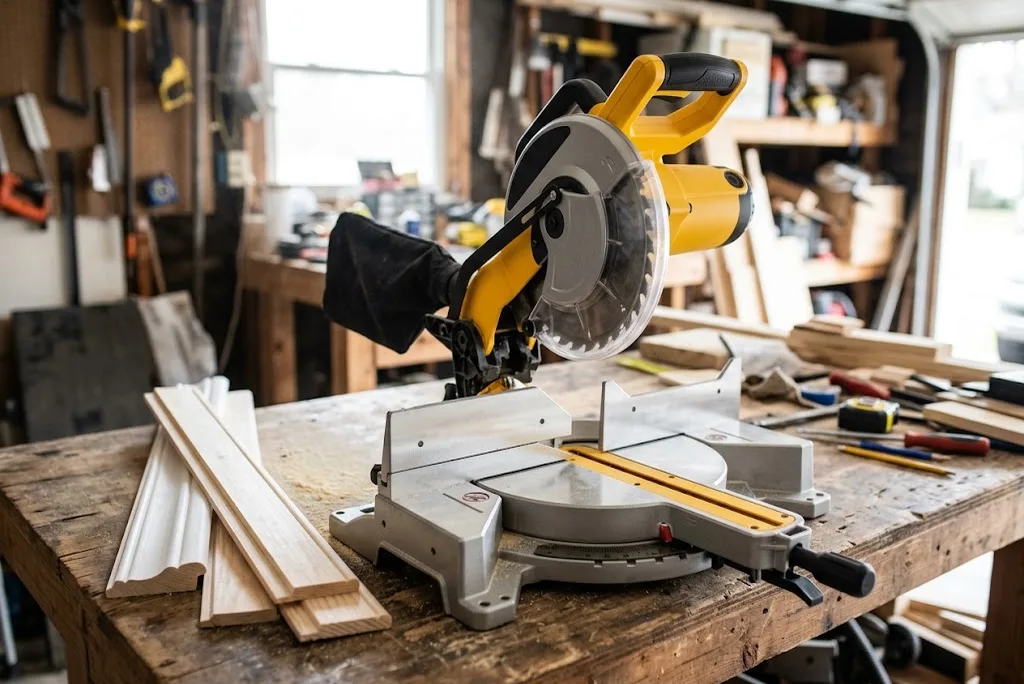 Power ToolsMiter Saw: The Fast, Accurate Way to Cut Trim and FramingA miter saw is a circular saw mounted on an arm that swings down onto a board held against a fence, so it makes fast, repeatable angled and square crosscuts.
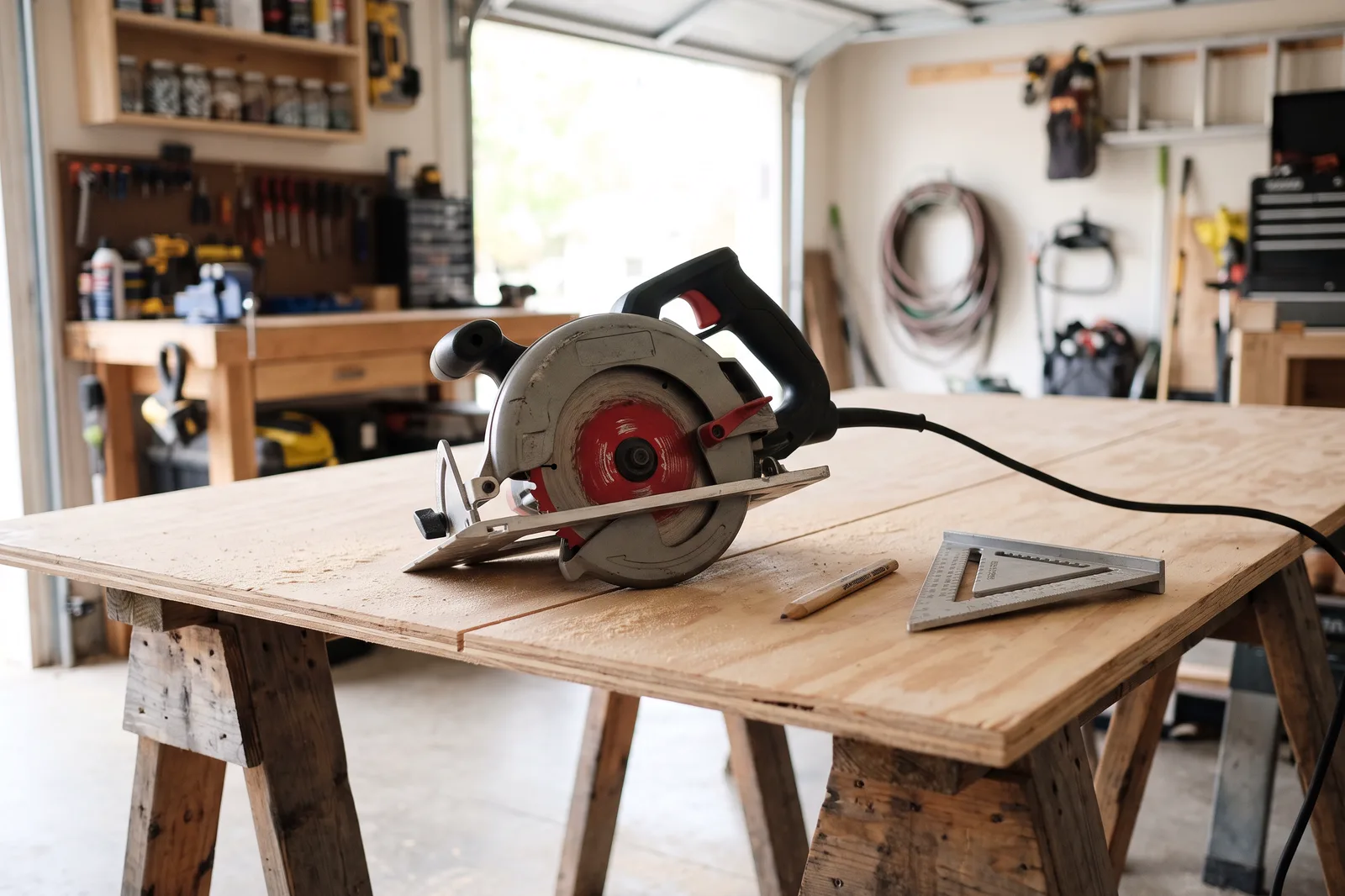 Power ToolsCircular Saw: The Power Saw Most Homeowners Should Own FirstA circular saw is a handheld power saw with a round toothed blade that cuts boards and sheets of plywood in a few seconds.
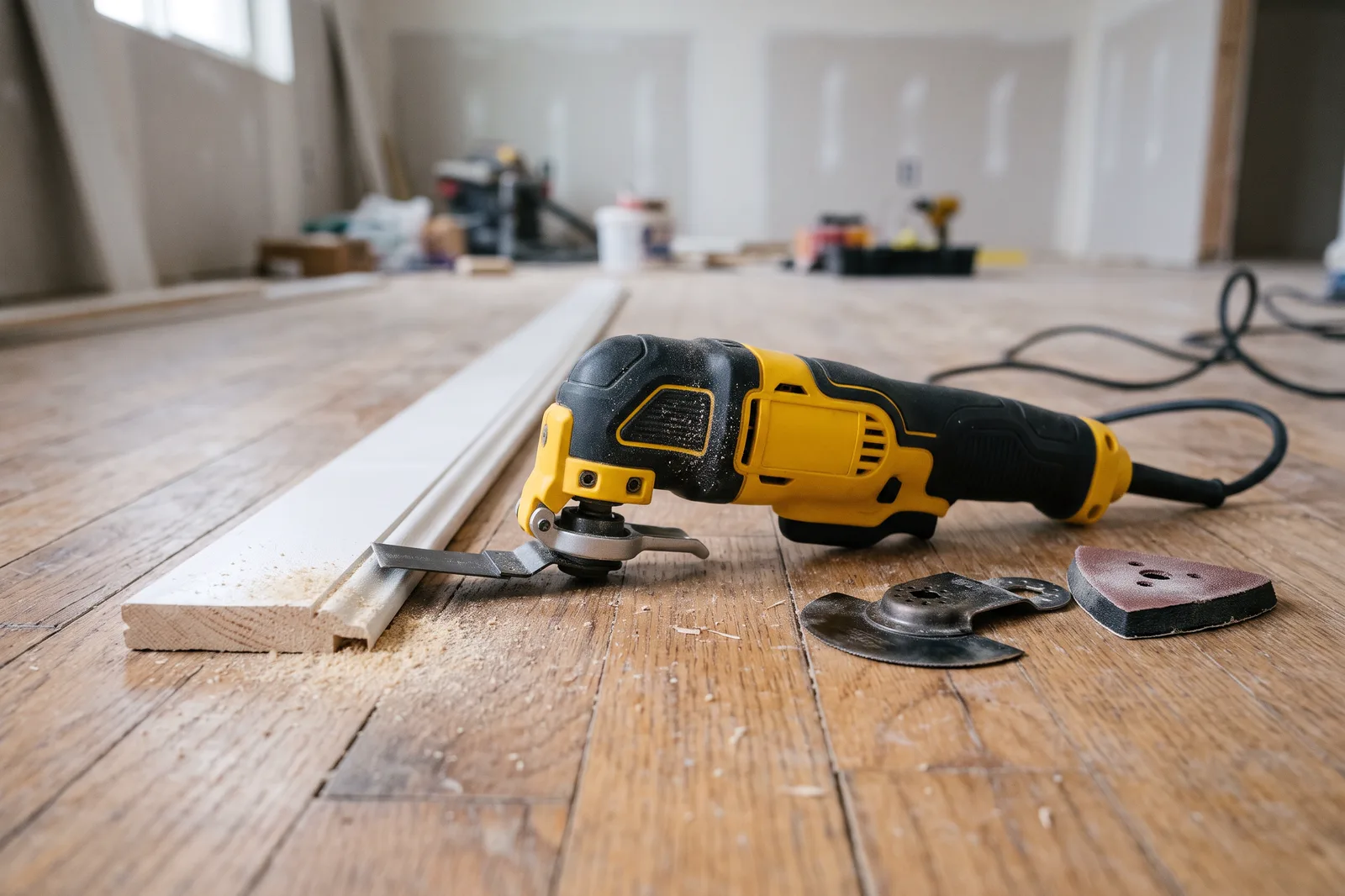 Power ToolsOscillating Multi-Tool: The One Tool for Cuts Other Saws Cannot MakeAn oscillating multi-tool wiggles a short blade back and forth to make plunge cuts, flush cuts and tight sanding that a normal saw cannot reach.