Hand Tools · Buyer's guide · DIY
Claw Hammer Buying Guide: Which Type and Size to Own
Quick answer
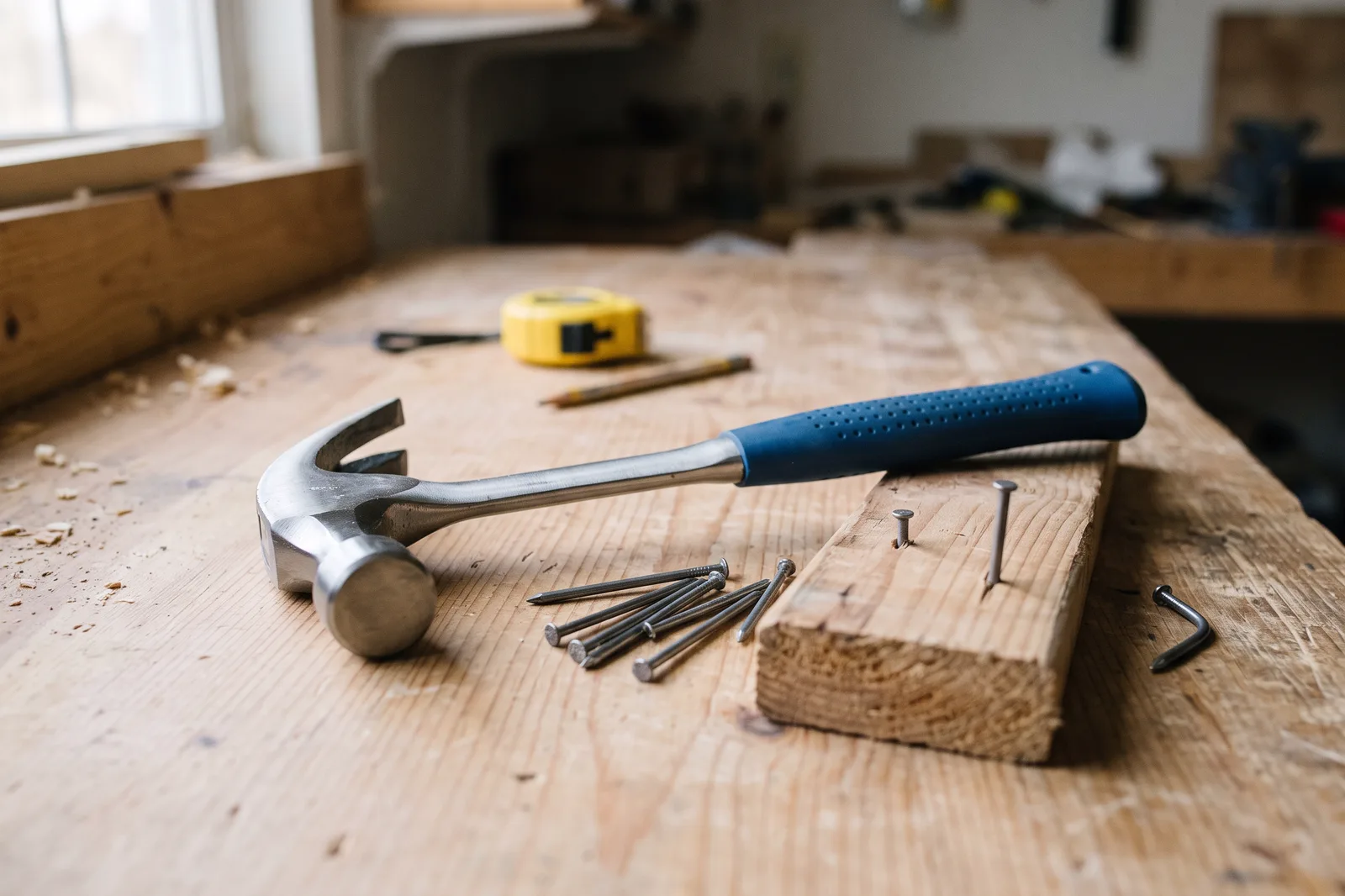
A claw hammer drives nails with its flat face and pulls them with its split claw. Most homeowners should buy one 16-ounce hammer with a smooth face and a handle that suits their hand. Steel is the toughest, fiberglass and wood soften the shock. Skip the heavy framing sizes unless you build decks and walls.
What is a claw hammer?
A claw hammer is a hand tool with a weighted head on a handle. One end of the head is a flat face for driving nails. The other end is a claw, a split hook that grips a nail and pulls it out. It is the most common hammer in homes, and the one most people mean when they say "a hammer."
The parts that change from one model to the next are the claw, the face, the handle and the weight:
| Part | Choices | What it changes |
|---|---|---|
| Claw | Curved, or straight (rip) | Curved pulls nails with less effort. Straight slips between boards for prying. |
| Face | Smooth, or waffle (milled) | Smooth is for finish work. Waffle grips framing nails but marks wood. |
| Handle | Steel, fiberglass, or wood | Shock, durability and whether you can replace it. |
| Head weight | About 16 to 28 oz | Control against power. |
A claw hammer is not a sledge or a demolition tool. Use it to drive nails and pull the ones you bend, and keep a pry bar for heavier levering.
Why you'll want one
It does the basic jobs fast. Hanging a picture, nailing trim, closing a crate, tapping a loose board back into place or building a simple frame all start with a hammer. Nothing else drives and pulls a nail with one hand.
It rarely needs power or a battery. A hammer works in a basement, on a ladder and in a garage with no outlet. That is why it is on almost every "first tools" list.
It is cheap insurance against a bad nail. Bent a nail? Flip the hammer and pull it. The claw is part of the job, not an extra.
What the tests found
We read two hands-on tests and a buying guide, and checked three videos. The patterns:
- Steel won both written tests. Bob Vila's tester named the Estwing Rip Claw 16 oz best overall after driving and pulling 16D and 8D nails. This Old House scored a 16 oz Estwing steel claw hammer 4.9 out of 5, the top score, noting minimal mishits and the best nail driving.
- Wood and fiberglass held their own. This Old House ranked a 16 oz hardwood hammer and a 16 oz oak hammer next, each scoring 4.6. A wood handle was third-best at damping vibration, though it noted some reviewers question long-term durability.
- Weight matters. The same test found a 20 oz Craftsman fiberglass hammer drove 16D nails well but transmitted more vibration and had three mishits, so heavier is not always better.
- Handle material trade-offs are clear. Bob Vila says fiberglass is lighter and absorbs vibration well, steel is the most durable, and wood absorbs shock but is more likely to split.
- Waffle faces wear smooth. In the Catus Maximus comparison, the reviewer says a waffle face on a heavily used framing hammer was almost pounded smooth, and argues a smooth face is the better buy for most people.
- Hold it near the end. The same video says vibration concentrates near the head, and choking down on the handle makes it more noticeable.
What buyers say about our three picks
We feature three 16 oz hammers across the tiers. They are examples, not the only good ones.
- Estwing E3-16S (pro tier). The listing calls it a one-piece forged American steel rip hammer with a shock reduction grip, and Amazon reviews give it a very high average. A common complaint in written and video reviews of steel hammers is that more shock reaches your hand than with wood or fiberglass, and the rip claw is less comfortable for pulling nails than a curved one. Estwing also sells a curved-claw version, the E3-16C, if nail pulling matters more to you.
- Craftsman CMHT51398 (mid tier). Buyers on Amazon rate this fiberglass hammer highly. Bob Vila calls the handle curve more pronounced than needed. This Old House's tester found a 20 oz Craftsman fiberglass hammer had more vibration than the steel winner, so check which weight you are buying.
- Stanley 51-616 (budget tier). A hickory-handled classic with a curved claw. It has far fewer reviews on Amazon than the other two, so there is less buyer feedback to go on. ToolGuyd points to it as a simple economical pick for people who do not care about steel or American-made construction.
| Pros of owning a claw hammer | Cons of owning a claw hammer |
|---|---|
| Drives and pulls nails with one tool and one hand | Slow and tiring for long runs of nails compared with a nail gun |
| Needs no battery, cord or outlet | Heavy levering can break the handle |
| A good 16 oz model is among the cheaper tools in the box | A miss can dent wood or hit a finger |
| Simple to use and easy to find replacements or repair | One hammer will not suit both fine trim and heavy framing |
Steel, fiberglass or wood: which to buy first?
- Choose steel if you want one hammer that will outlast the others and you do not mind a little more shock. Pick a model with a thick rubber grip.
- Choose fiberglass if you swing a hammer for longer sessions and want a light handle. Remember it cannot be repaired if it breaks.
- Choose wood if you like the traditional feel and shock absorption. Check the handle is bonded tightly to the head, and do not use it as a pry bar.
Common mistakes
- Holding the handle too close to the head. You lose power and control. Grip near the end.
- Hitting with a tilted face. The video guides say the face should hit the nail head flat. A tilted blow bends nails.
- Using the claw as a crowbar. Heavy levering breaks handles. Switch to a pry bar.
- Choosing too heavy. A heavier hammer drives nails faster but tires your arm. Pick a weight you can swing comfortably for the job.
- Skipping safety glasses. Nails can fly when you pull or strike them.

Who it's for
- First-time homeowners and renters who hang pictures, assemble furniture and fix small things
- Weekend DIYers building shelves, a workbench or a fence
- Anyone starting a toolbox who wants one hammer that does most jobs
- Parents and teachers helping with first nailing projects who want a light, balanced 16 oz tool
Who should skip it
- People who build wood frames or decks all day. A longer, heavier framing hammer, or a nail gun, is the better fit.
- Anyone who mainly hangs light frames. A small hammer or a push-pin hanging kit can be enough.
- Heavy demolition work. Use a pry bar or a small sledge instead of a claw hammer.
How to use it
These steps work for most nailing jobs on wood.
- Pick the right nail. The nail should be about two to three times as long as the board you are fastening is thick, so it bites into the second piece. A nail that is too short will not hold.
- Mark the spot. Use a pencil so you do not guess. For a row of nails, mark them with a speed square or framing square.
- Wear safety glasses. Nails and chips can fly.
- Hold the nail near the top. Pinch the nail between your thumb and finger, or poke it through a thin card so your fingers stay clear.
- Grip the handle near the end. Hold firmly, not tightly, so the hammer can swing.
- Start with light taps. Choke up on the handle to start the nail, then tap until it stands on its own.
- Move your hand to the end of the handle. Release the nail and take full swings from the elbow and shoulder.
- Keep the face flat. Look at the nail head, not the hammer. Hit the nail straight on.
- Stop before the surface. If you want a nail flush, make the last blow gentle so the face does not dent the wood. For a countersunk nail, use a nail set.
- Straighten a bent nail. Stop, tap it gently from the side, or pull it with the claw.
- Pull a nail. Slide the claw under the head, pull back until the nail lifts, put a thin block under the head, and pull again.
- Put the hammer away. Keep it dry. A light coat of oil on the head prevents rust.

Safety note: do not use a claw hammer to strike hardened steel such as other hammers, chisels or masonry nails, because chips can fly off. For heavier or repeat nailing, a pneumatic nail gun does the job faster, and our workbench guide shows what else you need for a first project.
What to look for when buying
- Weight. Start at 16 oz for general home use. Go to 20 oz only if you do framing.
- Claw. Curved for pulling nails, straight for prying and tight spaces. If you only own one, curved is usually the easier first choice.
- Face. Smooth for finish and household work.
- Handle. Pick steel for toughness, fiberglass for light weight or wood for tradition, and check the grip is comfortable.
- Balance. The head should feel weighted but not top-heavy.
- One-piece or tight bond. Look for forged steel, or a wood or fiberglass handle fixed firmly to the head.
- Magnetic nail holder. A bonus, though the Catus Maximus video says it never worked well for them and the slot wears out.
- Warranty. A clear maker warranty is a good sign.
Key specs to look for
| Spec | What to look for |
|---|---|
| Head weight | 16 oz is the all-round size for homes. Bob Vila and This Old House both put most DIY work at 16 to 20 oz. Heavier heads (20 to 28 oz) drive framing nails faster but tire your arm. |
| Claw shape | A curved claw gives more leverage for pulling nails and scars the wood less. A straight rip claw pries boards apart and fits tight spots but pulls nails with less ease. |
| Face | A smooth face avoids leaving marks. A waffle (milled) face grips nail heads but dents wood, and in one video test the waffle pattern wore down on a heavily used hammer. |
| Handle material | Steel is toughest and transmits more shock. Fiberglass is light and absorbs shock but cannot be repaired. Wood absorbs shock and can be replaced but may split. |
| Handle length | About 13 to 16 inches suits household work. Longer handles add strike force and cost control in tight spaces. |
| Grip | A rubber or vinyl grip cuts shock and keeps a sweaty hand from slipping. Check that the base flares so the hammer will not slide out. |
| Balance | It should feel like the weight is in the head without the handle flipping out of your hand. Try a few swings in the store if you can. |
| Construction | A one-piece forged head and handle has no joint that can loosen. Wood and fiberglass handles should be tightly bonded to the head. |
Where to get it
All three are sold on Amazon. We put the Estwing in the pro tier, the Craftsman in mid and the Stanley in budget. Check the listing for the head weight and the claw type before you order.

ESTWING Rip Hammer, 16 oz Smooth Face, Shock Reduction Grip, E3-16S
- One piece of forged steel from head to handle, so there is no joint to loosen, per the maker
- Named best overall in Bob Vila's hammer test and topped This Old House's scored test as a 16 oz Estwing steel claw
- Straight rip claw is easy to slip under boards and works for light prying; the curved E3-16C is the easier choice for pulling nails
How we scored it
Usefulness 9/10 · Value 8/10 · Durability 10/10. This is our own opinion, based on specs, buyer reviews and independent tests. It is not an Amazon or customer rating.

CRAFTSMAN Hammer, Fiberglass, 16 oz. (CMHT51398)
- Curved claw and a fiberglass handle that soaks up more shock than bare steel
- Bob Vila's tester picked it as best bang for the buck after driving and pulling nails with it
- The listing says overstrike protection guards the part of the handle where fiberglass usually breaks
How we scored it
Usefulness 8/10 · Value 8/10 · Durability 7/10. This is our own opinion, based on specs, buyer reviews and independent tests. It is not an Amazon or customer rating.

Stanley 51-616 16 Ounce Hickory Handle Nailing Hammer
- A classic curved-claw nailing hammer with a hickory handle that dampens vibration
- ToolGuyd points to it as a simple, economical choice if you do not need steel or American-made
- Wood handles can split if you pry hard on them, so use a pry bar for stubborn nails
How we scored it
Usefulness 7/10 · Value 8/10 · Durability 6/10. This is our own opinion, based on specs, buyer reviews and independent tests. It is not an Amazon or customer rating.
Read the newest reviews before you buy.
Watch and read more
Video reviews
- Ripping/Framing Claw Hammer Review & Comparison — Catus Maximus
Compares Stanley, Estwing, Husky and other claw hammers by handle material, claw shape, face and weight. - A Complete Guide To Claw Hammers: Framing, Finish, Demolition, and More — WB Tool News
Explains curved vs. straight claws, smooth vs. milled faces, handle materials and weights. - How to choose and use a claw hammer — WorkshopCommunity
A short guide to weight, handle choice, grip and driving and pulling nails.
Free calculators FigureMyHome
- Deck Calculator — Work out boards and nails before you start a deck.
- Fence Calculator — Estimate posts, rails and pickets for a fence project.
Frequently asked questions
What size claw hammer should I buy?
A 16 oz hammer is the usual first choice. Bob Vila's guide says 16 to 20 oz suits most DIYers, and This Old House's tester says to go to a 16 oz hammer for most household tasks.
What is the difference between a curved claw and a rip claw?
A curved claw sweeps down so the hammer pivots like a lever and pulls nails with less effort. A rip, or straight, claw is nearly flat so it slides between boards for prying and demolition, but it is less comfortable for pulling nails.
Is a steel, fiberglass or wood handle best?
It depends on what you value. Steel is the toughest and, in This Old House's test, a steel Estwing scored best overall. Fiberglass is light and absorbs shock but is hard to replace. Wood absorbs vibration but can split if you pry hard.
Should I choose a smooth face or a waffle face?
For home projects, a smooth face. It will not leave a waffle-shaped mark when you miss, and the hammer's face works for finish nails. A waffle face grips framing nails better but marks wood.
How do I pull a nail without bending it?
Slide the claw under the head, pull the handle back until the nail lifts a little, then slide a thin scrap block under the head and pull again. The block gives more leverage and protects the surface. A pry bar or a cat's paw is better for stubborn or buried nails.
How do I hold a hammer for more power?
Hold the handle near the end, keep your grip firm but relaxed, and swing from the elbow and shoulder rather than only the wrist. Keep your eyes on the nail head.
Can I use a claw hammer to pry or demolish things?
Light prying is fine, but heavy levering can break the handle. For trim and boards use a flat pry bar, and wear safety glasses because nails can fly.
Sources
Related tools
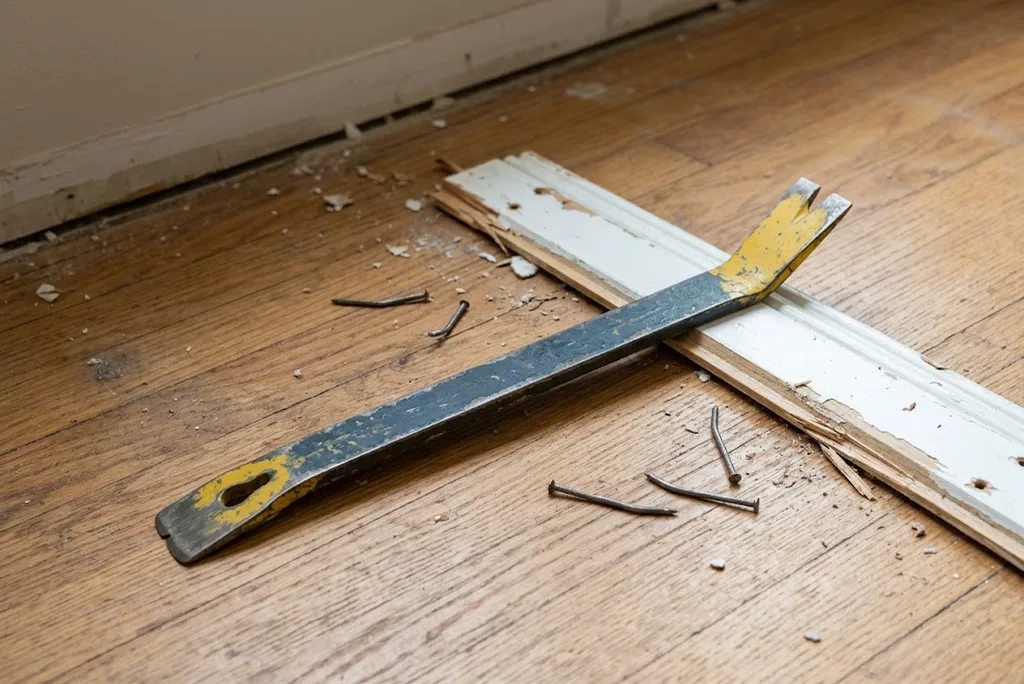 Hand ToolsPry Bar and Crowbar: The Leverage Tool Every Home NeedsA pry bar is a flat steel bar with a thin, beveled end and a nail slot, used to lift trim, pull nails and separate boards with leverage.
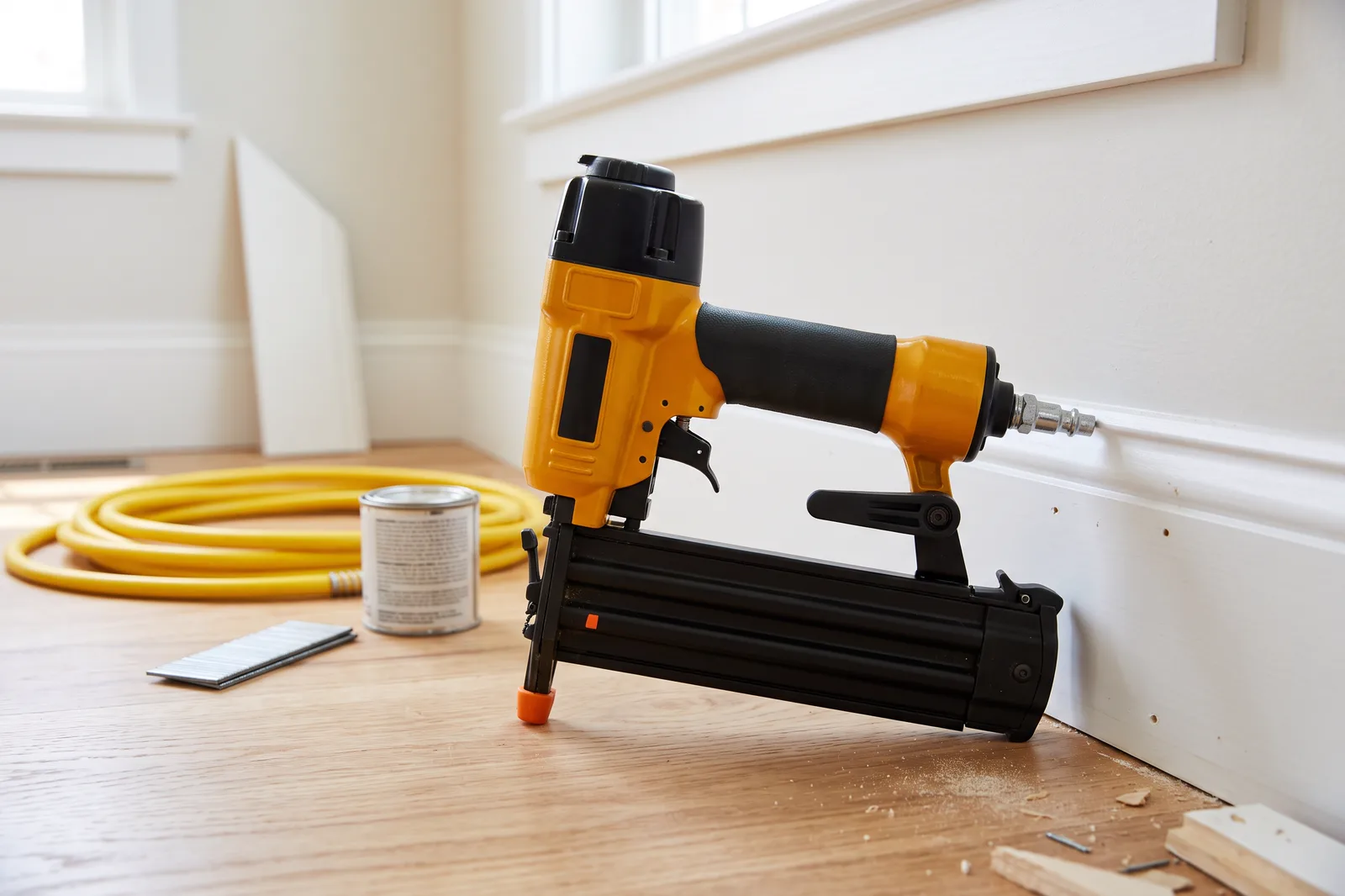 Power ToolsPneumatic Nail Gun: The Fast Way to Hang Trim Without a HammerA pneumatic nail gun uses compressed air from a compressor to drive a nail in a fraction of a second.
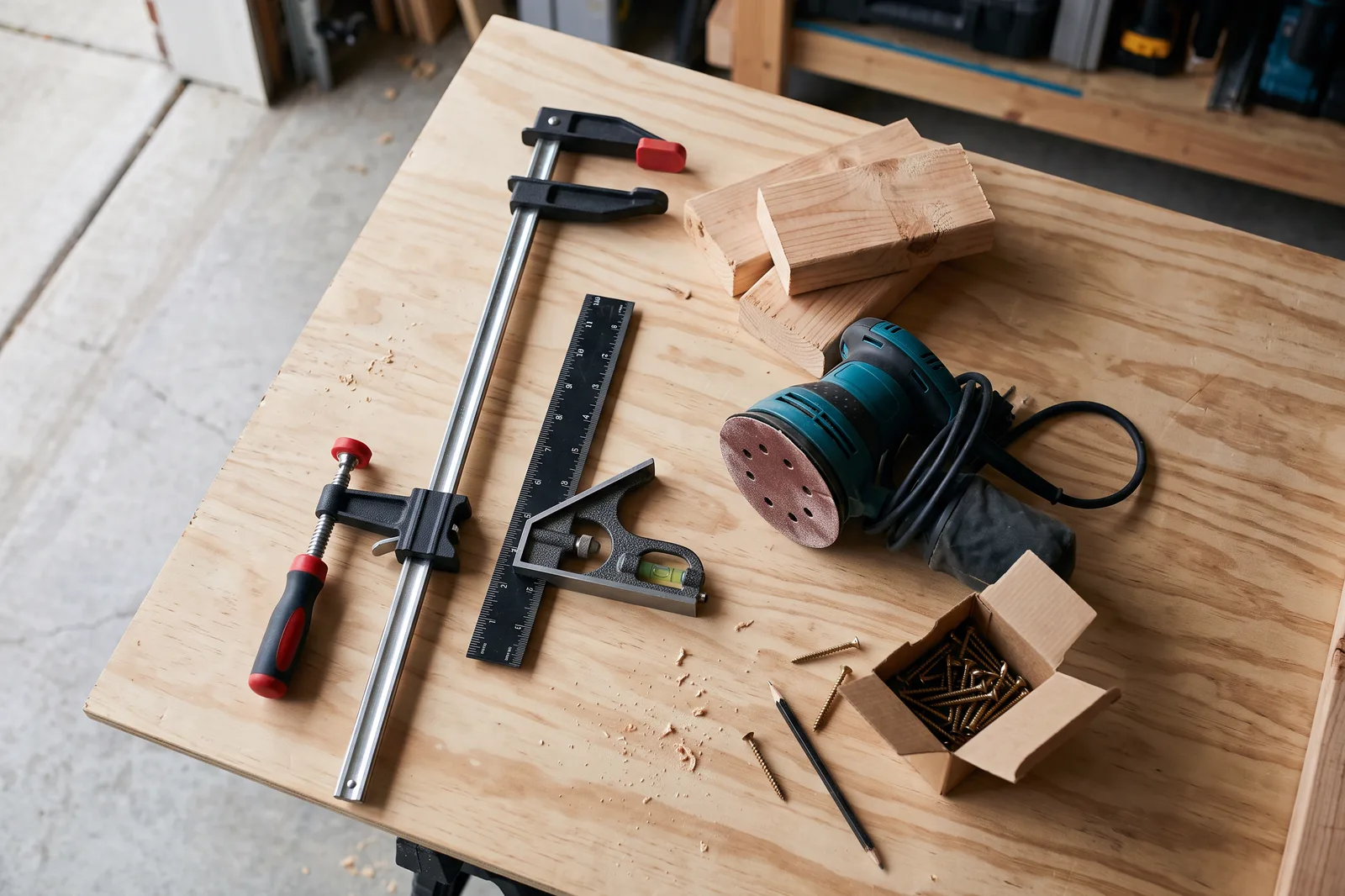 Workshop & StorageTools Needed to Build a Simple WorkbenchA simple workbench is 2x4 legs and rails with a plywood or MDF top, so you need a saw, a cordless drill/driver, a tape measure, a square and a few clamps.