
Measuring & Layout · Comparison · Maker
Marking Tools for Woodworking: Pencils, Knives and Gauges Compared
 Dixon Industrial Carpenter Pencils, 12-pack
 X-ACTO #1 Precision Knife With 5 #11 Blades
 Taytools 467603 Wheel Marking Gauge, Brass Head
Photos from the Amazon listings. Scores are our own, not customer ratings.
Quick answer
Use a pencil for rough layout and a marking knife or gauge for anything that has to fit. A scored line is thinner than a pencil line, cannot be rubbed out by accident and gives your saw or chisel something to sit in. If you buy only one new tool, make it a marking knife. Add a marking gauge when you start cutting joints.
Quick answer: which marking tool should you use?
Every woodworking project starts with a line. How you make that line decides how well the joint fits. We compared the three main ways to mark wood (a pencil, a marking knife and a marking gauge) using Lee Valley's marking gauge guide, Fine Woodworking's marking knife test and what woodworking creators and buyers say about them.
The short answer is simple:
- Pencil for quick layout, rough stock and anything you may want to rub out.
- Marking knife for any line that a saw or chisel will follow.
- Marking gauge when you need the same distance from an edge again and again.
If you are a beginner and can only buy one tool, buy a marking knife. If you mostly build with screws and glue, a speed square and a carpenter pencil may be all you need.
Pencil, knife or gauge: how each one marks
Pencils
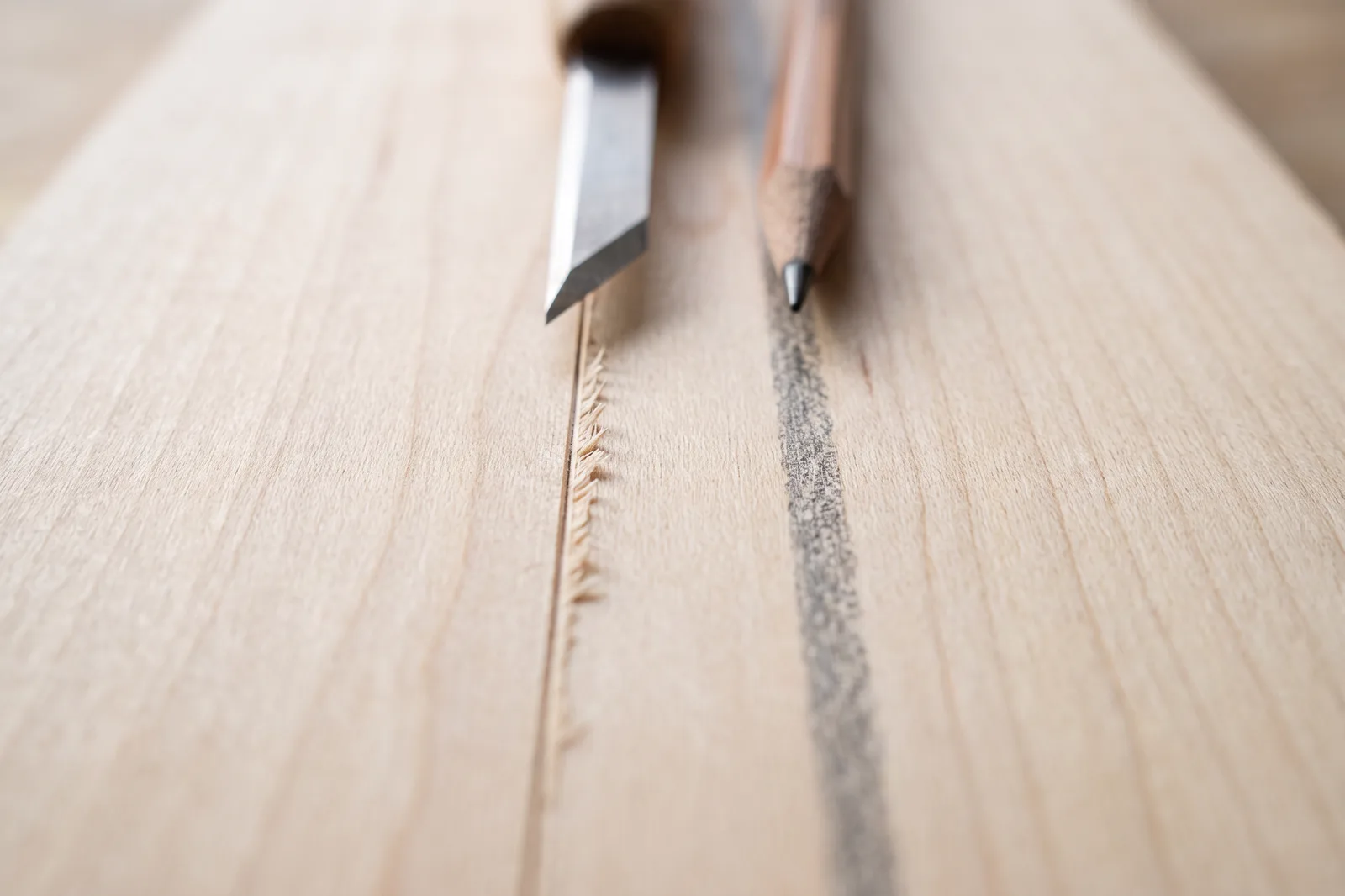
A pencil makes a line by leaving graphite on the surface. That is fast, visible, easy to see on rough boards and easy to remove. It is also thick. Lee Valley's guide puts even the thinnest pencil line at about half a millimeter, and a dull pencil is much wider.
A flat carpenter pencil is the usual choice for lumber. It will not roll off the bench, and you can sharpen it to a chisel edge with a knife for a thin line along a square. For finer work, many woodworkers use a hard, sharp pencil. A pencil is also the right tool when you do not want a permanent mark.
Marking knives
A marking knife cuts a very thin groove in the surface. According to Lee Valley, a line made by a knife, point or disc cutter is less than 1/64 inch thick (about 0.4 mm), thinner than the smallest pencil line. Because it is a cut, it cannot be erased by accident, and it gives a chisel or saw a place to sit. That is why many hand-tool woodworkers use it to transfer lines from the face of a board to the edge.
Marking gauges
A marking gauge scores a line at a set distance from an edge. A pin gauge has a point that scratches, which works with the grain. A knife or wheel gauge has a small blade or disc that slices across the grain and on end grain without tearing the fibres. A mortise gauge has two pins to mark both sides of a mortise at once. A gauge is how you mark the same line on four board ends, or around the shoulder of a tenon.
Who it's for
- Beginners who want accurate dovetails, rabbets and shoulders without buying a drawer of tools
- Hand-tool woodworkers who saw or chisel to a line
- Furniture and cabinet makers who need repeatable lines from an edge
- Makers who build from rough stock and want a quick, visible layout for the first cuts
Who should skip it
- Rough construction. For framing and deck work a carpenter pencil and a speed square are all you need.
- Anyone who needs removable marks. On a finished surface or veneer, use pencil or tape.
What the testers found
Fine Woodworking's marking knife test
Fine Woodworking's tester put 16 knives through five real tasks, including scoring a line against a combination square, marking dovetails and laying out a mortise. In the text visible to non-subscribers:
- The X-Acto No. 1, the Blue Spruce Spearpoint and the Hock Violin Knife tied for the best overall.
- The X-Acto was named best value. Its thin, flexible blade left a deep, narrow line, carried a line around corners and was nimble enough for delicate inlay.
- The Blue Spruce was a favourite for dovetails because of its long spear point and flat back.
- The Hock was a heavier knife whose blade stayed on track in all tasks.
- The tester's own favourite was one of the least expensive knives in the test, and the tester had used it for years.
This test is from 2008, so models and availability have changed, but the lesson holds: you do not need a boutique knife to get a good line.
Lee Valley's guide to marking gauges
Lee Valley's guide, written by woodworker Charles Mak, explains why a scribed line beats a pencil line for joinery: it is thinner, permanent and registers the tool. It also notes that pin gauges suit lines along the grain, while knife gauges suit lines across the grain and on end grain, and that a mortise gauge makes two parallel lines in one pass. Pencil marks are the choice when the surface should not be permanently marked, and they are easier to see on rough wood. Lee Valley sells marking gauges, so treat the guide as an expert view from a retailer.
Pros and cons
Pencils
| Pros | Cons |
|---|---|
| Fast and visible on rough stock | Thick line. Even a sharp pencil is wider than a scored line. |
| Easy to remove, so good for layout you may change | Cannot guide a chisel or saw |
| Low cost and found everywhere | Smudges and wears while you work |
Marking knives
| Pros | Cons |
|---|---|
| Thin, accurate line that stays put | Permanent, so mark only where the line will be cut away |
| Registers a chisel or saw for tight joints | Hard to see on dark or rough wood |
| Easy to start with, especially with a hobby-style knife | Needs a sharp edge or it tears instead of cutting |
Marking gauges
| Pros | Cons |
|---|---|
| Repeatable lines from an edge | Another tool to buy and set up |
| Clean lines across the grain with a knife or wheel | Only parallel to an edge |
| Fast once set | A poorly made gauge slips, so a good lock matters |
Which should you buy first?
- If you are a beginner, get a marking knife and use your pencil only for rough layout.
- If you cut joints, add a wheel marking gauge. It makes shoulders, rabbets and mortises accurate and repeatable.
- If you build furniture from rough lumber, keep a flat carpenter pencil for first marks and switch to the knife for anything final.
- If you build with screws, a pencil and square are enough. Our speed square guide shows how to use one.
Using them together on a real joint
Most woodworkers do not pick one tool. They hand each job to the tool that suits it. Here is a simple order of work for a basic joint, such as a shoulder line on a tenon or a rabbet.
- Rough layout with a pencil. Mark the pieces, the face side and the waste so you do not cut the wrong part. A pencil line is easy to see and easy to correct.
- Set the gauge. Lock the fence at the distance you want from the edge and run the gauge along the board from each end. Roll the wheel or pin toward you so it trails behind the point instead of digging in.
- Check with the knife. Where the joint needs a square line across the board, hold a try square on the line and score it with the marking knife. Use the same knife to carry the line around to the adjoining faces so the layout matches on all sides.
- Deepen the line, then cut in the waste. Make a second light pass with the knife, then put a chisel in the groove and make a small ledge. Your saw or chisel now has a place to sit.
- Clean up. A scored line stays on the board, so keep it inside the waste or where the joint will hide it. If a line will be visible, use pencil instead.
Lee Valley's guide makes the same point: a scribed line is thinner than the thinnest pencil line, cannot be erased by accident and lets a tool register in it, which is why it is preferred for transferring a line from one face to an adjoining edge.
Common mistakes to avoid
- Pressing too hard on the first pass. A heavy first cut can wander with the grain. A light first pass followed by a second pass is easier to control.
- Using a dull knife. A dull edge crushes fibres and leaves a fuzzy line. Strop it or replace the blade.
- Marking on the wrong side of the line. Decide which side is waste before you score, and keep the cut on that side.
- Letting the gauge dig in. Tilt the gauge slightly so it trails, and take a lighter pass across the grain.
- Scoring a visible surface. A scored line is permanent. On a show face, mark with a pencil or tape instead.
Tips for cleaner lines
- Mark with a square. Slide the knife along the edge of a try square or speed square, with the flat side of the blade against it.
- Make two light passes instead of one hard pass. The first pass defines the line, the second deepens it.
- Start the knife on the waste side of the line so the cut falls in the scrap.
- Trace the line with a chisel. Put the chisel edge in the groove and tap lightly to make a ledge for your saw or chisel.
- Keep it sharp. Strop the knife and sharpen pencils with a blade, not a pencil sharpener.
- Add up measurements twice. The feet-inch fraction calculator on figuremyhome.com helps with cut lists.
Key specs to look for
| Spec | What to look for |
|---|---|
| Line width | A scored line is thinner than a pencil line. Lee Valley's guide puts a scribed line at about 0.4 mm and the thinnest pencil line at about 0.5 mm. |
| Permanence | A pencil line comes off with an eraser or sanding. A scored line stays, so use it only where it will be cut away or hidden. |
| Registration | A scored line lets a chisel or saw seat in the line. A pencil line cannot do that. |
| Blade shape (knife) | A skew or spear point with a flat back on one side lets you slide the knife along a square. Fine Woodworking's testers liked a thin, slightly flexible blade. |
| Tip type (gauge) | Pin gauges suit lines with the grain. Knife and wheel (cutting) gauges suit lines across the grain and end grain without tearing fibres. |
| Gauge body | A stock that locks firmly and a beam marked clearly. A mortise gauge has two pins for two parallel lines in one pass. |
| Grip | A handle you can hold like a pencil for control. Round handles roll, so a flat side is a plus. |
| Upkeep | Knife blades and gauge wheels need sharpening or replacing. A dull edge crushes fibres and leaves a fuzzy line. |
Where to buy
All three kinds of tool are sold on Amazon. We list a budget pencil (Dixon Industrial), a budget knife (X-ACTO No. 1) and a mid-tier gauge (Taytools 467603).

Dixon Industrial Carpenter Pencils, 12-pack
- Flat shape will not roll off a bench and wears into a broad or chisel tip
- Quick and visible on rough lumber, and easy to erase or sand off
- Good for cut lists, rough layout and marking waste
How we scored it
Usefulness 8/10 · Value 9/10 · Durability 7/10. This is our own opinion, based on specs, buyer reviews and independent tests. It is not an Amazon or customer rating.

X-ACTO #1 Precision Knife With 5 #11 Blades
- Fine Woodworking named the X-Acto No. 1 best value in its marking knife test
- Thin, flexible blade leaves a narrow, deep line and turns corners easily
- Blades are cheap to replace when they go dull
How we scored it
Usefulness 9/10 · Value 9/10 · Durability 6/10. This is our own opinion, based on specs, buyer reviews and independent tests. It is not an Amazon or customer rating.

Taytools 467603 Wheel Marking Gauge, Brass Head
- Cutting wheel slices rather than tears, so it works across grain and with it
- Sets a repeatable distance from an edge for shoulders, rabbets and mortises
- Leaves a thin line you can see and feel with a chisel
How we scored it
Usefulness 9/10 · Value 8/10 · Durability 8/10. This is our own opinion, based on specs, buyer reviews and independent tests. It is not an Amazon or customer rating.
Read recent reviews before you buy, and check that the knife is the pointed No. 1 style and not a utility blade.
Watch and read more
Free calculators FigureMyHome
- Feet-Inch Fraction Calculator — Add and subtract measurements for a cut list without fraction mistakes.
Frequently asked questions
Is a marking knife better than a pencil?
For joinery, usually yes. Lee Valley's guide says a scored line is thinner than a pencil line, cannot be erased by accident and lets a chisel or saw register in it. A pencil is still better for quick layout, rough stock and any mark you may want to remove.
What is the best marking tool for a beginner?
A marking knife and a sharp pencil. Fine Woodworking's marking knife test named the X-Acto No. 1 best value, and the tester had used one for years. Add a marking gauge when you start cutting joints and want repeated lines from an edge.
Do I need a marking gauge?
If you cut joints, yes, because it sets a line at an exact distance from an edge and repeats it. If you build with screws and glue, a pencil and square may be enough.
What is the difference between a pin gauge and a wheel gauge?
A pin gauge scratches a line, which works well with the grain. A wheel or knife gauge slices the fibres, which gives cleaner lines across the grain and on end grain, according to Lee Valley's guide.
Can I make a marking line that I can still erase?
Yes. Use a sharp hard pencil and mark lightly, or use painter's tape and mark on the tape. A scored line is permanent, so keep it inside the waste.
How do I keep a marking knife sharp?
Strop it or touch it up on a fine stone, and replace blades on a hobby-style knife when they dull. A dull blade crushes the wood instead of cutting it.
What is the best pencil for woodworking?
A hard lead (such as 2H) gives a thin line for layout. A carpenter pencil gives a broad, visible line on rough lumber. Many woodworkers keep one of each.
Sources
Related tools
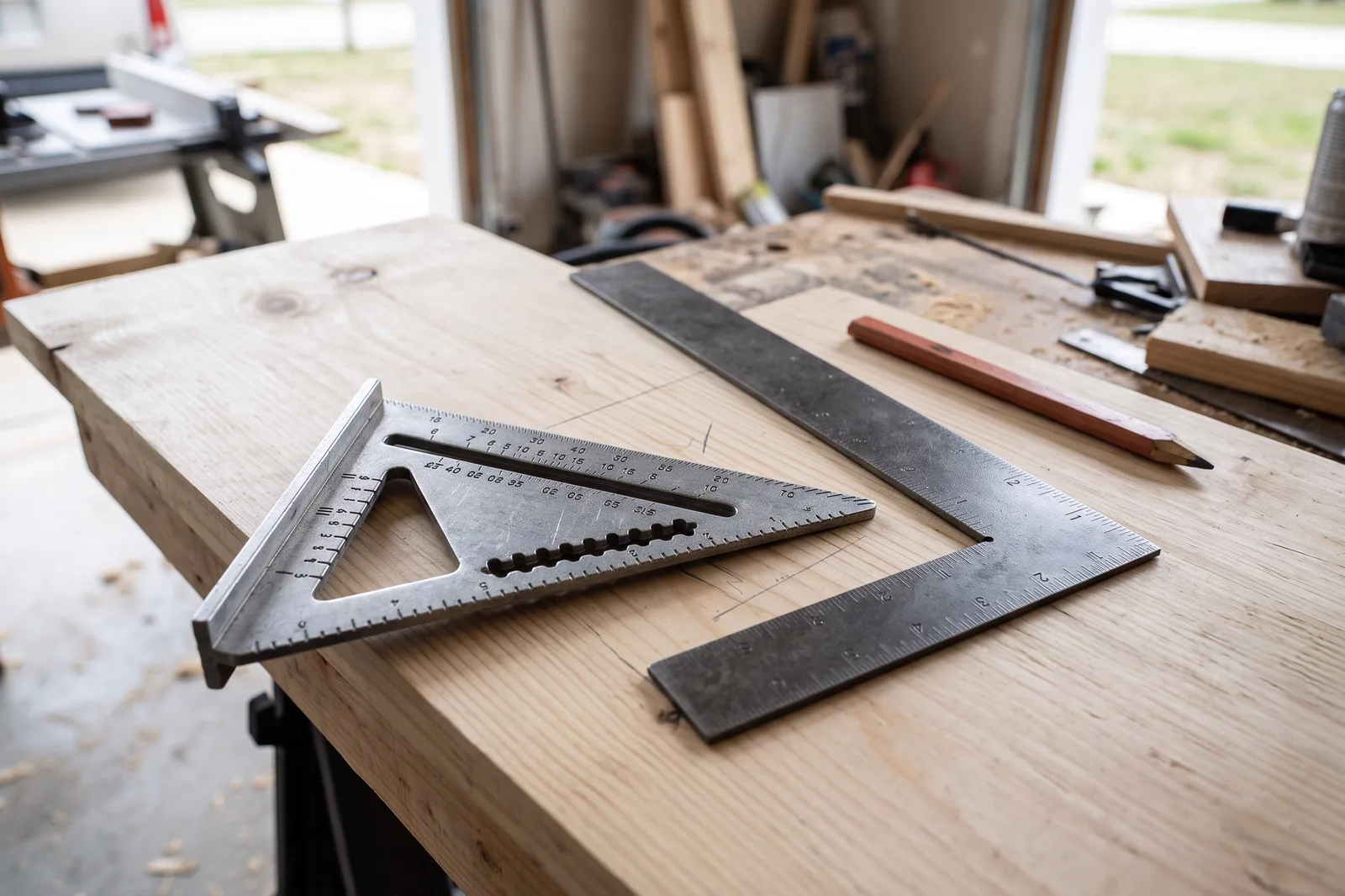 Measuring & LayoutSpeed Square and Framing Square: Two Layout Tools Worth OwningA speed square is a small aluminum triangle for marking square and angled cuts on boards, and a framing square is a large steel L for checking corners and laying out stairs and rafters.
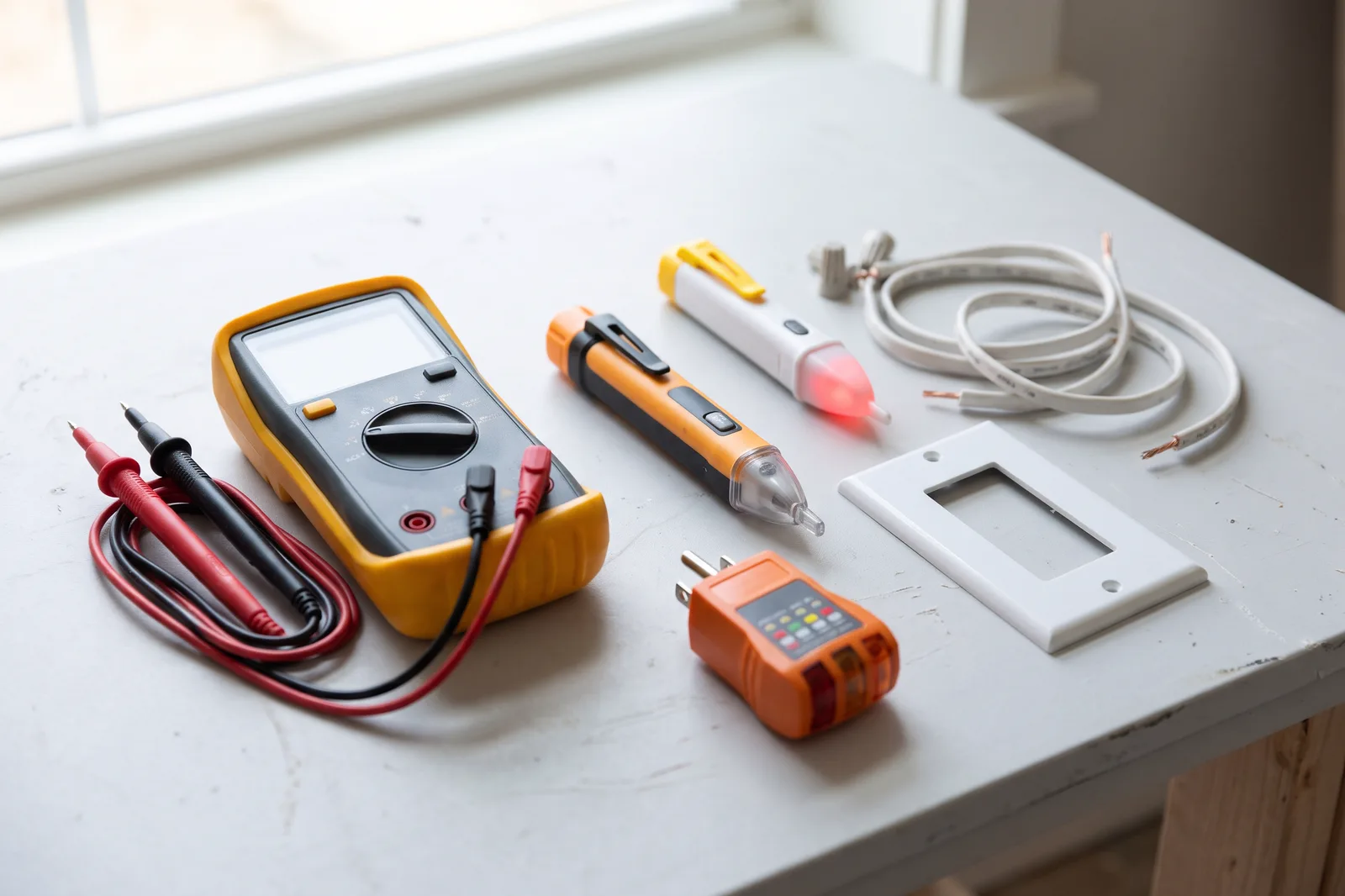 Measuring & Layout · RoundupMultimeters and Voltage Testers: Which to Own at HomeA non-contact voltage pen tells you if a wire may be live, a plug-in outlet tester checks wiring on the spot, and a multimeter gives actual numbers.
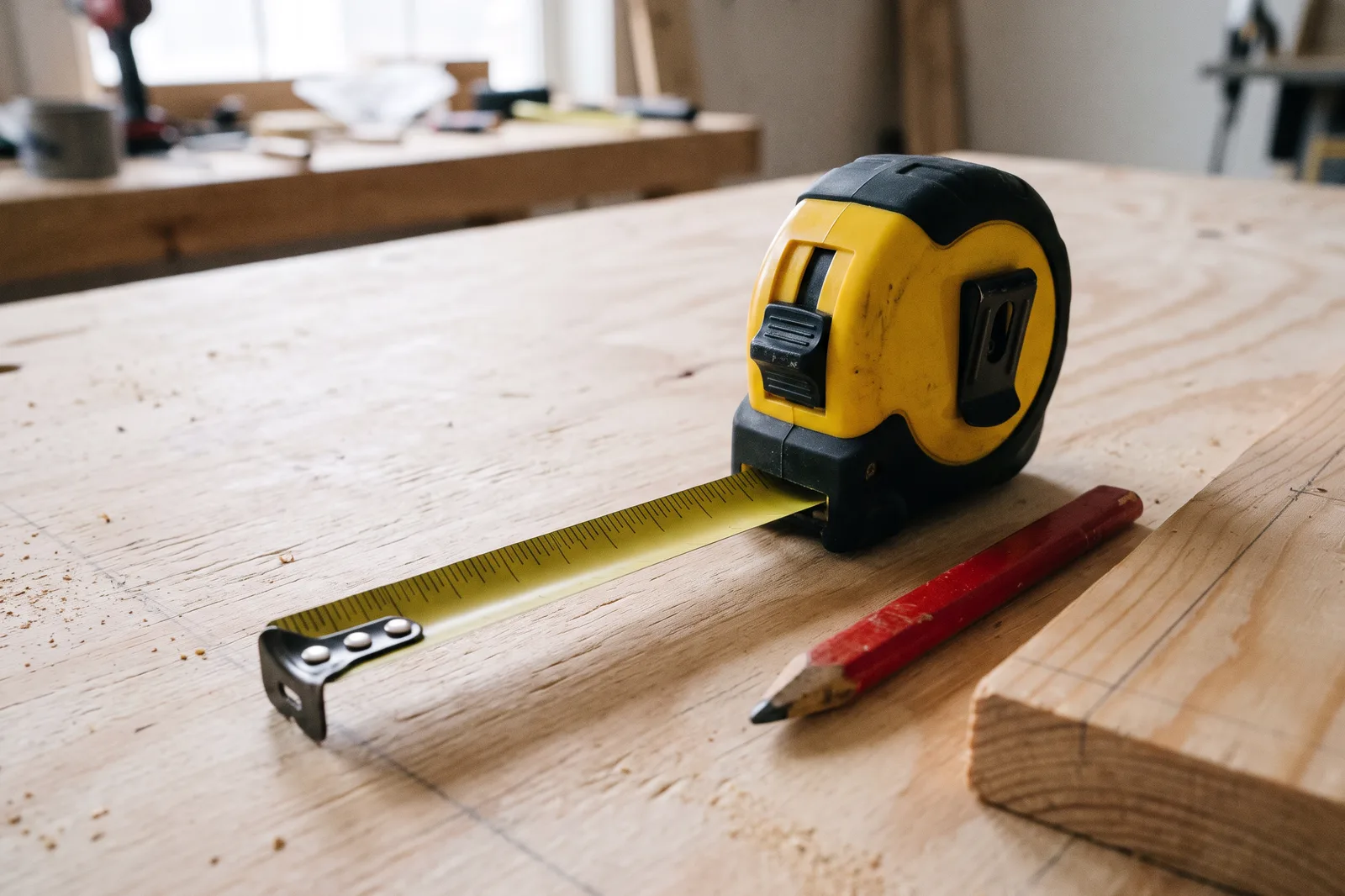 Measuring & LayoutTape Measure: The Everyday Tool Behind Every Good CutA tape measure is a coiled steel ruler that locks and retracts, and it is the first measuring tool every home toolbox needs.