Power Tools · Single tool · DIY · Maker
Jigsaw: The Saw for Curves, Cutouts and Tight Spots

Our verdict
BOSCH JS470E 7.0 Amp Top-Handle Corded Jig Saw
8.3/10
Worth-owning score
Price tier Mid ($$)
View on AmazonOur own score from specs, buyer reviews and tests. Not a customer rating. Photo from the Amazon listing.
Quick answer
A jigsaw is a handheld saw with a thin up-and-down blade that cuts curves, circles and cutouts that other saws cannot. A corded top-handle model like the Bosch JS470E is a well-reviewed all-rounder for a first purchase. Skip it if you mostly cut straight boards to length, because a circular saw or hand saw is faster and straighter.
What is a jigsaw?
A jigsaw is a handheld power saw with a thin, narrow blade that moves up and down very fast. Because the blade is narrow, it can turn, so the saw can follow a curve, cut a circle or notch out a square corner. Uncle Knackers calls it the obvious go-to tool for curved and flush cuts.
You push the saw along a pencil line with its flat base plate (also called the shoe or foot) resting on the wood. The blade cuts on the upward stroke, which also keeps the wood pressed down against the base. Swap the blade and the same saw can cut wood, plastic, laminate or thin metal, per Pro Tool Reviews.
| Jigsaw | Circular saw | Hand saw | |
|---|---|---|---|
| Best at | Curves, circles, cutouts, tight spots | Long straight cuts in boards and sheets | Quiet cuts to length, no power needed |
| Cut accuracy | Good with practice; blade can drift | Straight with a guide | Depends on your technique |
| Plunge into the middle of a panel | Yes, after a pilot hole | Possible but risky | Awkward |
Why you'll want one
It cuts shapes nothing else can. A circular saw only goes straight. A jigsaw follows a curve, so you can cut a round tabletop, a scalloped shelf edge or a template line.
It makes cutouts inside a board. Drill a starting hole, drop the blade in and cut a hole for a sink, a vent, a cable pass-through or a pet door. Pro Tool Reviews lists cutting holes for sinks and other installations as a typical job.
It is a friendly first power saw. Uncle Knackers says new DIYers gravitate to it because it is quieter than other power saws and does not look as scary, though he admits straight lines and blade choice were hard when he started.
One saw, many materials. With the right blade it cuts wood, metal, plastic, laminate and more. The Bosch listing gives up to 5-7/8 in. in wood, 7/8 in. in aluminum and 3/8 in. in mild steel.
Which blade for which job
Blades are sold by TPI, teeth per inch. Fewer teeth cut fast and rough; more teeth cut slow and smooth. Uncle Knackers recommends T-shank blades, which are more common and often change without tools.
| Job | Blade | What to know |
|---|---|---|
| Fast rough cuts in thick wood | 6 TPI | Cuts quickly but splinters more |
| General wood and plywood | 10 TPI | Uncle Knackers calls it his go-to all-rounder |
| Laminate and fine work | 20 TPI | Slow and clean |
| Tight curves and circles | Narrow scroll blade, about 14 TPI | Thinner so it can turn |
| Splinter-free top face | Reverse-tooth blade | Teeth face down; it can bounce if you are not used to it |
Common home jobs
- Shaped cuts: round tabletops, curved shelf ends and craft shapes.
- Cutouts: sink openings, vents and access holes. Check behind the surface for wires and pipes first.
- Notches: cutting around pipes, outlets and corners in boards and panels.
- Trimming: cutting a board in place when you cannot get a bigger saw in.
Who it's for
- First-time DIYers who want to cut curves, circles and shaped cutouts
- Homeowners cutting sink openings, vent holes and notches in boards and panels
- Makers and hobbyists cutting shapes from plywood, plastic or thin metal
- Anyone who prefers a top handle for one-handed or hold-down-with-the-other-hand work
Who should skip it
- People who only cut boards to length. A circular saw, miter saw or hand saw is faster and straighter.
- Buyers who want clean, furniture-grade edges without practice. A jigsaw blade can drift; guides and slow cuts help.
- Anyone who needs a cordless saw for ladders. Corded power needs an outlet or extension cord.
How to use it
Wear safety glasses and hearing protection, clamp the work down, and unplug the saw (or remove the battery) before you change a blade or adjust the base.
- Pick the blade. Match the TPI to the material, as in the table above. Fit it fully into the clamp until it stops.
- Mark your line. Use a pencil. For a long straight cut, a guide fence helps; Hardwood Art notes most guides are optional and only fit certain saws.
- Support the work. Let the offcut hang free and keep the blade clear of your bench, so it cannot bite the surface under the cut.
- Choose the orbital setting. Zero gives the cleanest cut. Higher settings cut faster and rougher. Uncle Knackers usually uses zero and accepts a slower cut.
- Set the speed. A max-speed dial or trigger lets you slow down for metal and tight curves. Hardwood Art calls variable speed the single most important jigsaw feature.
- Drill a pilot hole for inside cuts. For a circle or cutout, drill a hole on the waste side of the line big enough for the blade.
- Reach full speed first. Uncle Knackers says to start the saw and let it reach top speed before entering the cut, or it will bounce and make a mess.
- Press the base flat and go slowly. Do not force the saw. Let it work at its own pace and gently turn it around curves.
- Use the lock-on only for steady cuts. Hardwood Art says the lock suits a straight cut at one steady speed. For curves, keep your finger on the trigger so you can slow down or stop.
- Unplug, then clean up. Let the blade cool before you remove it and sweep up the dust.

Our circular saw guide covers the better choice for long straight cuts, and our hand saw roundup covers quiet manual options.
What reviewers and buyers say about the Bosch JS470E
We feature the Bosch JS470E, a corded top-handle saw. Here is what we found:
- Praised: Pro Tool Reviews picked it as Best for the Money, noting its pro-grade heritage, 3,100 SPM top speed and comfortable design. The Amazon listing's buyer-review summary describes clean, smooth cuts, strong power, easy blade changes and solid build quality.
- Common complaints: Catis Maximus, reviewing a lightly used saw, found the orbital switch stiff, the variable-speed range narrow (roughly a quarter inch of trigger travel) and the case held by nine screws, which makes replacing a cord or brushes slower. He also felt it was pricey for what it offers next to older Bosch models. That is one reviewer's view, not a test.
- Warranty: the Bosch listing shows a one-year limited warranty on the tool.
- Independent tests: We did not find a measured head-to-head test of this exact saw, so we do not claim a ranking beyond Pro Tool Reviews' pick.

Top handle or barrel grip?
Pro Tool Reviews says the choice is partly habit. Top-handle saws suit one-handed cutting while you hold the work with the other hand. Barrel-grip saws sit lower and give more control when both hands are on the saw, and they more often come with variable speed and a lock-on switch.
- Choose top handle if you cut one-handed, work on site, or already like a D-shaped grip.
- Choose barrel grip if you want a low, controlled grip for precise work and have larger hands.
What to look for when buying
- Variable speed. A trigger plus a max-speed dial lets you slow down for metal and tight curves.
- Orbital settings. Three or four settings plus off give you fast rough cuts or slow clean ones.
- Tool-free blade change. A clamp that releases without a hex key means you will use the right blade.
- T-shank blade system. It fits the widest range of blades. Check before buying an older or odd saw.
- A solid base plate with bevel adjustment. A flat, sturdy plate keeps cuts square, and a bevel setting to 45 degrees handles angled cuts.
- Weight and grip. Hold one if you can. A comfortable handle helps long cuts.
- Dust blower and light. Some saws blow sawdust off the line or have an LED; they make the line easier to follow.
- Corded or cordless. Corded never runs down. Cordless is easier on ladders and away from outlets, but needs a battery.
If you are building a first tool set, our oscillating multi-tool guide and cordless drill guide cover two more tools that often work alongside a jigsaw.
Key specs to look for
| Spec | What to look for |
|---|---|
| Motor | 7 amps, corded, according to the listing. More amps usually means less bogging in thick or hard wood. |
| Speed (SPM) | Up to 3,100 strokes per minute (SPM, how many up-and-down cuts the blade makes each minute), variable with a trigger and a max-speed dial. Slow suits metal and tight curves; fast suits wood. |
| Stroke length | 1 inch per Pro Tool Reviews. A longer stroke clears sawdust better and cuts faster in thick wood. |
| Orbital settings | Off plus three, per Pro Tool Reviews. Orbital action tilts the blade forward on the cutting stroke so it cuts faster but rougher. |
| Blade change | Tool-free, with a blade-ejection lever so you never touch a hot blade, according to the listing. |
| Weight | 5.6 pounds bare, per Pro Tool Reviews. Lighter is easier on long cuts and overhead work. |
| Base plate | Die-cast foot with a steel insert and bevel adjustment up to 45 degrees, per the listing. A flat, sturdy plate keeps cuts square. |
| Cutting capacity | The listing says up to 5-7/8 in. in wood, 7/8 in. in aluminum and 3/8 in. in mild steel with the right blade. |
Where to get it
The Bosch JS470E is a corded top-handle model with tool-free blade change. Check the listing for what is in the box before you buy.

BOSCH JS470E 7.0 Amp Top-Handle Corded Jig Saw
- A 7 amp corded motor with variable speed up to 3,100 strokes per minute and four orbital settings, per the listing and Pro Tool Reviews
- Tool-free blade change with a blade-ejection lever, a die-cast foot with a steel insert and an on-board bevel wrench, per the listing
- Pro Tool Reviews named it Best for the Money among jigsaws, citing its comfortable design and pro-grade heritage
How we scored it
Usefulness 9/10 · Value 8/10 · Durability 8/10. This is our own opinion, based on specs, buyer reviews and independent tests. It is not an Amazon or customer rating.
Watch and read more
Video reviews
- Jigsaw BASICS for Beginners. — Uncle Knackers
Walks through blade changing, bevel adjustment, the orbital lever, T-shank blades, tooth counts and cutting a circle with a pilot hole. - Jigsaw Basics - Settings, Blades, and More — Hardwood Art
Compares speed control, lock-on, orbital settings, base plates, bevel adjustment and cutting guides across three different jigsaws. - Bosch JS470E Professional Jig Saw Review — Catis Maximus
A critical look at a lightly used JS470E: praises the air jet that blows sawdust off the line, but dislikes the stiff orbital switch, short variable-speed range and nine-screw case.
Frequently asked questions
What is a jigsaw best at?
Curves, circles and cutouts. Uncle Knackers calls it the go-to tool for curved and flush cuts, and Pro Tool Reviews lists cutting holes for sinks and other installations among its common jobs.
Is a jigsaw the same as a scroll saw?
No. A scroll saw sits on a bench and you move the wood through it. A jigsaw is handheld and you move the saw across the wood, so it suits big sheets and in-place cuts.
What does the orbital setting do?
It tilts the blade forward on the way up so it bites harder. Uncle Knackers says higher settings cut much faster but splinter more, and he usually leaves his on zero for a cleaner cut.
Which blade should I buy first?
Uncle Knackers calls a 10 teeth-per-inch blade his go-to all-rounder, with 6 TPI for fast rough cuts, 20 TPI for fine work like laminate and a narrow scroll blade for curves. Pick T-shank blades, which fit most modern saws.
Top handle or barrel grip?
Pro Tool Reviews says top-handle saws suit one-handed cutting, while a barrel grip gives more control when you can use both hands. It often comes down to what you learned on and your hand size.
Why does my jigsaw blade wander off the line?
Common causes are pushing too hard, using a coarse or dull blade, and starting a cut before the blade is at full speed. Uncle Knackers says to let the saw reach top speed before entering the wood and to let it work at its own pace.
Do I need safety gear?
Yes. Wear eye and hearing protection, clamp the work down and unplug the saw before you change a blade or adjust the base plate.
Sources
Related tools
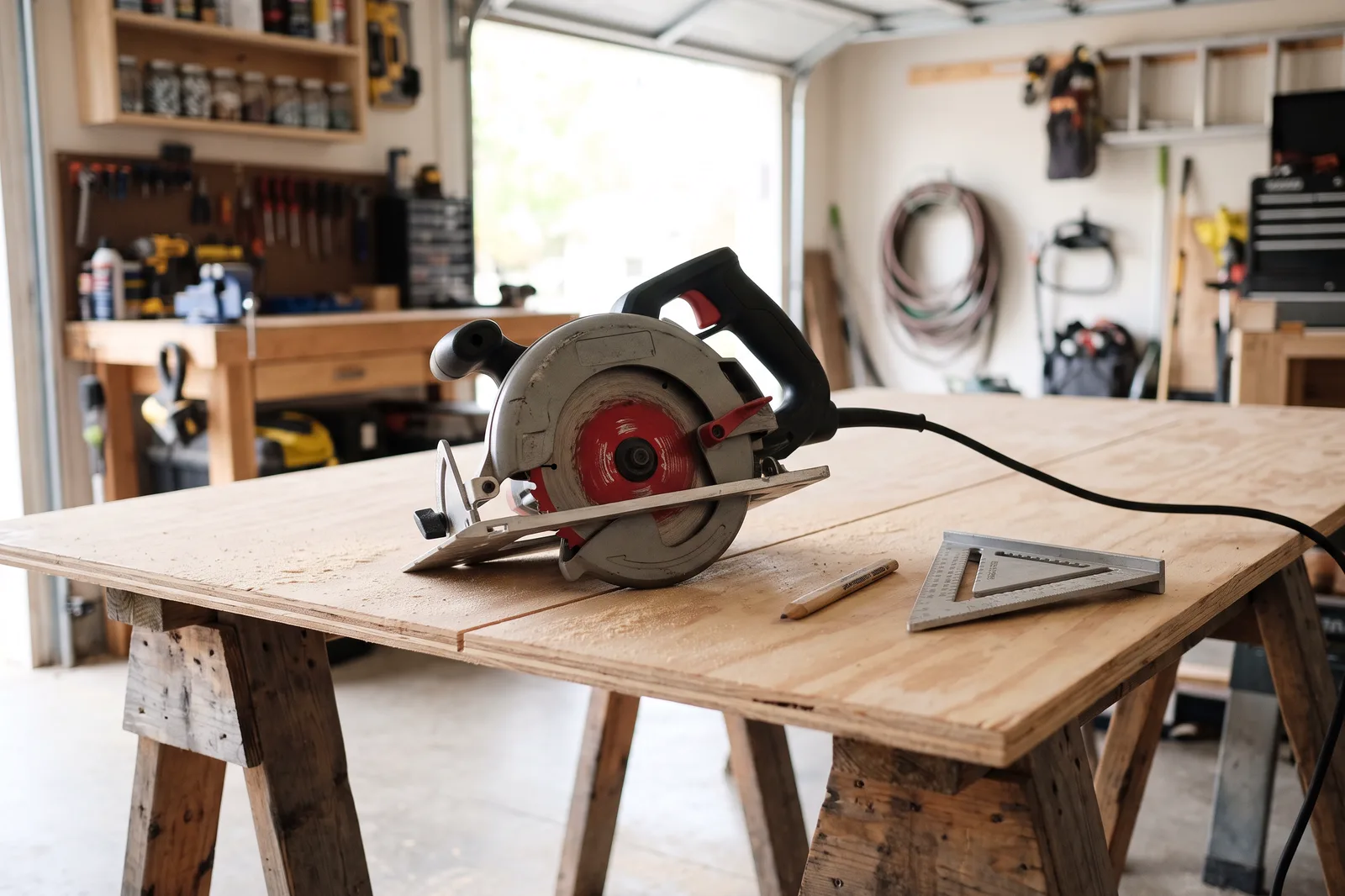 Power ToolsCircular Saw: The Power Saw Most Homeowners Should Own FirstA circular saw is a handheld power saw with a round toothed blade that cuts boards and sheets of plywood in a few seconds.
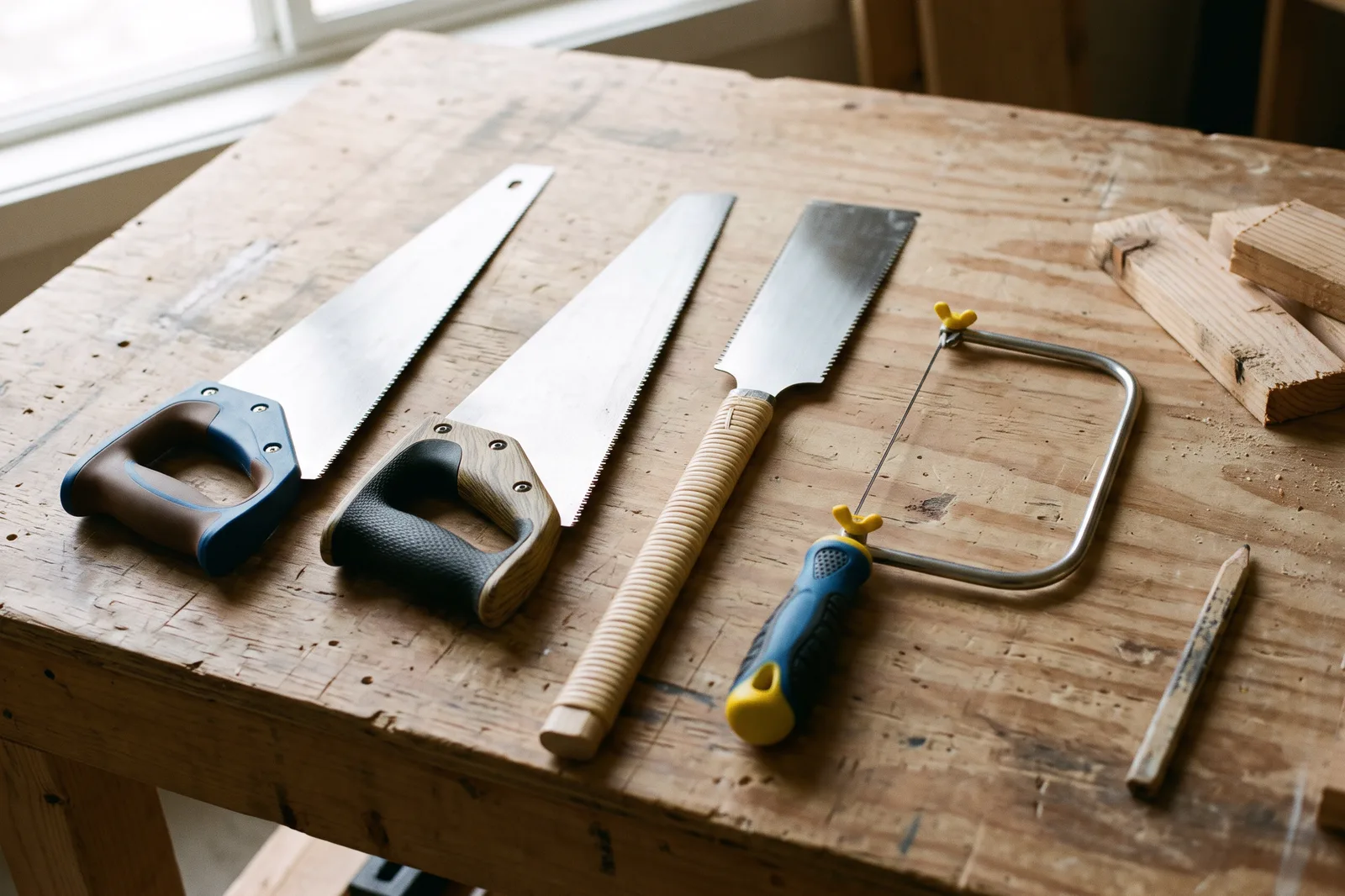 Hand Tools · RoundupHand Saws Every Toolbox Needs: Panel, Pull and Coping Saws ExplainedMost toolboxes need three hand saws: a 15-inch panel saw for quick cuts in lumber and plywood, a Japanese pull saw for neat, thin-kerf cuts in trim and joinery, and a coping saw for curves and inside corners.
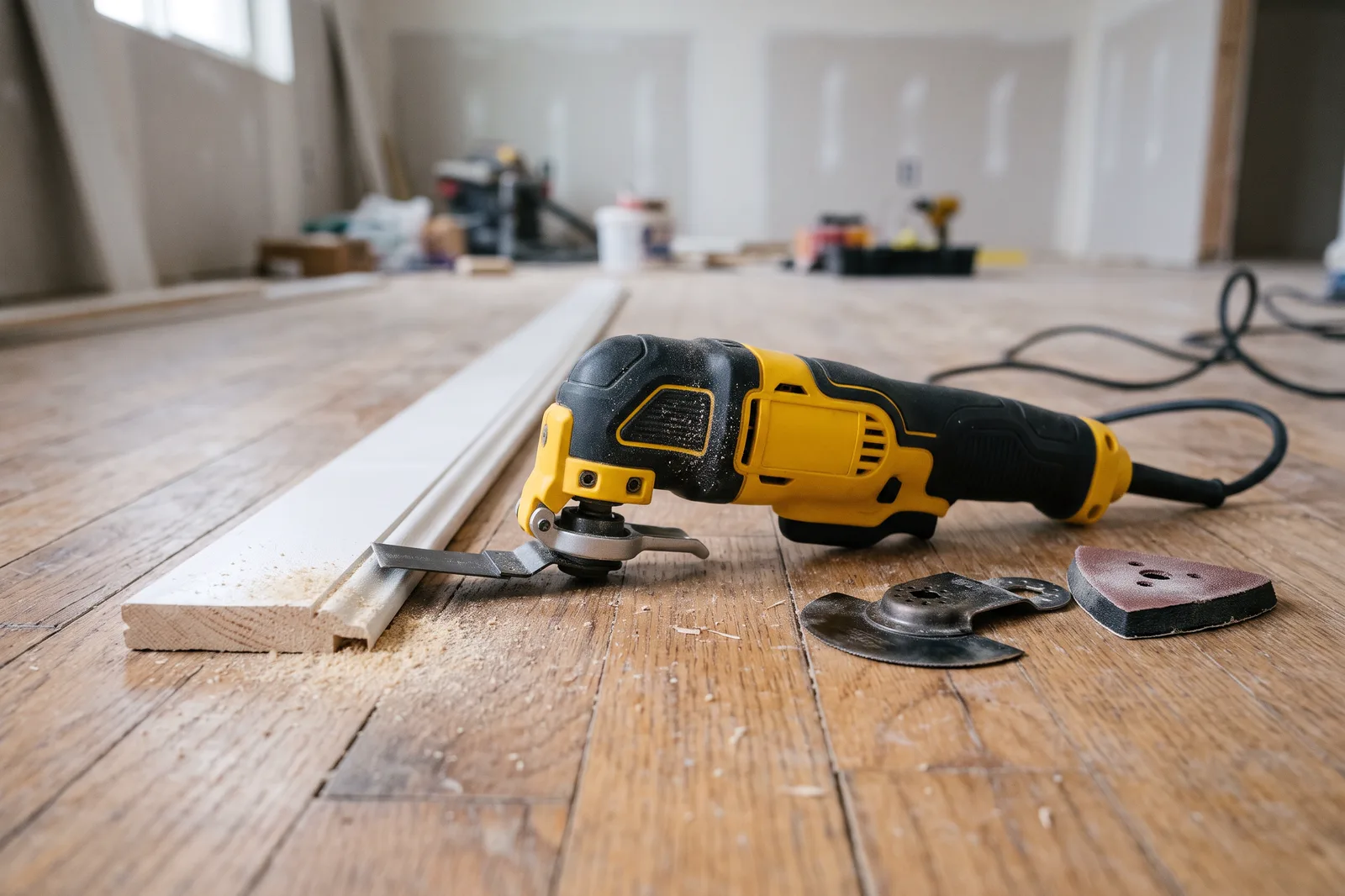 Power ToolsOscillating Multi-Tool: The One Tool for Cuts Other Saws Cannot MakeAn oscillating multi-tool wiggles a short blade back and forth to make plunge cuts, flush cuts and tight sanding that a normal saw cannot reach.