
Power Tools · Buyer's guide · DIY
Best Cordless Drill for First-Time Homeowners: 4 Picks by Budget
 DEWALT 20V MAX XR Drill Driver, Battery and Charger (DCD771C2)
 RYOBI 18V ONE+ HP Compact Brushless 1/2 in. Drill/Driver Kit
 BLACK+DECKER 20V MAX Cordless Drill and Driver, 3/8 Inch (LDX120C)
 Milwaukee 3403-22 M12 FUEL 12V 1/2 in. Drill Driver Kit
Photos from the Amazon listings. Scores are our own, not customer ratings.
Quick answer
For most first-time homeowners, the DEWALT DCD771C2 kit is the safe all-round pick, the Ryobi HP compact kit is the best choice if you want more tools on the same battery for less, and the Black+Decker is fine for light chores only. Choose the Milwaukee M12 FUEL if you want a small, strong drill that will last for years.
Quick verdict
A cordless drill is the tool you will reach for most often after you move in. It hangs shelves, assembles furniture, drives deck screws and drills pilot holes. Which one you buy matters less than which battery system you join, because every future tool will run on that battery.
We compared four drills across three tiers by reading the makers' specs, independent tests from Project Farm, Torque Test Channel, Classic Act Workshop and Pro Tool Reviews, and written reviews such as This Old House. Here is the short version:
- Best all-rounder: DEWALT DCD771C2. A widely recommended first drill with two batteries, a 1/2 inch chuck and a strong warranty.
- Best for the budget: Ryobi 18V ONE+ HP compact. A modern brushless drill that held its own against DEWALT in testing, on a huge battery system.
- Best for light chores only: BLACK+DECKER LDX120C. A simple starter for furniture and picture hanging.
- Best compact upgrade: Milwaukee M12 FUEL 3403-22. Small, strong and built for long use.
What a first-time homeowner needs
You do not need a pro-level drill. You need a drill that:
- Holds a bit tightly. A 1/2 inch all-metal chuck does this best.
- Stops before it strips a screw. A clutch with many settings gives you control.
- Runs long enough. Two batteries and a charger in the kit means no waiting.
- Is comfortable. Weight and balance matter more than the power number on the box.
- Opens the door to more tools. The battery system should have the saw, impact driver and light you will want later.
Torque numbers on the box are a poor guide. Project Farm noted that makers' own test methods are not very realistic, and it measured real working torque far below the claimed maximum on several drills.
Who it's for
- First-time homeowners who need one drill for shelves, furniture and repairs
- Renters and apartment dwellers hanging pictures and assembling furniture
- New DIYers who expect to add a saw or impact driver later
- Gift buyers picking a first toolkit for a friend
Who should skip it
- People with another brand's batteries. A bare drill from that brand is the better buy.
- Anyone who needs to drill masonry often. Look for a hammer drill instead.
- Daily pros. Pro brands are built for that work.
Our four picks
Best all-rounder: DEWALT DCD771C2
According to the maker, the DCD771C2 kit includes a 20V MAX drill with 300 unit watts out, two speeds (0-450 and 0-1,500 rpm), a 1/2 inch single-sleeve ratcheting chuck, two compact batteries and a charger. DEWALT lists a 3-year limited warranty, one year of free service and a 90-day satisfaction guarantee. The listing puts the weight at about 3.6 pounds.
This Old House named it the most durable pick in its test and noted that it drilled and drove through hard, medium and soft woods and has a good balance. Its downsides were that the compact battery lasted only about 20 minutes of heavy use, no bits come in the box, and some customers said batteries stopped holding a charge after a few months.
Choose it if you want the safest, best-known starter drill. Skip it if you want a brushless motor, since the listing does not mention one.
Best for the budget: Ryobi 18V ONE+ HP compact brushless
The listing says this kit has a brushless motor, up to 400 inch-pounds of torque, two speeds (0-450 and 0-1,700 rpm), a 24-position clutch and a ratcheting chuck, in a 6.4 inch body. In Classic Act Workshop's test, a Ryobi HP brushless kit finished lag bolts and a 2-inch hole saw faster than a DEWALT brushless kit, though its trigger felt less precise and its impact driver was harder to start screws with.
Ryobi has a very large range, with reviewers counting hundreds of tools on the ONE+ battery. 731 Woodworks says the brand is best for beginners and occasional projects, not for hard daily use, and that a Ryobi battery fits tools made as far back as 1996.
Choose it if you want a modern drill and plan to add tools, including yard tools, over time. Skip it if you expect daily heavy use.
Best for light chores only: BLACK+DECKER LDX120C
This is a simple 20V MAX drill with a 3/8 inch chuck, an LED work light, and a battery and charger. We found limited independent testing of this exact model. A similar BLACK+DECKER 20V MAX drill, the LD120VA, was tested by This Old House. That drill was the heaviest of its picks at 4.2 pounds, worked well for furniture assembly and hanging items, but stalled in harder wood.
Choose it if you only hang a few pictures, assemble flat-pack furniture and change batteries once a year. Skip it if you plan to build decks, drill large holes or use the drill weekly.
Best compact upgrade: Milwaukee M12 FUEL 3403-22
The maker lists a brushless motor, 400 inch-pounds of torque, an all-metal 1/2 inch chuck, a length of 5.9 inches and a kit with a 4.0Ah pack, a 2.0Ah pack and a charger. It runs on Milwaukee's 12V system, a lighter line than the 18V M18 system. We found no independent test of this exact kit, but Milwaukee's larger drills ranked near the top in Project Farm's hammer drill test, and Torque Test Channel found them strong in torque.
A compact 12V drill is easier overhead and in tight spaces. The trade-off is a smaller battery and, for heavy jobs like lag bolts, a little less power than an 18V/20V drill.
Choose it if you want a small, strong drill that will last for years. Skip it if you want the largest range of low-cost tools.
Pros and cons by pick
| Pros | Cons |
|---|---|
| DEWALT DCD771C2: durable, two batteries, trusted brand and warranty. | DEWALT DCD771C2: brushed motor and small batteries. |
| Ryobi HP compact: brushless, a 24-position clutch and a huge battery system. | Ryobi HP compact: trigger control was called spongy by one tester, and the brand is not built for daily jobsite use. |
| BLACK+DECKER LDX120C: simple and low-cost for light jobs. | BLACK+DECKER LDX120C: a 3/8 inch chuck and limited power. |
| Milwaukee 3403-22: compact, strong and brushless, with a large kit. | Milwaukee 3403-22: the highest entry cost and a smaller battery system than 18V. |
Drill, impact driver or hammer drill?
Shoppers often get these three mixed up, so here is the short version.
- Drill/driver. The all-purpose tool. It makes holes and drives screws, and its clutch lets you stop before a screw goes too deep. This is the one to buy first, and it is what all four picks above are.
- Impact driver. It adds quick sideways taps as it turns, which drives long screws and lag bolts with little effort. It takes hex-shank bits only and is rougher for delicate work. Many people add one second.
- Hammer drill. A drill with a mode that adds a forward pounding action, for masonry and concrete. Project Farm and Pro Tool Reviews tested these for concrete work. If you live in a house with brick or block walls you may want one. Otherwise a drill/driver is lighter and easier to handle.
What buyers and reviewers say
Across the written reviews, videos and forum threads we read, these points repeat for first-time drill buyers.
What people praise
- Light, compact drills are easier to live with. Testers keep coming back to weight and balance, and the compact models get praise for fitting in tight spots.
- A second battery is a big upgrade. Kits with two batteries and a charger let you keep working while one charges.
- A big battery system pays off later. Reviewers like being able to add a saw, a light or a yard tool without buying another battery.
What people complain about
- Short battery life in starter kits. This Old House's test found the DEWALT's compact battery lasted about 20 minutes under heavy use.
- No bits in the box. Several kits ship without drill bits.
- Low-end drills stall in hard wood. The BLACK+DECKER model This Old House tested stalled in harder wood, and the cheapest drills in Project Farm's tests ran out of steam early on lag bolts.
Your first day with a new drill
Read the manual first. These steps are the routine most safety guides teach.
- Charge both batteries fully. Do it the day before a project so you are not waiting on the charger.
- Wear safety glasses. Drilling throws chips, and a bit can snap.
- Set the clutch low. Start at a low number for screws and raise it only when the screw will not go in. Use the drill symbol (no clutch) for drilling holes.
- Pick the speed. Use low speed for large bits and driving screws, and high speed for small holes.
- Match the bit to the job. Use a twist bit for metal and wood, a brad-point bit for clean holes in wood, and a driver bit that fits the screw head tightly.
- Clamp or hold the work. Never hold small pieces in your hand while drilling.
- Drill a pilot hole. For hardwood and near board edges, a small hole first prevents splitting.
- Back out to clear chips. On deep holes, pull the bit out now and then to clear the chips and cool it.
- Remove the battery to change bits or store the tool. It prevents accidental starts.
A word about battery systems
When you buy a drill, you also buy a battery system: the family of tools that share one battery. Ryobi's ONE+ and DEWALT's 20V MAX are two of the biggest. 731 Woodworks points out that Ryobi's batteries fit tools going back to 1996, which shows how long the company keeps its systems stable. DEWALT's range goes up to pro-grade tools. Milwaukee's 12V line is lighter than its 18V line, which is a plus for compact tools, but some heavy tools only run on the larger battery. Before you buy, look at the tools you may want in the next few years and check that the brand makes them.
How to choose
- You want the lowest cost and might add a lot of tools. Ryobi.
- You want the simplest safe choice. DEWALT DCD771C2.
- You will only use a drill a few times a year. BLACK+DECKER, or a basic budget kit.
- You want a drill that lasts and stays comfortable. Milwaukee M12 FUEL.
- You already own a battery. Buy a bare drill from that brand.
What to buy with your first drill
A drill is only as good as its bits. Many starter kits ship with none, so budget for a general-purpose drill bit set, a few screw-driving bits and a box of mixed screws. Our screw assortment set guide explains what to keep on hand. For shelves and furniture, a speed square helps you mark true lines, and when you are ready to build, our circular saw guide shows what to buy next.

Key specs to look for
| Spec | What to look for |
|---|---|
| Chuck size | A 1/2 inch chuck takes larger bits and holds them better than a 3/8 inch chuck. Choose all-metal or ratcheting, which grips tighter than plastic. |
| Voltage and battery | For home use, 18V/20V platforms such as Ryobi ONE+ and DEWALT 20V MAX balance power and weight. Compact 12V drills are lighter. |
| Brushless motor | Brushless motors run cooler, use the battery better and last longer. Worth paying for if you will use the drill often. |
| Clutch | A ring with many numbered settings stops the drill before it strips a screw. More positions give finer control. |
| Speed range | Two speeds are enough: a low range for screws and big bits, and a high range for small holes. |
| Weight and length | A lighter, shorter drill is easier overhead and in tight spaces. Heavy kits tire your wrist. |
| Battery in the kit | Look for two batteries and a charger. A second battery means you do not wait for a recharge in the middle of a job. |
| Warranty | DEWALT lists a 3-year limited warranty. Ryobi advertises 3 years on tools. Read each maker's current terms. |
Where to buy
All four drills are sold on Amazon. We rate the DEWALT DCD771C2 as our mid-range pick, the Ryobi HP and BLACK+DECKER as budget picks and the Milwaukee as a pro-tier upgrade.

DEWALT 20V MAX XR Drill Driver, Battery and Charger (DCD771C2)
- A widely recommended first drill with a 1/2 inch ratcheting chuck and two speeds
- Kit includes two batteries and a charger, per the maker
- Backed by a 3-year limited warranty and a very large tool range
How we scored it
Usefulness 9/10 · Value 8/10 · Durability 8/10. This is our own opinion, based on specs, buyer reviews and independent tests. It is not an Amazon or customer rating.

RYOBI 18V ONE+ HP Compact Brushless 1/2 in. Drill/Driver Kit
- Brushless motor, 24-position clutch and a ratcheting chuck, per the listing
- Beat a comparable DEWALT in several of Classic Act Workshop's speed tests
- Joins a huge battery system sold at Home Depot
How we scored it
Usefulness 8/10 · Value 9/10 · Durability 7/10. This is our own opinion, based on specs, buyer reviews and independent tests. It is not an Amazon or customer rating.

BLACK+DECKER 20V MAX Cordless Drill and Driver, 3/8 Inch (LDX120C)
- A simple, low-cost starter with an LED work light, battery and charger included
- 3/8 inch chuck suits furniture, curtain rods and shelf brackets
- Best for occasional light jobs, not for big holes or thick lumber
How we scored it
Usefulness 6/10 · Value 8/10 · Durability 5/10. This is our own opinion, based on specs, buyer reviews and independent tests. It is not an Amazon or customer rating.

Milwaukee 3403-22 M12 FUEL 12V 1/2 in. Drill Driver Kit
- The maker lists a brushless motor, 400 inch-pounds and an all-metal 1/2 inch chuck
- About 6 inches long, so it fits tight spots and stays comfortable overhead
- Kit includes a 4.0Ah pack, a 2.0Ah pack and a charger, per the maker
How we scored it
Usefulness 9/10 · Value 7/10 · Durability 9/10. This is our own opinion, based on specs, buyer reviews and independent tests. It is not an Amazon or customer rating.
Check the current listing and read recent reviews before you buy. Look at what is in the box, since some listings are tool only. Whichever you choose, pick up a pair of safety glasses and a set of bits in the same order.
Watch and read more
Video reviews
- DeWalt vs Ryobi Brushless Drill and Impact Driver Kit | Surprising Performance Testing — Classic Act Workshop
Compares a Ryobi HP brushless kit with a DEWALT brushless kit on lag bolts, hole saws and control. Ryobi was faster; DEWALT had better control and lower weight. - Cordless Drills: Is Buying Top Models Even Worth It These Days? — Torque Test Channel
Tests a Ryobi, a Ridgid, a compact DEWALT and Milwaukee's M18 and concludes that several mid-range drills do the job for less than the top models. - Everyone Hates RYOBI. I Had to Know Why. — 731 Woodworks
A buyer's look at Ryobi's range, battery compatibility and warranty, and who the tools suit: homeowners and beginners, not daily jobsite use.
Frequently asked questions
What should a first-time homeowner look for in a cordless drill?
A 1/2 inch chuck, two speeds, a clutch with many settings, a battery in the kit and ideally a second battery. A brushless motor is a bonus. Think about the battery system as well, since you will likely add tools later.
Drill or impact driver first?
A drill first. It makes holes and drives screws. An impact driver is a great second tool for long screws and deck fasteners, but it is not as good for drilling clean holes.
Is an 18V or 20V drill better than a 12V one?
For most homeowners the difference is small. Compact 12V drills are lighter and easier overhead. 18V and 20V drills have more power and a bigger range of tools. The Milwaukee 3403-22 shows how strong a modern 12V drill can be.
How many inch-pounds of torque do I need?
The makers list 400 inch-pounds for the Ryobi and Milwaukee drills here, and testers find that range plenty for furniture, shelves and decking. Higher numbers matter for large holes and lag bolts. Project Farm found that tool makers' torque claims often exceed what the drill delivers in real work, so do not shop on that number alone.
Do I need a hammer drill?
Only if you will drill concrete or brick. For wood, metal and drywall, a regular drill is enough, and it is lighter.
Can I use any drill bits with my drill?
Most bits with a round or hex shank fit a 1/2 inch chuck. Many starter kits do not include bits, so plan on buying a set of general-purpose bits and a few screw-driving bits.
How long do batteries last?
It depends on the job. One review of the DEWALT DCD771C2 found the compact battery lasted about 20 minutes of heavy use, which is why a second battery is useful.
Sources
Related tools
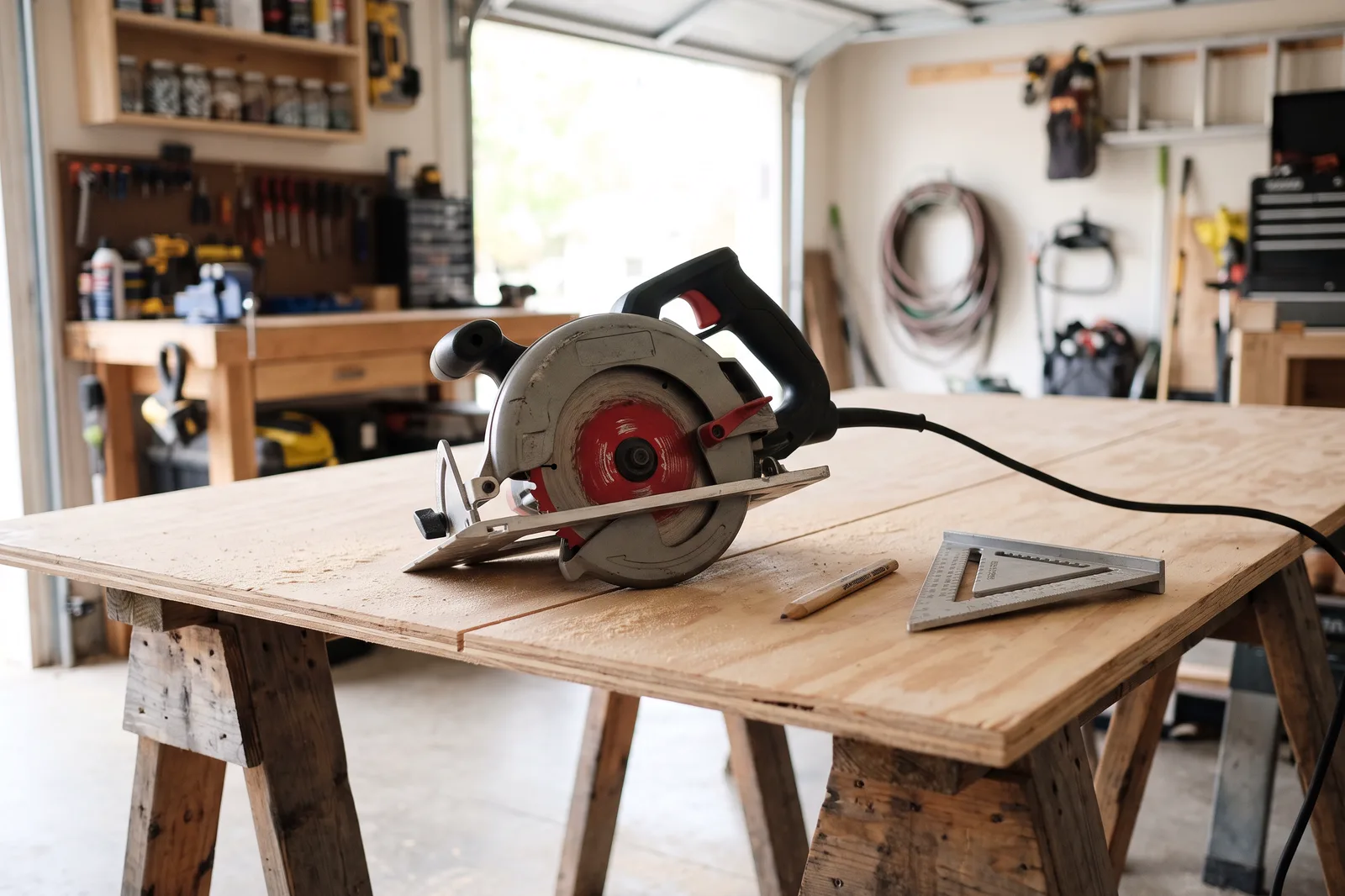 Power ToolsCircular Saw: The Power Saw Most Homeowners Should Own FirstA circular saw is a handheld power saw with a round toothed blade that cuts boards and sheets of plywood in a few seconds.
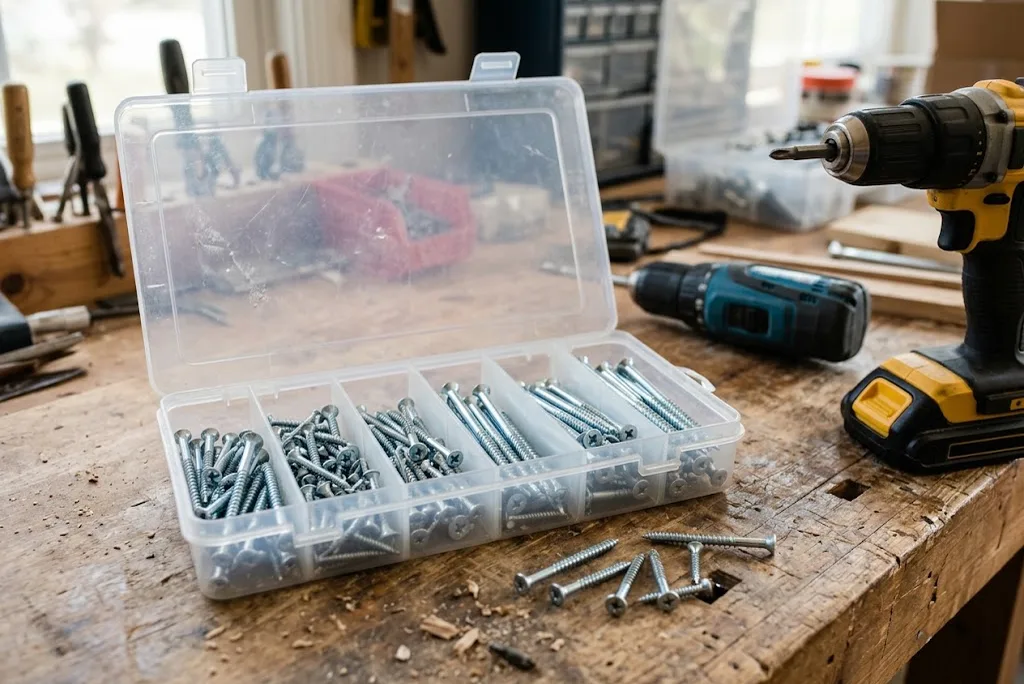 Fasteners & HardwareScrew Assortment Set: The Box That Saves You a Trip to the StoreA screw assortment set is a compartment box holding a mix of common screw sizes.
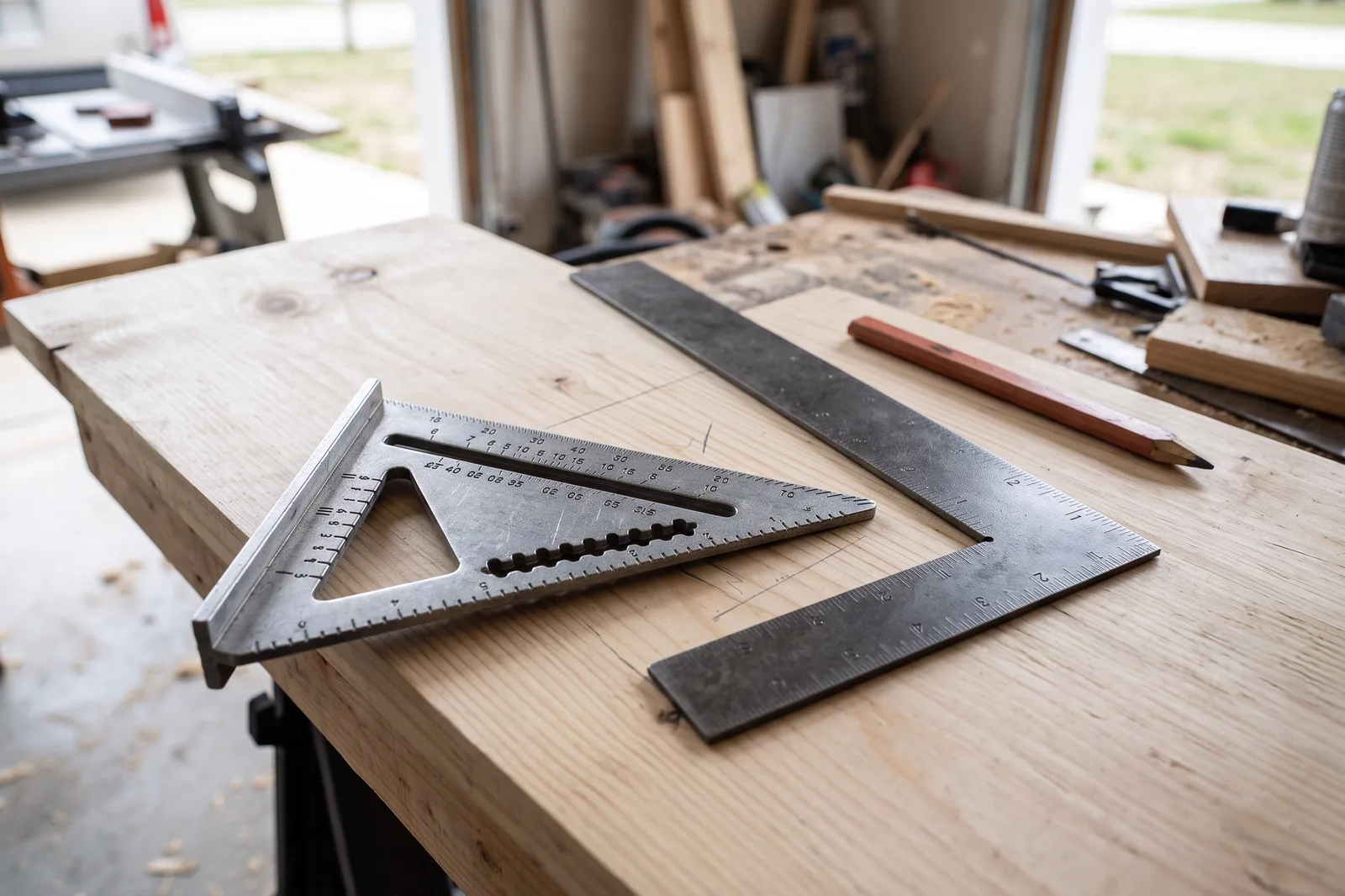 Measuring & LayoutSpeed Square and Framing Square: Two Layout Tools Worth OwningA speed square is a small aluminum triangle for marking square and angled cuts on boards, and a framing square is a large steel L for checking corners and laying out stairs and rafters.