
Outdoor & Garden · Buyer's guide · DIY · Maker
Pruning Shears Buying Guide: Bypass vs Anvil and Which Pair to Own
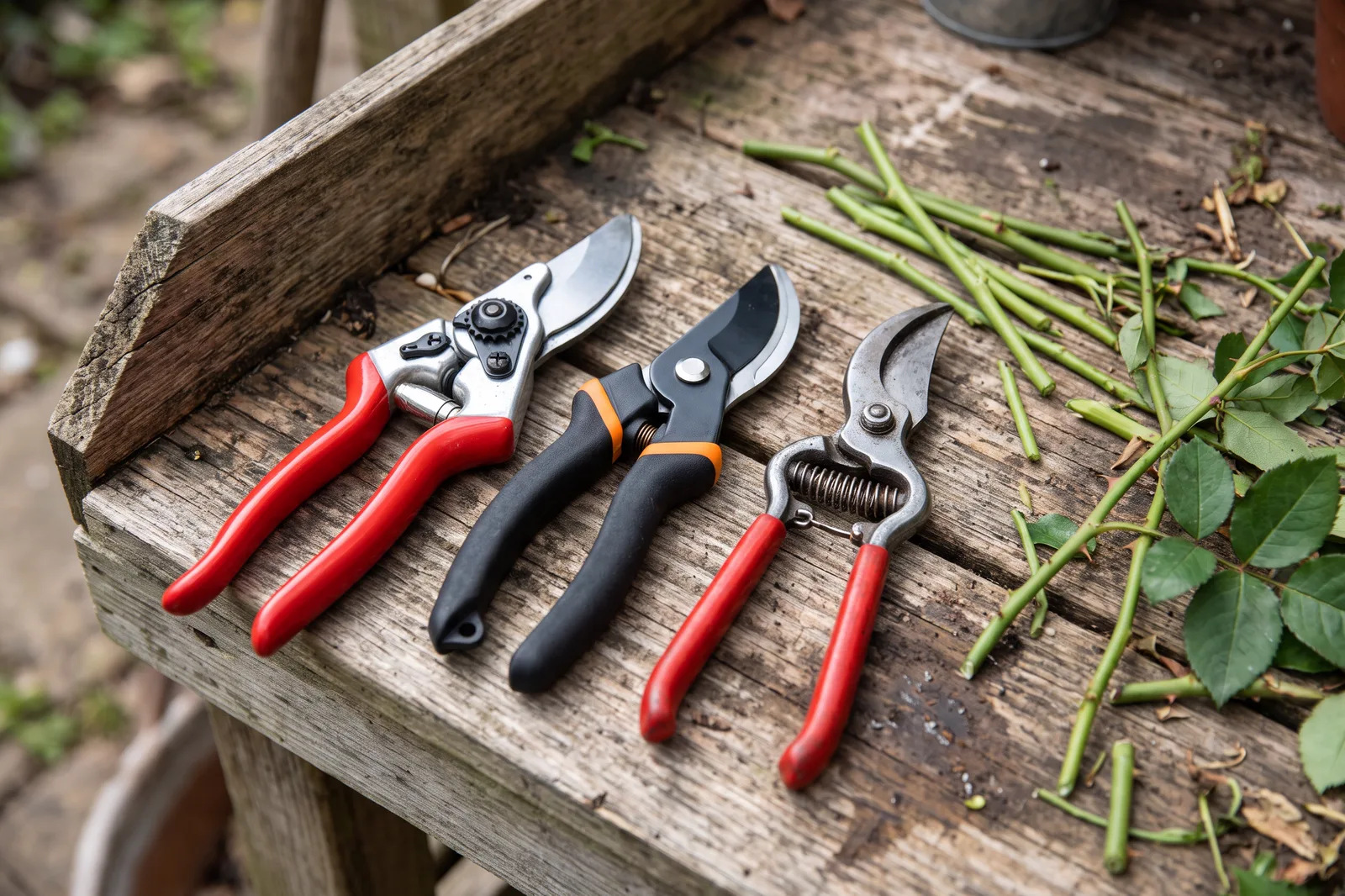
Quick answer
Pruning shears are one-handed clippers for stems and branches up to about the width of your thumb. Most yards need a bypass pair, which cuts like scissors and suits living wood. A premium pair like the Felco F-2 lasts and can be repaired, while a Corona or Fiskars covers lighter use for less.
What are pruning shears?
Pruning shears, also called hand pruners or secateurs, are one-handed clippers for trimming stems and small branches. You squeeze the handles, a spring opens them again, and a curved blade slices through the growth. A lock keeps them shut in a pocket or drawer.
There are two designs. Bypass pruners have two curved blades that pass each other like scissors. Anvil pruners press one straight blade down onto a flat surface, which crushes the stem. A University of Florida extension post notes that early results suggest anvil cuts crush more tissue, and that bypass pruners suit live growth, while anvil pruners fit dead, dry wood better.
| Part | What it does |
|---|---|
| Cutting blade | The sharp, curved blade that does the slicing |
| Hook or counter blade | The thicker blade the cutting blade slides past |
| Spring | Opens the handles after each cut |
| Lock | Holds the blades closed for storage |
| Pivot bolt | Sets how tightly the blades meet |
| Sap groove | A channel that clears sticky sap from the cut |
Why you'll want a pair
Hedges, roses, vines and fruit trees all need regular trimming, and a clean cut matters. Bypass blades slice rather than crush, which is easier on living stems. A pair is also quicker and kinder to your hands than twisting or tearing growth, and it gets into spots a larger tool cannot reach.
We read Bob Vila's test of eight pruners, Yourbestdigs' seasons-long testing, a University of Florida extension post and two video reviews. Patterns that repeat:
- A premium pair earns its rank. Bob Vila and Yourbestdigs both ranked the Felco F-2 first. Bob Vila gave it top marks in every category and praised the way it comes apart for cleaning and for replacing the blade or spring.
- A middle-priced pair can be enough. Bob Vila called the Fiskars a best-value pick that does well on green wood, though its tester doubted long-term durability and found the lock flimsy.
- A low-cost forged pair cut very well. Bob Vila's testers say the Corona cut every test branch cleanly and has easy-to-sharpen blades, but found the lock hard to reach and the straight handles less comfortable on thick cuts.
- Real limits sit below the rating. Yourbestdigs found the Felco cut cleanly up to about half an inch and said larger cuts took a lot of grip strength. The Corona handled live stems up to about three quarters of an inch.
- The spring matters for fatigue. In one Master Gardener's video, the Fiskars' strong spring snapped back and tired the hand during long sessions, while the Felco's spring felt smoother.
- Very cheap pairs are frustrating. The same video found a very cheap pair had a lock that engaged by accident and a spring that popped off, which makes it useless.
What buyers and testers say about our three picks
We feature three bypass pruners across the price range, but the sources do not all test the exact same models.
- Praised: the Felco's clean cuts, light weight and repairability; the Fiskars' sap-resistant coating and value; the Corona's sharp, durable forged blade.
- Common complaints: hard-to-use or flimsy locks, handle fit that varies with hand size, and tired hands on thick cuts. Yourbestdigs found the Felco's lock confusing at first and the Corona less balanced than the Felco.
- Maker facts: according to the listings, the Felco has a 1 inch cutting diameter and is about 8.5 inches long, the Corona has a 1 inch capacity, and the Fiskars is rated for 5/8 inch.
| Pros | Cons |
|---|---|
| Slicing action makes clean cuts on living stems | Limited to thumb-thick wood |
| Light and one-handed, so it is quick for long sessions | A weak spring or lock can be tiring or annoying |
| Good pairs can be sharpened and repaired | Dead, dry wood can nick the blade |
| Gets into tight spots between branches | Handle fit varies with hand size |

Who it's for
- Gardeners and rose growers: clean cuts on live stems help plants heal
- Fruit-tree and shrub owners: yearly shaping and thinning
- New homeowners: the first garden tool for hedges, vines and overgrown beds
- Makers and flower arrangers: cut stems with a neat edge
Who should skip it
- Anyone cutting branches thicker than a thumb. Loppers or a pruning saw give the leverage; forcing the shears twists the blade.
- People with weak hand grip. A ratchet pruner or a lighter, smaller pair is easier on the hand.
How to use it
- Choose the cut point. Find the branch collar or the spot just above a bud or side branch. Cut at a slight angle so water runs off.
- Check the thickness. If the stem is thicker than your thumb, switch to loppers or a saw.
- Face the blade correctly. Place the thin cutting blade on the side you are keeping and the thicker hook on the part you are removing. This keeps the cut clean on the plant that stays.
- Open the shears wide. Slip the stem deep into the jaws, close to the pivot, where you get the most leverage.
- Squeeze in one motion. A steady squeeze beats a sawing twist. Twisting the blade bends it and leaves a ragged edge.
- Use two hands for tougher stems. Hold the wood steady with the other hand away from the blade, or ease the cut with your off hand's help on the shears.
- Do not pry or twist. If a stem will not cut, stop. Forcing the shears wobbles the pivot and chips the blade.
- Wipe the blade between plants. A quick wipe stops sap and disease from moving between plants.
- Lock them shut. Close the blades and engage the lock before you put them away.
- Clean and oil after use. Wipe off sap and dirt and add a drop of oil to the pivot. Yourbestdigs says this takes only a minute on a Felco.
Which cuts suit pruning shears
| Job | Fit for shears? |
|---|---|
| Rose stems and cut flowers | Yes, a clean bypass cut |
| Hedge shaping and vines | Yes, for stems under thumb thickness |
| Fruit-tree thinning of small branches | Yes, as shown in the Felco orchard video |
| Branches thicker than a thumb | No, use loppers or a saw |
| Dead, dry hardwood | Poor fit for bypass; use a saw or anvil pruner |
Quick care tips
- Sharpen on a schedule. A dull blade crushes stems and tires your hand.
- Tighten the pivot. A loose bolt lets stems slip between the blades.
- Keep the spring seated. In one video, a spring that came off made a very cheap pair useless.
- Store dry. Rust is the main enemy of a pruner left in the shed.
What to look for when buying
- Bypass blades. For live growth, bypass is the standard.
- Cut capacity. The listings range from 5/8 to 1 inch. Pick one that matches the thickest stem you cut often.
- Weight. Lighter pairs are easier for long sessions. Bob Vila lists the Felco at 8.5 oz against about 10 oz for the Fiskars and Corona.
- Lock. It should be easy to release with one thumb and hard to engage by accident.
- Spring. A smooth spring causes less hand fatigue. Check reviews for mentions of snapping or popping off.
- Replaceable parts. Blades, springs and bolts you can swap mean a good pair lasts for years.
- Hand fit. A pair that is too wide or too small is tiring. Look for left-handed models if you need them.
- Sap resistance. A groove or non-stick coat makes cleanup easier.
For bigger limbs, our hand saws guide covers the pruning saw you will want next. If you dig or clear ground as well, our pick mattock guide covers the heavy end of the yard toolbox.

Which style suits you
| Pair | Best for | Trade-off |
|---|---|---|
| Premium (Felco F-2) | Frequent pruning, long-term ownership | Higher upfront cost; lock takes getting used to |
| Mid (Fiskars) | Beginners and light-to-medium use | Heavier, with a lock some testers found flimsy |
| Budget (Corona BP 3180D) | Occasional use with a forged steel pair | Awkward lock and straight handles on thick cuts |
Key specs to look for
| Spec | What to look for |
|---|---|
| Cut type | Bypass for live stems and green wood. Anvil is for dead, dry wood. A bypass blade passes the hook like scissors. |
| Cut capacity | About 5/8 to 1 inch on the listing. Testers found real comfort limits lower than the rating, so use loppers above thumb thickness. |
| Weight and size | Light enough for a long session. Bob Vila lists the Felco at 8.5 oz against about 10 oz for the Fiskars and Corona. |
| Lock | Easy to open with a thumb, but hard to trip by accident. A badly placed lock was the most common complaint in the sources. |
| Spring | Smooth, and safely mounted. In one video comparison a strong spring that snapped back caused hand fatigue. |
| Blade and coating | Replaceable or sharpenable blade. A sap groove or non-stick coat makes cleaning faster. |
| Handle fit | Match the pair to your hand size. Yourbestdigs found the Corona suits medium to large hands best. |
| Spare parts | Replaceable blades, springs and bolts keep a good pair going instead of replacing it. |
Where to get it
All three pairs are sold on Amazon and sit in different tiers. Check each listing title for the model number and capacity before you order.

Felco F-2 Pruning Shears (Swiss-made bypass hand pruner)
- Swiss-made bypass pruner with a replaceable blade and parts, so one pair can last for years, according to the listing and Bob Vila
- The listing gives a 1 inch cutting diameter, about 8.5 inches long and about 251 grams, and Bob Vila's testers called it clean and lightweight
- Rated top pick in Bob Vila's test and Yourbestdigs' multi-season test, with a lifetime warranty noted on the listing
How we scored it
Usefulness 9/10 · Value 7/10 · Durability 10/10. This is our own opinion, based on specs, buyer reviews and independent tests. It is not an Amazon or customer rating.

Fiskars Bypass Pruning Shears, 5/8 in. Cut Capacity
- A 5/8 inch cut capacity in the listing title, with a non-stick coated blade that resists sap buildup
- Named best value by Bob Vila and called a workhorse for beginners in one Master Gardener's video comparison
- Testers flagged a heavy feel and a flimsy-feeling lock; the video found the spring snaps back and tires the hand over long sessions
How we scored it
Usefulness 8/10 · Value 8/10 · Durability 7/10. This is our own opinion, based on specs, buyer reviews and independent tests. It is not an Amazon or customer rating.

Corona BP 3180D ClassicCUT Forged Bypass Pruner, 1 in. Cut
- A forged steel bypass pruner with a 1 inch cutting capacity and a sap groove, according to the listing
- Bob Vila's testers found it cut every test branch cleanly and that the blade is easy to sharpen
- A common caution in tests is a lock that is awkward to reach and straight handles that tire the hand on thick cuts
How we scored it
Usefulness 8/10 · Value 9/10 · Durability 8/10. This is our own opinion, based on specs, buyer reviews and independent tests. It is not an Amazon or customer rating.
Read the newest reviews before you buy, and keep the blades clean and locked so your pair lasts.
Watch and read more
Video reviews
- Ultimate Garden Bypass Pruner Review: Dollar Tree vs Fiskars vs Felco | Blueacre Garden — Blueacre Garden
A trained Master Gardener compares a very cheap pair, a Fiskars bypass pruner and the Felco 2 for sharpness, spring, lock and hand fatigue. - Are Felco Pruners Worth It? We Put the Felco 2 to the Test — DirtFarmerJay
Unboxes the Felco 2 and prunes small branches on apple trees, explaining bypass versus anvil cuts and the replaceable parts.
PROSWho uses it
- Blueacre Garden — A trained Master Gardener who compared a Fiskars bypass pruner and the Felco 2 and picked the Felco as the clear winner for heavy pruning.
Frequently asked questions
What is the difference between bypass and anvil pruners?
A bypass pruner has two curved blades that pass each other like scissors. An anvil pruner presses one straight blade onto a flat surface. Garden guides and a University of Florida extension post suggest bypass for living wood and anvil for dead or dry wood, where crushing does no harm.
How thick a branch can pruning shears cut?
The listings give 5/8 inch for the Fiskars and 1 inch for the Felco F-2 and Corona BP 3180D. Reviewers found comfortable limits lower: Yourbestdigs reported the Felco cut cleanly up to about half an inch, and anything larger took a lot of grip strength.
Are expensive pruners like the Felco F-2 worth it?
For frequent pruning, many testers think so. Bob Vila and Yourbestdigs both ranked it first, and the pieces can be replaced. A Master Gardener in one video called it a buy-once tool. For light use a lower-cost pair cut well in the same tests.
How do I keep pruning shears sharp and clean?
Wipe the blades after use and oil the pivot. Yourbestdigs says a quick wipe and oil keeps the Felco in shape, and sharpening restores a dull edge. Keep the pair closed and locked when you store it.
Why do my pruners crush stems instead of cutting?
Usually a dull blade, a loose pivot bolt, or an anvil pruner on live wood. Place the thin cutting blade toward the plant you keep, sharpen the edge, and tighten the pivot until the blades meet without gaps.
Should I buy left-handed pruning shears?
If you are left-handed and prune a lot, yes. A Master Gardener in one comparison video notes that Felco makes left-hand models, shaped for the left hand. Most standard pairs are built for the right hand.
Can I use pruning shears on dead wood?
Small dead twigs are fine, but dead wood is hard on a bypass blade. Hard or dry wood can nick the edge, so use a pruning saw or an anvil pruner for it.
Sources
- Bob Vila: Best Pruning Shears (tested against seven others)
- Yourbestdigs: pruning shears tested over several seasons
- University of Florida IFAS: anvil vs bypass pruners (ongoing study)
- Lee Valley: bypass vs anvil pruners, what is the difference
- Blueacre Garden: Dollar Tree vs Fiskars vs Felco (video)
- DirtFarmerJay: Felco 2 unboxing and orchard test (video)
Related tools
 Outdoor & GardenHeavy-Duty Hose Nozzle: The Metal Sprayer That Outlasts PlasticA heavy-duty hose nozzle is a metal-bodied sprayer that survives drops, freezes and a lot of squeezing, and it gives you patterns from a soft shower to a hard jet.
 Outdoor & GardenPick Mattock: The Digging Tool for Ground a Shovel Cannot BreakA pick mattock is a heavy digging tool with a pick on one side and a flat chopping blade (an adze) on the other.
 Hand Tools · RoundupHand Saws Every Toolbox Needs: Panel, Pull and Coping Saws ExplainedMost toolboxes need three hand saws: a 15-inch panel saw for quick cuts in lumber and plywood, a Japanese pull saw for neat, thin-kerf cuts in trim and joinery, and a coping saw for curves and inside corners.