
Power Tools · Single tool · DIY · Pro
Impact Driver: The Compact Tool for Long Screws and Deck Boards

Our verdict
DEWALT 20V MAX 1/4 in. Impact Driver, Tool Only (DCF885B)
8.3/10
Worth-owning score
Price tier Mid ($$)
View on AmazonOur own score from specs, buyer reviews and tests. Not a customer rating. Photo from the Amazon listing.
Quick answer
An impact driver is a compact cordless tool that adds quick rotational taps to drive long screws and bolts with little wrist strain. It is a great second tool after a drill, and the DEWALT DCF885B is a proven, light, brushed 20V MAX example sold without battery or charger. Skip it if you only hang light frames and drive a few short screws.
What is an impact driver?
An impact driver is a short, light cordless tool that drives screws and bolts. It looks like a small drill, but inside it has a hammer and anvil. When a screw gets tight, the hammer delivers rapid bursts of rotational force, a bit like tapping a stuck bolt with a wrench while you turn it. The tool does most of the heavy turning, so your wrist does not have to fight it.
It has no chuck you tighten. Instead it has a hex collar that takes bits with a 1/4 inch hex shank. You pull the collar, push the bit in and let go. There is also no clutch, so there is no setting that stops it at a chosen force.
| Drill driver | Impact driver | |
|---|---|---|
| Best at | Drilling holes, small screws, delicate work | Long screws, lag bolts, deck boards, stuck fasteners |
| Bit type | Round or hex shank, tightened in a chuck | 1/4 inch hex shank only |
| Control | Clutch and speed range | Trigger only |
| Sound | Steady whir | Loud clicking under load |
Why you'll want one
It drives long screws without wrist pain. In a Travers Tool Co demonstration, a drill ran small screws a little faster than the driver, but with a lag bolt the drill needed its low gear and sent the torque back into the user's wrist. The impact driver went in while the user held it loosely. The takeaway: for big or many fasteners, use the driver.
It is small and light. The DEWALT we feature is about 5.55 inches long, per the listing, and roughly 2.8 pounds with a battery, according to Bob Vila's test. That makes overhead work, tight stud bays and the underside of a deck easier than with a full-size drill.
It saves time on decks, fences and framing. Artisan Woodworks says an impact driver is the tool to reach for when building a deck, putting up fencing or screwing into stud work all day, because it picks up the slack and keeps going without wearing you out. An Ace Hardware home expert says deck screws go in more evenly and with more power than with a typical cordless drill.
It is a good second tool. Both Artisan Woodworks and the Ace expert make the same point from opposite sides: a drill driver is the all-rounder, and the impact driver is the specialist. If you have a drill and a battery system already, a bare impact driver is a cheap way to add one, which is why the tool-only version of this model is so common.
What reviewers and buyers say about the DEWALT DCF885
We feature the DEWALT DCF885B, the tool-only version of a well-known 20V MAX driver. Here is what we found across written tests and buyer summaries:
- Praised: Bob Vila's tester called it a strong performer with a responsive variable-speed trigger, plenty of torque for its size, three built-in LED lights and a one-handed hex chuck. Amazon's summary of buyer reviews likewise notes incredible torque, a compact size and a light weight.
- Common complaints: The kit version tested by Bob Vila used a small 1.5 amp-hour battery that lasted a little over 40 minutes of near-constant use, and the tool is brushed, not brushless. Amazon's summary reports mixed opinions on battery life, and some buyers note the tool-only version has no battery or charger.
- Reliability: Forum owners describe the brushed 885 as a dependable workhorse. One Garage Journal poster who owns both brushed and brushless says brushless is not clearly worth it for impact drivers unless it makes the tool significantly more compact. These are anecdotes, not controlled tests.
- Independent test note: We did not find a controlled head-to-head test of this exact model, so we do not claim a performance ranking for it. Newer brushless drivers from DEWALT and rivals exist, and the DCF885 is best seen as a proven, compact, lower-cost-of-entry choice.

Brushed or brushless?
A brushless motor has no carbon brushes to wear out, so it usually runs cooler and gets more work from each battery charge. A JLC Online writeup reports that in one test a brushless model drove about twice as many lag screws as a brushed one on a charge. A brushed motor, like the one in this model, is simpler and is still plenty for weekend jobs.
- Choose brushed if you build a deck or fence a few times a year and want to spend less.
- Choose brushless if you drive screws every week, want longer runtime, or already own brushless batteries of the same brand.

Who it's for
- Deck, fence and pergola builders driving long screws all day
- Anyone who already owns a drill and wants a faster, lighter second tool
- Shelf and cabinet installers screwing into studs and tight corners
- Owners of a matching 20V battery system who can buy the tool alone
Who should skip it
- People who hang light frames and assemble small furniture. A cordless drill covers that.
- Anyone who needs clean holes. An impact driver is built for driving fasteners, not precise drilling.
- Buyers without a battery and charger. The tool-only version cannot run on its own.
How to use it
Always follow your model's manual, and wear safety glasses. This routine fits most impact drivers.
- Pick the right bit. Use an impact-rated hex-shank bit that fits the screw head exactly. A loose bit strips the head and wears out fast.
- Seat the bit. Pull the collar forward, push the bit in until it clicks and let go. Tug lightly to confirm it is locked.
- Choose forward or reverse. The small switch above the trigger sets the direction. Forward drives a screw in; reverse backs it out.
- Mark and pre-drill when needed. Hardwood, screws near a board end and fasteners near a corner may split. Drill a pilot hole with a drill first.
- Start slowly. Press the bit square into the screw head and ease the trigger. Starting slowly keeps the bit from skating.
- Push straight and steady. Keep the driver in line with the screw. Light forward pressure is enough; the impact action does the rest.
- Listen for the clicking. When the screw gets tight, the tool starts to click. That is normal. Keep the trigger down until the head nears the surface.
- Stop at flush. There is no clutch, so ease off as the head meets the board. Overdriving can strip the screw or sink it too deep.
- Back out a stuck screw. Switch to reverse, press firmly and squeeze the trigger. Bob Vila's tester noted the tool loosened stuck fasteners without stripping the heads.
- Carry it safely. Remove the battery before changing accessories, and use the belt hook to keep your hands free on a ladder.
For deck jobs, the Deck Calculator helps you count boards and screws before you start, and our backyard deck tool list covers the rest of the kit. A drill bit set gives you the pilot-hole bits to go with it.
What to look for when buying
- Pick a battery system first. An impact driver is only as useful as its battery. Choose a brand whose batteries also fit a saw, a light and a drill so you can share them. Our Ryobi vs. DEWALT comparison walks through that choice.
- Tool only or kit. A tool-only version is the cheapest way in if you already own batteries. A kit includes a battery and charger, which a first-time buyer needs.
- Torque and impacts per minute. More is better for long structural screws, but for most home work a mid-range number is plenty. Do not buy on the biggest figure alone.
- Brushed or brushless. See above: brushless for heavy use, brushed for weekend jobs.
- Size and weight. Shorter and lighter is easier overhead and between joists. Hold it if you can.
- Lights and trigger. Built-in LEDs and a trigger that lets you start slowly help in dim corners and with small screws.
- Hex bit set. Plan to buy impact-rated bits too; the ones that came with an old drill may not hold up.
If this is your first cordless tool, read our first-time homeowner drill guide first. A drill is the better starting point, and an impact driver is the logical next addition.
Key specs to look for
| Spec | What to look for |
|---|---|
| Torque | Maker and reviewer specs for this model list up to about 1,400 inch-pounds. Torque is the twisting force. More torque drives longer screws, but most home jobs need far less than the maximum. |
| Impacts per minute | Listed at up to 3,200. That is how many quick taps the hammer makes each minute; higher means faster work in dense wood. |
| Free speed (rpm) | Up to about 2,800 rpm with no load. Speed matters for small screws; torque matters for big ones. |
| Motor type | Brushed (this model) or brushless. Brushless costs more, tends to run cooler and lasts longer per battery charge. Brushed is simpler and still plenty for home use. |
| Size and weight | About 5.55 inches long and roughly 2.8 pounds with a battery, per the listing and reviewers. Smaller wins in tight spaces and overhead work. |
| Chuck | A 1/4 inch quick-release hex chuck takes hex-shank bits only. Pull the collar, push the bit in, let go. |
| Lights | Built-in LEDs light the screw in dark corners, crawl spaces and the underside of a deck. |
| Battery system | This model is sold as a bare tool. Match it to batteries you already own, or buy a kit with a battery and charger. |
Where to get it
The DEWALT DCF885B is sold as a bare tool. Check that you have a compatible 20V MAX battery and charger, or choose a kit version that includes them.

DEWALT 20V MAX 1/4 in. Impact Driver, Tool Only (DCF885B)
- Compact body of about 5.55 inches front to back, so it reaches between joists and into tight corners, per the listing
- Three LED lights that stay on for 20 seconds after you release the trigger, and a one-handed 1/4 inch hex chuck, per the listing
- Bob Vila's testers named the kit version their best overall impact driver, praising its torque for its size and its variable-speed trigger
How we scored it
Usefulness 9/10 · Value 8/10 · Durability 8/10. This is our own opinion, based on specs, buyer reviews and independent tests. It is not an Amazon or customer rating.
Watch and read more
Video reviews
- The Difference Between An Impact Driver And A Drill & When To Use Them — Travers Tool Co
Races a drill against an impact driver on small screws and lag bolts; the drill is a bit faster on small screws, but the driver handles lag bolts without twisting the user's wrist. - Do You Need Both? (Drill vs Impact Driver Honest Answer) — Artisan Woodworks
Explains the hammer-and-anvil action, the clicking sound, and why a drill driver is enough to start while an impact driver helps with decks and long screws. - Drill vs. Impact Driver | Ace Hardware — Ace Hardware
A store expert compares a cordless drill with an impact driver and suggests deck screws go in more evenly and with more power using the impact driver.
Free calculators FigureMyHome
- Deck Calculator — Estimate boards and screws before you start driving.
- Fence Calculator — Plan posts, rails and fasteners for a fence build.
Frequently asked questions
What does an impact driver do that a drill does not?
It adds a hammer-and-anvil mechanism that delivers quick bursts of rotational force when a screw meets resistance. The tool does the hard turning, not your wrist. A drill spins steadily and has a clutch for control.
Why does my impact driver click so loudly?
The clicking is the hammer and anvil doing their job once the screw gets tight. Artisan Woodworks says it can sound like something is broken the first time, but it is normal.
Can I use regular drill bits in an impact driver?
Only bits with a 1/4 inch hex shank fit the chuck. Many brands sell hex-shank drill bits and driver bits marked for impact use. Standard round-shank bits do not fit.
Do I need both a drill and an impact driver?
Not at first. Artisan Woodworks says a drill driver is enough to start and an impact driver becomes valuable when you build bigger things or drive lots of screws. Ace Hardware's home expert suggests owning both.
Is a brushless impact driver worth it?
For heavy daily use, yes: a JLC Online writeup reports a brushless model drove about twice as many lag screws as a brushed one on a charge. For a homeowner doing weekend jobs, forum owners often say a brushed tool like the DCF885 is plenty.
Can an impact driver damage screws or soft wood?
Yes, it can strip heads or overdrive screws in soft material because it has no clutch. Use the lightest trigger pull, start slowly and stop as the head sits flush.
Does the DEWALT DCF885B come with a battery?
No. The listing sells it as tool only. Amazon's review summary notes some buyers were surprised the battery and charger were not included, so check which version you are buying.
Sources
Related tools
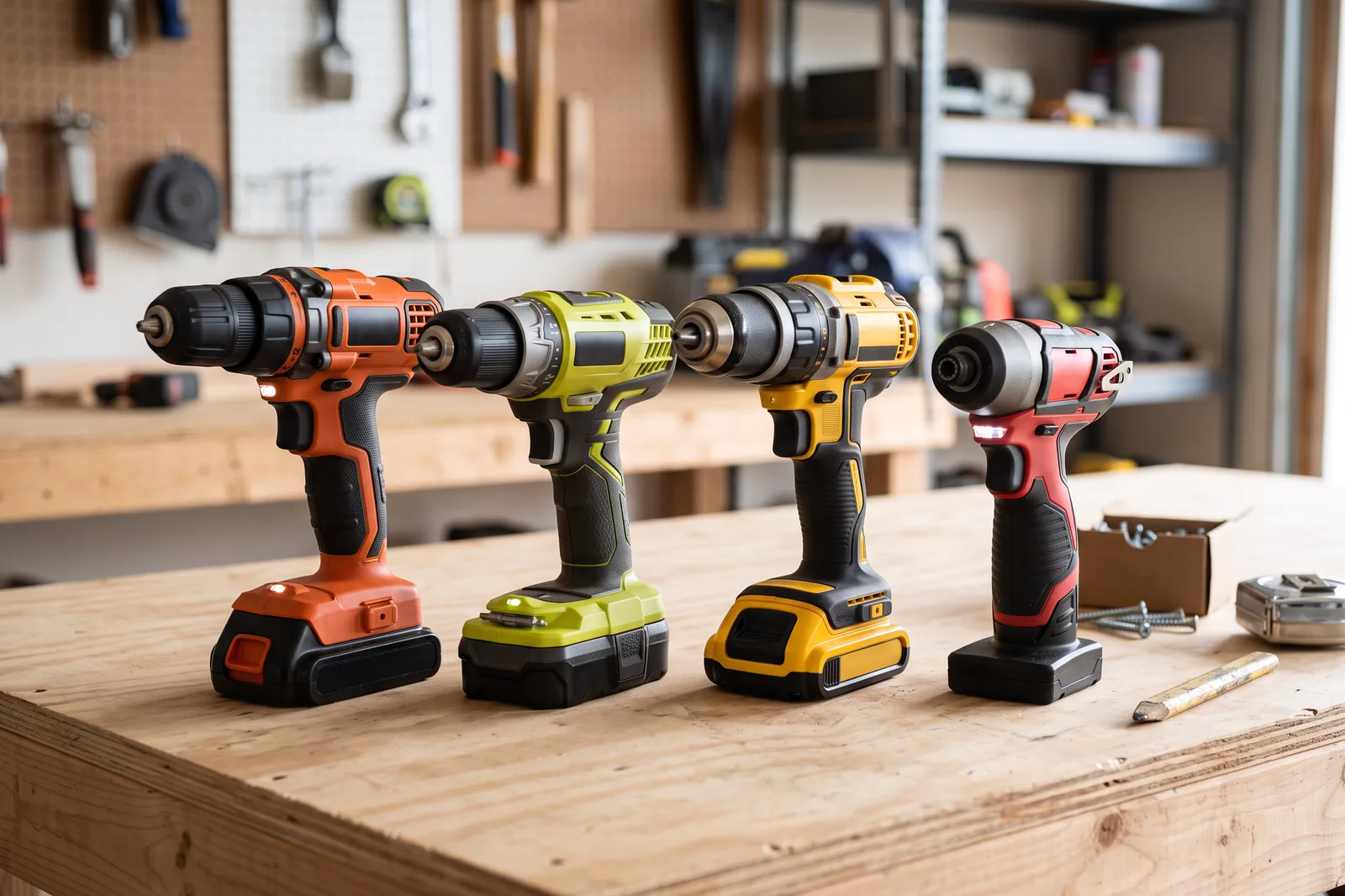 Power ToolsBest Cordless Drill for First-Time Homeowners: 4 Picks by BudgetFor most first-time homeowners, the DEWALT DCD771C2 kit is the safe all-round pick, the Ryobi HP compact kit is the best choice if you want more tools on the same battery for less, and the Black+Decker is fine for light chores only.
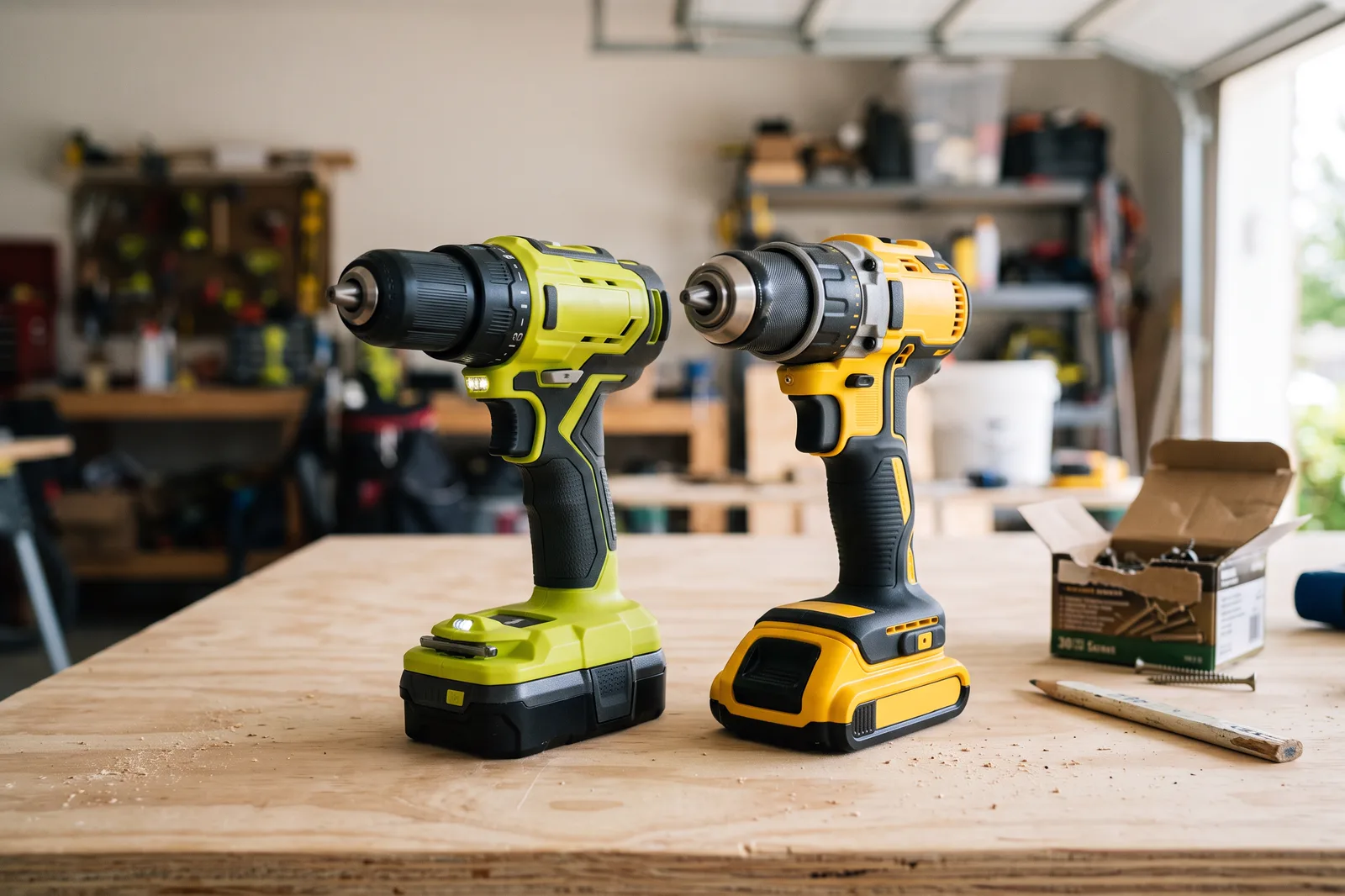 Power ToolsRyobi vs. DEWALT for Homeowners: Which Platform to Buy?Pick Ryobi if you do occasional projects, want one battery for the house and the yard, and like shopping at Home Depot.
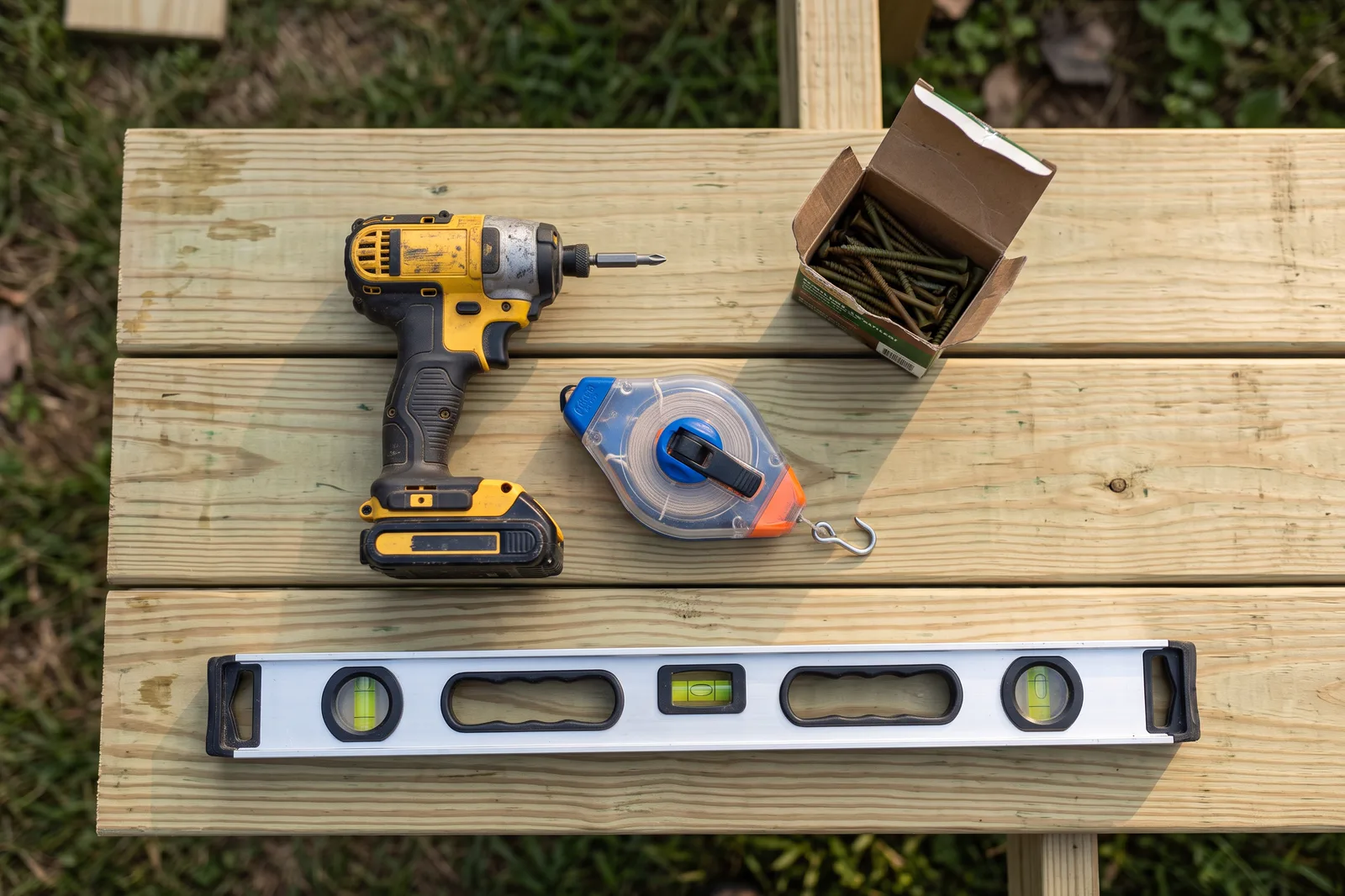 Outdoor & GardenTools Needed to Build a Backyard DeckA low backyard deck needs a saw, an impact driver for the hundreds of screws, a level, a chalk line, a tape measure and a square, plus a way to dig footings.