
Measuring & Layout · Comparison · DIY · Pro
Chalk Line: IRWIN vs. Tajima and How to Snap a Straight Line
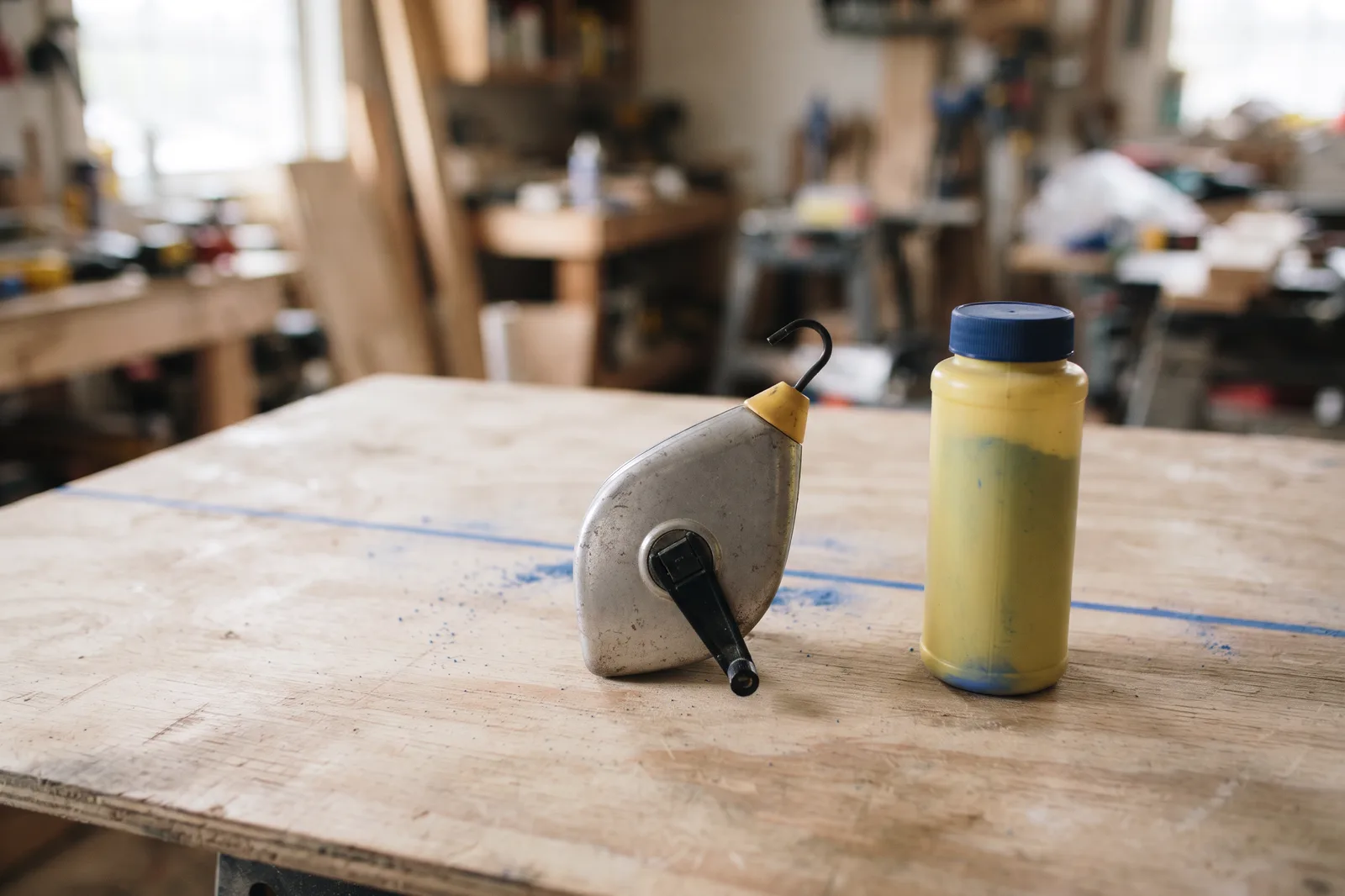
Quick answer
A chalk line is a reel of string coated in powdered chalk that you pull tight and snap to leave a long, straight mark. An aluminum IRWIN Strait-Line Classic reel is a well-reviewed budget start, and a Tajima Chalk-Rite Jam Free is the step-up for frequent use. Skip it for short cuts, where a square and pencil are faster.
What is a chalk line?
A chalk line is a reel of string inside a small case filled with powdered chalk. You pull the string out, hold it tight between two marks and pluck it like a guitar string. The string snaps down onto the surface and leaves a thin, straight line of chalk dust. Chris Palmer calls it a great way to set up a straight line for a cut or the start of a layout mark.
The tool has been around far longer than laser levels. Chris Palmer notes it was a pro's early layout tool, and it still works well because it is cheap, simple and makes a line as long as your string.
Most reels have three parts to know:
- The case or box. It holds the chalk and the spool. Aluminum cases take knocks better than thin plastic.
- The string. A tough line, usually around 100 feet, that picks up chalk as it passes through the case.
- The hook. A small metal tab on the end of the string that catches an edge or a nail so you can pull the line tight.
| Chalk line | Pencil and straightedge | Laser level | |
|---|---|---|---|
| Best at | Long straight lines on flat surfaces | Short, precise marks | Level and plumb lines on walls |
| Length | As long as the string | As long as the edge | Long, but needs a wall or surface to catch the beam |
| Cost to run | Chalk only | A pencil | Batteries |
| Weakness | Sags in wind; line can blur | Not practical past a few feet | Hard to see outdoors in bright light |
Why you'll want one
It makes long lines easy. A straightedge ends where it ends. A chalk line gives you a straight mark across a whole floor, roof or sheet of plywood, which would otherwise take a laser level or a lot of patience.
It is a one-person tool. You do not need a helper. Corvus Construction shows how to hold one end with an awl and snap the line alone, and homesteady shows the same idea with a nail.
It works on many surfaces. Wood, concrete, drywall, roofing and plywood all take a chalk line, as long as the surface is dry and not too rough. Carpet and finished walls need the right chalk color, as we cover below.
Some reels double as a plumb bob. A plumb bob is a weight on a string that hangs straight down and shows true vertical. The IRWIN listing says its center line can be used as one. That gives you a vertical check as well as a layout line from a single tool.
| Pros | Cons |
|---|---|
| Long straight lines in seconds. One snap replaces a lot of measuring and marking. | Chalk can be messy. Red and black are permanent, and blue is semi-permanent, per Essential Craftsman. |
| Low running cost. Buyers only refill chalk; there are no batteries. | Sags in wind. A long loose string will not snap straight in a breeze. |
| Works alone. A nail or awl holds one end so nobody has to help. | Weather blurs lines. Rain can widen and fade chalk, so outdoor lines may need re-snapping. |
| Easy to carry. The reel fits a tool bag or apron. | Jams if overfilled. Filling a new reel full at once is a common mistake. |
| Can double as a plumb bob. Some models, like the IRWIN, can hang as a weight on their own string, per the listing. |
Who it's for
- Deck, fence and shed builders laying out long straight lines on lumber or ground
- Flooring and tile DIYers snapping a starting line across a room
- Roofers and framers marking shingle courses, sheathing and stud layouts
- Anyone hanging a long run of shelves or wall panels who wants one straight reference
Who should skip it
- People marking short cuts. A speed square or straight edge and a pencil are quicker and more precise.
- Anyone working on a finished surface they cannot clean. Red and black chalk are permanent, and even blue can linger.
- Buyers who need a laser-straight line over wind. A laser level sets lines that a sagging string cannot.
How to use it
Check that the surface is dry, and pick your chalk color first (see the buying section). Essential Craftsman says to keep chalk away from surfaces you cannot clean.
- Load the reel the right way. Pull out about 30 to 50 feet of line first, then add a little chalk, tap the case, wind the line in and repeat. Essential Craftsman says filling it full right away is what makes it jam.
- Mark your two end points. Use a tape measure and a pencil to put a small V at each end of the line you want.
- Hook the first end. Set the hook on an edge, a nail or a screw at your first mark. Alone, push a nail or awl into the mark and hook the line on it.
- Walk the reel to the second mark. Pull the line straight, keeping it off the surface so it does not smudge.
- Pull the line tight. Chris Palmer says the tighter you hold it, the straighter the line will be.
- Hold it flat on the mark. Press the line down with a finger at the second mark so it lines up exactly.
- Lift and snap. Pull the middle of the line straight up and let go. Chris Palmer says to pull straight up, not off to the side, or the line will bend.
- Check the mark. A good line is thin and crisp. A fuzzy or doubled line usually means the string moved or too much chalk is on it.
- Rewind and set the reel down. Wind the line in with the hook seated. Store it dry, and with the cap closed so it does not leak.
- Clean off extra chalk if you have to. With black chalk especially, Essential Craftsman knocks extra chalk off the line before putting it on the surface.
Working with a helper
Essential Craftsman suggests winding the end of the line around a finger at least once so the reel cannot pull out of the helper's hand and drop chalk on the floor. He also repeats a simple rule: the person holding the box walks and pops, and the person at the mark stays put.
Using a plumb bob reel
If your reel has a pointed tip like the IRWIN, hold the hook high at the spot you want to check, let the case hang until it stops swinging, and mark where the tip points. That point sits straight below the hook.
Common mistakes
- Overfilling the case. It jams the reel on the first rewind.
- Using a loose line. A slack line gives a wavy mark.
- Snapping in wind. The string swings, so pick a calm spell or use a laser level.
- Choosing permanent chalk on a finished surface. Red and black will not wipe off.
What to look for when buying
Case material. The Saw Guy says a metal frame is a durability upgrade over plastic. Aluminum like the IRWIN's is light and tough; the Tajima adds reinforced sides.
Line length and thickness. Most home jobs fit within 100 feet. A 1.0 mm extra-bold line shows up better, while a thin line is finer and gives a more exact mark.
A jam-free design. Chalk jams are a common complaint on cheaper reels. A reel with a smooth spool and sealed filler cap, like the Tajima, helps. Still, load it in stages as described above.
A good hook. The Saw Guy says a weak hook makes it hard to hold the line straight and pull it tight. Look for a solid metal hook that stays put.
Gearing. Faster gears wind long lines back in quicker. A 1:1 ratio, as on the IRWIN, is simple and cheaper but slower.
Refill opening. A wide door makes refills easier. A tight cap keeps chalk from leaking in a bag.
Chalk color. Essential Craftsman explains the trade-off:
| Chalk | How long it lasts | Best for |
|---|---|---|
| White | Brushes off easily | Interior floors, carpet and white walls |
| Blue | Semi-permanent, can last longer than you want | General rough work |
| Red | Permanent | Marks you want to stay on rough surfaces |
| Black | Permanent | Lines on light surfaces; very messy |
| Fluorescent orange | Very visible, comes off almost like white | Low light and outdoor work |
Tier. A budget reel is plenty for occasional DIY. The Saw Guy says the IRWIN suits DIY and remodeling; a pro-grade Chalk-Rite is aimed at people who snap lines all the time.
Key specs to look for
| Spec | What to look for |
|---|---|
| Line length | 100 ft on both featured reels, per the listings. Longer lines reach farther but sag more in wind, so most home jobs fit within 100 ft. |
| Line thickness | The Tajima CR301JF uses a 1.0 mm extra-bold line, per the listing. Thicker lines leave a bolder mark; thinner lines leave a finer one. |
| Housing | Aluminum on the IRWIN, per the listing, so it takes a knock better than plastic. Rubber-backed or reinforced cases protect the reel when dropped. |
| Rewind gearing | The IRWIN uses a 1:1 gear ratio, per the listing. Faster gearing cuts the time spent winding line back in on long runs. |
| Refill opening | The IRWIN has a wide refill door for seeing and pouring chalk, per its listing. A tight seal keeps chalk from leaking in a toolbag. |
| Hook | A solid hook that bites an edge or sits on a nail holds the line steady. The Saw Guy says a weak hook makes a straight, tight snap hard. |
| Plumb bob use | The IRWIN listing says its center line can double as a plumb bob. Check for a pointed, balanced body if you want this. |
| Chalk included | The IRWIN includes blue chalk, per the listing. The Tajima box is sold on its own, so plan to buy chalk separately. |
Where to get it
We feature two reels: a budget aluminum IRWIN and a pro-grade Tajima. According to the listings, the IRWIN Strait-Line Classic has an aluminum housing, a 100 ft poly line, a wide refill door and a center line that can act as a plumb bob, and it includes blue chalk. The Tajima Chalk-Rite CR301JF has a 1.0 mm extra-bold, 100 ft line in a jam-free design. Check the latest buyer reviews on each listing, since chalk leaks and jams show up in some reviews of Tajima's other models, so we cannot say whether they apply to this one.
| IRWIN Strait-Line Classic | Tajima Chalk-Rite CR301JF | |
|---|---|---|
| Tier | Budget | Pro |
| Line | 100 ft poly line, 5 to 6 strikes per pull per the listing | 100 ft, 1.0 mm extra bold per the listing |
| Case | Aluminum housing | Jam-free design with O-ring sealed cap per JLC |
| Plumb bob | Center line can serve as one, per the listing | Not listed |
| Chalk | Blue chalk included | Sold separately |
| Best for | Weekend deck, floor and shelf jobs | Frequent snapping, longer working days |
Our verdict. If you snap lines a few times a year, the IRWIN covers the job and adds a plumb bob. If you snap lines most weeks, or you are tired of jams and leaks on cheaper reels, the Tajima is the step up that The Saw Guy and other reviewers point to. Whichever you pick, load it in stages and match the chalk color to the surface.

IRWIN Tools STRAIT-LINE Classic Chalk Reel, 100 ft (IWHT48441BC)
- Aluminum housing, a 100 ft abrasion-resistant poly line and a wide refill door, per the listing
- The center line can be used as a plumb bob, according to the listing, so one tool snaps lines and checks vertical
- Comes with blue chalk, and The Saw Guy rates this IRWIN line a good fit for DIY and remodeling rather than full-time pro use
How we scored it
Usefulness 8/10 · Value 9/10 · Durability 7/10. This is our own opinion, based on specs, buyer reviews and independent tests. It is not an Amazon or customer rating.

Tajima CR301JF Chalk-Rite Jam Free Chalk Snap Line Box, 100 ft
- A 1.0 mm extra-bold, 100 ft line that leaves a highly visible mark, according to the listing
- Jam-free design with a filler cap that seals with an O-ring to prevent leaks, per a JLC product write-up
- The Saw Guy calls the Chalk-Rite family the professional standard, with metal internal gears and premium nylon string
How we scored it
Usefulness 9/10 · Value 7/10 · Durability 9/10. This is our own opinion, based on specs, buyer reviews and independent tests. It is not an Amazon or customer rating.
Pair a chalk line with a speed square for short marks and a laser level for level lines. For a full project list, see tools needed to build a backyard deck, or browse our new homeowner toolkit.
Watch and read more
Video reviews
- Home Help : How to Snap a Chalk Line — homesteady
Hook one end at the corner, pull the line flat and tight, then snap straight up; also shows a nail to hold one end when working alone. - The Chalk Line Hack only Pro Carpenters Use — Essential Craftsman
Explains chalk colors, how to fill a new reel in stages so it does not jam, jobsite snapping habits and a test of coatings to protect lines from rain. - How to Snap Chalk Lines Solo — Corvus Construction
A short tip: use an awl to secure one end of the line at your mark, extend it and snap, with no helper needed.
Free calculators FigureMyHome
- Deck Calculator — Work out boards and fasteners before you snap your layout lines.
- Tile & Flooring Calculator — Estimate material for a room before you snap a starting line.
Frequently asked questions
What is a chalk line used for?
It marks long straight lines where a square or straightedge will not reach. Chris Palmer calls it a great way to set a straight line for a cut or a layout mark.
How do I snap a chalk line by myself?
Fix one end with a nail, screw or awl on your mark, pull the line tight to the other mark and snap it. Corvus Construction shows using an awl to hold one end when no helper is around.
Which chalk color should I buy?
Essential Craftsman says red and black are permanent, blue is semi-permanent and can last longer than you want, and white brushes off easily. Pick white for finished interiors and blue for most outdoor and rough work.
Why does my chalk line keep jamming?
Essential Craftsman says the common mistake is filling a new reel full of chalk at once. Pull out 30 to 50 feet of line, add a little chalk, wind it back and repeat.
How tight should I pull the line?
As tight as you comfortably can. Chris Palmer says the tighter you pull, the straighter the line, then pull straight up and let go.
Can a chalk line be used as a plumb bob?
Some reels can. The IRWIN listing says its center line can be used as a plumb bob, and The Saw Guy calls that a well-designed built-in feature. Hold the hook high, let the reel hang still and mark where the point lands.
Does rain wash away chalk lines?
It can blur and widen them. Essential Craftsman tested clear coats over snapped lines on plywood in a rainy week, so plan on re-snapping any line you need to be precise after bad weather.
Sources
Related tools
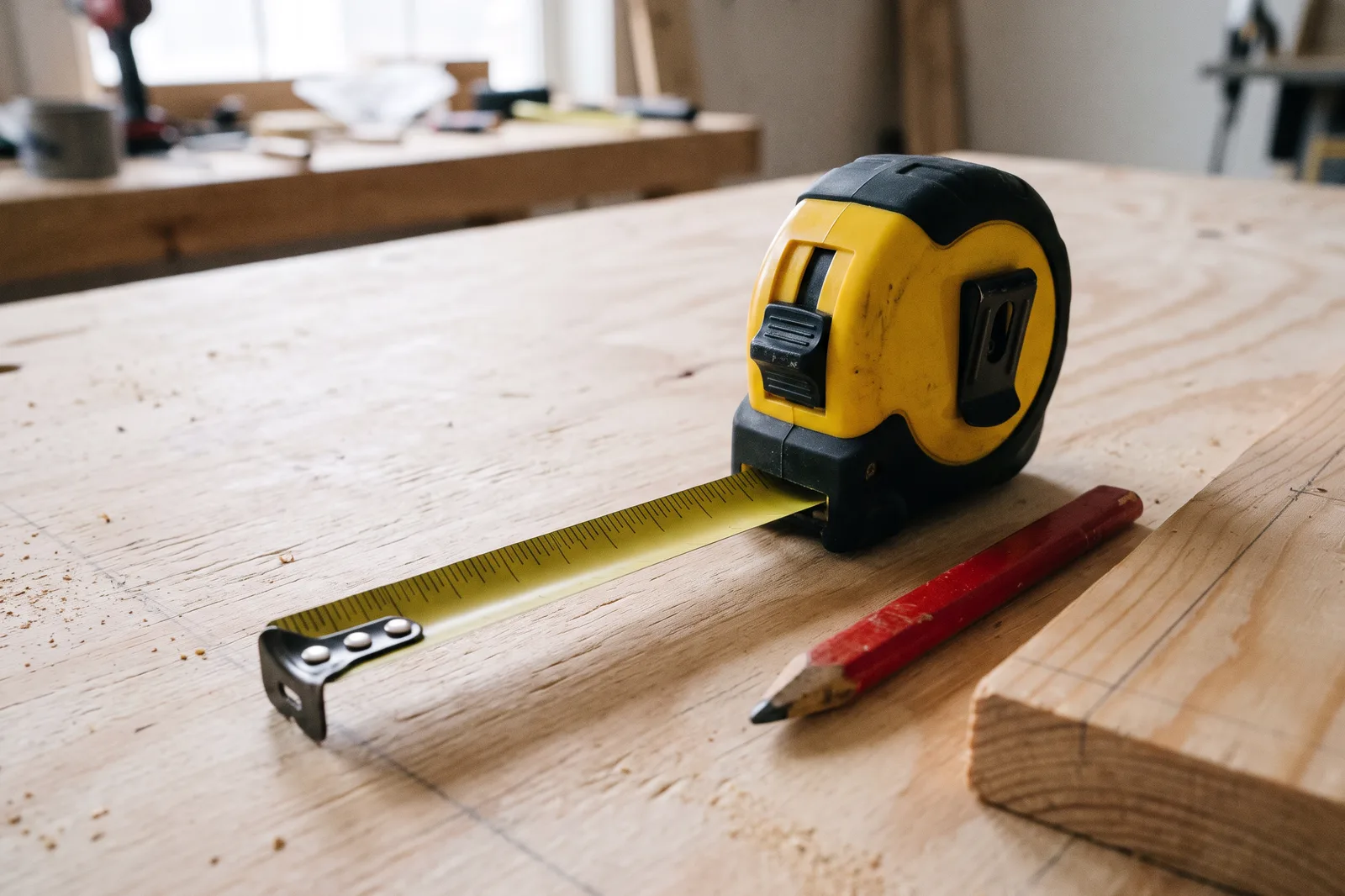 Measuring & LayoutTape Measure: The Everyday Tool Behind Every Good CutA tape measure is a coiled steel ruler that locks and retracts, and it is the first measuring tool every home toolbox needs.
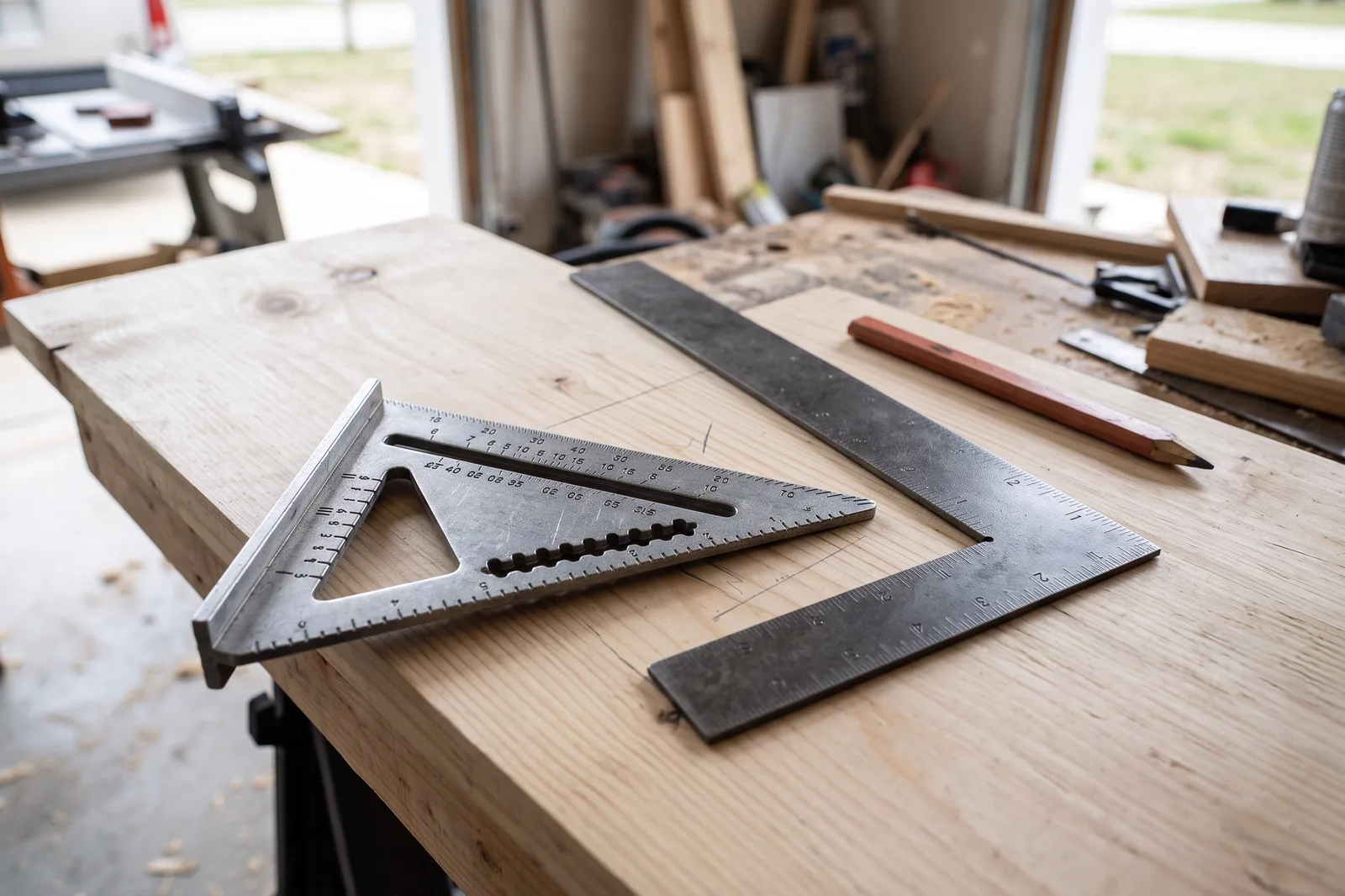 Measuring & LayoutSpeed Square and Framing Square: Two Layout Tools Worth OwningA speed square is a small aluminum triangle for marking square and angled cuts on boards, and a framing square is a large steel L for checking corners and laying out stairs and rafters.
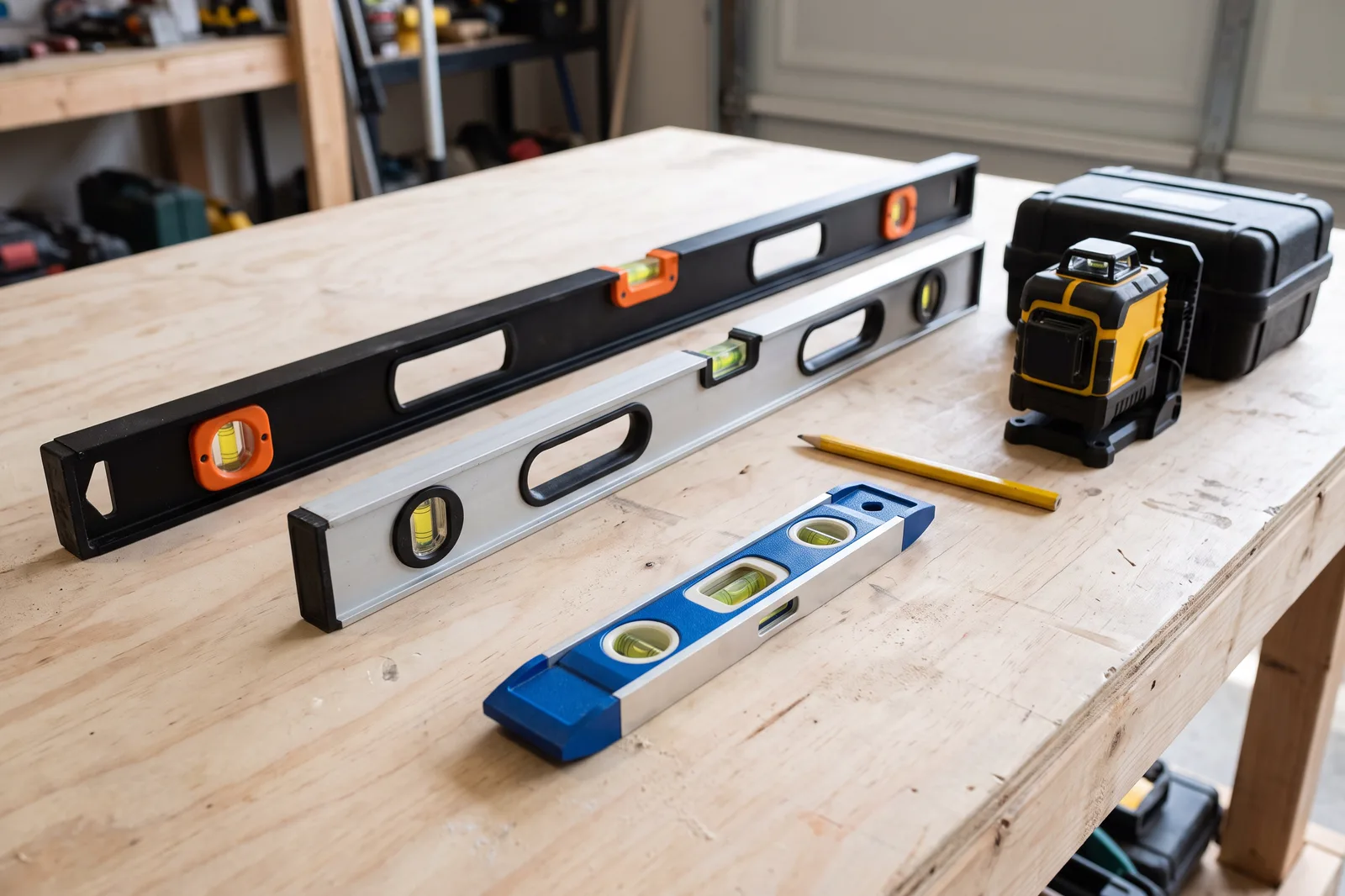 Measuring & Layout · RoundupTorpedo, Box and Laser Levels: Which Ones to Own for Home ProjectsOwn a short magnetic torpedo level for quick checks and tight spots, plus one longer frame level (24 to 48 inches) for shelves, doors and cabinets.