
Measuring & Layout · Roundup · DIY · Pro
Torpedo, Box and Laser Levels: Which Ones to Own for Home Projects
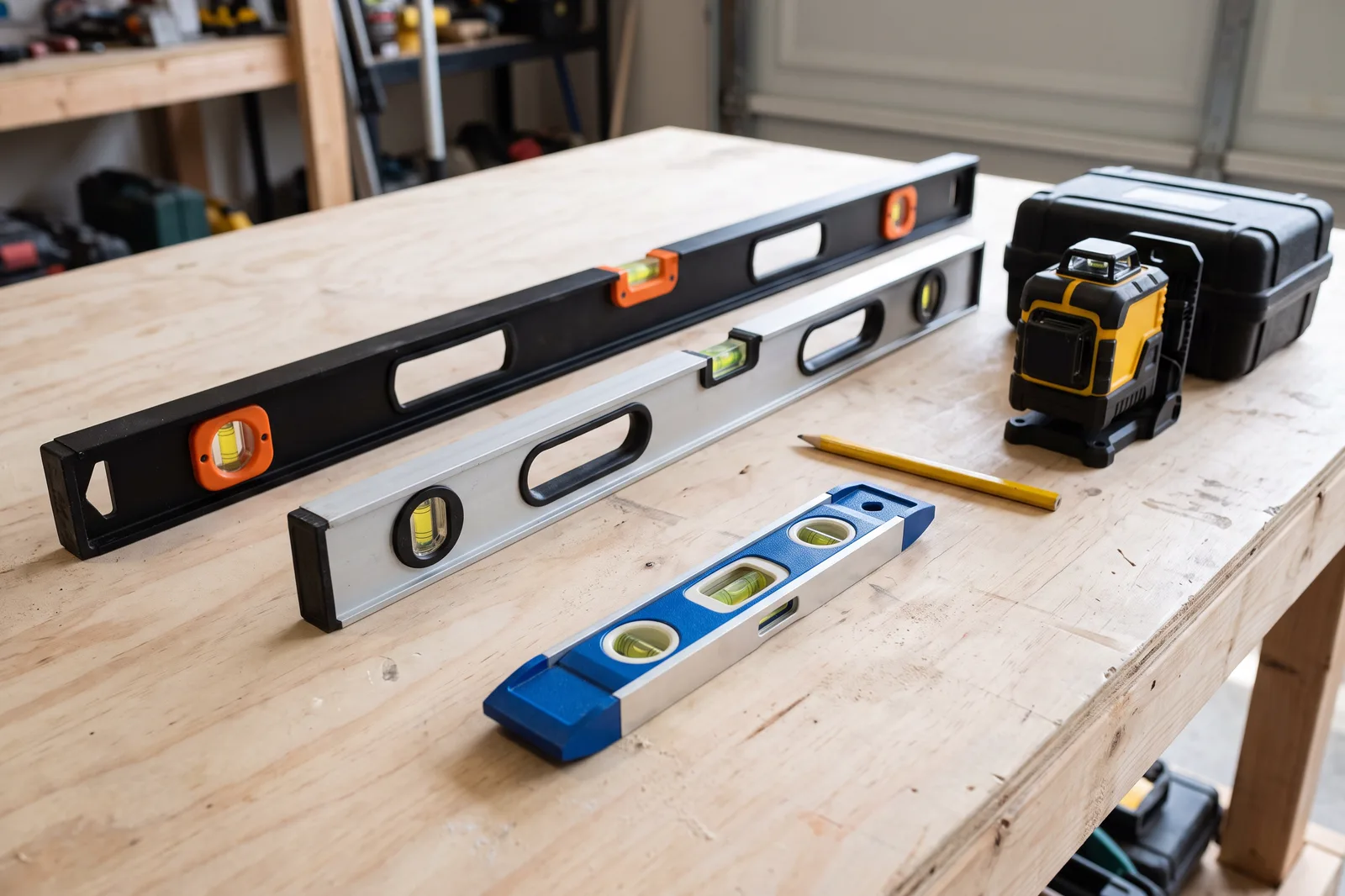
Quick answer
Own a short magnetic torpedo level for quick checks and tight spots, plus one longer frame level (24 to 48 inches) for shelves, doors and cabinets. Add a cross-line laser only if you tile, hang rows of pictures or level across a whole room. If you can only buy one thing today, make it the longer frame level, because it is the one that answers most home questions.
What are the levels worth owning?
A level is a sealed glass or acrylic tube (a vial) with a bubble in it. When the bubble sits between two lines, whatever the level rests on is flat (level) or straight up and down (plumb). That is it. What changes from tool to tool is length, frame and whether a laser does the checking.
Three kinds cover almost every home job:
| Level | Length | What it does best | Where it struggles |
|---|---|---|---|
| Torpedo level | 9 to 12 inches | Quick checks, tight spots, pipe, steel brackets | Long runs, because a short level averages out less error |
| Box or I-beam frame level | 24 to 72 inches | Shelves, doors, cabinets, counters, framing | Tight corners and one-handed work |
| Cross-line laser level | Projects a line across a room | Tile layout, rows of pictures, deck posts, long runs | Bright daylight (red beams), and it costs more |
We picked one well-reviewed model of each: the Empire EM81.12 torpedo, the Empire 430-24 and Johnson 3748 frame levels, and the DEWALT DW088K laser. We chose them from the makers' listings, the Amazon review summaries, a Bob Vila guide to level types, ToolGuyd's look at DeWalt's red and green line lasers and three YouTube reviews whose captions we read. If you are also marking lines to cut, pair this with our guide to the speed square and framing square.
The three types in more detail
Torpedo level. A short, tapered level, usually 9 to 12 inches. Bob Vila's guide describes it as about 9 inches long with two or three vials and calls a 9-inch magnetic torpedo the one level most homeowners should own. The Empire EM81.12 listing describes a 12-inch aluminum body with four vials that read plumb, level and 45 degrees, plus a vari-pitch vial for slope and a full-length magnetic edge. Opinion on torpedo levels is split. A contractor in the Saving Miller review calls a torpedo level almost useless for hanging pictures, saying it is made for metalwork, because a little dirt on the short base throws the reading off. We think both views hold: it is a fast, handy second level, not a first one.
Box or I-beam frame level. A long frame level is the workhorse. Bob Vila describes a rectangular box-beam frame that resists bending and twisting better than older I-beam shapes, and calls the 48-inch size the most versatile for everyday work. Many lower-cost levels, including the two frame levels we picked, use an I-beam shape, which is lighter and works well if you keep it clean and straight. The Empire 430-24 is a 24-inch aluminum I-beam made for homeowners, with hand holes and acrylic vials. The Johnson 3748 is a 48-inch aluminum I-beam with replaceable vials and cover plates, shock-absorbing end caps and a top-read window, according to its listing. In the Saving Miller review, the speaker says Johnson and Stabila make the frame levels contractors trust and recommends a 24-inch Johnson as a step up from plastic.
Cross-line laser level. A laser level throws a beam instead of resting on the work. A cross-line model projects a horizontal and a vertical line at once, and a self-leveling one finds level on its own with a small pendulum. The DEWALT DW088K listing says it levels itself within about 4 degrees, is accurate to about 1/8 inch at 30 feet, has a magnetic bracket and a 1/4-20 tripod thread and carries an IP54 dust and water rating. It reaches about 100 feet, and 165 feet with a detector sold separately.
Why you'll want them
A crooked shelf is the first thing you notice. Your eye catches a tilt against a door frame or window. A level costs a small fraction of a shelf and a bracket, and it saves you from drilling the wall twice.
Level and plumb are not the same job. Level is flat side to side. Plumb is straight up and down. A good level checks both, which is why every vial matters. A door that is plumb but not level still sticks.
Length is accuracy. A short level only checks a few inches of a surface, so a small bump can fool it. A 48-inch level spans a wall stud or a cabinet run and averages out those bumps. Bob Vila notes that a laser pays off on spans of about 4 feet and longer.
Different tools for different distances. In the This Old House video, a contractor shows why a laser, a water level and a pressure-based level each fit different distances. A laser needs line of sight, so a wall in the way stops it. A water level works around corners because water finds its own height. For a typical room, a frame level plus a cheap laser is plenty.
A laser saves a second pair of hands. One person can set a laser on a tripod or magnetic bracket and mark a level line around a room while the line stays put. That is useful for tile rows, picture rows, chair rails and deck posts. The Provide & Protect reviewer uses a red cross-line laser and a detector to match post heights on a slope.
It is cheap insurance. A level is a small purchase that prevents rework on every shelf, door and deck board that follows.

Who it's for
- First-time homeowners hanging shelves, mirrors, a TV bracket or a row of pictures
- Weekend DIYers setting cabinets, building a deck, framing a wall or laying tile
- Renters and apartment dwellers who want one small level that fits in a drawer
Who should skip it
- Anyone who only needs to hang one picture. A phone level app or a quick look with a ruler is fine for a single frame, though a real level is more trustworthy.
- Buyers chasing a laser for small jobs. A 24 to 48 inch level is cheaper and faster for shelves and short runs.
- Professionals who need surveying-grade accuracy. Rotary and optical levels are a different tool, not covered here.
How to use them
These steps follow the habits in the sources and videos we checked.
- Wipe the level and the surface. Dust, a paint chip or a screw head under the level shifts the reading. The Saving Miller reviewer says edges must be clean or they throw off a level.
- Run the flip test on any new level. Place it on a flat surface and read the bubble. Turn it end for end on the same spot and read again. If the bubble sits in the same place, the level is true. If not, the level is off by half the difference. Do the same for the plumb vial against a vertical edge.
- Start with level, then plumb. Set a shelf or a cabinet level first, then check the sides for plumb. Fixing one often changes the other.
- Keep the bubble between the lines. Look straight at the vial, not from the side. A sideways glance can fool you into seeing the bubble centered.
- Choose the right length. Use a torpedo level for brackets and pipe, a 24-inch level for shelves and pictures, and a 48-inch level for doors, cabinets and studs.
- Mark with a pencil along the level edge. Draw your line along the edge of the level, then check it again before drilling. Our guide to tools needed to hang heavy shelves and TVs shows where a level fits in that job.
- Check a laser before trusting it. Set the laser on a tripod or a stable surface, let it settle, and mark the line on two walls. Move the laser and repeat. If the marks disagree, send it back or calibrate it.
- Use a detector or green beam outdoors. A red beam fades in sunlight. The Provide & Protect video says it is hard to see in direct sun and uses a detector; cut or measure early or late in the day if you do not have one.
- Load the batteries as shown inside the laser. The Provide & Protect reviewer says the DW088 takes three batteries with two facing one way and one facing the other, and that it will not run if all three face the same way.
- Lock or power down a laser before moving it. The pendulum inside is delicate. A pendulum lock or power switch protects it in transit.
- Store levels flat or hung, away from the pile. Dropping a level or stacking tools on it bends frames and cracks vials.
- Recheck the level after any fall. Run the flip test again. A level that looks fine can have shifted a vial.
Common mistakes
- Trusting one short reading on a long wall. A torpedo level only sees a few inches. Use a longer level or a laser for a long run.
- Reading the bubble at an angle. Parallax makes a centered bubble look off, or the reverse.
- Using a magnetic level on wood and expecting it to stick. It holds only on steel.

What to look for when buying
Start with length. If you buy one level, make it a 24-inch frame level, which handles shelves, pictures and furniture. Add a 48-inch level if you hang doors, set cabinets or frame. A torpedo level is a good second tool, particularly if you work around metal. Bob Vila's guide suggests a 9-inch torpedo plus a 24- or 48-inch level for most homes.
Look for a straight, solid frame. Aluminum is the common choice for good reason. Bob Vila says a box-beam frame resists twisting better than older I-beam designs, but the Saving Miller reviewer says even metal I-beam levels are a step below the box levels contractors use, and lower-cost plastic frames wear sooner. If you are only hanging a few things, a well-made I-beam is enough. If you use it every week, choose a box level from a name known for accuracy.
Check the vials and whether you can replace them. Large, bright vials are easier to read. The Johnson listing mentions replaceable vials and cover plates, which means a damaged vial does not end the tool. Blue Collar Drew's torpedo ranking notes that the blue-tinted vial liquid on the Empire True Blue 8-inch can be harder to read in low light, and the 12-inch model has the same True Blue vial style.
A magnet is a bonus. On the Empire torpedo, buyers in the Amazon review summary mention a strong magnet. It holds the level on steel studs, brackets and conduit, so you can use both hands. It does nothing on wood.

For a laser, think about the beam and the mount. Red is cheaper and fine indoors. ToolGuyd notes that green beams are generally brighter and easier to see, especially at a distance, and that a green DeWalt model has a longer range than the red one. Look for a magnetic base, a tripod thread and a self-leveling lock. A detector, sold separately, extends the range for outdoor use.
Check the buyer feedback. The Amazon review summary for the Empire EM81.12 says customers find it accurate, solidly built and good value, with strong magnets. The summary for the Johnson 3748 says buyers find it well made and surprisingly accurate. The summary for the DEWALT DW088K says buyers find it accurate and well calibrated out of the box, and like that it levels itself. It also says brightness gets mixed feedback, because the beam is bright enough indoors but not visible in daylight, and that durability opinions are mixed, with some buyers reporting that it broke. We did not find a review summary for the Empire 430-24, so that pick rests on the maker's description and the general guidance above.
Test it when it arrives. Run the flip test the day it arrives, and keep the receipt. No maker's accuracy rating replaces a ten-second check.
Key specs to look for
| Spec | What to look for |
|---|---|
| Length | Short (9 to 12 inches) for tight spots and quick checks. Medium (24 inches) for shelves and furniture. Long (48 inches) for doors, cabinets and wall studs. The longer the frame, the more error it averages out. |
| Vials | A level needs at least a level vial and a plumb vial. A 45-degree vial helps with braces and pipe. Check that the vials are easy to read and ideally replaceable. |
| Frame | A solid aluminum frame with a straight, clean edge. Plastic frames cost less but wear and warp sooner. Box and I-beam shapes both resist bending, and the maker should say which one it is. |
| Magnets | A strong magnetic edge helps on steel studs, brackets and conduit. A magnet is no help on wood or drywall, so it is a bonus, not a reason to buy. |
| Accuracy rating | Makers quote a tolerance such as 0.0005 inch per inch for premium frame levels. Treat it as a claim and run the flip test (see below) on any level you buy. |
| Laser range and beam | Indoor range, whether it levels itself and whether the beam is red or green. Green is easier to see in bright rooms, and a detector (sold separately for most models) extends the range outdoors. |
| Mounting | For a laser: a magnetic base, a ceiling or wall bracket and a tripod thread. These matter more than extra beams for most home jobs. |
Where to get them
All four are sold on Amazon. We rate the Empire torpedo and the Empire 430-24 as budget tier, the Johnson 3748 as mid tier and the DEWALT DW088K as pro tier. Check the length and the beam color in each listing before you buy, and read the box contents for the laser, since some versions ship with a bracket and a case and others do not.
| Pick | Best for | What buyers like | What buyers flag |
|---|---|---|---|
| Empire EM81.12 torpedo | Brackets, pipe, tight spots, steel | Accurate, sturdy, strong magnet | Short length averages out less error |
| Empire 430-24 | Shelves, pictures, small furniture | Light and easy to carry, made in the USA per the listing | Lighter I-beam frame, shorter run |
| Johnson 3748 48-inch | Doors, cabinets, studs, framing | Well made and accurate, replaceable vials | Long and awkward in tight spaces |
| DEWALT DW088K laser | Tile, picture rows, deck posts, long runs | Self-leveling, accurate, strong magnets | Red beam fades in daylight, mixed durability reports |

Empire EM81.12 True Blue 12-Inch Magnetic Torpedo Level
- Four vials read level, plumb and 45 degrees, plus a vari-pitch vial that reads slope, per the listing
- Full-length magnetic edge clings to steel brackets, studs and conduit
- Small enough to ride in a tool bag or back pocket
How we scored it
Usefulness 8/10 · Value 9/10 · Durability 8/10. This is our own opinion, based on specs, buyer reviews and independent tests. It is not an Amazon or customer rating.

Empire 430-24 Homeowner Aluminum Level, 24-Inch
- Light aluminum I-beam frame with hand holes, sized for shelves, pictures and small furniture
- Made for homeowners, per the maker, so it is simple and easy to read
- Acrylic vials and a light 9-ounce body that is easy to carry, per the listing
How we scored it
Usefulness 7/10 · Value 9/10 · Durability 6/10. This is our own opinion, based on specs, buyer reviews and independent tests. It is not an Amazon or customer rating.

Johnson Level 3748 Professional Aluminum I-Beam Level, 48-Inch
- A 48-inch run covers door frames, cabinets, counters and wall studs in one reading
- Replaceable vials and cover plates, plus shock-absorbing end caps, per the listing
- Top-read window lets you check level while looking down on the work
How we scored it
Usefulness 8/10 · Value 8/10 · Durability 8/10. This is our own opinion, based on specs, buyer reviews and independent tests. It is not an Amazon or customer rating.

DEWALT DW088K Self-Leveling Cross-Line Laser, Red Beam
- Projects a level line and a plumb line at the same time, and levels itself within a few degrees of tilt
- Magnetic bracket and a 1/4-20 thread for a tripod, with an IP54 dust and water rating, per the listing
- Red beam is easy to see indoors, but weak in daylight unless you add a detector
How we scored it
Usefulness 8/10 · Value 7/10 · Durability 7/10. This is our own opinion, based on specs, buyer reviews and independent tests. It is not an Amazon or customer rating.
Before you buy a TV bracket, run the numbers on height with the TV size and mounting height calculator, and measure the wall first with a laser distance meter if you want a quick, accurate number.
Watch and read more
Video reviews
- Level Up! Best Torpedo Levels RANKED — Blue Collar Drew
Compares 14 torpedo levels side by side on magnets, vials, size and weight, and gives the Empire True Blue 8-inch an honorable mention as a widely available favorite whose blue-tinted vial liquid can be hard to read in low light. - HPR: What level should you buy? Stanley, Johnson, Stabila? — Saving Miller
A longtime contractor says a torpedo level is mostly a metalwork tool, recommends a 2-foot plastic I-beam for casual home use and a Johnson or Stabila box level for people who need one that stays true, and warns against gimmicks. - DeWalt Laser Level - Use & Review! — Provide & Protect
Shows the DEWALT DW088 red cross-line laser with its magnetic bracket, clamp and a detector, notes that the red beam is hard to see in direct sun, and uses it to match post heights on a slope.
PROSWho uses it
- This Old House — In 'How To Choose the Right Level for the Job' a contractor explains why a laser level, a water level and a pressure-based level each suit different distances inside and between rooms.
Free calculators FigureMyHome
- TV Size & Mounting Height — Pick the mounting height first, then use a level to set the bracket.
Frequently asked questions
What is the difference between a torpedo level and a box level?
A torpedo level is short (usually 9 to 12 inches) with a tapered body, built for tight spaces and quick checks. A box level is a long frame, from 24 to 72 inches, made to stay straight over a long reading. Many sellers also list I-beam levels, which are lighter and cheaper but have a different frame shape. For long runs, the longer frame gives the more reliable reading.
How do I check if a level is accurate?
Do the flip test. Set the level on a flat surface and note where the bubble sits. Turn the level end for end on the same spot and read it again. If the bubble sits in the same place both times, the level is true. If it moves, the level is off by about half the difference. Do the same for the plumb vial against a vertical edge.
What length level should I buy first?
For most homes, a 24-inch level is the first one to own because it handles shelves, pictures and furniture. A 48-inch level is the next step if you hang doors, set cabinets or frame. A torpedo level is a good second tool, especially if you work around metal.
Do I need a laser level?
Only for jobs where you need a level line across a whole room or over a long distance, such as tile layout, a row of cabinets or deck posts. A cross-line laser projects a level and a plumb line, and a self-leveling one finds level on its own. For hanging shelves or a TV, a regular level is faster and costs less.
Can I see a laser beam outdoors?
Red beams are hard to see in bright daylight. One reviewer of the DEWALT DW088 says it is difficult to see in direct sun and uses a detector instead, and the Amazon review summary agrees that the beam is bright indoors but not visible in daylight. A green beam is easier to see, and a detector extends the range of either color.
Are magnetic levels better?
A magnet helps on steel studs, metal brackets, conduit and pipe because the level holds itself. It does nothing on wood or drywall. If you only work on wood, a magnet is a nice extra rather than a reason to choose one level over another.
How often should I replace a level?
Replace or recalibrate it when the flip test shows it is off, or when the frame is bent, dented or has a cracked vial. Keep a level out of a pile of tools, because a drop or a bent edge can throw it off even if the vials still look fine.
Sources
- Bob Vila: Squares, levels and plumbs (types, lengths and what homeowners need)
- ToolGuyd: DeWalt cross-line lasers, red vs. green
- DeWALT DW088K listing on Amazon (customer review summary and maker specs)
- Empire EM81.12 torpedo level listing on Amazon (customer review summary and maker specs)
- Johnson 3748 48-inch level listing on Amazon (customer review summary and maker specs)
- Empire 430-24 homeowner level listing on Amazon (maker description)
- Sawmill Creek and Fine Homebuilding forum threads on checking and choosing levels
Related tools
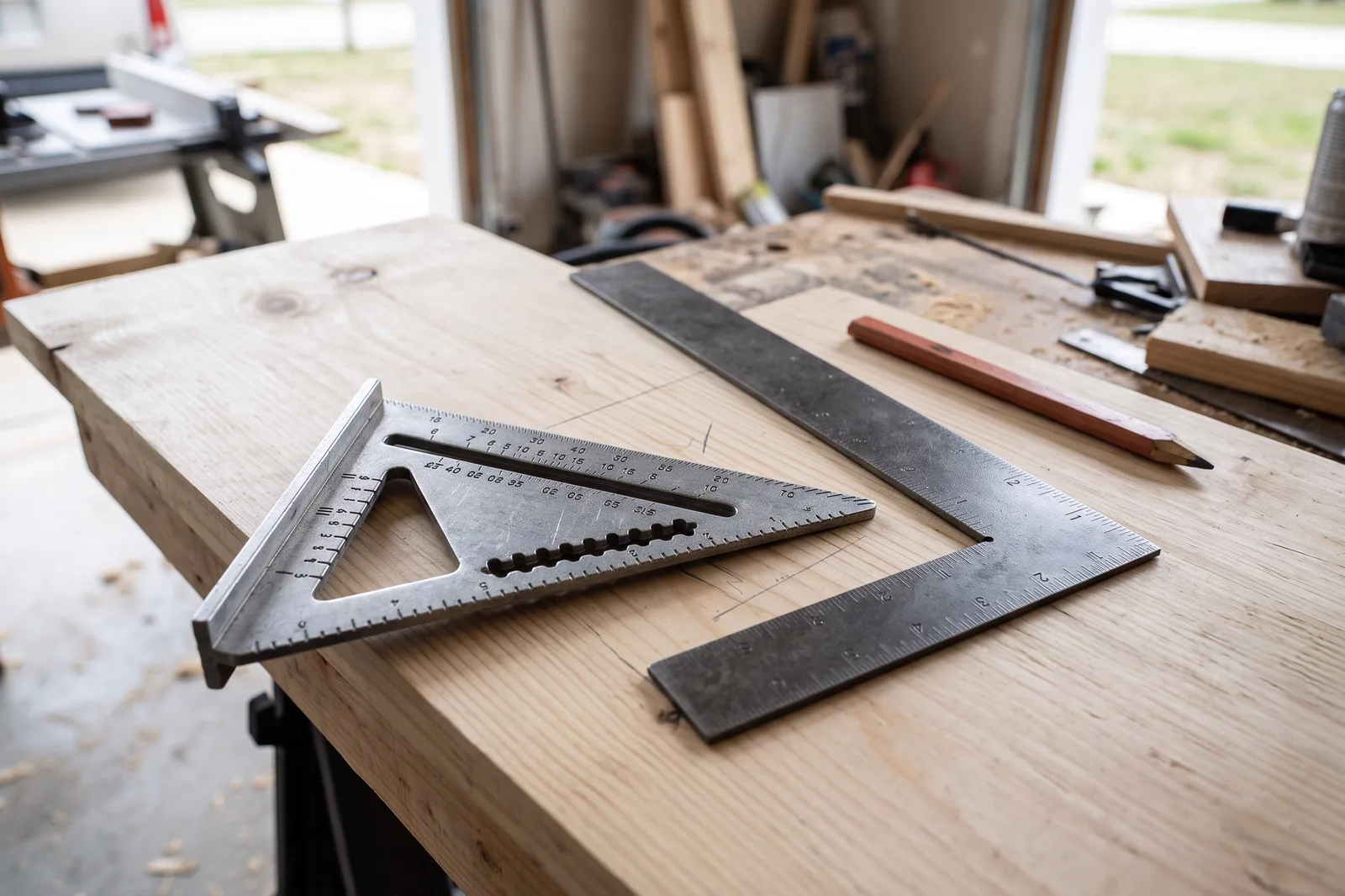 Measuring & LayoutSpeed Square and Framing Square: Two Layout Tools Worth OwningA speed square is a small aluminum triangle for marking square and angled cuts on boards, and a framing square is a large steel L for checking corners and laying out stairs and rafters.
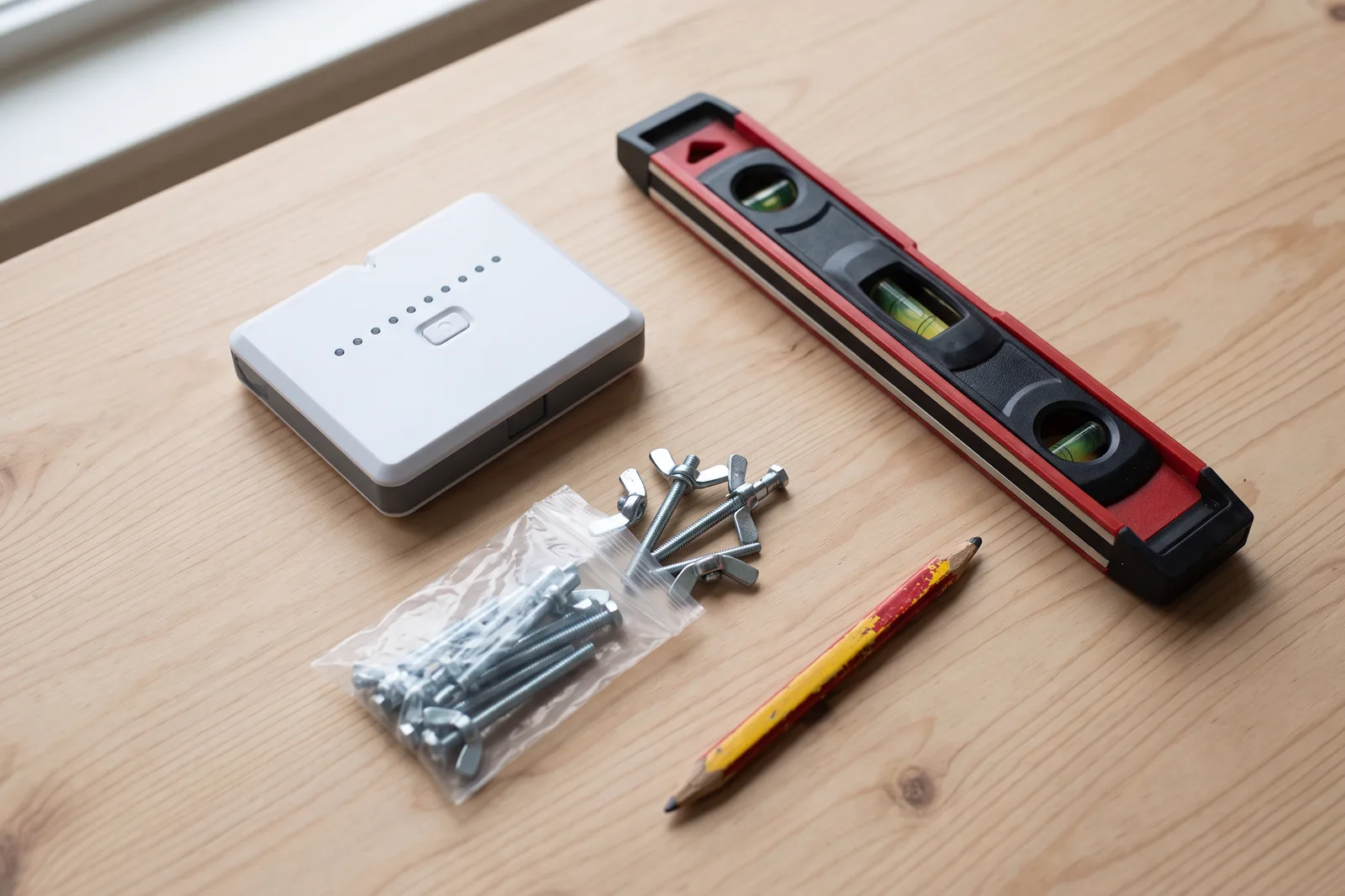 Fasteners & HardwareTools Needed to Hang Heavy Shelves and TVsTo hang a heavy shelf or a TV you need a stud finder to locate the wood studs, a level to set it straight, a drill and wall anchors rated for more than the load if a stud is not available.
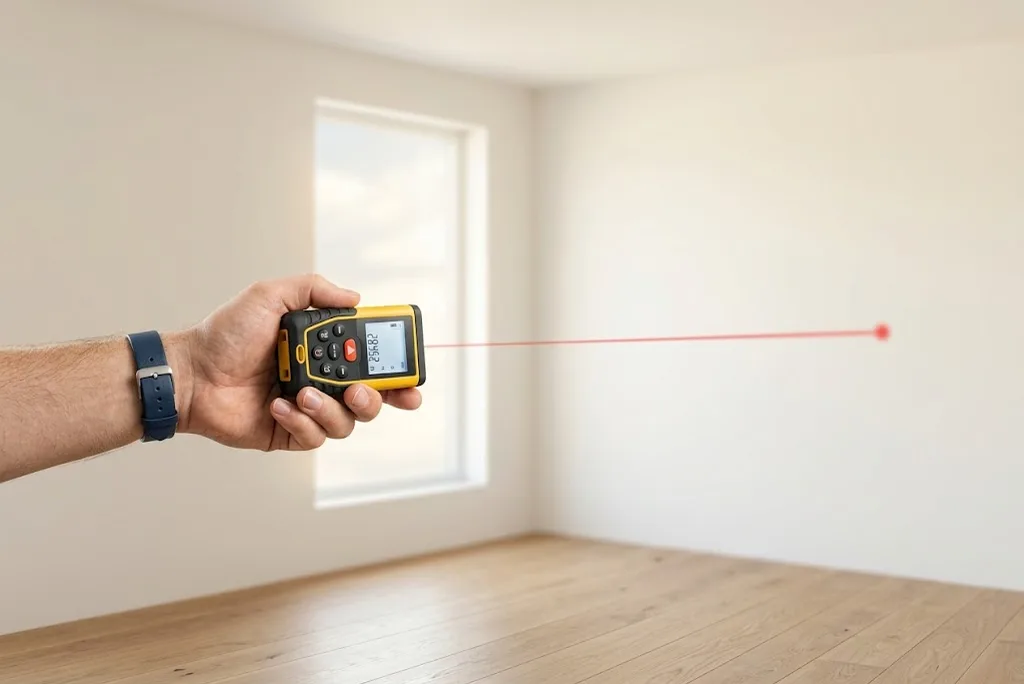 Measuring & LayoutLaser Distance Meter: The Tape Measure Upgrade Worth OwningA laser distance meter is a small handheld tool that shoots a laser at a wall and shows the distance on a screen.