
Hand Tools · Roundup · DIY · Pro
Caulk Guns: Manual, Dripless or Cordless? Which One to Own
Quick answer
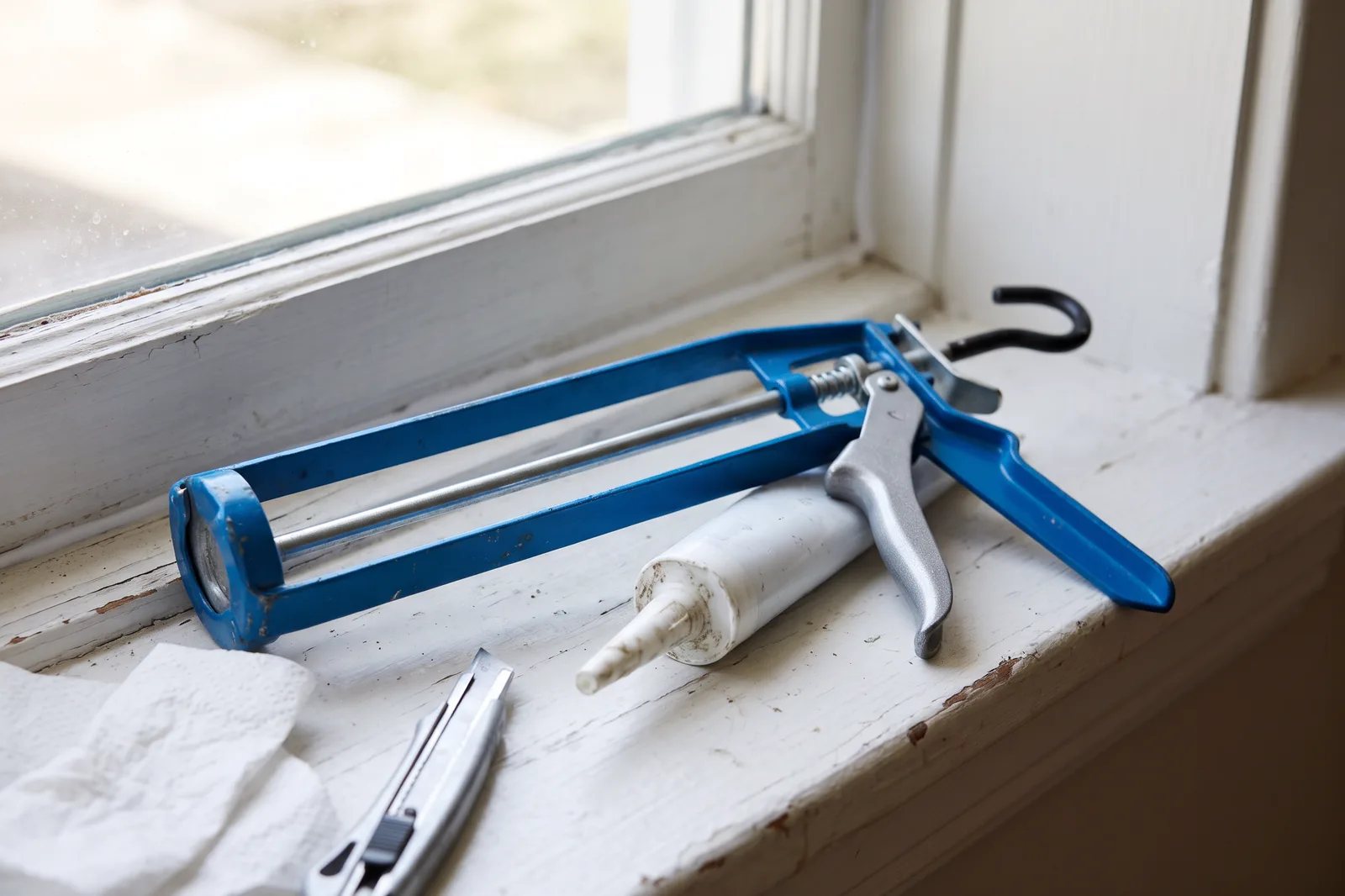
A caulk gun pushes sealant or construction adhesive out of a tube in a steady bead. For most homeowners a smooth-rod manual gun with a high thrust ratio, such as the Newborn 250, is the best all-round buy. A budget dripless gun such as the Newborn 930-GTD suits light bathroom and kitchen caulking, and a cordless gun such as the DEWALT DCE560B only makes sense if you run lots of adhesive or already own the batteries.
What are caulk guns?
A caulk gun is a hand tool that holds a tube of sealant or adhesive and squeezes it out in a controlled bead. You squeeze the trigger, a rod pushes a plunger into the back of the tube and the material flows out of the cut tip. Guns differ in how much leverage they give you, how smoothly the rod moves, whether they stop flow when you let go, and whether they run on a battery.
Pick by the material and the amount you apply.
| If you... | Get | Why |
|---|---|---|
| Want one gun for caulk and adhesive | Newborn 250 | An 18:1 smooth-rod gun that Bob Vila named Best Overall and Practical Sailor recommends as an all-rounder |
| Mostly seal tubs, sinks and trim with latex or silicone | Newborn 930-GTD | A 10:1 drip-free gun with a comfortable grip, per the listing and Bob Vila |
| Run many tubes of adhesive or already own DEWALT 20V batteries | DEWALT DCE560B | A powered 10 oz gun with speed settings and an anti-drip pull-back |
| Need one tiny dab | None of these | A small squeeze tube is enough |
Most manual guns share the same parts:
- The frame. A steel cradle that holds the tube. Some frames revolve so you can turn the nozzle.
- The rod. It pushes the plunger. A smooth rod moves in one steady stroke; a ratchet rod moves in clicks.
- The trigger and handle. You squeeze these to advance the rod. The leverage here is the thrust ratio.
- The release. A thumb catch or lever frees the rod so you can pull it back and change tubes. On dripless guns it also eases the rod back when you let go.
- Extras. A tip cutter, a puncture wire and a hang hook.
| Manual gun | Cordless gun | Squeeze tube | |
|---|---|---|---|
| Best at | Neat beads and fine control | Steady, fast flow on big runs | One tiny dab |
| Weakness | Hand fatigue on cold or thick material | Bigger, heavier, battery needed | Cannot be reloaded |
| Power | Your hand | Battery | Your hand |
Why you'll want one
It makes a smoother bead than your thumb. A trim installer in a DeMiDoG45 video says a cordless gun avoids tired hands from squeezing cold silicone and gives a constant flow with no stop-start breaks. A manual smooth-rod gun gives a similar even push without a battery, and Bob Vila's testers rated the Newborn 250 for its smooth frame rotation.
It handles thick adhesive. Construction adhesive is stiff, and Practical Sailor found that low-ratio guns struggled with cold polyurethane, leaving poor control and hand fatigue. A higher thrust ratio solves that. Bob Vila ran its guns on acrylic caulk at just under freezing and then on cold construction adhesive and roofing tar to see which ones coped.
It stops waste. A drip release and a nozzle cap or plug keep material from running out or drying in the tip.
It covers many jobs. Typical uses include sealing a tub, a window frame or a gap along baseboard, laying a bead of adhesive for trim or a shelf, and sealing around an outdoor tap.
It makes a neat finish. Even pressure gives an even bead, which means less wiping and less touch-up. That is why testers care about a smooth rod and a comfortable grip more than about extras.
| Job | What helps most |
|---|---|
| Sealing a tub or sink with latex or silicone | A 10:1 gun, a drip release, a comfortable grip |
| Laying construction adhesive | An 18:1 or higher gun for the stiff material |
| Running a dozen tubes in one project | A powered gun with steady flow, if you can carry the weight |
| One small repair a year | A budget manual gun |
Who it's for
- Homeowners sealing a tub, a window or baseboard gaps
- Renovators laying down construction adhesive for subfloors, trim or foam board
- Anyone who dislikes lumpy beads and wants a smooth rod and a drip release
- Heavy adhesive users who may justify a cordless gun
Who should skip it
- Anyone with a single dab of sealant to do. A squeeze-tube of caulk needs no gun.
- Anyone who wants delicate, detailed beads from a powered gun. SomeGuy's Garage says a manual gun is still better for fine work.
- Anyone who needs a repair that carries load. Sealant fills gaps; it is not a structural fix.
How to use it
These steps apply to any manual tube gun. Cordless guns add a speed setting.
- Remove the old caulk first. Pull or scrape it out, and consider a pry bar for stubborn bits or an oscillating multi-tool for tight spots.
- Clean and dry the joint. Dust, soap and moisture weaken a seal.
- Cut the tube tip. Cut at a 45-degree angle, small to begin with, using the gun's cutter or a utility knife. The opening sets the width of the bead, and you can always cut more.
- Pierce the inner seal. Use the puncture wire on the gun or a long nail.
- Release the rod and pull it right back. Slide the tube in with the nozzle pointing forward.
- Seat the plunger. Push the rod forward until it just touches the back of the tube.
- Squeeze steadily. Hold the gun at an angle and move at an even pace, pushing the bead ahead of the nozzle for a clean line.
- Release the pressure at the end of the bead. Use the thumb release or drip release, then lift away.
- Smooth the bead right away with a gloved finger or a tool, following the sealant's instructions.
- Cap the tube. A caulk plug, shown on the Newborn 250 listing, or a nail pushed into the tip keeps the rest fresh.

What goes wrong
| Problem | What happens | Fix |
|---|---|---|
| Rod not released | The plunger will not come back | Press the thumb release or lift the lever first |
| Gun still pushing after you stop | Material oozes out | Use the drip release and wipe the tip |
| Wrong ratio for the material | Thick sealant is hard to squeeze and hands tire | Move to 18:1 or higher for adhesive |
| Tip cut too wide | The bead is too thick | Start small and cut more |
| Squeezing too hard on a high-ratio gun | Practical Sailor warns a 26:1 gun can burst a tube | Ease off and let the plug move |
| Loose poker on a cordless gun | It can flop around | A SomeGuy's Garage owner notes the DEWALT's poker is loose, so mind it when storing |
What testers and owners say
We feature three guns. Here is what we found:
- Newborn 250 (mid). Bob Vila named it Best Overall at 18:1, praising smooth frame rotation, comfortable grips, a built-in cutter and an easy thumb release. It reports a small drip and a rubber coating on only one handle. Practical Sailor recommends it for marine sealants and as an all-around choice.
- Newborn 930-GTD (budget). Bob Vila gave it Best Grip for comfort and ease of squeezing, but saw it drip a little despite the drip-free design. At 10:1 it suits caulk better than thick adhesive.
- DEWALT DCE560B (pro, cordless). A SomeGuy's Garage video shows speed settings from one to six, an auto anti-drip pull-back and an automatic stop at the end of the stroke. The same video notes the extra size and weight, and that a little caulk is left in the tube. It still suggests a manual gun for delicate, detailed work. Tools Tested found its performance decent but disliked the two-trigger design.
- Independent force test. Tools Tested measured eight cordless guns on a hydraulic rig. The Milwaukee M18 delivered the most force, a Ryobi beat its own rating and was the video's value pick, and two guns (Ridgid and Dianamix) failed during testing.
- Independent manual test. Practical Sailor used guns on real jobs and bench checks. It found low-ratio guns struggled with cold polyurethane, called a drip-release useful with latex, and rated tip cutters and pokers less useful.

What to look for when buying
- Thrust ratio. Use 8:1 to 10:1 for caulk and 18:1 or more for adhesive, per Practical Sailor.
- A smooth rod. It gives an even bead and fewer lumps than a ratchet.
- A drip release. Bob Vila still saw some dripping, so treat it as helpful rather than perfect.
- Frame feel. A revolving frame and a firm cradle help control.
- Comfortable handles. Rubber coating on both handles is a plus.
- Manual or cordless. Pick cordless only if you run many tubes or already own the battery platform. Cordless guns are bigger and heavier, and a battery is sold separately on the bare-tool DEWALT.
- Extras you will actually use. A hang hook is handy; a cutter and poker are bonuses.
- Pair it with the right tools. A sharp utility knife cuts the tip, and our garage shelves project lists other tools for adhesive jobs. For small craft holds, a hot glue gun is the right tool instead.
Key specs to look for
| Spec | What to look for |
|---|---|
| Thrust ratio | The leverage the gun gives your squeeze. Practical Sailor suggests 8:1 or 10:1 for latex and silicone caulk and 18:1 or 26:1 for thick polyurethane sealants. The Newborn 250 is 18:1 and the Newborn 930-GTD is 10:1, per the listings. |
| Rod type | Smooth rods push in one steady motion. Ratchet rods advance in clicks and can leave lumps in a bead. Both Newborn picks here use smooth rods. |
| Frame style | A cradle or open frame holds the tube along its length. A revolving frame lets you turn the tube to reach corners, which Bob Vila praised on the Newborn 250. |
| Drip control | A release that pulls the rod back when you let go stops the tube oozing. Bob Vila still saw some dripping on the dripless guns it tested, so thin caulk and the release both matter. |
| Cutter and poker | A built-in tip cutter and puncture wire save reaching for a knife. Practical Sailor found these less useful in testing, so treat them as a bonus. |
| Tube size | Most guns take a standard 10 oz (about 300 ml) tube. The DEWALT DCE560B is a 10 oz model, and SomeGuy's Garage notes larger-tube versions exist. |
| Power source | Manual guns need no battery. A cordless gun adds speed control and steady flow but is bigger and heavier. |
| Grip | Bob Vila's testers liked rubber-coated handles and a comfortable trigger for long beads. |
Where to get a caulk gun
Our three picks are below, based on listings, tests and owner videos.

Newborn 250 Super Smooth Rod Caulking Gun, Revolving Steel Frame, 18:1 Thrust Ratio
- An 18:1 thrust ratio, a smooth rod, a revolving steel frame and a hook, per the listing
- Bob Vila named it Best Overall after testing eight guns, praising the smooth frame rotation, comfortable grips, built-in cutter and easy thumb release
- Bob Vila reports it drips a little and that only one handle has a rubber coating
How we scored it
Usefulness 9/10 · Value 9/10 · Durability 8/10. This is our own opinion, based on specs, buyer reviews and independent tests. It is not an Amazon or customer rating.

Newborn 930-GTD Drip-Free Smooth Hex Rod Cradle Caulking Gun with Gator Trigger Comfort Grip, 10:1 Thrust Ratio
- A 10:1 thrust ratio, a smooth hex rod, a cradle frame and a comfort-grip trigger, per the listing
- Bob Vila picked it as its Best Grip, calling it very comfortable and easy to squeeze
- Bob Vila says it still dripped a little despite the drip-free design, and it is a 10:1 gun, so it suits caulk better than thick adhesive
How we scored it
Usefulness 8/10 · Value 9/10 · Durability 7/10. This is our own opinion, based on specs, buyer reviews and independent tests. It is not an Amazon or customer rating.

DEWALT 20V MAX Cordless Caulking Gun, 10 oz, Variable Speed Trigger, Bare Tool (DCE560B)
- A powered 10 oz gun with a variable-speed trigger and interchangeable canister trays, sold as a bare tool without a battery, per the listing
- Bob Vila named it Best Battery, citing even, repeatable results, and a SomeGuy's Garage owner video shows six speeds and an automatic anti-drip pull-back
- Tools Tested put it last in its ranking, mainly for its double-trigger design, while saying it works if you already run the DEWALT batteries
How we scored it
Usefulness 8/10 · Value 6/10 · Durability 8/10. This is our own opinion, based on specs, buyer reviews and independent tests. It is not an Amazon or customer rating.
Watch and read more
Video reviews
- DeWalt DCE560 20v Cordless Caulking and Adhesive Gun - Easy Peasy One Hand Squeezy — SomeGuy's Garage
Shows the DEWALT's two triggers, speeds one to six and anti-drip pull-back, and notes the weight and size downside. - The best caulking gun you can own! — DeMiDoG45
A trim installer tries a cordless caulk gun on baseboard and notes steady flow, no tip cutter and no oozing when idle. - Best Cordless Caulk Gun? Hydraulic Test! Ryobi, Ridgid, Kobalt, Makita, Dewalt, Milwaukee, Dianamix — Tools Tested
Measures push force on eight cordless guns with a hydraulic rig and ranks them.
Frequently asked questions
What does thrust ratio mean on a caulk gun?
It is how much the gun multiplies your squeeze. A higher number pushes thick material more easily. Practical Sailor suggests 8:1 or 10:1 guns for latex caulk and 18:1 or 26:1 guns for polyurethane sealants.
What is the difference between a smooth rod and a ratchet rod?
A smooth rod slides forward in one continuous push, which makes for an even bead. A ratchet rod moves in small steps, which can leave lumps. Bob Vila's Best Overall pick, the Newborn 250, uses a smooth rod.
Do dripless caulk guns really stop dripping?
They help but do not always stop it. Bob Vila saw a little dripping on the Newborn 930-GTD and the Newborn 250 in its tests. Practical Sailor says a drip-release is useful with latex caulk, so ease off the trigger and release the rod when you finish a bead.
Is a cordless caulk gun worth it?
For a few tubes a year, a manual gun is enough. A SomeGuy's Garage owner used a DEWALT to run about a dozen tubes of foam-board adhesive and says it gave steady, lump-free flow, though the larger size and weight are a downside.
How do I cut the nozzle tip?
Cut it at a 45-degree angle, small at first. The opening should match the size of the bead you want. You can always cut more, but you cannot put it back.
Why does my caulk keep coming out after I stop squeezing?
Pressure is still in the tube. Use the release on the gun to pull the rod back, then wipe the tip. A SomeGuy's Garage video shows the DEWALT doing this automatically with its anti-drip feature.
Do I need a different gun for construction adhesive?
A higher thrust ratio makes thick adhesive easier. Practical Sailor found low-ratio guns struggled with cold polyurethane. Match the ratio to the material, and choose 18:1 or higher for adhesive.
Sources
Related tools
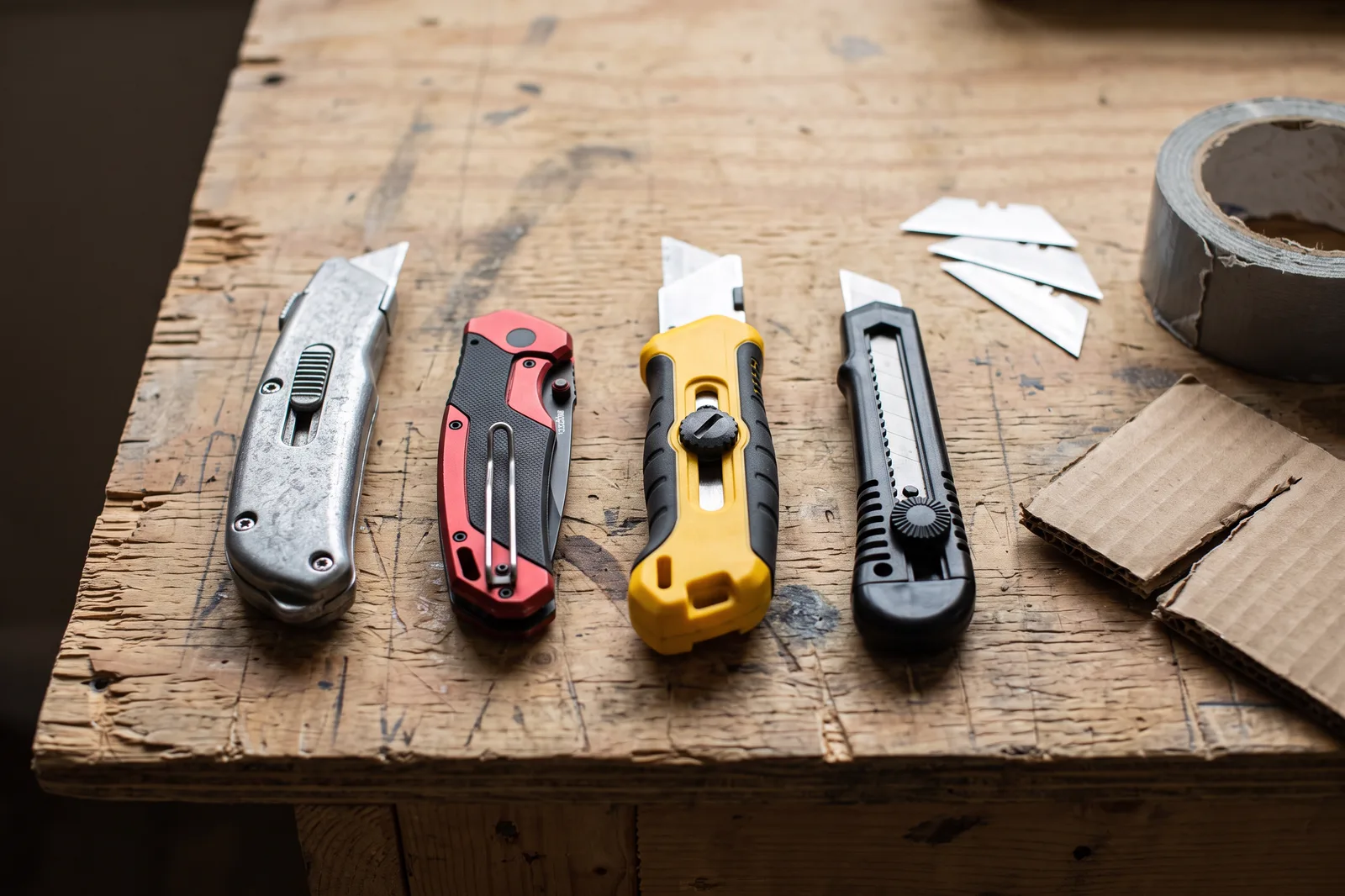 Hand ToolsBest Utility Knife for DIY and Jobsite UseFor most homes and job sites, the Stanley Classic 99 is the safest all-round pick: simple, tough and held up in independent drop tests.
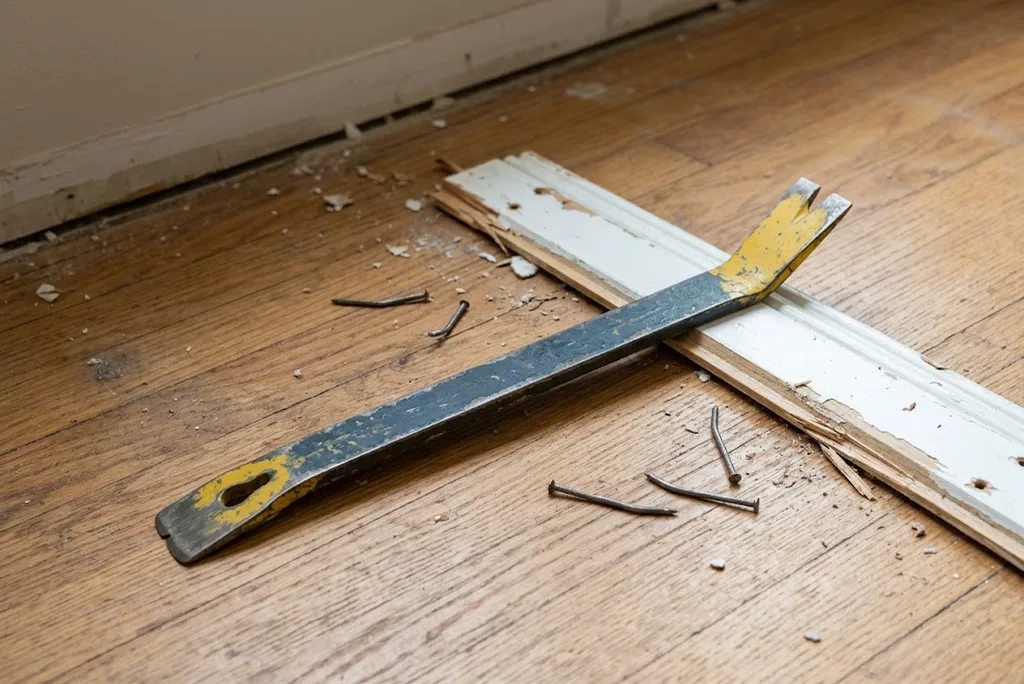 Hand ToolsPry Bar and Crowbar: The Leverage Tool Every Home NeedsA pry bar is a flat steel bar with a thin, beveled end and a nail slot, used to lift trim, pull nails and separate boards with leverage.
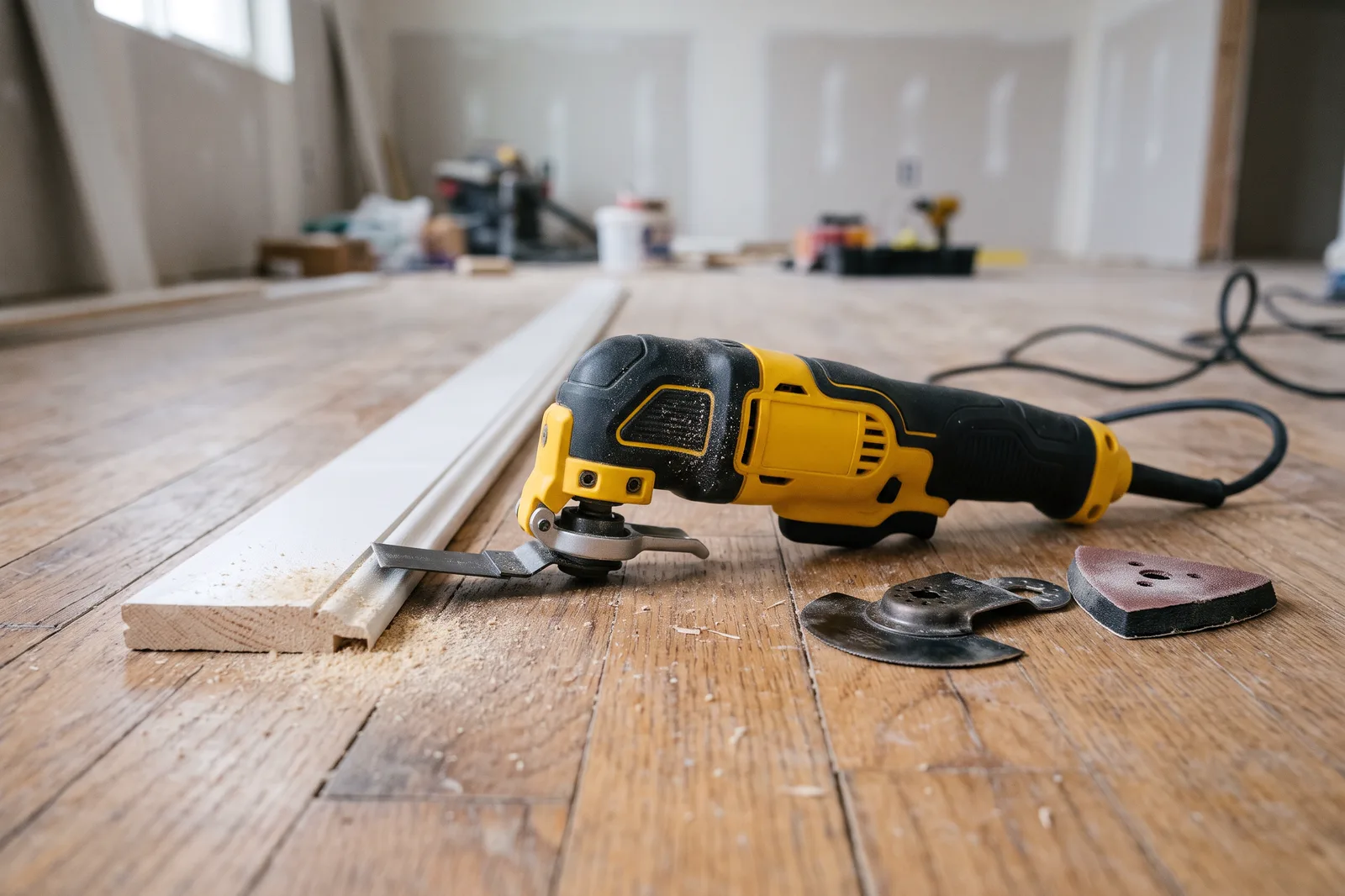 Power ToolsOscillating Multi-Tool: The One Tool for Cuts Other Saws Cannot MakeAn oscillating multi-tool wiggles a short blade back and forth to make plunge cuts, flush cuts and tight sanding that a normal saw cannot reach.