Hand Tools · Buyer's guide · DIY · Pro
Best Utility Knife for DIY and Jobsite Use
 Stanley Classic 99 Retractable Utility Knife, 6 in (10-099)
 Milwaukee FASTBACK Compact Flip Utility Knife
 OLFA 18mm Heavy-Duty Utility Knife (L-1) with Ratchet Lock and Snap-Off Blade
 STANLEY FatMax Quick Change Fixed Blade Utility Knife (10-780)
Photos from the Amazon listings. Scores are our own, not customer ratings.
Quick answer
For most homes and job sites, the Stanley Classic 99 is the safest all-round pick: simple, tough and held up in independent drop tests. Pick the Milwaukee FASTBACK if you want a folding knife that opens with one hand, the OLFA L-1 for long, controlled cuts in soft materials, and the Stanley FatMax 10-780 for heavy daily cutting.
Quick verdict
A utility knife is one of the cheapest tools in the box and one of the most used. We compared four popular models of four different kinds. We read the maker listings, a Project Farm test of folding knives, a retractable-knife comparison with drop and drive-over tests, written reviews and buyer feedback. Our picks:
- Best all-round: the Stanley Classic 99. It is simple, metal and tough, and it came through every test in an independent comparison.
- Best folding knife: the Milwaukee FASTBACK. Opens with one hand, locks open and closed and comes with a belt clip.
- Best for long, clean cuts in soft materials: the OLFA L-1. Snap-off blades give you a fresh edge in seconds.
- Best for hard daily use: the Stanley FatMax 10-780. A fixed blade has no slider to wear out.
If you only buy one, buy the Classic 99 and a box of spare blades. For a wider tool list for first-time owners, see our pry bar basics and speed square guide.
Which type of utility knife should you choose?
Utility knives differ most in how the blade is held. That matters more than brand.
Retractable. A slider moves the blade in and out. It is the classic jobsite knife. The blade can stay out, in, or at a middle length. Most buyers like that it is quick and sturdy. The risk is a worn slider that lets the blade slide back under pressure.
Folding. The blade folds into the handle like a pocket knife. It is safer to carry in a pocket and nicer on a belt. In Project Farm's test of more than a dozen folding knives, the lock strength, the opening effort and the belt clip varied a lot from brand to brand, and several folding frames bent or jammed after a heavy impact.
Snap-off. The blade is scored in segments. When the tip dulls, you snap it off. They cut soft materials very cleanly. They are not as tough for prying or scraping, and the blades are thinner.
Fixed blade. The blade does not move at all until you change it. There is no slider to fail, so the knife is the simplest and often the strongest. You just have to cover the blade when you store it.
Who it's for
- Homeowners who open boxes, trim carpet, cut tape and score drywall
- Contractors and installers who go through blades daily
- Anyone building a first toolbox who needs one dependable knife
Who should skip it
- People who want a pocket knife for camping or self-defense. Utility knives are work knives, not outdoor knives.
- Fine craft work. A hobby knife with a thin blade cuts paper and models more precisely.
- Anyone around small children. All of these knives are razor sharp. Store them closed and out of reach.
Our four picks
Stanley Classic 99: the safe all-round choice
According to Stanley, the 10-099 is a 6-inch knife with a die-cast zinc body, an InterLock nose and three blade positions, and it ships with blades. It stores spare blades in the handle. In the Urban Survivor comparison of seven full-size retractables, the Classic 99 had no visible damage after a drop from about 15 feet onto concrete, held up in the freezer and the drive-over test, and did well on the staple removal and tip-bash tests. The reviewer highly recommended it. His one complaint is that you need a tool to change the blade or open the handle.
Buyer reviews are similarly positive. They praise durability and sharpness, and some owners say they have used the same knife for years. Complaints are small: the blade extractor can be stiff, the blade can have a little play in the locked position, and some buyers find a blade dulls quickly, which is down to the blade, not the knife.
Milwaukee FASTBACK: the folding knife to pick
The Milwaukee FASTBACK is a folding knife that you open with one press-and-flip motion. According to Milwaukee, blade changes are tool-free, a metal extension over the release button protects against accidental blade removal, and there is a wire belt clip and a lanyard hole.
In Project Farm's folding knife test, a Milwaukee press-and-flip knife was light at about 111 grams, took very little force to open, locked in both the open and closed positions and finished second overall. Project Farm said he likes it quite a bit and found it comfortable and well designed. The same test noted two drawbacks: the metal extension that protects the release button also makes the button harder to reach, and the belt clip needs a bit more effort to attach. After a heavy railroad-tie impact test, the Milwaukee was bent and stuck open, as were many of its rivals, so it is not the knife for hard abuse. Project Farm did not name the exact model number, and the knife he tested also had a wire stripper and a gut hook, so treat his results as a guide to the FASTBACK family, not to this exact knife.
OLFA L-1: snap-off blades for clean cuts
The OLFA L-1 is an 18 mm snap-off knife with a ratchet lock. According to the listing, it has Japanese tool-steel blades and an ABS handle reinforced with stainless steel. A ratchet wheel holds the blade where you set it. When the tip dulls, you snap off the end segment for a fresh edge.
Reviewers and buyers like the sharp blade, the secure lock and how easily it cuts thick cardboard. The most common criticism is the ratchet wheel itself, which some users find slow for one-handed adjustment, and some say blade changes are not the fastest if you do them constantly. We found fewer independent tests for the L-1 than for the Stanley, so treat our summary as buyer feedback, not lab results.
Stanley FatMax 10-780: the fixed-blade workhorse
The FatMax 10-780 is a fixed-blade knife with a straight steel handle about 6-1/4 inches long. According to the listing, blade changes are tool-free, a pop-up dispenser in the handle holds spare blades, an interlocking nose helps secure the blade, a blade clamp is meant to stop wobble and soft-touch panels improve grip. We did not find independent test results for this exact model, so the specs above come from the maker and retailers. A different FatMax model, the two-in-one retractable, was among the knives the Urban Survivor reviewer recommended for heavy-duty use, but we cannot say the same of the 10-780 without a test of its own.
What buyers and testers say
Across the sources we read, the same points came up.
What people praise most:
- Simple designs that last. The Classic 99's metal body and the straightforward blade-slider are the most praised features in reviews and in the drop tests.
- Easy, tool-free blade changes. The FASTBACK and the FatMax win fans here, and the lack of this feature is the Classic 99's main complaint.
- Sharp blades and clean cuts. OLFA buyers say the blades slice cardboard with little effort.
The most common complaints:
- Lock and slider failures. In the retractable comparison, three of the seven knives had blade or lock problems after a tip bash. A loose lock is the most serious fault, because the blade can retract under pressure.
- Folding frames that bend. In Project Farm's impact test, many folding knives bent or jammed.
- Clips, buttons and wheels that are awkward. Belt clips with too little hook, a hard-to-reach release and a slow ratchet wheel all show up in the notes.
Pros and cons
| Pros | Cons |
|---|---|
| Stanley Classic 99: tough metal body, simple, spare blades in the handle and easy to find blades. | Stanley Classic 99: needs a tool to change the blade, and the blade has some play. |
| Milwaukee FASTBACK: opens with one hand, locks open and closed, light and pocketable. | Milwaukee FASTBACK: a harder-to-reach release button and a folding frame that can bend under heavy impact. |
| OLFA L-1: very sharp snap-off blades and a secure ratchet lock. | OLFA L-1: the ratchet wheel is slower than a thumb slider, and the thin blades are not for prying. |
| Stanley FatMax 10-780: no moving slider, tool-free blade changes and soft-touch grip. | Stanley FatMax 10-780: a larger knife, with fewer independent tests than the other three. |
Which knife for which job?
The best knife depends on what you cut most. Based on the specs, tests and buyer feedback above, here is how we would match them.
| Job | Best fit | Why |
|---|---|---|
| Opening boxes and cutting tape | Milwaukee FASTBACK or OLFA L-1 | Light, quick and sharp, with a safe closed position or a short blade |
| Cutting carpet, vinyl and roofing felt | Stanley Classic 99 or FatMax 10-780 | Sturdy bodies that take pressure, with standard blades that are easy to replace |
| Scoring drywall | Stanley Classic 99 | Strong, simple and quick to re-extend as the blade wears |
| Trimming insulation and foam | OLFA L-1 | A fresh, thin snap-off edge cuts soft material cleanly |
| Carrying in a pocket or apron | Milwaukee FASTBACK | Folds shut, with a belt clip |
| Heavy daily use on a job site | Stanley FatMax 10-780 | Fixed blade, tool-free changes and soft-touch panels |
None of these replaces a hobby knife for fine work, or a pry bar for prying. Use a knife to cut and a pry bar to pry, since pressing a blade sideways is how tips snap off and cut hands.
Blades matter as much as the knife
A utility knife is only as good as its blade, and this is the cheapest upgrade you can make.
Standard utility blades fit the Stanley models. They come in general-purpose and heavy-duty versions, and most big brands make compatible ones. Buy a name-brand box rather than loose unmarked blades, and keep a few spares in the handle.
Snap-off blades are a different standard. The OLFA L-1 uses 18 mm segmented blades, and only knives built for them will hold them. The advantage is a new edge in seconds. The disadvantage is that the blade is thinner and less suited to scraping or prying.
Blade life. Change blades when cuts start to drag or tear. A dull blade needs more force, wanders off the line and is more likely to slip. For drywall, carpet and roofing, that can mean a new blade every few cuts or after each room.
Blade disposal. Put used blades in a rigid container such as an empty metal can before throwing them out, so no one is cut at the other end of the bin.
How to use a utility knife safely
- Use a sharp blade. A dull blade needs more force and slips. Change it early.
- Cut away from your body. Keep your free hand behind the blade, never in front of it.
- Use a straight edge. A metal ruler or straightedge guides the cut. Several light passes beat one hard one.
- Support the work. Cut on a stable surface, ideally a scrap board, so you don't cut the bench.
- Retract or fold after every cut. Don't leave a knife open in a pocket or on a bench.
- Dispose of blades safely. Put used blades in a rigid container such as a metal can.
Key specs to look for
| Spec | What to look for |
|---|---|
| Blade style | Retractable blades slide in and out (Stanley Classic 99). Folding blades fold into the handle (Milwaukee FASTBACK). Snap-off blades break off in segments (OLFA L-1). Fixed blades stay out until you change them (FatMax 10-780). |
| Blade changing | Tool-free is faster. The Classic 99 needs a tool, while the FASTBACK and the FatMax 10-780 change blades without one, per the listings and tests. |
| Lock | The blade should not move under pressure. Look for a lock that engages every time. The FASTBACK locks both open and closed, per Project Farm. |
| Body | Metal bodies, like the Classic 99's die-cast zinc, tend to survive drops. Plastic bodies are lighter but can crack. |
| Blade storage | Spare blades in the handle save trips to the truck. Stanley says the Classic 99 holds spare blades in its handle; the FatMax 10-780 listing mentions a pop-up blade dispenser. |
| Size and weight | Full-size 6-inch knives suit a tool bag. A compact folding knife suits a pocket or apron. |
| Blade type | Standard utility blades fit the Stanley models. OLFA's snap-off blades are a different, 18 mm style and only fit knives made for them. |
Where to buy
All four knives are sold on Amazon. Our Classic 99 and OLFA picks sit in the budget tier, and the Milwaukee and FatMax picks sit in the mid tier. If you buy the Classic 99, check that you are getting a single knife and not a multi-pack, and add a box of spare blades to the order.

Stanley Classic 99 Retractable Utility Knife, 6 in (10-099)
- Die-cast metal body that came through drop and drive-over tests in an independent comparison
- Simple thumb slider with three blade positions and blade storage in the handle
- A proven design with replacement blades sold everywhere
How we scored it
Usefulness 9/10 · Value 10/10 · Durability 9/10. This is our own opinion, based on specs, buyer reviews and independent tests. It is not an Amazon or customer rating.

Milwaukee FASTBACK Compact Flip Utility Knife
- Press-and-flip opening with one hand, and a lock for both open and closed
- Tool-free blade changes and a belt clip, in a light, pocketable body
- Ranked second overall among the folding knives in Project Farm's test
How we scored it
Usefulness 8/10 · Value 8/10 · Durability 7/10. This is our own opinion, based on specs, buyer reviews and independent tests. It is not an Amazon or customer rating.

OLFA 18mm Heavy-Duty Utility Knife (L-1) with Ratchet Lock and Snap-Off Blade
- Snap-off blades that you break off for a fresh edge in seconds
- Ratchet lock holds the blade at the length you choose
- Buyers describe the blades as very sharp and cutting thick cardboard easily
How we scored it
Usefulness 8/10 · Value 9/10 · Durability 8/10. This is our own opinion, based on specs, buyer reviews and independent tests. It is not an Amazon or customer rating.

STANLEY FatMax Quick Change Fixed Blade Utility Knife (10-780)
- Fixed blade with no moving slider to fail, per the listing
- Tool-free blade change from a magazine of blades in the handle
- Soft-touch side panels and a blade clamp meant to stop blade wobble
How we scored it
Usefulness 8/10 · Value 8/10 · Durability 8/10. This is our own opinion, based on specs, buyer reviews and independent tests. It is not an Amazon or customer rating.

Whichever you choose, spare blades matter more than the knife. A fresh blade makes safer, cleaner cuts, and a box of blades costs little. Drywall work coming up? The drywall calculator on figuremyhome.com helps you work out how many sheets you need before you start scoring.
Watch and read more
Video reviews
- Best Utility Knife? Let’s Find Out! Milwaukee, DeWalt, Gerber, Husky, Kobalt, Klein Tools… — Project Farm
Tests folding utility knives for opening force, lock strength, belt clips and impact. A Milwaukee press-and-flip knife finishes second overall and he likes its comfort and design. - 7 Retractable Utility Knives Compared - Which is Best? — Urban Survivor
Compares seven full-size retractable knives with a staple removal, tip bash, 15-foot drop, freezer and drive-over test. He highly recommends the Stanley Classic 99, noting that it needs a tool to change blades.
Free calculators FigureMyHome
- Drywall Calculator — Work out how many sheets a room needs before you start scoring.
Frequently asked questions
What is the best utility knife for a homeowner?
A Stanley Classic 99-style retractable knife is the simple answer. In an independent comparison of full-size retractables it held up in every test and the reviewer highly recommended it. Add a pack of spare blades.
Is a folding or a retractable utility knife better?
A folding knife like the Milwaukee FASTBACK is easier to carry in a pocket and safe when closed. A retractable knife is sturdier in a tool bag and quicker to use on long cuts. Project Farm found some folding knives bent or stuck after a heavy impact test, so rough work favors retractable or fixed-blade knives.
What is a snap-off blade knife good for?
Snap-off blades are scored in segments. When the tip dulls, you break off the segment and have a new edge in seconds. They cut cleanly through soft materials like carpet, vinyl, tape and thin cardboard. The OLFA L-1 is the best-known model.
How often should I change a utility knife blade?
A dull blade needs more force and slips, which is how people get cut. Change or snap the blade as soon as cuts start to drag or tear. For drywall and carpet that can be every few cuts.
Can I use a utility knife to score drywall?
Yes. Score the paper face along a straight edge, snap the board, then cut the back paper. A fresh blade matters. Our drywall calculator on figuremyhome.com helps work out how many sheets a room needs.
How should I store utility knives safely?
Retract or fold the blade after every cut, keep the knife in a pouch or drawer and dispose of used blades in a rigid container such as an empty metal can. Never leave a knife open in a pocket or on a bench.
Sources
Related tools
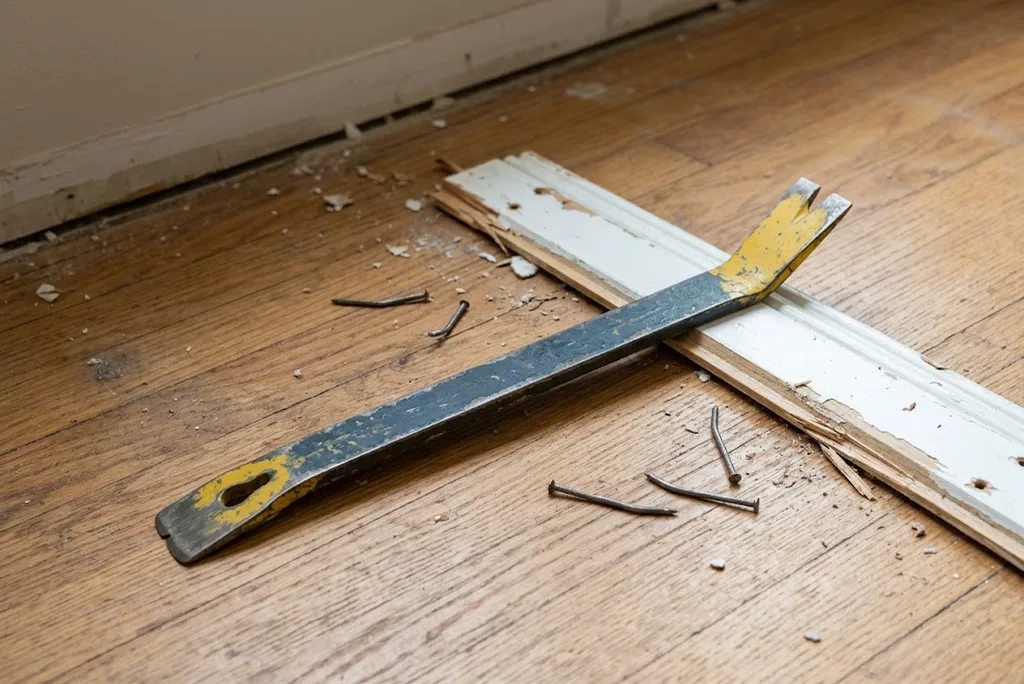 Hand ToolsPry Bar and Crowbar: The Leverage Tool Every Home NeedsA pry bar is a flat steel bar with a thin, beveled end and a nail slot, used to lift trim, pull nails and separate boards with leverage.
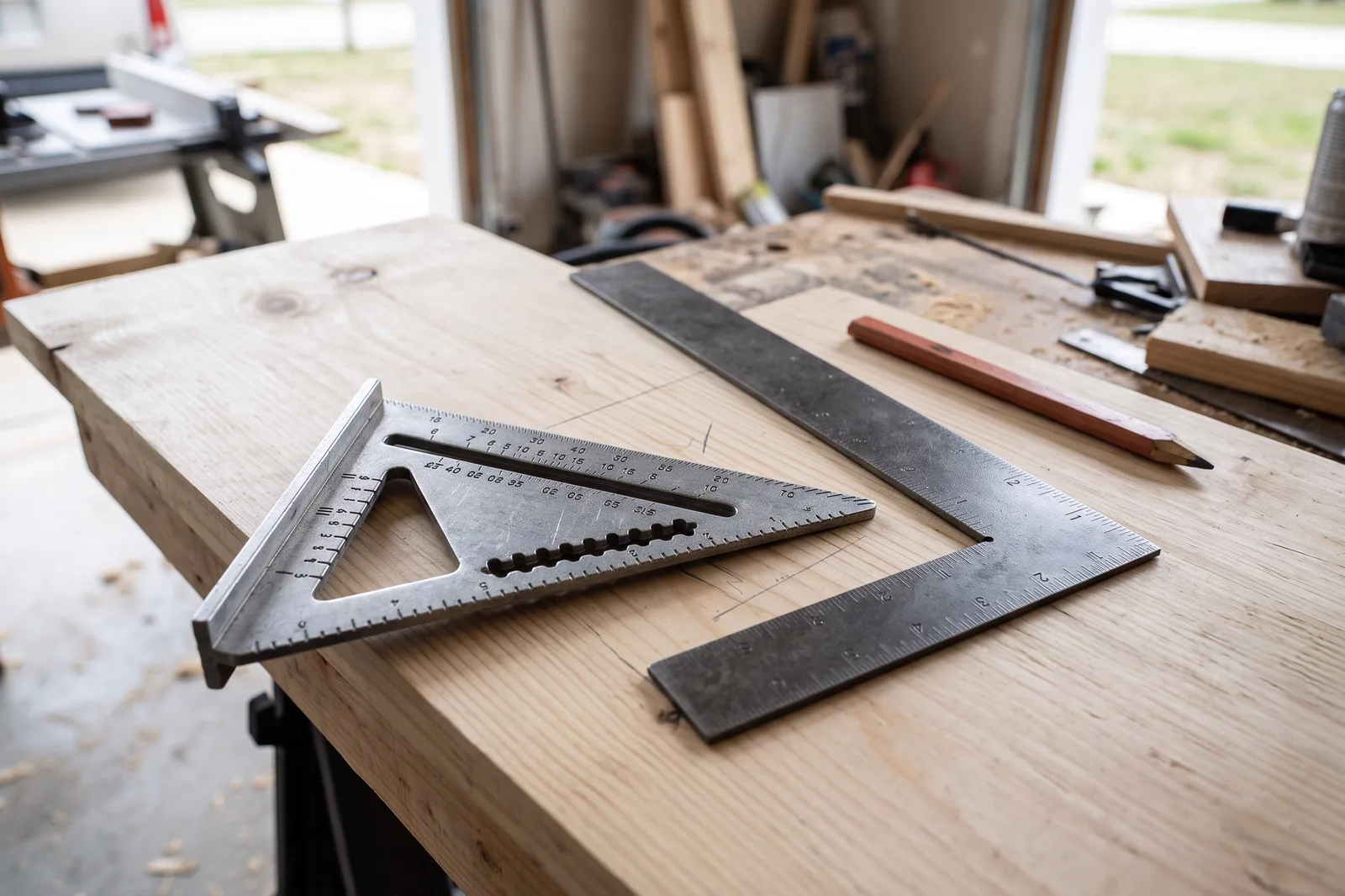 Measuring & LayoutSpeed Square and Framing Square: Two Layout Tools Worth OwningA speed square is a small aluminum triangle for marking square and angled cuts on boards, and a framing square is a large steel L for checking corners and laying out stairs and rafters.
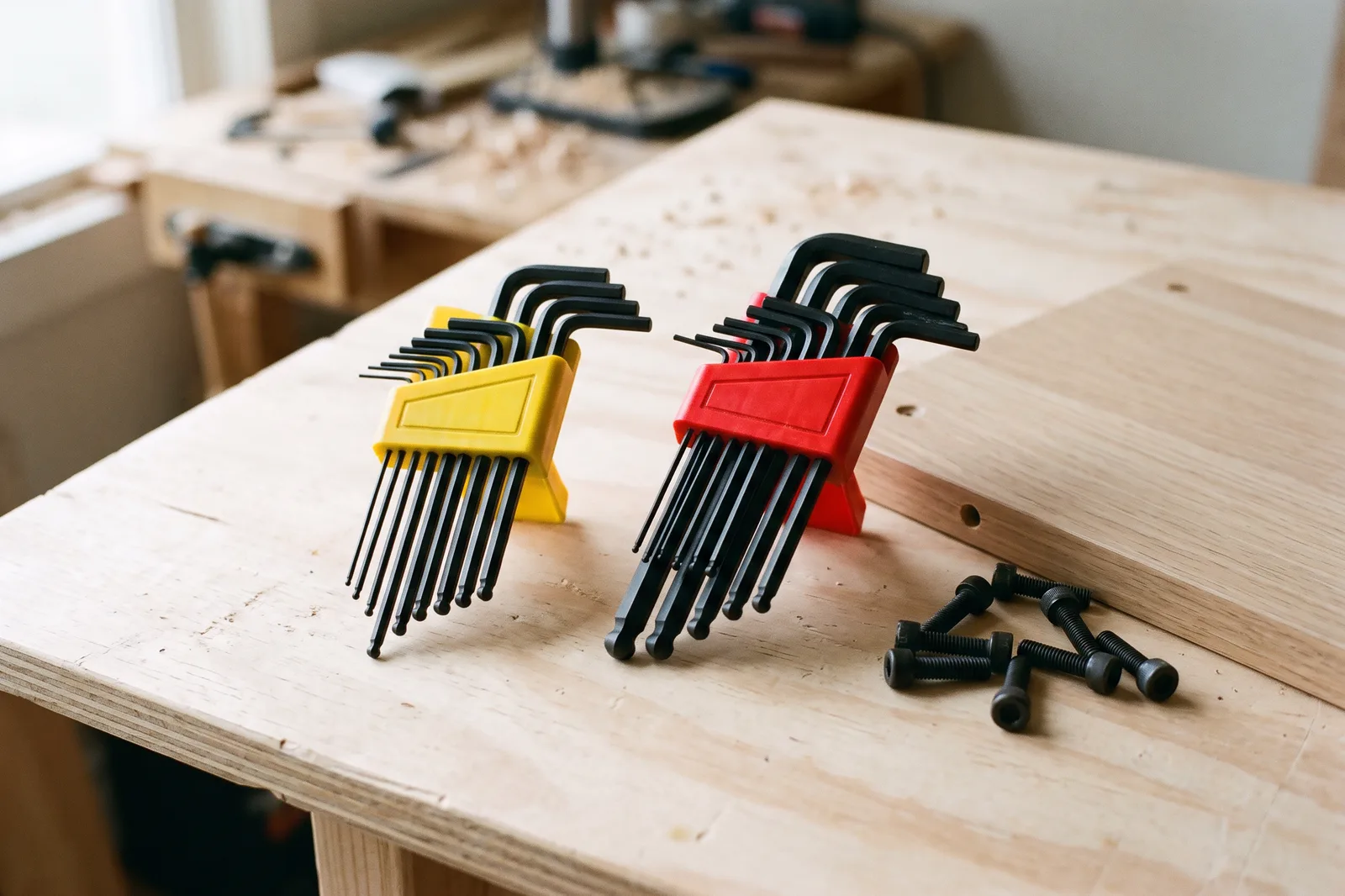 Hand ToolsHex Key Set: The Small L-Keys Behind Every Flat-Pack and Bike FixA hex key set is a bundle of L-shaped steel keys that turn bolts with a six-sided socket, the kind in flat-pack furniture, bikes and appliances.