
Fasteners & Hardware · Project · DIY
Tools Needed to Hang Heavy Shelves and TVs
 Franklin Sensors ProSensor M90 9-Sensor Stud Finder
 TOGGLER SNAPTOGGLE BA Toggle Anchor with Bolts, 10 Pack
 Empire EM81.12 True Blue 12-Inch Magnetic Torpedo Level
Photos from the Amazon listings. Scores are our own, not customer ratings.
Quick answer
To hang a heavy shelf or a TV you need a stud finder to locate the wood studs, a level to set it straight, a drill and wall anchors rated for more than the load if a stud is not available. Always fasten into studs when you can, and check the weight rating on both the bracket and the anchor.
What tools do you need to hang heavy shelves and TVs?
A TV or a loaded shelf can weigh far more than a picture frame, and a wall that looks solid is often hollow. Drywall is a thin layer of plaster board over wood studs. The studs hold the weight. Anything heavy that is only screwed into the drywall can pull out.
So the job comes down to three tools and one habit.
- A stud finder to locate the wood studs behind the wall.
- A level to set the bracket or shelf straight.
- A drill/driver with the right bits to make pilot holes and drive screws.
- The habit: check the weight rating on every part, from the bracket to the screws to the anchors, and choose parts rated for much more than your load.
Add a pencil, painter's tape, a tape measure, safety glasses and a helper. A TV is awkward to lift alone. Our screw assortment guide covers the loose screws you will want in the toolbox, but use the screws that come with your mount for the mount itself.
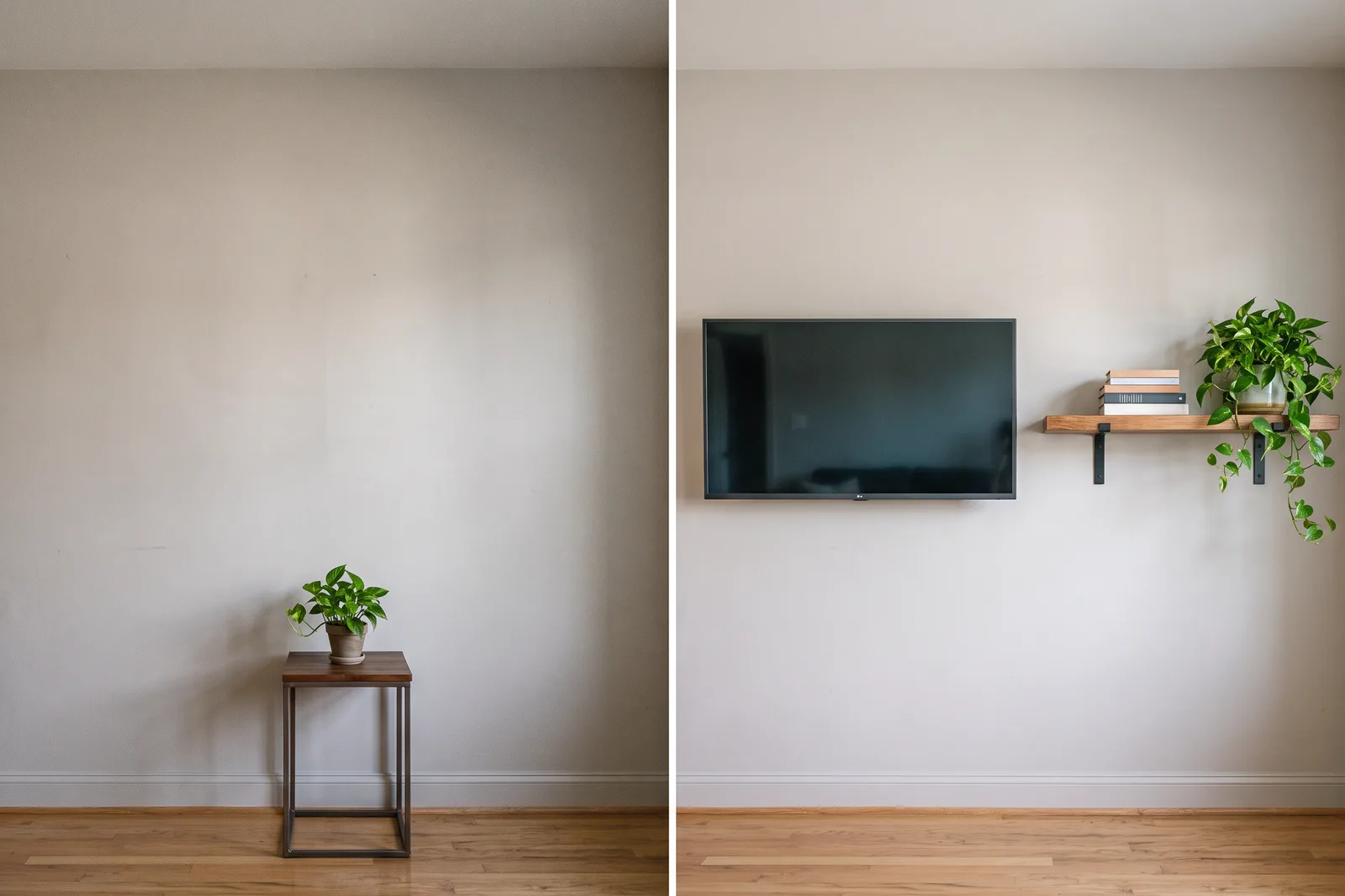
Why these tools matter
The stud finder is the safety tool. Hitting a stud means your screws bite into solid wood. A sensor-array finder, like the ProSensor M90, shows the full width of the stud so you can place the screw in its center. Its Amazon summary says buyers find it accurate, including through knock-down plaster, and consider it well worth the price. The same summary lists complaints: the lights can blink randomly, units sometimes died after months, and rechargeable batteries caused compatibility problems. If you buy one, keep the receipt and use the batteries the maker lists.
The level avoids a crooked TV. A short magnetic torpedo level clings to a steel bracket. Buyers of the Empire level say, in the Amazon summary, that it is accurate, sturdy and handy, and that the magnet is strong. Level the bracket before you tighten the last screws, then check again after the TV is on.
The right anchor matters when no stud lines up. A toggle anchor works by opening behind the drywall so the load spreads over a wider area. In the summary for the Toggler SnapToggle, buyers describe it as an excellent drywall anchor with strong holding power for heavy items, and easy to install. The summary also records mixed feedback on value and some issues with the included bolts. Check the package rating against your load, and never use a lightweight plastic anchor for a TV or a loaded shelf.
A pilot hole helps. A drill with the bit size the anchor maker lists keeps the hole clean. Drywall dust is messy, so hold a vacuum nozzle near the hole.
Who it's for
- Homeowners and renters hanging a TV, shelf or cabinet
- Anyone with a heavy wall mount who wants to find the studs first
- People with drywall and no stud where they want it who need a toggle anchor
- DIYers hanging floating shelves or kitchen shelves
Who should skip it
- Anyone hanging on brick, concrete, stone or metal studs. Use anchors made for that wall, or ask a pro.
- People hanging very heavy items overhead or over a bed. Hire a pro.
- Renters who cannot drill the wall. Use a stand or a landlord-approved method.
How to hang a heavy shelf or TV, step by step
Always follow your bracket maker's instructions and the wall anchor's installation steps. These are the general routine.
- Weigh the load. Add the weight of the shelf or TV and what it will hold. Check the mount's weight rating is well above it.
- Pick the height. For a TV, the center of the screen is commonly placed near seated eye level. Our TV size and mounting height calculator can give a starting point.
- Find the studs. Scan the wall with the stud finder and mark both edges of each stud with painter's tape.
- Check for pipes and wires. Use a finder with AC detection and avoid drilling directly above or below outlets and switches.
- Hold the bracket up and level it. Place the level on the bracket and mark the screw holes in the studs.
- Drill pilot holes. Use the bit size in the instructions.
- Fasten into the studs. Drive the supplied screws. Do not overtighten.
- If no stud lines up, use a rated toggle anchor. Drill the size hole the maker lists, set the anchor and follow the steps.
- Check level again. Adjust before the final tightening.
- Hang the item with a helper. Lift it onto the bracket and secure the safety screws.
- Test gently. Push down and pull out on the shelf before loading it fully.
Mistakes to avoid
- Trusting the drywall. Drywall alone cannot hold a heavy item.
- Skipping the weight check. Every part has a rating.
- Using the wrong screws. Use the ones supplied or a screw sized for the stud.
- Drilling blind. Check for pipes and wires first.
What buyers say, with pros and cons
We read the customer-review summaries for each listing and the two videos below. We describe the patterns rather than quote anyone.
| Pros of this tool kit | Cons |
|---|---|
| Fastening into a stud is the strongest option. A finder removes the guesswork. | Stud finders can be fussy. Calibration, thick plaster and metal can confuse them. Some buyers report short lifespans. |
| Toggle anchors give you options. They suit hollow walls where studs do not line up. | Toggle anchors need larger holes. Repairs are harder than with a screw. |
| A level avoids rework. A crooked mount is hard to fix. | Not for every wall. Brick, concrete and metal studs need different parts. |
What to look for when buying each tool
Stud finder. There are two main types. Edge finders mark the edges of a stud as you slide them along the wall. Sensor-array finders, like the one featured here, light up across the full width of a stud. Either is better than guessing. Look for one that finds studs through your wall thickness and has AC detection to warn about live wires. Check the battery type before you buy.
Toggle anchors. For a heavy item on hollow drywall, a toggle-style anchor is a common choice. It uses a metal channel that passes through the hole and flips flat behind the wall. Look at the package: the rating, the hole size and the bolt thread. Buy the size that fits your bracket's holes, and compare the rating to the load.
Level. A 12-inch torpedo level works for TV brackets and short shelves. A magnetic edge helps on steel brackets. For a long shelf, add a 24-inch level.
Drill/driver. A cordless drill/driver with a bit set handles pilot holes and screws. Use a drill bit sized to the anchor maker's instructions.
Helpful extras
- A pencil and painter's tape to mark studs and screw holes.
- A tape measure for height.
- A vacuum nozzle to catch drywall dust.
- A socket wrench or driver that fits the mount's lag screws.
- A helper to lift the TV.
Choosing a mount or bracket
Read the mount's rating and its list of compatible wall types. Pick a mount whose rating is well above your TV's weight and whose pattern matches your TV's mounting holes. A tilt or full-motion mount puts more leverage on the wall than a fixed mount, so use studs when you can. For shelves, floating shelf brackets need to go into studs, and a longer, loaded shelf needs more fasteners.
When not to DIY
Hang nothing heavy on a wall you cannot identify. Plaster over lath, brick, concrete, stone and metal studs all need different fasteners. Hire a pro for very heavy cabinets, anything over a bed or a doorway, or a mount on a wall with pipes or wiring you cannot trace. A falling TV can injure someone and break the TV, so spend the time to get it right.
Sizing the load
Add the weight of the shelf to everything on it, then add a safety margin. Books are heavier than they look. Decide on the load first, then pick the bracket and anchors rated for it.
Key specs to look for
| Spec | What to look for |
|---|---|
| Stud finder type | Sensor-array finders show the width of a stud. Edge-finding models mark the stud edges as you slide them. Both work, so pick what you find easiest to read. |
| Wall material | Drywall over wood studs is the most common. Plaster, brick, concrete and metal studs need different anchors and finders. |
| Load rating | Add the weight of the TV or shelf plus what it will hold. Check the rating on the bracket, the screws and the anchors. Use fasteners rated well above the load. |
| Anchor type | Toggle-style anchors (the winged kind that opens behind the wall) are common for heavy hollow-wall loads. Light plastic anchors are for light things only. |
| Fastener length | A screw must pass through the drywall and bite well into the stud. Check the bracket's instructions for the size. |
| Level | A 12-inch torpedo level is enough for a shelf or TV bracket. A 24-inch level helps with a long shelf. |
| Drill and bits | A cordless drill/driver with a bit set. Use the bit size the anchor maker lists. |
| Pipe and wire safety | Use a finder with AC or metal detection, or check the wall layout, before drilling. Hitting a pipe or cable is dangerous. |
Where to get the tools
Here are three tools worth owning for this project. All are widely stocked.

Franklin Sensors ProSensor M90 9-Sensor Stud Finder
- Shows the whole width of a stud, not only the center, which makes it easier to place a bracket
- Buyers report it finds studs accurately, even through knock-down plaster
- Some buyers report units that failed within a year, so keep the receipt
How we scored it
Usefulness 10/10 · Value 8/10 · Durability 6/10. This is our own opinion, based on specs, buyer reviews and independent tests. It is not an Amazon or customer rating.

TOGGLER SNAPTOGGLE BA Toggle Anchor with Bolts, 10 Pack
- Hollow-wall anchor for places where no stud lines up with your bracket
- Buyers call it among the best drywall anchors for hanging heavy items
- Check the load rating on the package against your shelf or TV
How we scored it
Usefulness 9/10 · Value 7/10 · Durability 9/10. This is our own opinion, based on specs, buyer reviews and independent tests. It is not an Amazon or customer rating.

Empire EM81.12 True Blue 12-Inch Magnetic Torpedo Level
- A short level fits on a bracket or the back of a TV mount
- Magnetic edge holds on steel brackets, hands free
- Buyers say it is accurate and takes knocks
How we scored it
Usefulness 9/10 · Value 9/10 · Durability 8/10. This is our own opinion, based on specs, buyer reviews and independent tests. It is not an Amazon or customer rating.
For a very heavy mount, a wall you are unsure about or anything over a bed or a doorway, ask a pro. Keep the load ratings from your bracket and anchor packages, and buy safety glasses the same day.

Watch and read more
Free calculators FigureMyHome
- TV Size & Mounting Height — Find a starting mounting height for your screen size.
Frequently asked questions
How do I find studs without a stud finder?
Studs in many homes sit about 16 inches apart, centre to centre, and often alongside outlets and switches. Knocking and a small magnet on drywall screws can help, but a stud finder is faster and more reliable.
Do I have to mount a TV into studs?
Studs are the strongest option, and most mount makers say to use them. If your layout does not line up, some mounts allow a stud and anchor mix, or you can use a rated toggle anchor. Follow the mount's instructions.
How do I choose a wall anchor for a heavy shelf?
Add up the weight of the shelf and everything on it, then choose an anchor rated for much more than that load in your wall type. A toggle or snap-toggle anchor is a common choice for hollow drywall. Read the package rating.
What height should I mount a TV?
A common rule is to put the center of the screen near eye level when you are seated. Our TV size and mounting height calculator helps you find a starting height for your screen size.
Can I use drywall screws to hang a shelf?
No. Drywall screws are brittle. Use the screws that come with the bracket or structural screws sized for the stud.
How can I avoid pipes and wires in the wall?
Use a stud finder with AC detection, avoid areas directly above and below outlets and switches, and drill slowly. If in doubt, ask an electrician or plumber.
Sources
Related tools
 Fasteners & HardwareScrew Assortment Set: The Box That Saves You a Trip to the StoreA screw assortment set is a compartment box holding a mix of common screw sizes.
 Hand Tools · Roundup5 Pliers Every Homeowner Should Own (and What Each One Does)Most homeowners need five pliers: lineman's pliers for cutting and gripping, long-nose pliers for tight spots, tongue-and-groove pliers for pipes and big nuts, diagonal cutters for wire, and slip-joint pliers for general grabbing.
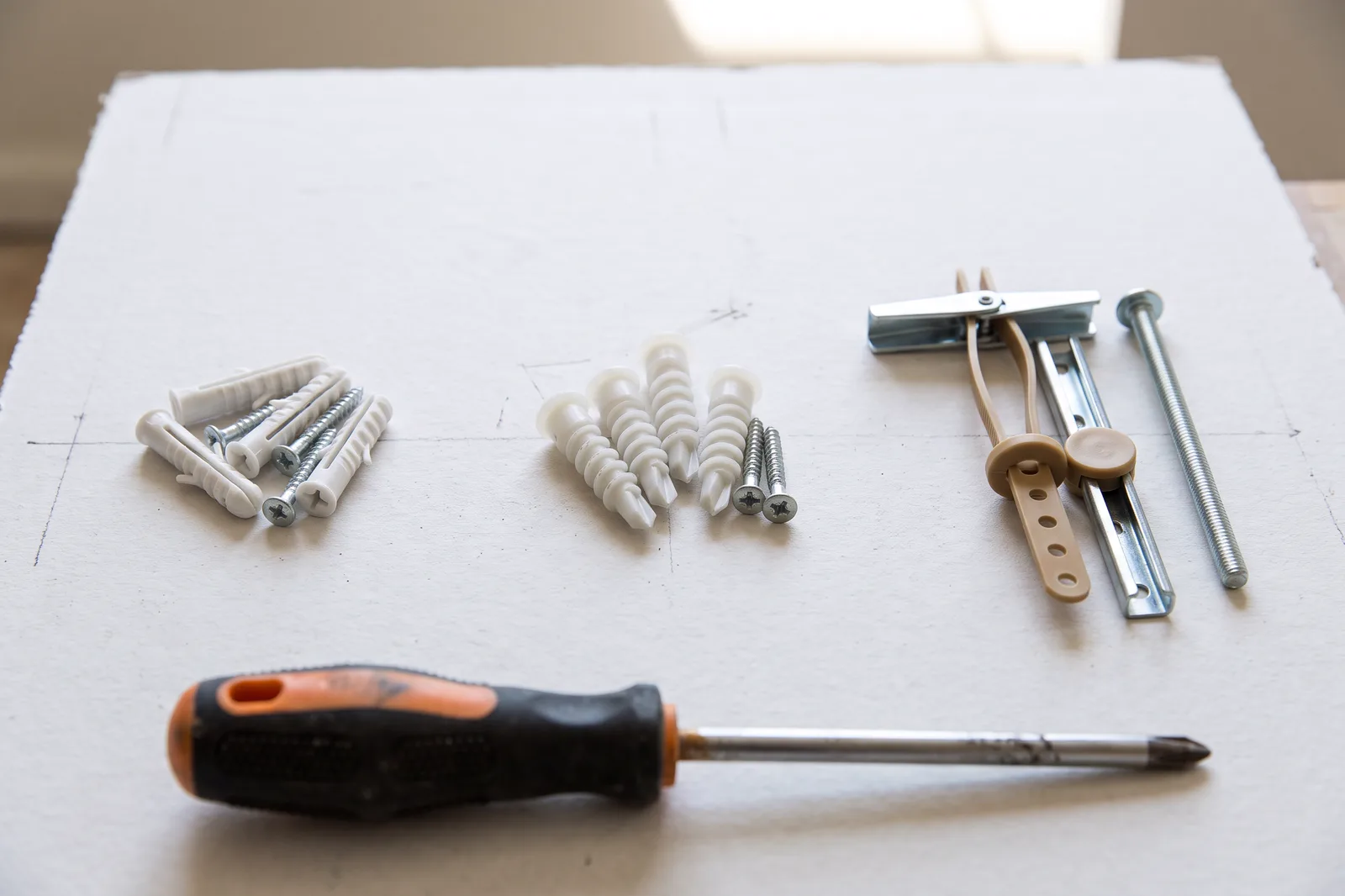 Fasteners & Hardware · RoundupWall Anchors: How to Pick the Right One for DrywallFor light things like frames and towel hooks, a plastic or twist-in anchor is enough.