Outdoor & Garden · Single tool · DIY
Heavy-Duty Hose Nozzle: The Metal Sprayer That Outlasts Plastic
Our verdict
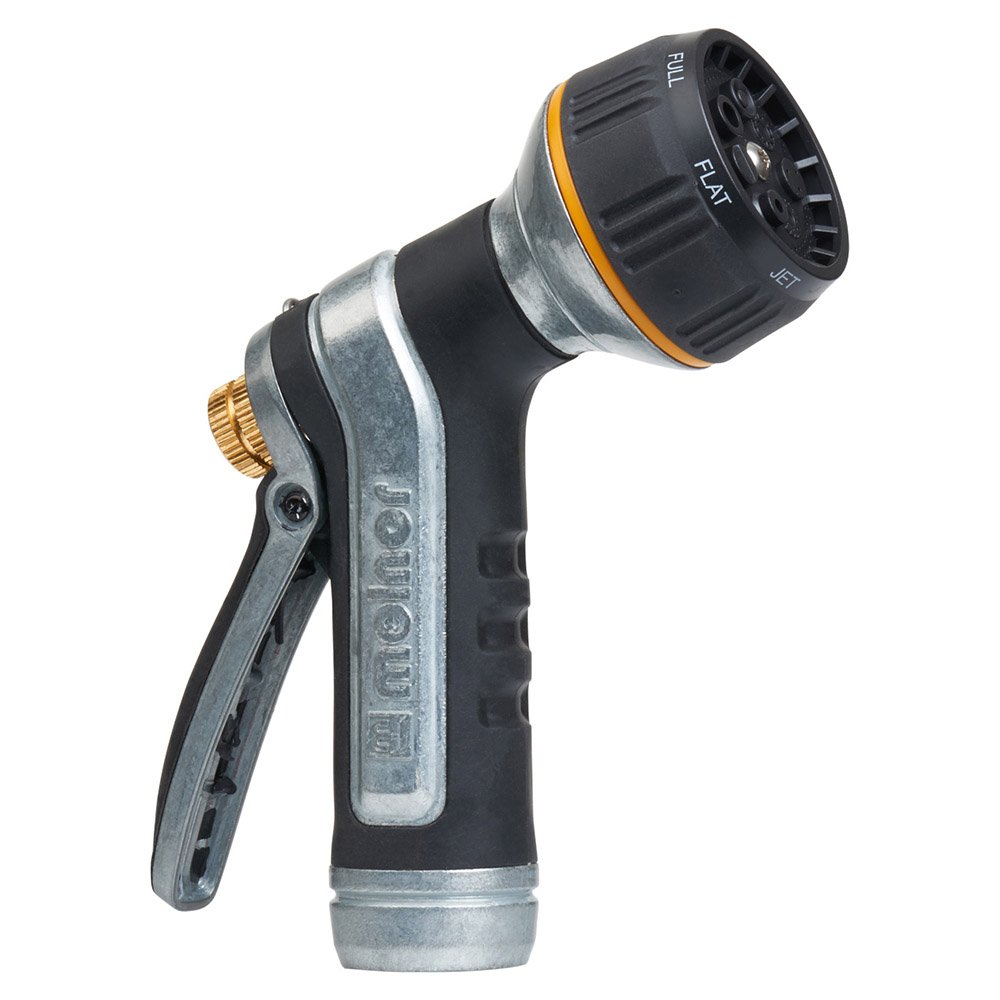
Melnor XT451 Heavyweight Metal 7-Pattern Hose Nozzle
8/10
Worth-owning score
Price tier Budget ($)
View on AmazonOur own score from specs, buyer reviews and tests. Not a customer rating. Photo from the Amazon listing.
Quick answer
A heavy-duty hose nozzle is a metal-bodied sprayer that survives drops, freezes and a lot of squeezing, and it gives you patterns from a soft shower to a hard jet. For most homeowners a rear-trigger metal model with several patterns is the right first one. Skip it if you only water a pot or two; a simple twist nozzle will do.
What is a heavy-duty hose nozzle?
A heavy-duty hose nozzle is a sprayer that screws onto the end of a garden hose and lets you control the water with a trigger or a twist. It is called heavy duty because the body is metal, usually brass, zinc alloy or aluminum, instead of thin plastic. The thicker parts are meant to take drops, knocks and a lot of squeezing.
Most U.S. garden hoses use a 3/4 inch GHT thread (garden hose thread), and nozzles are made to match it. Inside is a valve, a rubber washer that seals the connection, and a spray head that shapes the water.
Three common styles
| Style | How it works | Best for |
|---|---|---|
| Pistol grip | A trigger by the handle opens the water | Watering and washing with an easy squeeze |
| Twist or adjustable tip | You turn the tip from fine spray to jet | A simple, single-purpose sprayer |
| Multi-pattern head | A rotating dial picks mist, shower, cone, flat, jet or soaker | One nozzle for plants, lawn and cleaning |
The Bob Vila testing team notes that metal, especially brass, resists corrosion and impacts, and that metal-and-plastic hybrids are lighter. Their advice is to avoid all-plastic nozzles.
Why you'll want one
It lasts. Plastic nozzles crack when dropped or left out in a freeze. A metal body takes a lot more abuse. In Project Farm's test, which dropped nozzles from six feet and then drove a vehicle over them, light plastic models cracked or were crushed while several metal ones kept working.
Patterns for every job. A soft shower for seedlings, a flat fan for the lawn, a jet for mud on a mower deck and a soaker for beds: one nozzle replaces three.
Less hand strain. A trigger lock lets you let go while the water runs. Rear triggers and thumb controls can take less force than a front trigger; Project Farm measured the Melnor rear-trigger model at about 4.8 pounds of peak squeezing force, while some front-trigger metal guns needed more than eight.
Less wasted water. An off valve at the nozzle means no walks back to the faucet and no running hose between beds.
Cheaper than replacing. One metal nozzle that lasts years costs less than a plastic one every spring.
What buyers and testers say
For the Melnor XT451 we feature, and the Melnor metal seven-pattern line in general, buyer and tester patterns look like this:
- Praised: it feels solid, the metal body and rubberized grip are comfortable, it takes little hand force for a metal gun, and it has a trigger lock. Maker pages call it heavyweight metal with a limited lifetime warranty.
- Common complaints: it is heavy compared with plastic, and in Project Farm's test the jet setting was weaker than rivals. The same test found the shower cone about 17 inches across, which is tighter and easier to aim than some broad, scattered patterns.
- Reality check: Project Farm's overall winners were a single-pattern Fanhao and a multi-pattern Eden. A multi-pattern nozzle trades some jet force for flexibility.
Melnor's own page ties the Project Farm test to its heavy-duty metal 7-pattern nozzle. The model number may not match the XT451 exactly, so treat the test as a guide to the line, not a lab result for this exact version.

Who it's for
- Homeowners who water beds, lawns and containers every week
- Anyone who washes cars, decks, siding, bikes or muddy gear with a hose
- Hard-on-gear households: kids, dogs and hoses that get dropped or driven over
- People tired of replacing cracked plastic nozzles every season
Who should skip it
- Light waterers. If you only fill a pot or two, a cheap plastic or twist nozzle is fine.
- Anyone with weak or painful hands. A thumb-control or rear-trigger style helps; a heavy all-metal front-trigger gun may not.
- Pressure-washer buyers. A hose nozzle only shapes the pressure your faucet gives; it cannot match a pressure washer.
How to use it
Check your nozzle's instructions; models differ a little. This routine works for most.
- Check the washer. Look inside the hose end of the nozzle for a flat rubber washer. Bob Vila notes it is a common leak source, so replace it if it is cracked or missing.
- Screw it on by hand. Turn the nozzle clockwise onto the hose end until it seats. Do not overtighten; a hand-tight fit is enough.
- Turn the water on at the faucet. Open the faucet slowly rather than slamming it open.
- Pick a pattern first. Turn the head to the pattern you need before you squeeze. Shower or mist for plants and seedlings, flat for lawns, soaker for beds, jet for cleaning.
- Squeeze the trigger gradually. On a rear-trigger model the trigger sits behind the handle; squeeze it back toward the grip. Open slowly so a hard blast does not flatten small plants.
- Use the trigger lock for long jobs. Engage the lock to hold the spray on while you rest your hand, and release it to stop.
- Water the base, not the leaves. Aim at the soil in the morning so the plant dries and the water goes to the roots.
- Wash with the jet. For mud on a mower deck or a muddy bike, switch to the jet and stay a few feet back; keep it off paint chips and soft wood.
- Soak, don't blast, beds. The soaker pattern puts a lot of water down fast without eroding the soil.
- Shut off at the nozzle. Release the trigger to stop the flow without walking back to the faucet.
- Drain and store. Release the trigger, shake out the water and hang it in the garage or shed. Water trapped inside can freeze and crack the body.
Common mistakes
- Overtightening. Cranking the connection can flatten the washer and cause a leak.
- Blasting seedlings. A hard jet can flatten new plants and wash away soil.
- Leaving it out in winter. Frozen water can crack even a metal body.
- Expecting a pressure washer. Project Farm's strongest jets reached only about one and a half pounds of force.

What to look for when buying
Metal body, rubber grip. Choose brass, zinc alloy or aluminum, ideally with a rubber-coated grip and dial ring so it is comfortable and protected from knocks. Bob Vila's picks that lacked a padded grip drew complaints about fatigue.
Trigger style that suits your hand. A rear trigger or thumb control can take less force than a front trigger. Try the feel in the store if you can, or check the force numbers in reviews.
Patterns you will actually use. Seven is plenty. A guide-style rule: a jet, a shower or mist, a flat or cone and a soaker cover most jobs. A twist nozzle or single-pattern model is simpler and often has a stronger jet.
A trigger lock and flow control. The lock saves your hand on long jobs, and a flow dial lets you tame the jet near plants.
A good washer and seal. Leaks at the hose end are the top complaint. Look for an included washer that is easy to swap.
Weight. Metal is heavy. The nozzle Project Farm tested was the heaviest of the first group, so consider a lighter metal-and-rubber model if you water for a long time.
A warranty. Maker pages for the model we feature list a limited lifetime warranty.
Pros and cons of a heavy-duty metal nozzle
| Pros | Cons |
|---|---|
| Much tougher than plastic in drop and crush tests | Heavier than plastic, which tires some hands |
| Several patterns in one tool | Multi-pattern jets are weaker than single-pattern ones |
| Trigger lock and comfortable rubber grip reduce hand strain | Jets still cannot match a pressure washer |
| Metal body is built to last for years | Water left inside can freeze and crack it in winter |
Key specs to look for
| Spec | What to look for |
|---|---|
| Body material | Metal (brass, zinc alloy or aluminum) lasts far longer than plastic. Look for a rubber-coated grip or bezel so cold or hot metal is comfortable to hold. |
| Spray patterns | Seven or more patterns cover mist, shower, cone, flat, jet and soaker. A jet is for cleaning; a shower or mist is for plants. A single-pattern nozzle is simpler and often pushes a harder jet. |
| Trigger style | A front trigger is the classic pistol grip. A rear trigger or thumb control can take less squeezing force. A trigger lock lets you let go while the water runs. |
| Hose thread | U.S. garden hoses use 3/4 inch GHT (garden hose thread). Check the listing says GHT so it screws straight on. |
| Flow control | A dial or valve that throttles the water. It lets you tone down the jet on delicate plants. |
| Seals and washer | A rubber washer inside the hose connection stops leaks. Make sure one is included and that it is easy to swap. |
| Weight | All-metal nozzles are heavy. Pick up a heavy one if you water for a long time, or choose a lighter metal-and-rubber model. |
| Warranty | A written warranty is a good sign. The maker of the model we feature lists a limited lifetime warranty on its own page. |
Where to get it
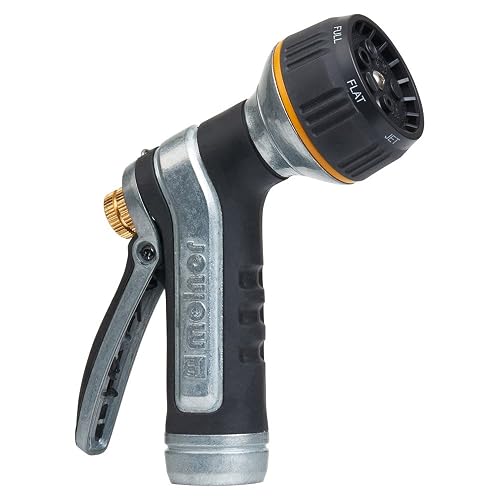
For this guide we feature the Melnor XT451 heavyweight metal seven-pattern nozzle. According to the listing it has a metal body with a rubberized grip, a metal rear trigger with an integrated lock and a rotating seven-pattern head. Buyers praise how solid it feels; the common complaint is the weight and a milder jet than single-pattern guns. It sits in our budget tier.
Melnor XT451 Heavyweight Metal 7-Pattern Hose Nozzle
- Metal body with a rubberized grip and a metal rear trigger, per the listing
- Seven spray patterns on a rotating head, from jet to shower and soaker
- Integrated trigger lock so you can hold the spray without squeezing
How we scored it
Usefulness 8/10 · Value 8/10 · Durability 8/10. This is our own opinion, based on specs, buyer reviews and independent tests. It is not an Amazon or customer rating.
Check that you have a spare washer before the season starts, and bring the nozzle inside before the first hard freeze. If you are digging in new beds first, see our guide to the pick mattock, and for fastening shade cloth or screen to a frame, our guide to the heavy-duty staple gun helps.
Watch and read more
Video reviews
- Finally! The Last Spray Nozzle You Will Ever Need! — Project Farm
Tests more than twenty hose nozzles for spray force, flow, spray patterns and drop and vehicle-crush durability, including a metal Melnor seven-pattern model that took only superficial damage.
PROSWho uses it
- Project Farm — Tested a Melnor metal seven-pattern nozzle against single-pattern, twist and multi-pattern rivals.
Frequently asked questions
What does heavy duty mean on a hose nozzle?
It usually means a metal body (brass, zinc alloy or aluminum) and thicker parts that take drops and knocks. There is no official standard, so check the material and read the specs.
Is a metal hose nozzle better than a plastic one?
Usually, yes for durability. Bob Vila's testers advise avoiding all-plastic nozzles, and Project Farm's drop and crush tests found light plastic nozzles failing while metal ones mostly kept working.
How many spray patterns do I need?
Three or four cover most homes: a jet for cleaning, a shower for plants, a flat or fan for the lawn and a soaker for beds. More patterns are a bonus, not a need.
Why does my hose nozzle leak where it screws on?
The most common cause is a worn or missing rubber washer inside the hose connection. Swap in a fresh washer and tighten by hand; overtightening can damage it.
Will a hose nozzle give me pressure-washer force?
No. A nozzle only narrows the water your hose already delivers. In Project Farm's test the strongest jets reached only about one and a half pounds of force.
Can I leave my hose nozzle outside in winter?
Better not. Water trapped inside can freeze and crack the body. Drain it and bring it in before the first hard freeze.
Are heavy-duty nozzles safe for hot water?
Only if the maker says so. Some models are rated for hot water and many are not, so check the listing before using anything but cold garden water.
Sources
Related tools
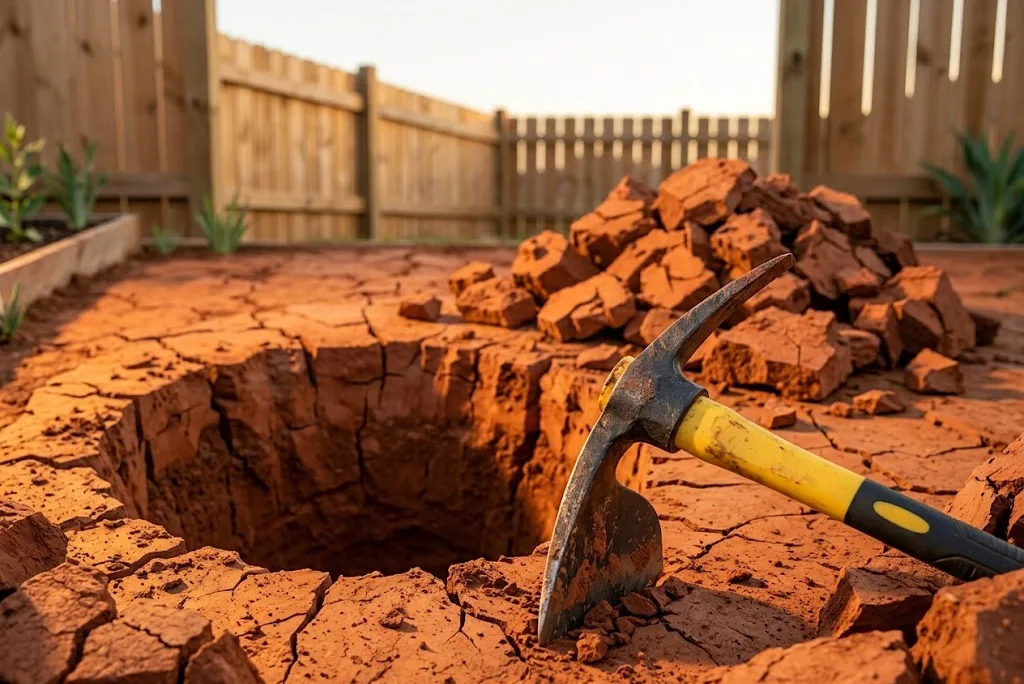 Outdoor & GardenPick Mattock: The Digging Tool for Ground a Shovel Cannot BreakA pick mattock is a heavy digging tool with a pick on one side and a flat chopping blade (an adze) on the other.
 Fasteners & HardwareHeavy-Duty Staple Gun: The Quick Way to Fasten Fabric, Screen and WrapA heavy-duty staple gun drives wide, strong staples into wood in one squeeze, which makes it the fast way to fasten fabric, screen, house wrap and insulation.
 Hand ToolsPry Bar and Crowbar: The Leverage Tool Every Home NeedsA pry bar is a flat steel bar with a thin, beveled end and a nail slot, used to lift trim, pull nails and separate boards with leverage.