
Hand Tools · Single tool · DIY
Adjustable Wrench: One Tool That Fits Most Nuts and Bolts

Our verdict
Crescent 10 in. Adjustable Black Oxide Wrench (AT210VS)
8.3/10
Worth-owning score
Price tier Mid ($$)
View on AmazonOur own score from specs, buyer reviews and tests. Not a customer rating. Photo from the Amazon listing.
Quick answer
An adjustable wrench is one wrench with a sliding jaw that you set to fit many nut and bolt sizes. A 10-inch black-oxide model like the Crescent AT210VS is a well-reviewed first size for home repairs and plumbing. Skip it for stubborn, high-torque bolts, where a box-end or socket wrench grips better.
What is an adjustable wrench?
An adjustable wrench is a wrench with one fixed jaw and one sliding jaw. You turn a small thumb wheel, called the knurl, and the sliding jaw opens or closes until it fits the flats of a nut or bolt head. Many people call it a "Crescent wrench" after the brand that popularized it; Crescent says it introduced the original adjustable wrench in the early 1900s.
Most adjustable wrenches share four parts:
- The fixed jaw. Part of the handle and the side that takes most of the force.
- The sliding jaw. It moves along the head when you turn the knurl.
- The knurl and worm gear. The thumb wheel drives a screw that slides the jaw open or shut.
- The handle. Longer handles give more leverage. Many have a hole at the end for hanging on a pegboard or tying a tether.
| Adjustable wrench | Combination wrench | Pliers | |
|---|---|---|---|
| Best at | Odd or unknown nut sizes | A known size, snug fit | Round or odd shapes |
| Grip on a nut | Two flat sides | Six or twelve points, fits tightly | Tends to chew corners |
| Weakness | Jaw slop; can round a tight nut | One size per wrench | Rounds hex nuts |
Why you'll want one
One tool covers many sizes. A basic wrench set stops at the sizes in the box. An adjustable wrench fits the odd nut on a faucet, a bike seat clamp, a washing-machine hose or a flat-pack bed frame without a trip to the store.
It handles two nuts at once. Plumbing jobs often have a nut you turn and a fitting that must not spin. Two wrenches, one on each, do the job and protect the pipe.
It is compact. One wrench replaces a whole drawer of loose wrenches for light jobs, which is why it shows up in almost every starter toolkit.
Reviewers keep naming the same brand. Bob Vila's team reviewed over two dozen models, tested seven on bolts in a 2x4 and on bicycles, engines and plumbing, and chose the 10-inch Crescent black-oxide wrench as best overall. They cited its build quality, solid performance, affordable price, stable jaws and easy-to-reach adjuster. Their one complaint was a smaller jaw opening than some similar-sized wrenches.
Common home jobs
- Faucets and supply lines: the nuts under a sink or behind a toilet are hex nuts of different sizes, which is where one adjustable wrench saves a trip to the store. Shut off the water first.
- Flat-pack furniture and bed frames: hex-head bolts that come with a small wrench in the box are quicker with a proper handle.
- Bike and garage fixes: seat clamps, wheel nuts and rack bolts vary in size from bike to bike.
- Washing-machine and garden hoses: hose couplings are often hex nuts or flats on a brass fitting; our hose nozzle guide and hose reel guide cover related gear.
- Holding a second nut: use a second wrench or a pair of pliers on the opposite fitting so it does not turn.
Who it's for
- First-time homeowners who need one wrench for faucets, supply lines and flat-pack bolts
- Renters and apartment dwellers with a small toolbox and no room for a full wrench set
- Garage and bike tinkerers who meet odd bolt sizes now and then
- Anyone with a toolbox gap who has pliers and screwdrivers but nothing that grips a hex nut
Who should skip it
- Anyone tightening or loosening a stuck, high-torque bolt. A box-end or socket wrench grips all six sides and is safer.
- People who turn the same few sizes all the time. A fixed combination set fits more snugly; see our wrench set comparison.
- Plumbers working on round pipe. A pipe wrench or tongue-and-groove pliers are the right tools for round stock.
How to use it
Wipe the wrench and fastener clean first so the jaws sit flat. The goal is a tight fit with no gap, and a pull in the right direction.
- Open the jaws wider than the nut. Roll the knurl toward you until the wrench slides on with room to spare.
- Seat the fixed jaw on the nut. The Gear and Gadget Garage video says to position the fixed jaw against the side you will turn toward, so the force lands on the solid side and not the moving jaw.
- Close the sliding jaw until it is snug. Roll the knurl until both jaws touch the flats with no gap. A gap lets the wrench slip off or round the corners.
- Check the fit. The wrench should not wobble. If it does, tighten the knurl another notch.
- Turn toward the fixed jaw. For a right-hand thread, that is clockwise to tighten with the fixed jaw leading. To loosen, flip the wrench over so the fixed jaw leads the other way.
- Pull, do not push. HVAC School and the Gear and Gadget Garage video both say to pull the handle toward you where you can. You get more control, and a slip is less likely to hurt you.
- Keep your grip near the head. Hold the head with your other hand if it helps stop the wrench from slipping off.
- Re-seat as you go. If you run out of room, take the wrench off, flip it and reset. Do not keep turning with a loose fit.
- Stop if it will not move. Do not slide a pipe over the handle. Gear and Gadget Garage says to use a larger wrench, a breaker bar with a socket or an impact wrench instead.
- Wipe it down and hang it up. A few drops of light oil on the worm gear keep it moving; wipe off the extra.
Mistakes that round nuts and hurt knuckles
| Mistake | What happens | Fix |
|---|---|---|
| Leaving a gap between jaws and nut | The wrench slips and rounds the corners | Close the knurl until the fit is snug |
| Turning toward the sliding jaw | Force lands on the weakest part and the jaw can spread | Turn toward the fixed jaw |
| Pushing the handle away from you | A slip throws your hand into whatever is next to the nut | Pull toward you where you can |
| Adding a pipe for leverage | Can strain or break the wrench | Use a bigger wrench, a breaker bar or an impact wrench |
| Using it on a very tight bolt | Jaws stretch and the nut rounds | Use a box-end or socket wrench |
What reviewers and buyers say about the Crescent AT210VS
We feature the Crescent 10 in. black-oxide wrench. Here is what we found:
- Praised: Bob Vila named the 10 in. Crescent black-oxide model best overall, citing stable jaws and an easy-to-reach adjuster. The listing's review summary describes it as high quality, durable and good for its price.
- Common complaints: Buyers in that summary are split on the knurl, with some calling it wimpy, and on size, with some finding the 10 in. just right for tight spaces and others finding it small. Some report a loose-feeling jaw. Shopper Q&A sites and forum posts we read make a similar point: current import-made Crescents have a little more play than older American-made ones.
- Independent tests: Project Farm tested a hex-jaw 10-inch Crescent among more than a dozen wrenches. Its jaw opened up about one millimeter under vibration, it showed one of the smaller jaw gaps under load, and it took more torque before rounding a nut than most, behind only a vintage USA-made Craftsman and a premium Wera Joker. We cannot say it was this exact AT210VS model, so treat it as a pointer, not a ranking for this listing.
- Not a pricing story: Project Farm's results did not follow price, so a calm hand test matters.
Which size to own first
| Size | Good for | Watch out for |
|---|---|---|
| 6 in. | Small nuts in tight spots, bikes, toys | Low torque; small jaw opening |
| 8 in. | Light plumbing, appliance hoses, electronics enclosures | Can be short on leverage |
| 10 in. | The all-round first wrench, with a 1-5/16 in. jaw on our featured model | Not a pipe wrench; heavy enough to tire the wrist |
| 12 in. | Bigger nuts and more leverage | Bulky in tight spaces |
Bob Vila suggests a pair, one 6 to 8 inches and one 12 to 15 inches. If you will own only one, start at 10 inches.
What to look for when buying
- Jaw fit. Close the jaw on a nut or bolt in the store, or on arrival, and wiggle. Project Farm and Torque Test Channel both measured jaw play and found large differences between brands.
- A knurl that turns easily and holds. You should be able to set the jaws with your thumb alone, and they should not creep open while you work.
- Jaw opening. Check it against the largest nut you expect to turn. Bob Vila noted that some 10 in. wrenches open less than others.
- Hex jaw or parallel jaw. Crescent's listing says its hex design reduces slippage; ask whether the jaw faces are flat and parallel to each other.
- Finish. Black oxide is slip-resistant and chrome resists rust. Both work; choose by feel.
- Size markings. Inch and metric scales help set the jaw quickly.
- A hanging hole. It lets you store the wrench on a pegboard or tether it when working on a ladder.
- A second, bigger or smaller size. Plan on adding one if you tackle plumbing or tight work. See our stackable tool box guide for where to keep them.
Key specs to look for
| Spec | What to look for |
|---|---|
| Length | 10 in. on the featured Crescent, per the listing. The listing shows 4, 6, 8, 10 and 12 in. sizes, and Bob Vila suggests a pair, one 6 to 8 in. and one 12 to 15 in. |
| Jaw opening | 1-5/16 in. (34 mm) on the featured model, per the listing. Check it against the largest nut you expect to turn, such as a spigot or a water-heater fitting. |
| Jaw fit and slop | Wiggle the sliding jaw by hand. Project Farm and Torque Test Channel both measured jaw play and found it varies a lot between brands. |
| Jaw shape | The Crescent listing says its hex jaw design is meant to reduce slippage by gripping the flats of a fastener. |
| Adjuster (knurl) | A thumb wheel big enough to turn easily and that stays put. Buyers in the listing's review summary are split on this one. |
| Finish | Black oxide on the featured model, per the listing title, which Bob Vila calls slip-resistant. Chrome resists rust more but can be slicker. |
| Scale markings | Inch and metric marks on the jaw help you pre-set the size. Not every wrench has them; Project Farm noted one that had none. |
| Weight | 1.1 lb for the 10 in. Crescent, per the listing. Heavier wrenches feel solid but tire the wrist on long jobs. |
Where to get it
Our featured pick is below, picked from independent tests and buyer feedback. For other wrenches, see our wrench set comparison, and for round stock our pliers roundup.

Crescent 10 in. Adjustable Black Oxide Wrench (AT210VS)
- A 10 in. wrench with a 1-5/16 in. (34 mm) jaw opening, a hex jaw design and a wide handle, according to the listing
- Bob Vila's team named the 10 in. Crescent black-oxide model best overall in a seven-wrench test, citing build quality, stable jaws and an easy-to-reach adjuster
- Buyers in the listing's review summary describe it as high quality and good for its price, though some say the knurl feels small and the jaw can feel loose
How we scored it
Usefulness 9/10 · Value 8/10 · Durability 8/10. This is our own opinion, based on specs, buyer reviews and independent tests. It is not an Amazon or customer rating.
Watch and read more
Video reviews
- Best Wrench (ADJUSTABLE)? Craftsman USA vs Craftsman, Crescent, Kobalt, Milwaukee, Channellock — Project Farm
Tests 10-inch wrenches for jaw slop, backing off under vibration, jaw gap under load and the torque each takes before rounding a nut; the 10-inch Crescent in it did well. - Best Adjustable Wrench? Testing Viewer Suggestions — Torque Test Channel
Measures how far each 10-inch wrench's jaw creeps open when repositioned and how much torque it takes before slipping on a hex, with a reminder to turn the wrench the right way. - How to Use an Adjustable Wrench the RIGHT Way (Beginner's Guide) — Gear and Gadget Garage
Shows snugging the fixed jaw on the fastener with no gap, turning toward the fixed jaw, pulling instead of pushing and not using it on high-torque jobs.
Frequently asked questions
What size adjustable wrench should I buy first?
A 10-inch wrench is a sensible first size. Bob Vila suggests owning two, one 6 to 8 inches and one 12 to 15 inches, for small nuts and big ones. Our featured Crescent has a 1-5/16 inch jaw opening, per its listing.
Which way should I turn an adjustable wrench?
Turn it toward the fixed jaw, the one built into the handle. The Gear and Gadget Garage video says the fixed jaw takes most of the force, and putting force on the sliding jaw can strain the mechanism.
Why does my adjustable wrench slip and round off nuts?
Usually the jaws are not snug on the flats, the wrench is turned the wrong way, or the bolt is too tight for the tool. Project Farm's tests show that jaw slop and jaw stretch under load both lead to slipping.
Can I put a pipe on the handle for more leverage?
We would not. The Gear and Gadget Garage video says not to add a pipe for leverage and to reach for a breaker bar with a socket or an impact wrench instead.
Is a cheap adjustable wrench good enough?
Sometimes. In Project Farm's test, the results did not line up neatly with price: some mid-priced wrenches slipped at lower torque than a budget one. Check the jaw slop and the adjuster when you buy.
Do adjustable wrenches replace a wrench set?
No. They are a flexible backup. A fixed combination wrench fits the nut more snugly and is less likely to round it, so keep one set for most jobs.
How do I keep an adjustable wrench working?
Wipe it clean and put a few drops of light oil on the worm gear and sliding jaw now and then, and wipe off the extra. The Gear and Gadget Garage video suggests this.
Sources
Related tools
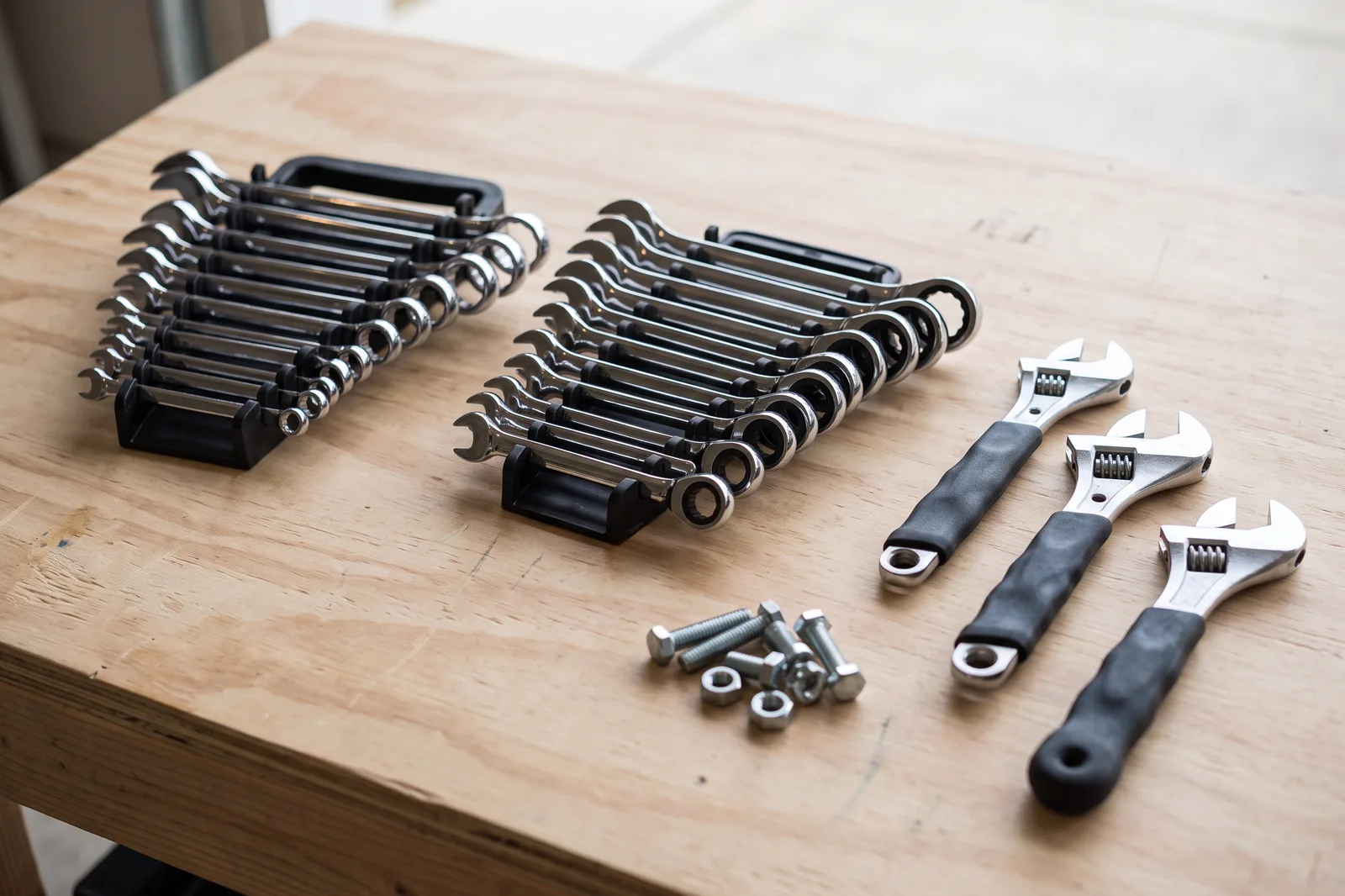 Hand Tools · RoundupWrench Sets: Which One to Own (Combination, Ratcheting or Adjustable)Most homeowners should start with a basic combination wrench set in both inch and metric sizes.
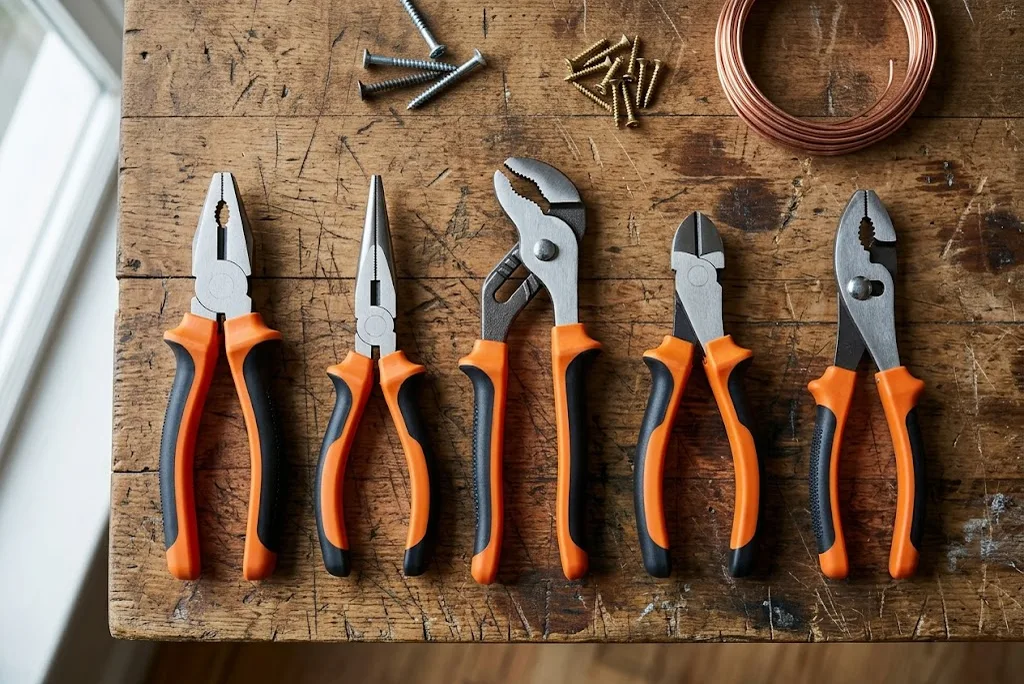 Hand Tools · Roundup5 Pliers Every Homeowner Should Own (and What Each One Does)Most homeowners need five pliers: lineman's pliers for cutting and gripping, long-nose pliers for tight spots, tongue-and-groove pliers for pipes and big nuts, diagonal cutters for wire, and slip-joint pliers for general grabbing.
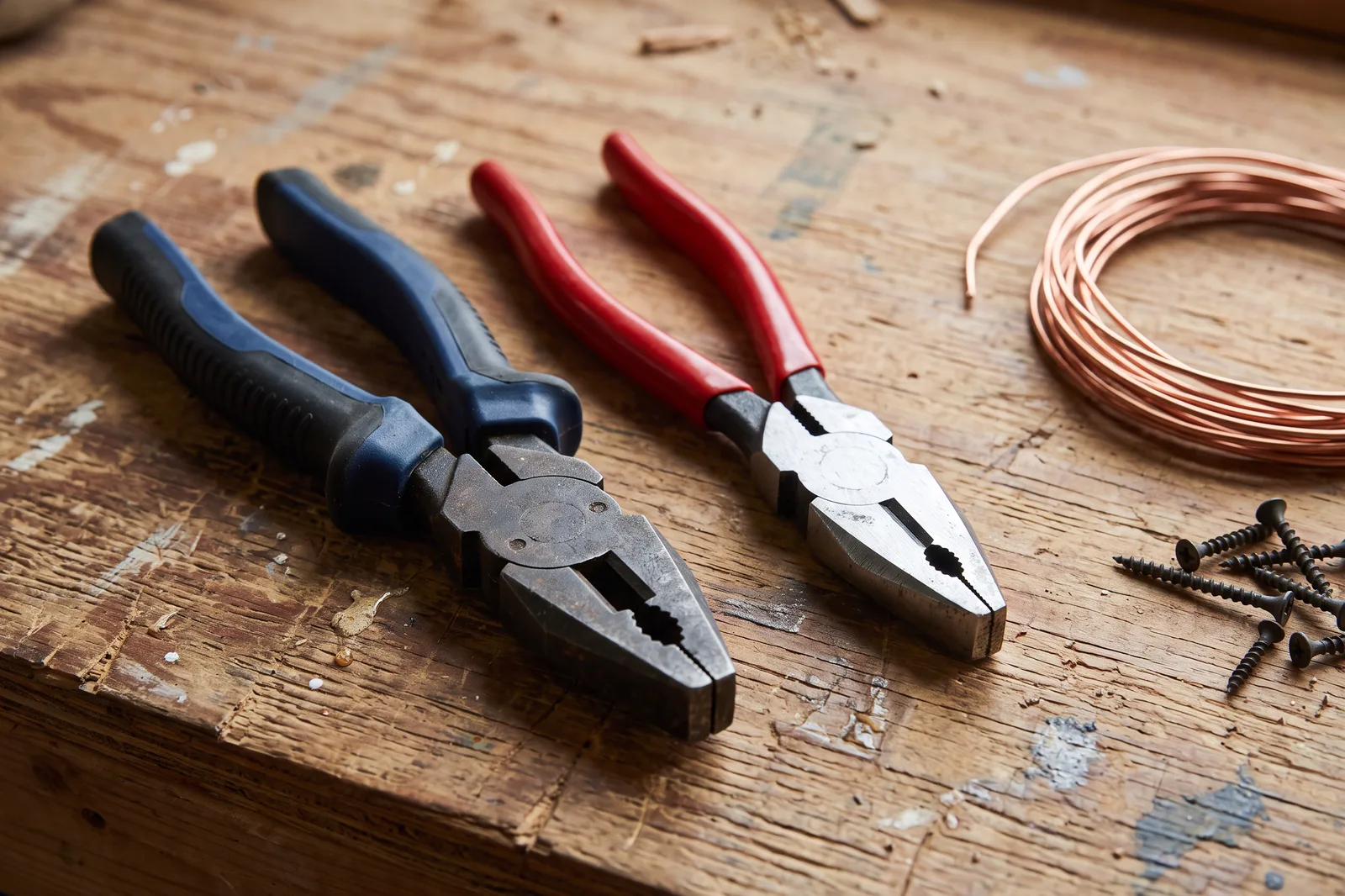 Hand ToolsKlein vs. Knipex Pliers: Are Premium Pliers Worth It?For most people who use pliers often, yes: one good premium pair of lineman's pliers is worth owning.