
Workshop & Storage · Roundup · DIY · Maker
Pegboard and Wall Organization: Which Type to Own for the Garage
Quick answer
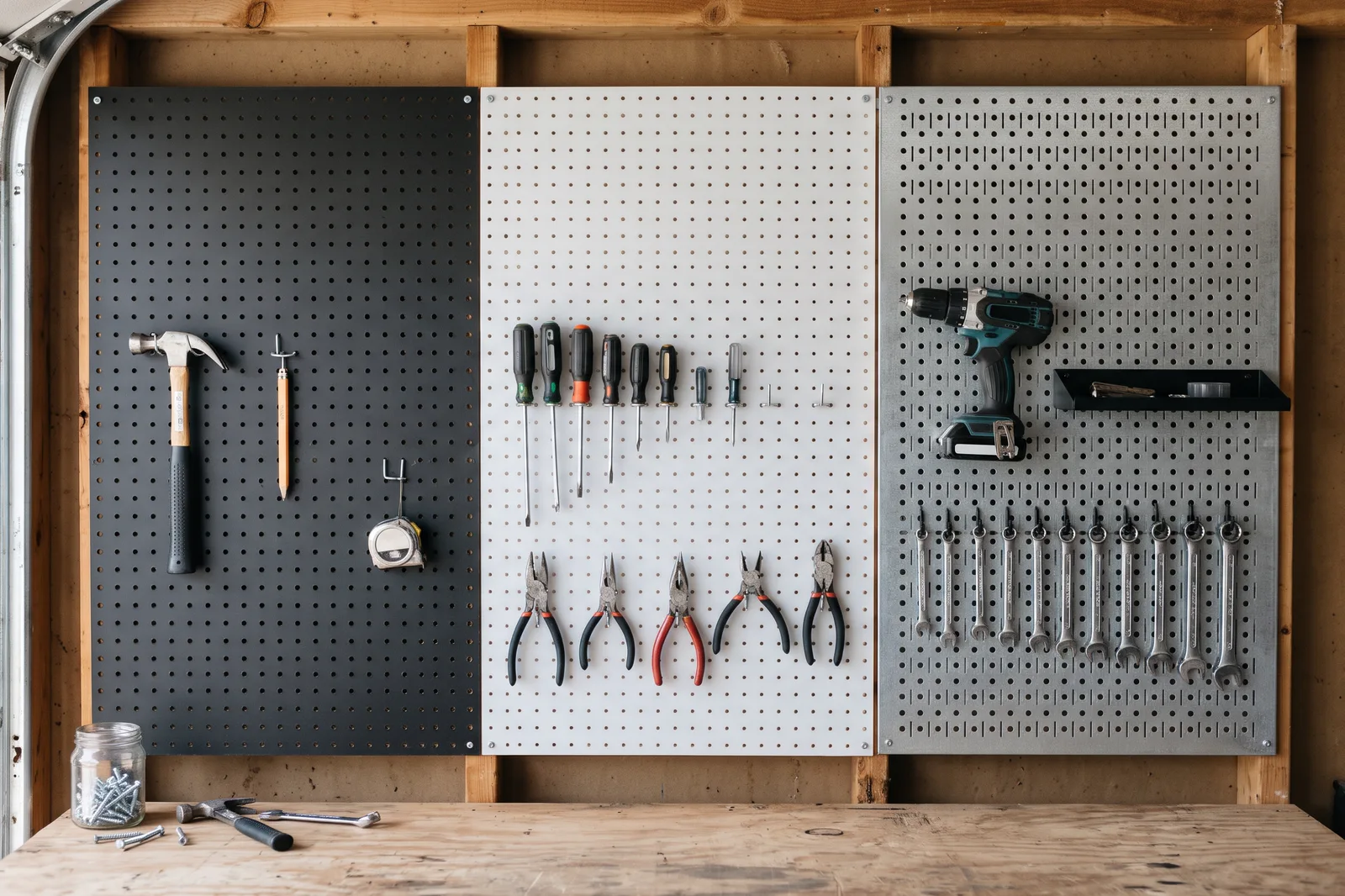
A pegboard is a wall panel with a grid of holes that takes hooks, so tools hang in sight instead of lying in a drawer. For a dry garage and light hand tools, a hardboard panel is the low-cost start. For a damp garage or basement, a polypropylene panel such as the Triton DuraBoard will not swell. For heavy tools and a clean look, a steel panel such as the Wall Control kit is the pro pick. Heavy, changing loads are better on French cleats.
What is a pegboard wall?
A pegboard is a wall panel punched with a grid of holes. Hooks, shelves and bins push into the holes, so tools hang in plain sight instead of lying in a drawer. A garage or workshop tool wall is the most common use, but the same panel works in a craft room, a laundry or a kitchen.
The holes on most panels are 1/4 in. wide and sit 1 in. apart, so hooks from any maker fit. What changes between panels is the material, and the material decides where the board belongs. In this guide we compare three:
| Type | Material | Where it fits | Main weak point |
|---|---|---|---|
| Hardboard | Painted fiberboard (MDF), thin | Dry rooms, light hand tools | Soaks up moisture, chips and ages poorly |
| Polypropylene | Rigid plastic, does not rot | Damp garages, basements, wet shops | Flexes over long spans without a frame |
| Steel | Powder-coated or galvanized sheet | Heavy tools, clean look, long life | Costs more, can arrive dented |
The three picks in this guide
We chose one well-reviewed product from each type, one per budget:
- Budget: a 2-pack of black hardboard pegboard, 24 x 48 in.
- Mid: the Triton Products DuraBoard DB-2 polypropylene 2-pack.
- Pro: the Wall Control 4 ft. galvanized steel kit with black accessories.
Choose the material first, then the size and the accessories.
Why you'll want a tool wall
You see everything at a glance. A tool you can see is a tool you use. A wall of hooks shows what is there and, with a painted outline, what is missing. Drawers hide tools, and a pile on a bench buries them.
It frees floor and bench space. In a small garage or a basement corner, every square foot counts. A 4 ft panel takes up almost no floor and holds screwdrivers, pliers, tape, clamps and a drill. Our stackable tool box guide covers the other half of the job, the boxes that hold small parts and fasteners.
It is quick to set up. One guide we read says pegboard is the cheapest and quickest wall system to install, which is its main advantage over French cleats and slatwall. Two reviewers who put up Wall Control kits both describe the install as easy, with the screws and anchors in the box.
It grows with you. Hooks, baskets and shelves are cheap, and you move them as the tool collection changes. That is the real strength of pegboard: the wall is never finished.

What buyers and reviewers say
We read the maker listings, two video reviews and several written guides. We found no lab test of these three exact panels, so the points below are patterns from reviews, not measurements.
- Hardboard: Buyers like the cost and the black finish. Written guides say hardboard, plywood and pressboard are lightweight and inexpensive but rarely age well, and the listing for our pick states it is a painted board. Keep it out of damp rooms.
- Polypropylene: A written review calls the Triton board waterproof, rustproof and resistant to most shop chemicals, and the maker says it will not fade, dry out, crack or peel. A common reason to choose it is a basement or a garage that gets wet.
- Steel: Reviewers call Wall Control sturdy and easy to install, and a long-term review describes a 4 ft kit as close to maintenance-free after three years. The most common complaint we found is panels arriving with dents or bends.
Reviewers also agree on a limit: pegboard suits light hand tools. For heavy tools, several guides and forum threads favor French cleats, which spread weight along the full strip.
Who it's for
- New homeowners who want hand tools off the floor and in plain sight in a garage or basement
- Renters and small-space DIYers who need an organizer that can come down without leaving a framed wall behind
- Makers and hobbyists who work with many small tools, clamps, scissors and craft supplies
- Anyone with a garage that gets damp who wants a panel that will not swell
Who should skip it
- People with very heavy or awkward tools. Heavy power tools and long clamps hang better on French cleats or a rail system.
- Anyone who rearranges the wall often. Hooks fall out of a standard pegboard easily, and a cleat wall is faster to change.
- Anyone with a few hand tools. A drawer or a single tool bag is cheaper and simpler.
How to use a pegboard wall
These steps follow the install order used in the video reviews and maker instructions. They work for any of the three types.
- Choose the wall and mark the studs. Use a stud finder and mark each stud from floor to ceiling. Fix panels to studs wherever you can.
- Pick the height. Put the most-used tools between waist and eye level. Place the bottom of the panel just above your bench, so tools do not hide behind it.
- Plan the layout on the floor. Lay the panel flat and set tools on it. Group by job: cutting, measuring, fastening, gripping.
- Add spacers if the panel needs them. Hardboard and polypropylene panels need a gap behind them so hooks can seat. Use the supplied spacers or screw strips of wood to the studs first. Steel kits are made to mount flat.
- Level the first panel. A video reviewer who hung a multi-panel wall used scraps and a level to set the bottom edge, then marked the screw holes before drilling.
- Screw it in loosely first. Leave the fixings a turn short so you can nudge the panels into line, then tighten.
- Butt the next panel against the first. Keep the hole grid lined up so hooks cover the whole wall.
- Hang the heaviest tools low and over studs. Use two hooks for a long tool so it does not swing or pull out.
- Use locking hooks for tools you grab often. Plain wire hooks can lift out when you pull a tool away. Clips or locking hooks stop it.
- Trace the outlines (optional). Paint or draw around each tool. A gap shows at once.

Common mistakes
- Mounting a thin panel flat on the wall. The hooks have nowhere to seat. Add spacers or a frame.
- Overloading one hook. A hook is much weaker than the panel. Spread heavy tools across several.
- Hanging a panel on drywall alone. Find studs, or use anchors rated for the load.
- Using hardboard in a wet room. It swells and the holes lose their shape.
What to look for when buying
Material first. Hardboard for a dry, light-duty wall. Polypropylene for damp spaces. Steel for heavy tools and a long life.
Load rating. The Triton listing gives 250 lb per board, and Wall Control claims its steel is far stronger than conventional pegboard. Treat both as maker claims. What your wall holds depends on the hooks and the fixings too.
Hole pattern. Standard 1/4 in. holes on 1 in. centers take the biggest range of hooks. The Wall Control listing says its pattern accepts standard 1/4 in. pegs as well as its own slotted accessories.

Standoff. Check whether the panel includes spacers. The black hardboard pack lists spacers, plastic pads and screws, and the Wall Control kit mounts without a frame.
Panel size. Measure the wall between studs. Two 24 x 48 in. panels side by side cover a 4 ft square.
Accessories. A kit saves a second order. The Wall Control kit comes with shelves and hooks. The hardboard and DuraBoard packs are bare panels, so you add a hook assortment.
Finish and cleaning. Steel and polypropylene wipe clean. Painted hardboard does not like water or scrubbing.
Price, in tiers. Hardboard is the budget tier, polypropylene is the mid tier and steel kits are the pro tier. Prices change, so check the current listing.
Which type fits which buyer
Light hand tools in a dry room. Hardboard is enough. It is the cheapest way to see whether you like a tool wall at all.
A garage that gets damp, or a basement. Polypropylene is the safer middle choice, because it will not rot or swell, and it wipes clean.
Heavy tools, a long-term wall, or a showpiece garage. A steel kit is the one reviewers keep praising. If you plan to hang drills, clamps and heavy wrenches, spend here.
Very heavy tools or constant changes. Skip pegboard for those and look at French cleats. Many builders combine a cleat wall for big items with a pegboard for small tools.
Key specs to look for
| Spec | What to look for |
|---|---|
| Panel material | Hardboard (MDF) is cheapest, polypropylene resists water, steel is the stiffest. Match the material to the room's dampness and your heaviest tool. |
| Load rating | Check what a panel or a single hook is rated for. The Triton listing gives 250 lb per board, but hooks and wall fixings are usually the weak point. |
| Hole size and spacing | 1/4 in. holes on 1 in. centers fit most pegboard hooks. Metal panels with slots take their own hooks too, and the Wall Control listing says it also accepts standard 1/4 in. pegs. |
| Panel thickness and standoff | Hooks need space behind the panel to seat. Hardboard and polypropylene panels need spacers or furring strips behind them. Steel kits are made to sit flat on the wall. |
| Panel size | 24 x 48 in. panels cover a good section of wall. Measure the wall between studs, and count how many panels you need to join. |
| Finish and cleaning | Painted hardboard chips and soaks up moisture. Polypropylene wipes clean. Powder-coated or galvanized steel wipes clean and is not damaged by drips. |
| Accessories included | A kit with hooks, shelves and bins saves a second purchase. A bare panel needs a hook assortment bought separately. |
Where to get a pegboard
All three are sold on Amazon. We rate the black hardboard 2-pack as budget tier, the Triton DuraBoard 2-pack as mid tier and the Wall Control 4 ft. galvanized kit as pro tier.
| Pros | Cons |
|---|---|
| Tools hang in plain sight, so you find and return them faster | Hooks and baskets limit the load, not the panel |
| Panels are quick to install and cheap to extend | Hardboard swells in damp rooms |
| Three material choices cover dry, damp and heavy-duty walls | Steel kits cost more, and some arrive dented |
| Pick | Best for | What buyers like | What buyers flag |
|---|---|---|---|
| Black hardboard 2-pack, 24 x 48 in. | Light tools, dry rooms | Low cost, hardware included | Painted MDF, not for damp rooms |
| Triton DuraBoard DB-2 2-pack | Damp garages, basements | Rigid plastic, will not fade or rot | Needs a frame or spacers, flexes on long spans |
| Wall Control 4 ft. galvanized kit | Heavy tools, clean look | Steel, easy install, accessories included | Cost, some dented panels |

2 Pcs Wood Pegboard High Density Fiberboard 24 x 48 in. Black Pegboard with Mounting Hardware
- Two painted MDF panels, each 24 x 48 in. and 6 mm thick, with screws, spacers and pads included, according to the listing
- Panels like this are the cheapest way to get a hook wall, but written guides say hardboard struggles in damp rooms and ages poorly
- The 1 in. hole spacing takes standard pegboard hooks, so accessories are easy to find
How we scored it
Usefulness 7/10 · Value 8/10 · Durability 5/10. This is our own opinion, based on specs, buyer reviews and independent tests. It is not an Amazon or customer rating.

Triton Products DB-2 DuraBoard Polypropylene Pegboards 24 x 48 x 1/4 in., 2-Pack
- A polypropylene panel with 1/4 in. holes on 1 in. centers and a 250 lb load rating per board, according to the listing
- The maker says it will not fade, dry out, crack or peel, which is why reviewers point to it for damp garages and workshops
- Plastic is less stiff than steel, so a long span needs studs or furring strips behind it
How we scored it
Usefulness 8/10 · Value 8/10 · Durability 8/10. This is our own opinion, based on specs, buyer reviews and independent tests. It is not an Amazon or customer rating.

Wall Control 4 ft. Metal Pegboard Standard Tool Storage Kit, Galvanized Toolboard with Black Accessories
- Steel panels made in the US that mount straight to studs or drywall with no frame, and the listing says they take both standard 1/4 in. pegs and Wall Control slotted accessories
- Video reviewers call the install quick and the panels sturdy, and one written review reports them still fine after three years
- It costs more than the other two, and some buyers report panels arriving dented
How we scored it
Usefulness 9/10 · Value 7/10 · Durability 9/10. This is our own opinion, based on specs, buyer reviews and independent tests. It is not an Amazon or customer rating.
If you are building the rest of the garage, our guide to tools for garage shelves and tools for a simple workbench show what goes on the floor under the wall.
Watch and read more
Video reviews
- Best Tool Storage Solution? Wall Control Metal Pegboard Review! — Dobrik Reviews It
Unboxes a Wall Control metal pegboard kit, shows the panels going onto drywall with the supplied screws, and fills the wall with shelves, bins and hooks. - Wall Control 30-P-3232G Pegboard Review | Is This Metal Pegboard Worth Buying? — Charles reviews
A buyer's short review of a 16 x 32 in. Wall Control panel: quick install with the included screws and anchors, metal build, and no complaints.
Frequently asked questions
What is the difference between pegboard and slatwall?
Pegboard is a panel with a grid of round holes that takes wire or steel hooks. Slatwall has horizontal grooves that take accessories that slide in. A slatwall guide we read says slatwall usually holds more weight per hook or shelf than standard pegboard, but it is vendor material, so treat it as one view.
How much weight can a pegboard hold?
It depends on the weakest part: the panel, the hook and the wall fixing. The Triton DuraBoard listing gives 250 lb per board, and Wall Control describes its steel panel as more than ten times stronger than conventional pegboard. Both are maker claims. A single wire hook still holds far less than the panel, so hang heavy tools on more than one hook.
Do I need to put pegboard on studs?
Fix it to studs wherever you can. The Wall Control listing says its panels mount directly to studs or drywall without framework, and a video reviewer says the kit worked fine on the wall studs. Hardboard and polypropylene panels need spacers or a frame so the hooks can seat behind the panel.
Is metal pegboard worth it over regular pegboard?
It depends on the room and the load. A written guide we read notes metal is stronger and looks better, and hardboard is a lot cheaper. If the wall holds a few light hand tools in a dry room, hardboard is enough. For heavier tools or a damp garage, steel or polypropylene lasts longer.
Are French cleats better than pegboard?
Several guides and forum posts we read favor French cleats for heavy tools because they spread weight along the whole strip. Cleats take more time to cut, mount and customize. Pegboard is quick to set up and cheaper for light tools, and many builders use both.
Do hooks fall out of pegboard?
Plain wire hooks can pull out when a tool is lifted off. Locking hooks, small clips or hooks that screw into the panel stop it. Steel panels with slots hold their own hooks more firmly.
Can I paint a tool outline on the board?
Yes. The Triton listing says its surface suits drawing silhouettes of tools, which shows at a glance what is missing. Use paint made for the material, and test a corner first.
Sources
- Wall Control: wall control vs traditional pegboard (maker page, treat as marketing)
- Garage Transformed: Wall Control pegboard review
- Trusscore: slatwall vs pegboard for the garage (vendor guide)
- Journeyman HQ: French cleats vs pegboard for heavy tools
- Triton Products DB-2 DuraBoard listing on Amazon (maker specs)
- Wall Control 4 ft. metal pegboard kit listing on Amazon (maker specs)
- Black hardboard pegboard 2-pack listing on Amazon (seller specs)
Related tools
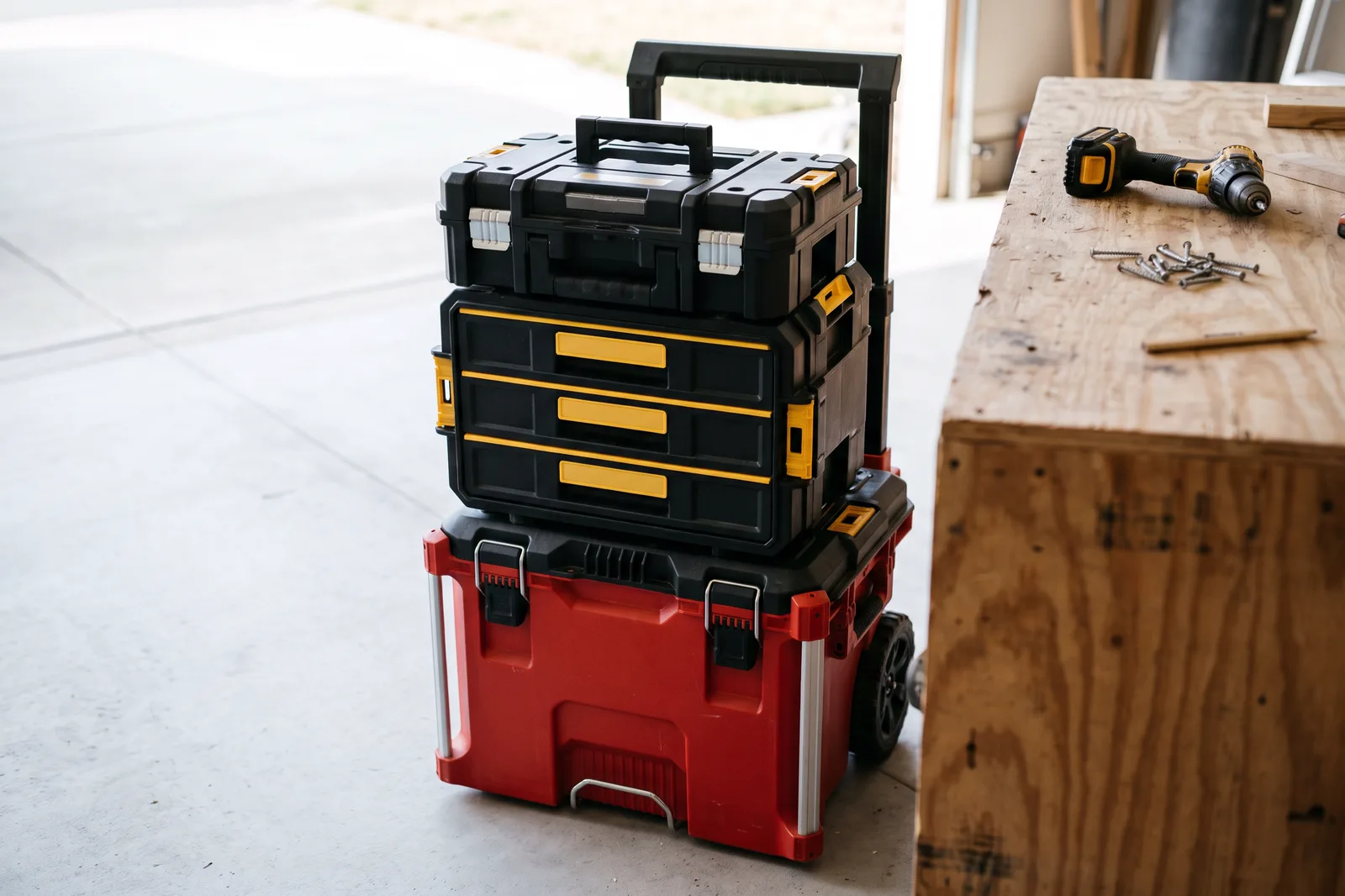 Workshop & Storage · RoundupStackable Tool Box Systems: Which One to Own for Home and JobsiteA stackable tool box system is a set of boxes that click together so one stack carries everything.
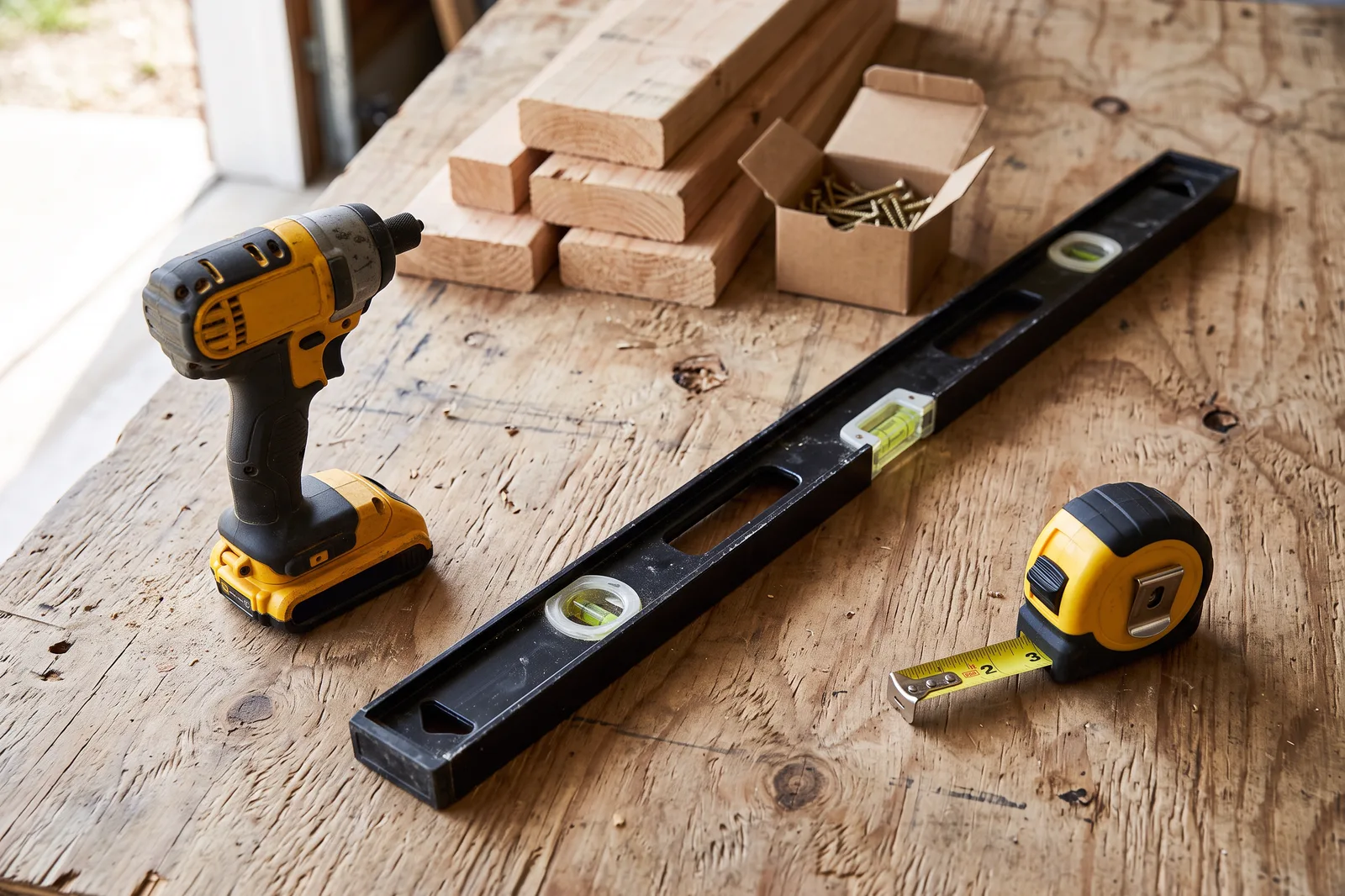 Workshop & StorageTools Needed to Build Garage ShelvesSturdy garage shelves from 2x4s and plywood need a handful of tools: a tape measure, a level, a cordless drill/driver, a saw to cut the lumber and a square to mark it.
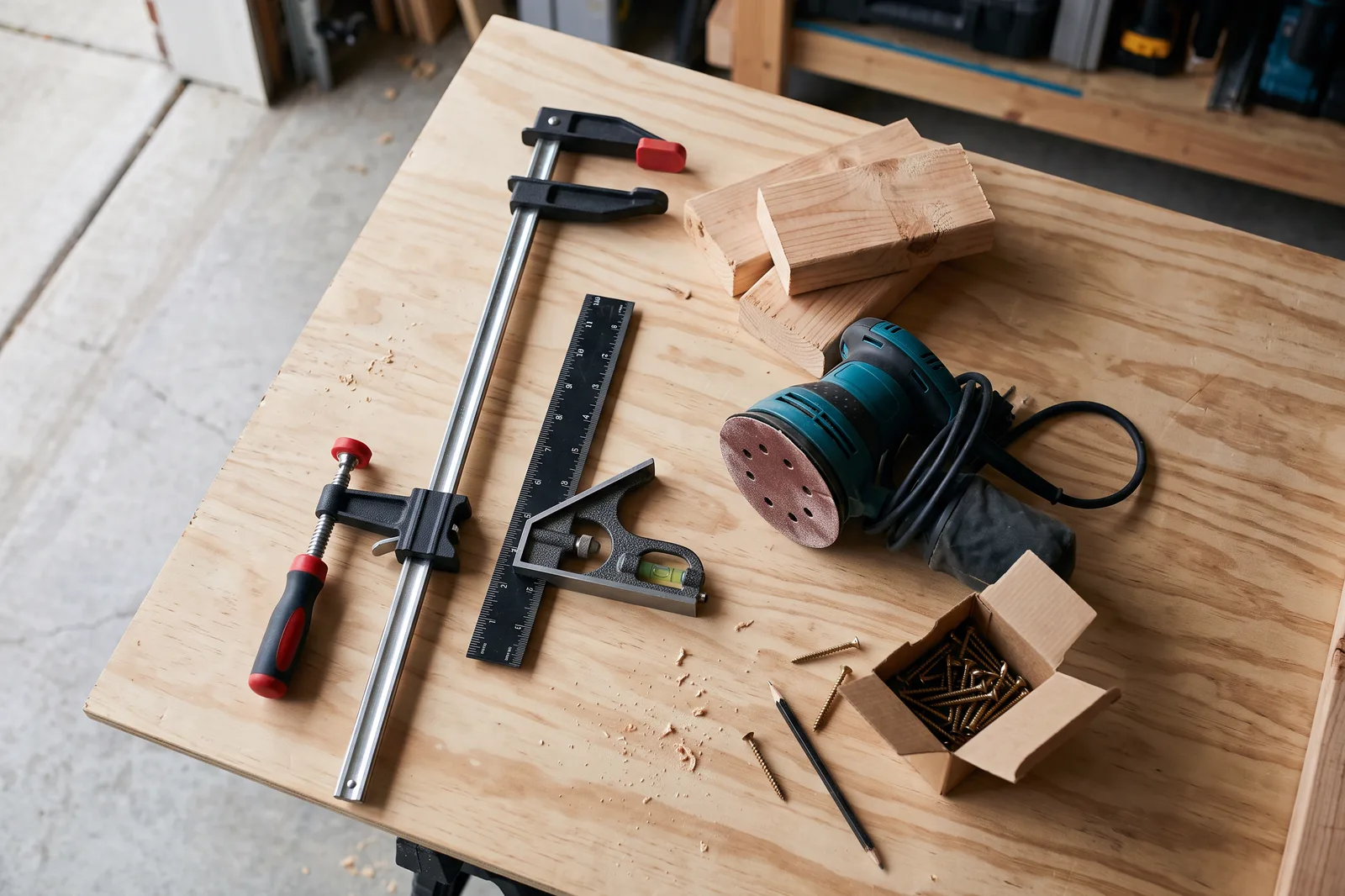 Workshop & StorageTools Needed to Build a Simple WorkbenchA simple workbench is 2x4 legs and rails with a plywood or MDF top, so you need a saw, a cordless drill/driver, a tape measure, a square and a few clamps.