
Workshop & Storage · Comparison · DIY · Pro
Step Ladder vs. Extension Ladder: Which One Should You Own First?
Quick answer
Buy a six-foot Type IA step ladder first. It stands on its own, reaches most ceilings, lights and shelves, and covers most indoor jobs. Add an extension ladder only when you must reach gutters, siding or a roof edge, because it needs a wall to lean on and a careful setup. Choose fiberglass near wiring and aluminum when weight matters.
Quick verdict: start with the step ladder
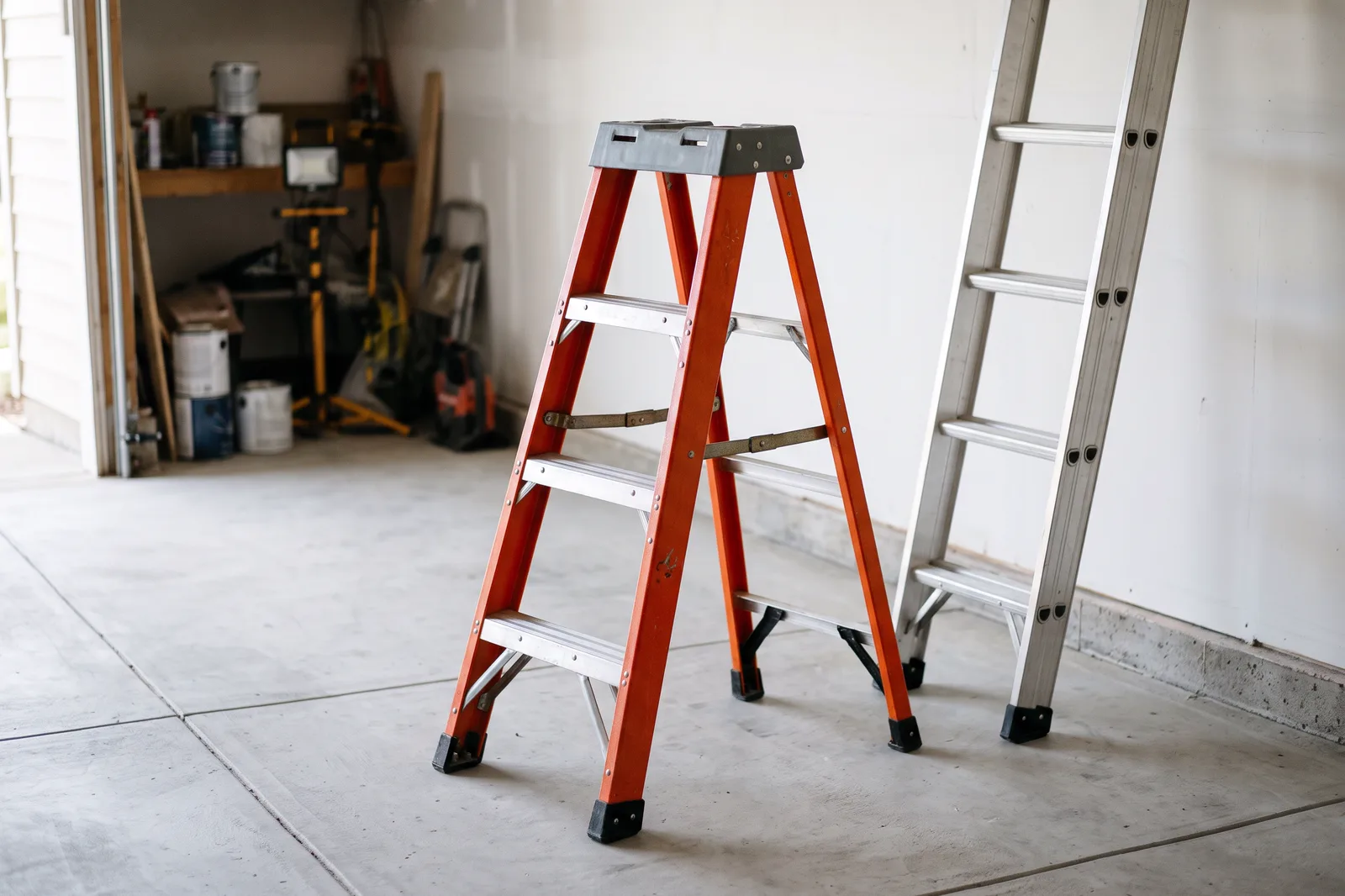
A step ladder is an A-shaped ladder that stands on its own. An extension ladder is a long straight ladder in two sliding sections that must lean against a wall or a roof edge. The two are not rivals for the same job. They solve different problems.
Buyer guides and safety videos agree on the basics. A step ladder suits most indoor and light work, and Lowe's notes it is the better choice when there is no nearby surface to lean an extension ladder against. An extension ladder is for outdoor height: gutters, siding, a second-story window or the edge of a roof.
For most homes that means one purchase order:
- A six-foot Type IA step ladder first.
- An extension ladder later, only if you have something tall to reach.
What each ladder is good at
| Question | Step ladder | Extension ladder |
|---|---|---|
| Stands on its own? | Yes | No, needs a wall or roof edge |
| Best place to use it | Rooms, garages, yards | Outside walls, gutters, roof edges |
| Typical jobs | Painting, lights, smoke alarms, shelves | Gutter cleaning, siding, windows |
| Setup effort | Open, lock the spreaders, climb | Carry, raise, extend, lock, set the angle |
| Reach at the same listed height | Higher | Lower |
| Storage | Folds flat | Long; needs a wall rack or garage ceiling |
Home Depot's guide gives the reach difference. You can safely stand two steps below the highest point of a step ladder, but only about four rungs below the top of an extension ladder. So at the same listed height, the step ladder lets you reach higher.

Who it's for
- Renters and first-time homeowners: a six-foot step ladder covers most rooms, lights and shelves
- Painters and decorators: a step ladder keeps you close to walls and ceilings
- Owners with a gutter, second-story window or roof edge: an extension ladder reaches where a step ladder cannot
- Anyone doing electrical work: fiberglass of either type, with the power turned off first
Who should skip it
- Anyone who only changes the odd light bulb. A small stool or a short step ladder is enough.
- Anyone nervous about heights. Hire a pro for gutters and roofs. A ladder does not replace a safe setup, and no buying guide does either.
Duty ratings: buy Type IA
Every ladder carries a rating for the total weight it can hold. This Old House lists the common ones: Type III is 200 lb (light household use), Type II 225 lb, Type I 250 lb, Type IA 300 lb and Type IAA 375 lb. The rating covers you plus your tools and materials. A person who weighs 220 pounds and carries a 25 pound bucket is already over a 225 pound rating.
A Consumer Reports buying guide recommends Type IA for most homeowners, because you cannot predict who will climb the ladder or what they will carry, and the extra margin is worth the extra weight. That is also why all three ladders in this comparison are Type IA.
Fiberglass vs. aluminum
The material matters more for an extension ladder, because it goes outdoors and sometimes near service cables.
- Fiberglass: does not conduct electricity, which lowers shock risk. It is heavier and harder to move around a house, according to This Old House and Today's Homeowner. Today's Homeowner says it can last more than ten years with care, though long sun exposure can break the surface down.
- Aluminum: very light and easy to carry, but it conducts electricity. Keep it away from power lines, and do not use it near wiring. It resists rust but can dent or bend if dropped.
None of this makes a ladder safe near live power. Turn the power off first and keep any ladder, fiberglass or aluminum, well away from overhead lines.
What buyers say about these ladders
Review data for ladders is thinner than for a drill or a saw, so we kept the claims to what we could source.
Louisville FS1506 step ladder. A buyer-feedback summary on ShopSavvy describes it as steady with no wobble, with good footing and a surface that is easy to clean. The complaints are small: some buyers report cosmetic marks such as dust or storage scuffs, and some find it heavy to carry. The Amazon listing shows a six-foot ladder with a 12 inch step rise, rubber feet and a molded top with tool slots.
Louisville extension ladders. We found very few independent test reports on the FE3224 or AE2224. The listing graphics show a MaxLock rung lock and a QuickLatch that hold the sections together while you extend the ladder, and swivel shoes for uneven ground. Treat these as the maker's claims, not test results. Dealer pages for the FE3224 list a 21 ft maximum extended length and a 52 lb weight, which is why the name "24 ft" does not mean you can reach 24 feet.
Pros and cons
| Pros of a step ladder | Cons of a step ladder |
|---|---|
| Stands on its own, so you can use it anywhere a flat floor exists | Limited height. Six feet suits most ceilings, but not gutters or a second story |
| Easier to set up, with no angle to judge and no wall to protect | Not for leaning. A step ladder used as a leaning ladder can fold or slide |
| Higher reach at the same listed height than an extension ladder | Bulky to carry in fiberglass |
| Folds flat for a closet, a garage wall or a car |
| Pros of an extension ladder | Cons of an extension ladder |
|---|---|
| Reaches outdoor heights a step ladder cannot | Needs a solid, stable lean point and a careful angle every time |
| Adjustable length, so one ladder suits a porch, a window and a roof edge | Heavy and awkward to raise alone, especially in fiberglass |
| Light in aluminum, and non-conductive in fiberglass | Takes storage space and a rack or ceiling hooks |
How to set up each ladder safely
These steps come from the two safety videos we checked and the buying guides above. They are general guidance, not a replacement for the label on your own ladder.
Step ladder
- Check it first. Look for bent or cracked rails, loose parts and damaged feet. A damaged ladder should be taken out of use.
- Open it fully on firm, level ground. Lock both spreaders before you step on it.
- Stand below the top. Home Depot says two steps below the highest point is safe. The top cap is not a step.
- Face the ladder, keep three points of contact. Two hands and a foot, or one hand and two feet, touch the ladder at all times.
- Keep tools out of your hands. Use the tool slots or a tool belt, not the climb.
Extension ladder
- Check the rails, rungs and rung locks. The MC Construction Teacher video shows what to look for: welds, bent rails and locks that swing and spring properly.
- Choose a firm, level spot. Put a wide board under the feet on uneven ground, not a thin 2x4.
- Set the base using the 4-to-1 rule. Both videos say one foot out for every four feet up to the support point. The teacher's quick test: stand with your toes at the base and arms straight out; your fingertips should just touch the rail.
- Extend the ladder three feet above the roof or landing. That gives you something to hold when you get on and off.
- Stop just above a rung, then let the locks seat. A lock that is not fully seated can slip.
- Do not set it in front of a doorway unless the door is blocked off.
- Three points of contact, belt buckle between the rails, and never lean out. The SafetyVideos.com video says to keep your belt buckle centered and not lean back.
What to look for when buying
- Rating: Type IA, 300 lb, as a minimum for most homeowners.
- Height: for a step ladder, a six-foot model reaches most ceilings. For an extension ladder, a dealer spec may list a shorter maximum length than the name, so check the "maximum extended length" before you buy.
- Material: fiberglass near wiring, aluminum when you must carry it alone or far.
- Feet and shoes: slip-resistant rubber feet, and swivel safety shoes on an extension ladder.
- Locks: spreaders that lock open on a step ladder, rung locks that seat on an extension ladder.
- Weight and storage: lift one in the store if you can, and check you have room to store it.

Which should you buy?
- If you live in a house or apartment and want one ladder, buy a six-foot Type IA step ladder. It handles light bulbs, smoke alarms, painting and shelves.
- If you have gutters, siding or a roof edge to reach, add an aluminum extension ladder if you can handle the weight and there are no power lines near the work.
- If you work near wiring, service cables or a meter, choose fiberglass, and turn the power off first.
- If you hate carrying ladders, weigh the aluminum extension ladder against a pro for the high jobs. A ladder you struggle to set up is a hazard.
- If you only reach high twice a year, consider renting an extension ladder, so you do not need to store one.
Many deck, fence and shelf projects need a ladder at some point. See tools needed to build a backyard deck for the rest of the kit, and safety glasses and hearing protection before any overhead work.
Key specs to look for
| Spec | What to look for |
|---|---|
| Duty rating | Type IA (300 lb) is the usual homeowner choice. Add your own weight and the weight of tools you carry before you compare it with the label. |
| Ladder height | Step ladder: the height listed is the folded length, not your reach. Extension ladder: the number is the total length of both sections, and the reachable height is less. |
| Material | Fiberglass does not conduct electricity and suits work near wiring. Aluminum is lighter and easier to carry. |
| Feet | Rubber, slip-resistant feet. An extension ladder should have swivel safety shoes that sit flat on uneven ground. |
| Locks and spreaders | A step ladder needs spreaders that lock fully open. An extension ladder needs rung locks that seat securely on a rung. |
| Top and tool slots | A step ladder with a molded top and tool slots keeps a drill or paint can within reach so you do not carry it up the rungs. |
| Weight | A ladder you cannot lift safely is a ladder you will set up badly. Check the weight before you order a long extension ladder. |
Where to buy
The ladders below are sold on Amazon. They are our budget, mid and pro picks. Check the exact model name, rating and length on the listing before you order. Stock on the extension ladders can be limited.

Louisville Ladder 6 ft Fiberglass Step Ladder, FS1506, Type IA, 300 lbs
- A six-foot, Type IA fiberglass step ladder with a 300 pound rating, a 12 inch step rise and a molded top with tool slots, according to the listing
- Fiberglass rails do not conduct electricity, and the listing says it meets ANSI and OSHA standards
- A buyer-feedback summary describes it as steady with no wobble; complaints are cosmetic marks, and some buyers find it heavy
How we scored it
Usefulness 9/10 · Value 8/10 · Durability 8/10. This is our own opinion, based on specs, buyer reviews and independent tests. It is not an Amazon or customer rating.

Louisville Ladder 24 ft Aluminum Extension Ladder, AE2224, Type IA, 300 lbs
- A 24 ft, Type IA aluminum extension ladder with a 300 pound rating; the listing calls aluminum a strong but lightweight choice that is easier to carry and move
- The listing graphics show a MaxLock rung lock and a QuickLatch that holds the two sections together while you extend it
- Aluminum conducts electricity, so keep it well away from power lines, meters and service cables
How we scored it
Usefulness 8/10 · Value 8/10 · Durability 7/10. This is our own opinion, based on specs, buyer reviews and independent tests. It is not an Amazon or customer rating.
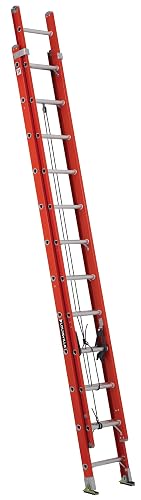
Louisville 24 ft Fiberglass Extension Ladder, FE3224, Type IA, 300 lbs
- A 24 ft, Type IA fiberglass extension ladder with non-conductive rails, a MaxLock rung lock, a QuickLatch and swivel safety shoes, according to the listing
- Fiberglass is the safer material near wiring, but it is heavier and harder to carry alone than aluminum
- A dealer spec lists a 21 ft maximum extended length and 52 lb weight, so check the reach against your wall before buying
How we scored it
Usefulness 8/10 · Value 7/10 · Durability 8/10. This is our own opinion, based on specs, buyer reviews and independent tests. It is not an Amazon or customer rating.
Watch and read more
Video reviews
- Extension Ladders - How to setup, parts, and safety — MC Construction Teacher
Walks through the parts of an extension ladder, the rule of setting the base one quarter of the height out from the wall, and extending the ladder three feet above a roof. - Ladder Safety: Inspection, Setup & the 3-Point Rule | Free OSHA Training — SafetyVideos.com
Covers inspecting a ladder before use, level footing, the 4:1 angle, extending three feet above the landing, and keeping three points of contact.
Frequently asked questions
Which ladder should I buy first, a step ladder or an extension ladder?
A step ladder for most homes. It stands on its own, so you can use it in any room or in the yard. Lowe's guide notes that a step ladder is the better choice when there is no nearby surface to lean an extension ladder against. Buy the extension ladder later if you have gutters, siding or a roof edge to reach.
What do ladder duty ratings mean?
This Old House lists the common U.S. ratings: Type III is 200 lb, Type II 225 lb, Type I 250 lb, Type IA 300 lb and Type IAA 375 lb. Add your body weight to the weight of tools and materials you carry. Consumer Reports recommends Type IA for most homeowners as a safety margin.
Is fiberglass or aluminum better?
Fiberglass does not conduct electricity, so it is the safer choice near wiring. Aluminum is lighter and easier to carry. Today's Homeowner says fiberglass can last more than ten years with care, while aluminum resists rust but can dent or bend. Neither material makes it safe to work near live power lines.
How high can I safely stand on a step ladder?
Home Depot's guide says you can safely stand two steps below the highest point of a step ladder, and about four rungs below the top of an extension ladder. A step ladder also reaches higher than an extension ladder of the same height. The top step and top cap are not for standing.
What is the 4-to-1 rule for extension ladders?
For every four feet of height to the support point, place the base one foot away from the wall. A safety video from SafetyVideos.com and a construction teacher's video both use this ratio. A 12 foot support height means the base sits about 3 feet from the wall.
How far should an extension ladder stick up above a roof?
About three feet above the point you step onto. Both safety videos say the ladder should extend at least three feet so you have something to hold when you get on and off.
Should I buy a multi-position ladder instead?
It can cover both jobs if you have little space, because it works as an A-frame and as a straight ladder. Western Ranch Supply and a Choice buying guide describe this type. Hinges and locks add complexity, so check the duty rating and read the reviews on the exact model.
Sources
- Home Depot: Ladder Buying Guide
- Lowe's: Ladder Buying Guide
- This Old House: Understanding Common Types of Ladders
- Today's Homeowner: Fiberglass vs. Aluminum Ladder
- Consumer Reports: Ladder Buying Guide
- Western Ranch Supply: Ladder Buying Guide
- ShopSavvy: Louisville Ladder FS1506 buyer-review summary
- Travers: Louisville Ladder FE3224 spec sheet
- MC Construction Teacher: Extension ladder setup (video)
- SafetyVideos.com: Ladder safety (video)
Related tools
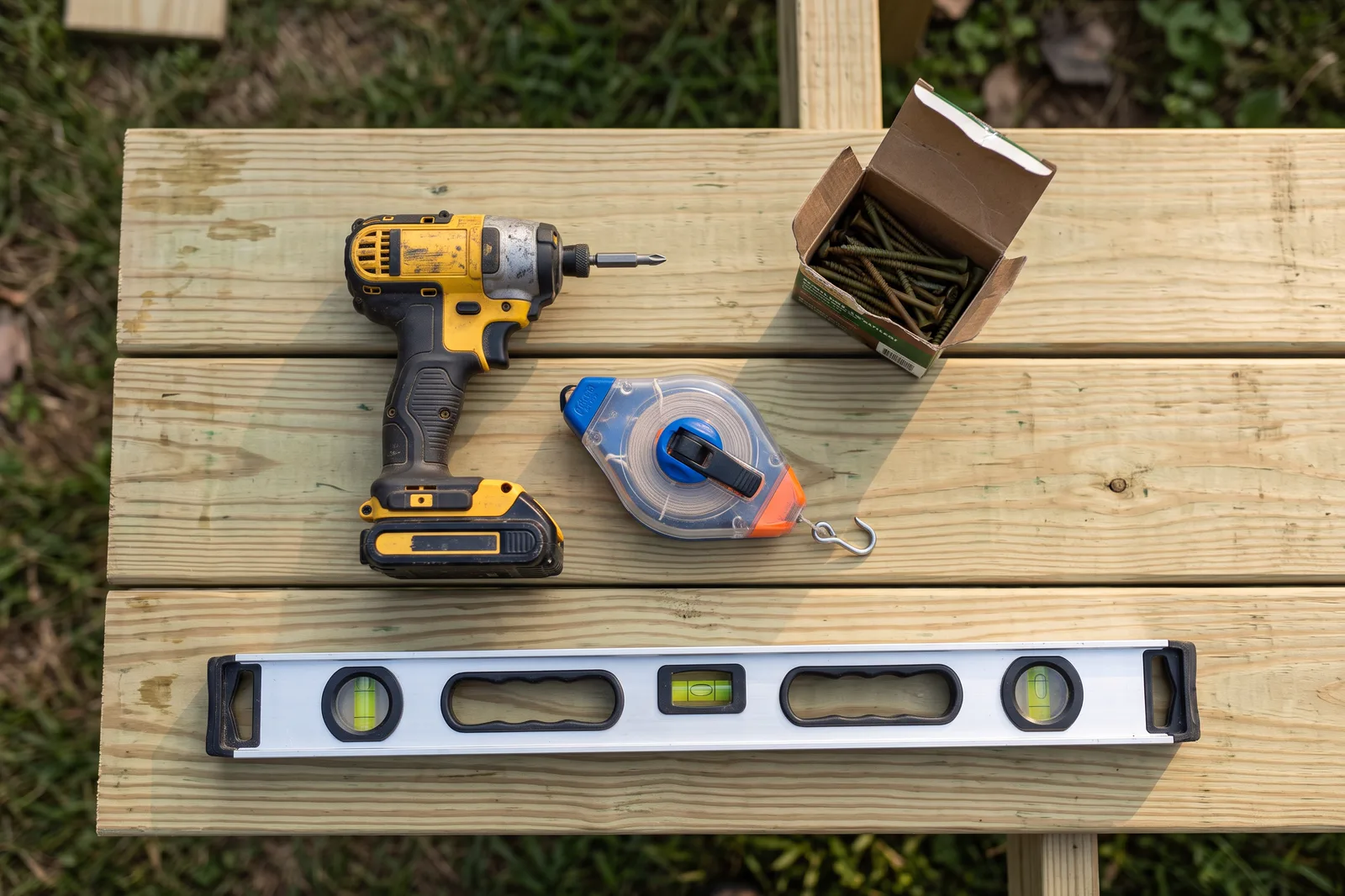 Outdoor & GardenTools Needed to Build a Backyard DeckA low backyard deck needs a saw, an impact driver for the hundreds of screws, a level, a chalk line, a tape measure and a square, plus a way to dig footings.
 Workshop & Storage · RoundupSafety Glasses and Hearing Protection: What to Own for Home ProjectsEvery power-tool job needs two things: impact-rated eye protection and hearing protection rated for the noise.
 Outdoor & GardenGarden Hose Reel: Wall-Mount, Cart or Retractable? What to OwnA garden hose reel keeps your hose coiled off the ground so it stops kinking, cracking and getting run over.