
Measuring & Layout · Single tool · DIY · Maker
Infrared Thermometer: Point, Read and Find Hot and Cold Spots

Our verdict
Etekcity Lasergrip 774 Infrared Thermometer
7.7/10
Worth-owning score
Price tier Budget ($)
View on AmazonOur own score from specs, buyer reviews and tests. Not a customer rating. Photo from the Amazon listing.
Quick answer
An infrared thermometer is a point-and-read gun that shows the surface temperature of whatever you aim it at, with no touching. A budget model like the Etekcity Lasergrip 774 covers vents, walls, grills and pans. Skip it if you want to see a whole draft or insulation gap at once; a thermal camera shows that better. It also cannot read inside food or a person's temperature.
What is an infrared thermometer?
An infrared thermometer is a handheld gun that reads the surface temperature of something without touching it. You point it, pull the trigger and a number shows on the screen. Every object gives off a little invisible infrared heat. A small lens inside the gun collects that heat and turns it into a temperature.
The red laser dot is only an aiming aid. As the makers ThermoWorks and Fluke describe it, the laser shows where to point, while the sensor reads the whole circle around that dot. The bigger the gap between you and the target, the bigger that circle grows.
| Infrared thermometer | Probe (contact) thermometer | Thermal camera | |
|---|---|---|---|
| How it reads | Heat given off by the surface | Metal tip touching or inserted | Heat as a colored picture |
| Best at | Quick surface checks from a distance | Inside of food, liquids, air | Seeing a whole pattern at once |
| Weakness | Surface only; shiny metal reads low | You must touch the target | More costly and bulkier |
| Good for a vent or hot pan | Yes | Slower | Yes |
Why you'll want one
It reads what you cannot or should not touch. A grill grate, a hot pizza stone, a soldering iron, a high wall register or a hot-looking appliance is easy to check from an arm's length or more. The home inspector in the video we checked uses one for exactly this: a register near the ceiling that he cannot reach.
It gives you a number instead of a guess. Instead of "this wall feels cold", you can see that one patch reads colder than the rest. That helps you decide where to look for a draft, thin insulation or a cold window frame.
It is quick. The Lasergrip 774 listing says a reading takes under half a second. A scan across a wall or a pan takes a few seconds.
It is cheap to own. A basic model is a small purchase, which makes it an easy tool to keep in a kitchen drawer or a toolbox.
Common home jobs
- Heating and cooling vents: compare the air coming from a register with the wall beside it.
- Cold spots: scan along a wall, window frame or door edge for a patch that reads colder.
- Grills, pans and pizza stones: check the surface is hot enough before you start.
- Appliances: check a fridge or freezer door seal area, or a motor or a water heater pipe that feels hot.
- Workshop and hobby use: check a soldering iron, a glue gun, a heated workbench or an engine part.
Gun or thermal camera?
Both tools read infrared heat, but they answer different questions. A thermometer gun gives one number for one circle. A thermal camera gives a colored picture of the whole scene, so a draft, a gap in insulation or a warm pipe shows up as a shape. A home-inspection guide we read sums it up this way: buy the thermometer when the answer is a number, such as the air coming out of a register, and buy the camera when the answer is a picture.
For most households the gun is the sensible first buy. It is small, simple and good for the kitchen, the workshop and a quick walk around the house. If you later find you are hunting drafts often, a camera is the upgrade.
Where a reading helps and where it misleads
| Job | What to aim at | What the number tells you |
|---|---|---|
| Heating or cooling vent | The grille, and the wall beside it | Whether air from the vent is clearly warmer or cooler than the room |
| Window or door edge | The frame, then the wall nearby | A frame that reads colder than the wall may leak air |
| Grill, pan or pizza stone | The cooking surface | Whether the surface is hot enough to start |
| Soldering iron or glue gun | The tip or the barrel | Whether the tool has reached working temperature |
| Meat or soup | Do not use | The gun cannot see inside food |
Who it's for
- First-time homeowners checking vents, walls, windows and a hot-feeling appliance
- Cooks and grill owners who want a quick surface reading on a pan, griddle, pizza stone or oven
- DIYers and hobbyists checking a soldering iron, a hot engine part or a heated workshop
- Renters and buyers comparing cold and warm spots on walls near windows and doors
Who should skip it
- Anyone who needs to see a whole draft or missing-insulation pattern at once. A thermal camera shows the picture; a spot gun shows one number at a time.
- Cooks who need the inside temperature of meat. It reads only the surface; use a probe thermometer for that.
- Anyone who wants to take a person's temperature. Fluke's listing for its model says it is not for human temperature, and this type of tool is made for objects.
How to use it
Point, pull, read. A few habits make the number far more useful.
- Put in the batteries. The Lasergrip 774 takes two AAA batteries, which come in the box, per the listing.
- Pick the unit. Use the unit button to switch between degrees F and degrees C if you need to.
- Stand close for small targets. Fluke's video advice is to get as close as you can, safely. With a 12:1 gun, a target smaller than the spot gets averaged in with the background.
- Aim the laser at the middle of the target. The dot marks the center, but the gun reads a circle around it. Keep that circle on the thing you want to measure.
- Hold the trigger until the number settles. The gun has no on and off button in the home inspector's example; it wakes when you press the trigger, and the number stays on the screen for about ten seconds after you let go.
- Use the screen light in dim spots. The inspector says the backlight helps in a dark room.
- Scan, do not just point. Sweep slowly across a wall or a pan and watch the number change. The coldest or hottest spot tells you more than a single reading.
- Check the baseline. Take a reading of a spot you know is normal, such as a wall in the middle of a room, so you have something to compare with.
- Tape over shiny surfaces. A strip of masking tape on shiny metal gives you a matte surface to read, which avoids the low reading that polished metal causes.
- Keep a safe distance from hot or live things. Reading from a distance is the point of the tool. Do not open an electrical panel yourself; leave that to a licensed electrician.
What reviewers and buyers say about the Etekcity Lasergrip 774
We feature the Etekcity Lasergrip 774. Here is what we found:
- Praised: Round-ups name it as a budget pick for cooking and general home use, and buyers describe quick, easy readings on grills, pans and vents. Its range and 12:1 ratio match more costly models on paper.
- Common complaints: Reviewers note it reads the surface only, so it cannot confirm that meat is cooked inside. One reviewer said it is hard to see exactly where a single laser is aiming when hunting for air leaks, and suggested a dual-laser model for that job.
- Independent tests: Project Farm tested many temperature guns against a certified probe, but the Lasergrip 774 was not among them. The takeaway from that video is general: several budget guns were off by about 10 degrees in a freezer test, shiny metal was hard for almost all of them, and changing the emissivity setting did not help much.
- Seller caution: Check the listing is sold by Etekcity or Amazon, since several versions of this model have been listed over the years.
Reading the numbers: three traps
| Trap | What happens | Fix |
|---|---|---|
| Shiny or polished metal | The reading is too low | Read a strip of masking tape on the metal |
| Standing too far away | The gun averages the target with its background | Move closer so the target fills the spot |
| Aiming through glass | The gun reads the glass, not what is behind it | Aim at the surface, not through a window |
What to look for when buying
- Distance-to-spot ratio. A higher second number means a smaller spot at a given distance. The Lasergrip 774 is 12:1, per the listing; Fluke's 62 Max is 10:1 and its 62 Max Plus is 12:1, per Fluke's video.
- Range. Make sure it covers the coldest and hottest things you will check. The 774 covers -58 to 842 degrees F, per the listing.
- Emissivity setting. A fixed setting works for most matte surfaces. An adjustable one is a plus for metal, though Project Farm's tests found changing it did not fix shiny-metal errors.
- A clear display. A backlight helps indoors, and a high-contrast screen helps in sun. Project Farm found some displays unreadable outdoors.
- Single or dual laser. A dual laser shows the edges of the spot and makes it easier to find an air leak.
- Build and warranty. Project Farm and Bob Vila both rate the Fluke 62 Max highly, but it costs far more than a basic gun and is aimed at pros.
- Know its limits. It does not read inside food, through glass or on a person. A stud finder and a moisture meter cover other things you cannot see in a wall, and a multimeter is the tool for electrical testing.
Key specs to look for
| Spec | What to look for |
|---|---|
| Distance-to-spot ratio | 12:1 on the Lasergrip 774, per the listing: at 12 inches away it reads a 1-inch circle. A bigger first number lets you stand farther from small targets. |
| Temperature range | -58 to 842 degrees F on the 774, per the listing. Check that it covers the coldest and hottest thing you will aim at. |
| Response time | Under 0.5 seconds per the listing, though Project Farm's stopwatch test found many guns slower than their claim. |
| Emissivity | How much heat a surface gives off. Matte surfaces read well at the usual 0.95 setting; shiny metal reads low. The 774 lists an adjustable setting. |
| Laser | A single laser dot marks the middle of the area the gun reads. Dual-laser models show the edges of the spot and are easier to aim. |
| Display | A backlit screen helps indoors; Project Farm found some dark displays hard to read in bright sun. |
| Max / hold | A max reading and a hold on the screen after you release the trigger. The video from a home inspector says the number stays on screen for about ten seconds. |
| Power | Two AAA batteries on the 774, which come in the box, per the listing. |
Where to get it
Our featured pick is below, chosen from the listing and the reviews we found. If you want a step up in build and accuracy, reviewers point to the Fluke 62 Max, which Project Farm found the most consistent in its test. For a pro-grade option, look at the Fluke 62 Max in our Tool finder.

Etekcity Lasergrip 774 Infrared Thermometer
- A 12:1 distance-to-spot ratio and a range of -58 to 842 degrees F (-50 to 450 degrees C), with readings in under half a second, according to the listing
- Backlit LCD, adjustable emissivity, a max-reading display and two AAA batteries in the box, per the listing
- The listing and reviewers describe it as a surface thermometer for cooking, HVAC vents and home jobs; one review round-up names it a budget pick
How we scored it
Usefulness 8/10 · Value 9/10 · Durability 6/10. This is our own opinion, based on specs, buyer reviews and independent tests. It is not an Amazon or customer rating.
Watch and read more
Video reviews
- I Didnt Expect a Thermometer This Accurate at This Price! — Project Farm
Tests about fifteen temperature guns against a certified probe on hot, cold, shiny and speed tests, and finds the Fluke 62 Max most consistent overall; the Etekcity 774 is not in this video. - How to use an infrared thermometer gun — Home Inspection Estate, Inc.
A home inspector shows the trigger-only operation, the screen light for dark rooms and checking the air coming from a high wall register. - Reviewing Distance-to-Spot Ratio With Fluke Infrared Thermometers — Fluke Corporation
A maker explains the distance-to-spot ratio and says to get as close as you safely can; read it as the maker's view.
Frequently asked questions
How does an infrared thermometer work?
It collects the infrared heat a surface gives off with a small lens, turns that into a temperature and shows it on a screen. The laser dot only shows where it is aiming. It does not do the measuring, as the thermometer makers ThermoWorks and Fluke explain.
What does the distance-to-spot ratio mean?
It says how big an area the gun reads from a given distance. Fluke gives the example of a 10:1 gun at 10 feet reading a circle about one foot wide, and says to get as close as you safely can so the target fills the spot.
Why does my reading look wrong on shiny metal?
Polished or shiny surfaces give off less heat than matte ones, so the gun reads low. In Project Farm's test, the shiny steel plate was one of the harder tests for the budget guns. Put a piece of masking tape on the metal and read the tape instead.
Can it read the temperature of meat?
It reads the surface only, not the middle. A kitchen-focused review lists this as a drawback, so use a probe thermometer to check that meat is cooked through.
Can it find air leaks and missing insulation?
It can hint at them. A patch of wall that reads colder than the wall around it may have a draft or thin insulation. A thermal camera shows the whole pattern at once, so it is the better tool for that job.
Is a more expensive infrared thermometer more accurate?
Often, but not always. Project Farm tested a wide range of prices and found the Fluke 62 Max the most consistent overall, while a very cheap model did well in most tests except the cold-steel one. Results varied by test, so check the use you care about.
Is the laser safe?
Do not point the laser at anyone's eyes, including pets, and keep it away from mirrors and shiny surfaces that could bounce it back.
Sources
Related tools
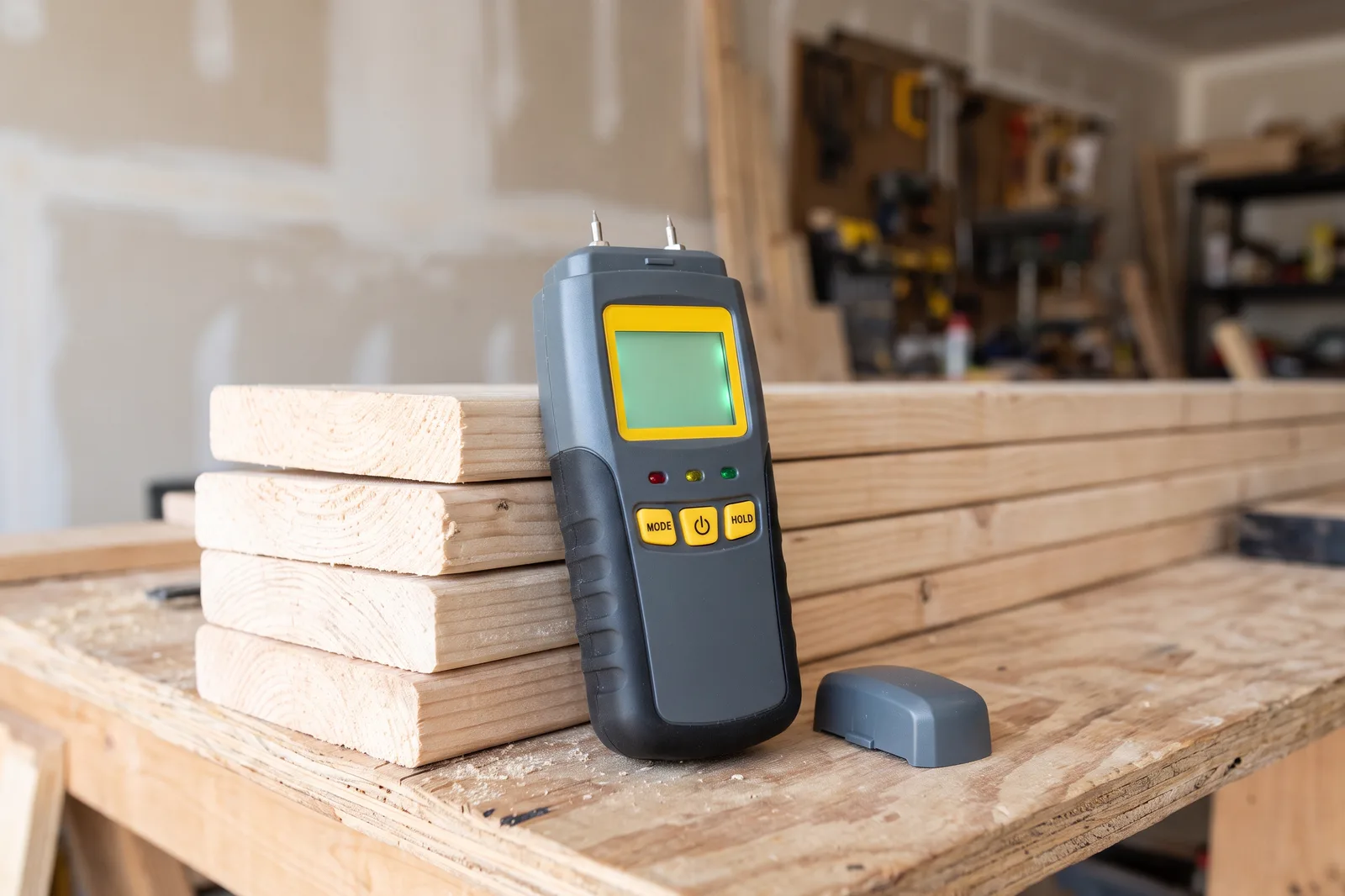 Measuring & LayoutMoisture Meter: The Pin Tester That Finds Damp Walls and Wet WoodA moisture meter shows how wet wood or a wall is, so you can find a hidden leak or check lumber before you build.
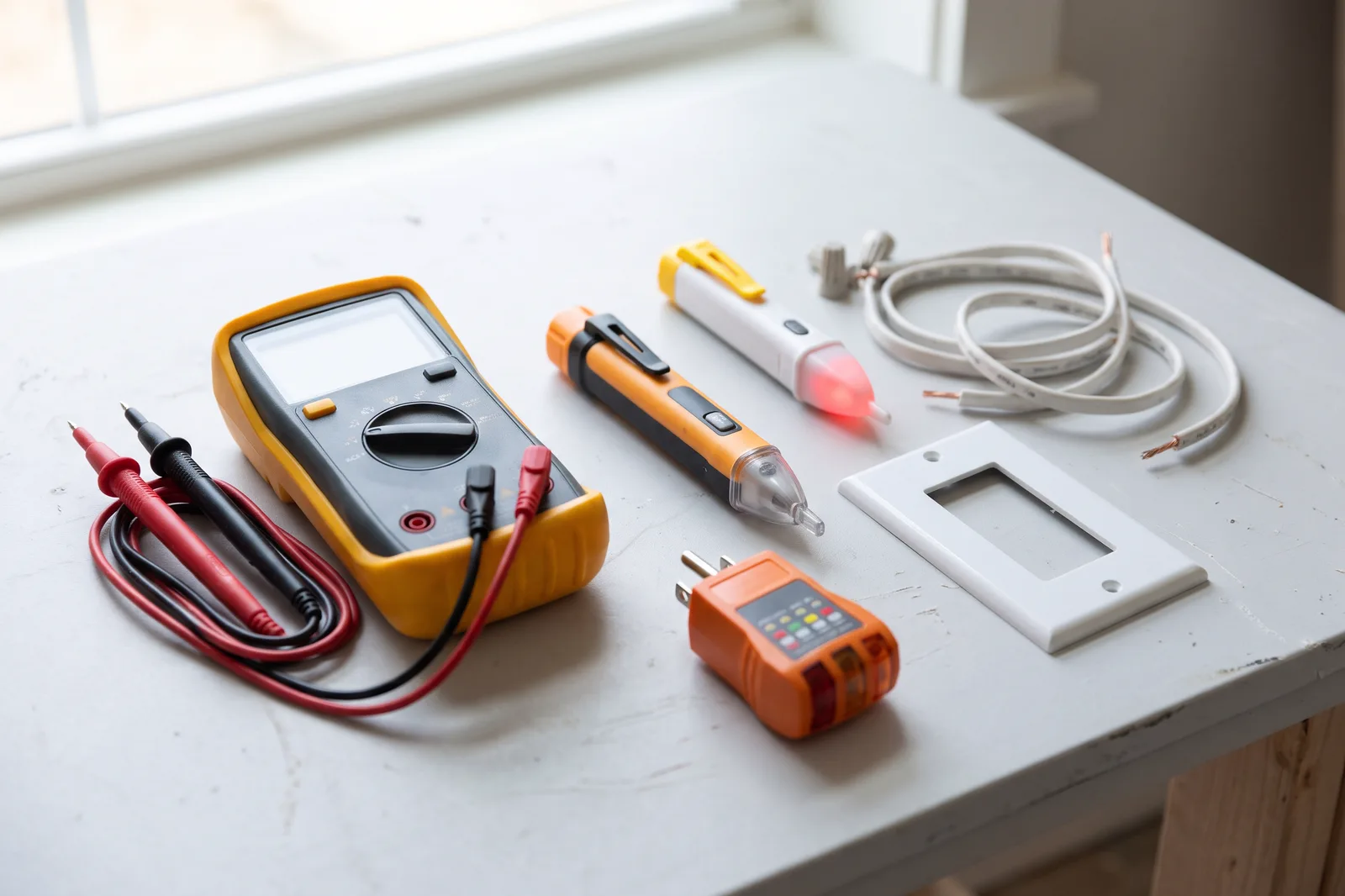 Measuring & Layout · RoundupMultimeters and Voltage Testers: Which to Own at HomeA non-contact voltage pen tells you if a wire may be live, a plug-in outlet tester checks wiring on the spot, and a multimeter gives actual numbers.
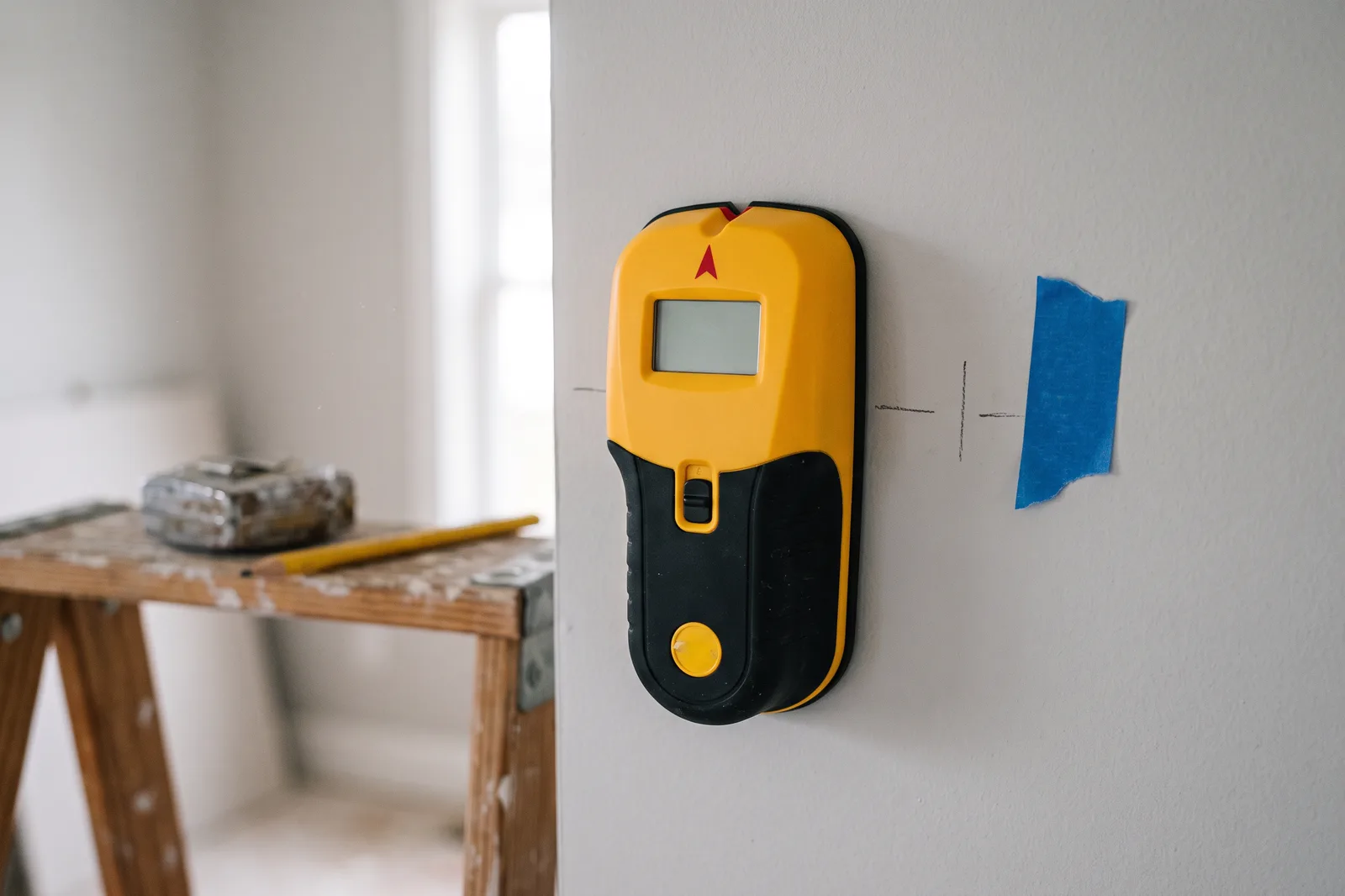 Measuring & LayoutStud Finder: The Wall Scanner That Keeps Shelves and TVs From FallingA stud finder is a small handheld scanner that tells you where the wood or metal studs are behind drywall, so heavy shelves, mirrors and TVs get fastened to something strong.